Health Insurance vs. Critical Illness Cover: The Key Differences You Should Know
By Matthew Ayandare —
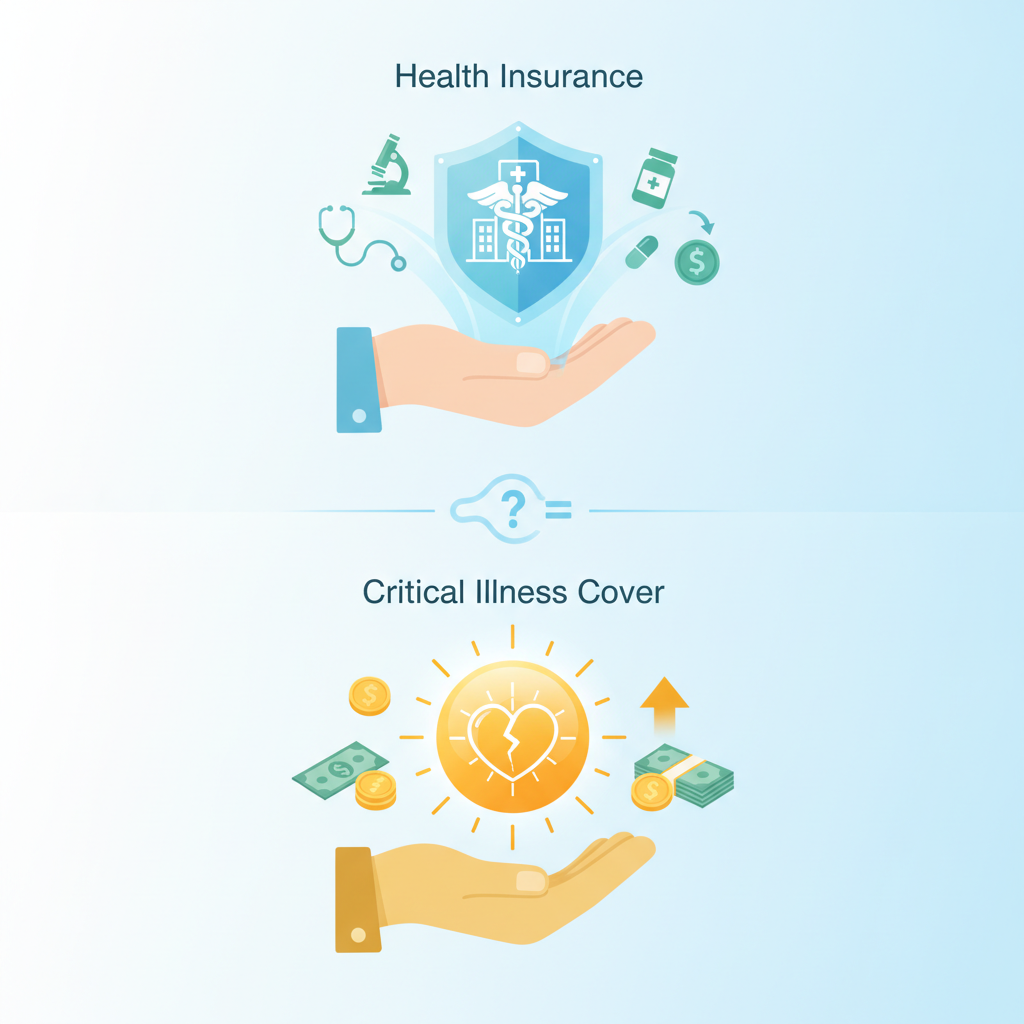
Two people can both say they're "covered" and still be talking about completely different things. That's the confusion at the heart of the health insurance versus critical illness debate — and getting it wrong can leave a big gap in your finances at the worst possible time.
At the simplest level, the two products answer two different questions. Health insurance asks, "Who pays my medical bills?" Critical illness insurance asks, "How do I keep the rest of my life running while I'm sick?" Both matter, but they work in fundamentally different ways.
Health insurance is designed to cover the cost of medical treatment. It typically pays for doctor visits, hospital stays, surgery, emergency care and prescription drugs, either directly to the provider or by reimbursing you for what you spent. In insurance terms, it is usually an indemnity product — it covers actual expenses incurred, up to a maximum sum insured. You generally don't see cash in your own pocket; the money flows toward your treatment.
Critical illness insurance works the opposite way. Instead of paying hospitals, it pays you. On diagnosis of one of the specific serious conditions named in the policy, the insurer releases a single lump-sum benefit. Crucially, that money is yours to use however you choose — you don't have to show receipts or prove it went toward medical care. It can cover a mortgage, replace lost income, fund travel for treatment, pay for childcare or simply keep the household afloat while you recover.
The list of what triggers a payout is the next big differentiator. Health insurance responds to a broad range of illnesses, injuries and medical events. Critical illness cover only pays out for the conditions explicitly listed in the contract. Those lists vary by insurer and by country, but they commonly include certain cancers, heart attack, stroke, coronary bypass surgery, major organ transplants and end-stage kidney failure. If your condition isn't on the list, there's no payout — which is why reading the policy wording matters so much.
How the money is paid also sets them apart. Health insurance can be claimed repeatedly, event after event, as long as your policy is active and you stay within its limits. Most critical illness policies are structured as a fixed, one-time benefit: once the lump sum is paid for a covered diagnosis, that portion of the cover is generally exhausted.
Because they do different jobs, they aren't really rivals. Health insurance handles the direct, ongoing cost of getting treated. Critical illness cover handles the indirect financial shockwave a serious diagnosis sends through your life — the bills that don't stop just because you can't work. Health insurance may not stretch to cover lost wages, long recovery periods, home modifications or the extra costs of caring for a seriously ill person, and that's precisely the gap critical illness cover is built to fill.
So which should you buy? Most guides that weigh the two land in the same place: this isn't an either-or decision. Health insurance is widely treated as the essential foundation, while critical illness cover is a targeted add-on for people who want financial breathing room if a major illness strikes. Factors like age, family medical history, dependants and existing savings all shape how much of each makes sense.
Before committing to either, compare the specific conditions covered, the payout structure and the exclusions, and confirm how the rules apply where you live — coverage terms differ significantly between providers and jurisdictions. As always, an independent, licensed advisor can help match a policy to your actual circumstances.
Category: Finance