NJC Suspends Rivers Judge, Two Others For Misconduct, Places Six On Watchlist
By CelebUD Newsroom —
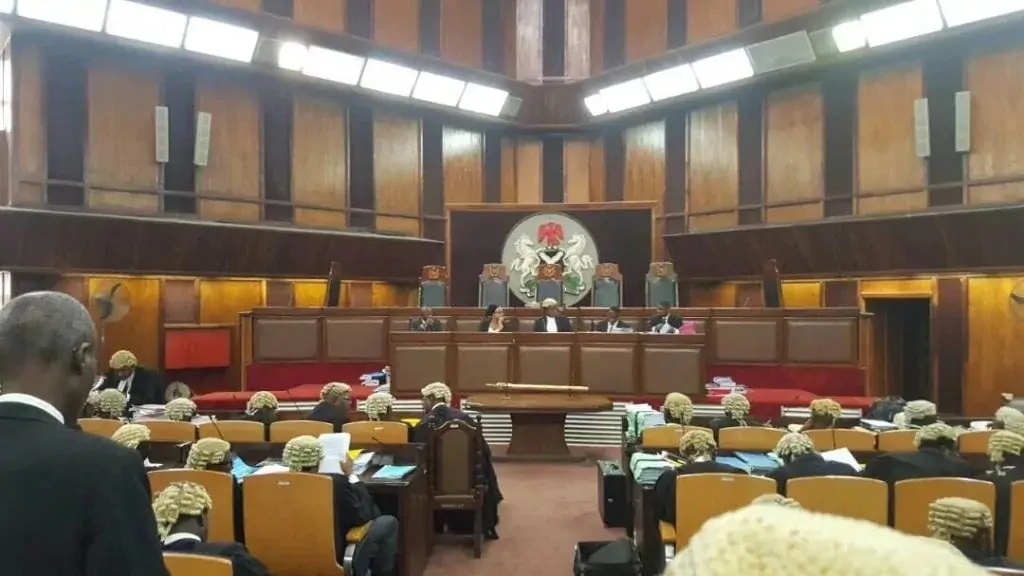
In a major disciplinary sweep targeting ethical infractions and procedural abuses across Nigeria's legal system, the National Judicial Council (NJC) has handed down one-year unpaid suspensions to three senior judicial officers. The sanctions, which also include promotion embargoes, stem from findings of power abuses, illegal detentions of court users, and unauthorized reviews of subsisting judgments. Six additional judges have been formally placed on the council's monitoring watchlist following thorough reviews of disciplinary petitions.
Disciplinary Decisions at the 112th NJC Meeting
The punitive actions were finalized during the NJC’s 112th statutory meeting held on November 3, 2026, presided over by the Chief Justice of Nigeria (CJN), Justice Kudirat Kekere-Ekun. Details of the resolutions were made public through an official release issued by Kemi Babalola-Ogedengbe, the Council’s Deputy Director of Information.
The three jurists hit with one-year suspensions without salary are:
- Justice Sobere Biambo of the Rivers State High Court
- Justice Hannatu Mohammed Kabir of the Nasarawa State High Court
- Grand Kadi Mohammed Sani Salihu of the Jigawa State Sharia Court of Appeal
Both Justice Biambo and Justice Kabir were additionally slapped with a three-year ban preventing them from being nominated for elevation to higher benches.
Breakdown of Offenses Leading to Suspensions
The probe conducted by the NJC’s Investigation Committee uncovered egregious procedural breaches in civil disputes handled by the sanctioned benchers, notably surrounding the proper administration of contempt proceedings.
Abuse of Contempt Rules in Rivers State
Investigators found Justice Sobere Biambo liable for directing law enforcement to apprehend parties to a civil suit over alleged breaches of an interim restraining order. Following the arrests, Justice Biambo arbitrarily imposed financial penalties of ₦300,000 against each individual involved. The NJC determined that the jurist skipped all legally mandated steps, failing to issue or serve Form 48 (Notice of Consequences of Disobedience to Order of Court) and Form 49 (Notice to Show Cause Why Order of Committal Should Not Be Made).
Because the alleged disregard of the injunction occurred outside the courtroom rather than in the face of the court (ex facie curiae), the council stressed that summary punishment was entirely unlawful without formal trial safeguards.
58-Day Unlawful Custody in Nasarawa State
In a similar breach, Justice Hannatu Mohammed Kabir was disciplined for ordering the apprehension and prolonged incarceration of a litigant, who was kept in custody for 58 days on accusations of defying court directives. As in the Rivers State case, the required procedural notices were neglected.
“The Investigation Committee found that she ordered the litigant’s arrest and detention for alleged disobedience of court orders without the issuance and service of the mandatory Forms 48 and 49 or the institution of proper contempt proceedings,” the council noted in its statement.
The council concluded that Justice Kabir stripped the citizen of their constitutional right to a fair hearing, justifying both the year-long suspension without remuneration and the three-year promotion freeze.
Jurisdictional Overreach in Jigawa State
Grand Kadi Mohammed Sani Salihu faced severe penalties after stepping outside his jurisdictional boundaries regarding a finalized verdict from the Federal Capital Territory (FCT) Upper Area Court. Salihu constituted an unauthorized review panel and reassigned the matter to a Higher Sharia Court judge, who admitted fresh witness testimony and produced an entirely new ruling.
The NJC concluded that this unusual maneuver amounted to an unlawful appellate review over a valid verdict rendered by a competent court. The substitute decision was subsequently quashed by the Jigawa State High Court. The council found Salihu in direct breach of Rule 3.3.1 of the 2016 Revised Code of Conduct for Judicial Officers. To prevent an administrative vacuum, the NJC directed the most senior Kadi in the Jigawa State Sharia Court of Appeal to immediately assume leadership responsibilities during Salihu's suspension.
Summary of Sanctioned Officers
| Judicial Officer | Jurisdiction | Infraction | Sanction Imposed |
|---|---|---|---|
| Justice Sobere Biambo | Rivers State High Court | Arrest of litigants & ₦300k fines without Forms 48 and 49 | 1-year suspension without pay; 3-year promotion ban |
| Justice Hannatu Mohammed Kabir | Nasarawa State High Court | 58-day unlawful detention of litigant without due contempt trial | 1-year suspension without pay; 3-year promotion ban |
| Grand Kadi Mohammed Sani Salihu | Jigawa State Sharia Court of Appeal | Unlawful reopening and re-trial of FCT Upper Area Court judgment | 1-year suspension without pay; functions handed to senior Kadi |
Six Jurists Placed on Official Watchlist and Cautioned
Beyond the suspensions, the regulatory council placed six judicial officers under formal monitoring and issued warning letters following findings on separate grievances.
Among those placed under scrutiny is Justice Bello Kawu of the FCT High Court. A probe validated a petition regarding his decision to offer interim bail to former Attorney-General of the Federation and Minister of Justice, Abubakar Malami, SAN, despite an existing, valid remand order issued by another presiding judge within the very same court.
Another jurist of the FCT High Court, Justice Kayode Agunloye, received formal admonition over questionable decisions during post-judgment garnishee proceedings involving First Bank of Nigeria Plc. According to investigators, Justice Agunloye granted an ex parte application for a Garnishee Order Nisi on October 22, 2025, even though an earlier, identical bid had already been withdrawn and struck out. The move occurred while connected motions, including the commercial bank's request for a stay of execution, were formally adjourned to November 4, 2025. The investigative panel observed that his conduct gave rise to justifiable suspicions of impropriety.
Three additional judges were issued warning letters regarding their management of court proceedings after investigations corroborated elements of petitions brought against them.
Petitions Dismissed and Bench Elevations Approved
In addition to hearing disciplinary cases, the council reviewed broader administrative and regulatory affairs across federal and state judicial branches:
- 24 petitions alleging improper conduct were dismissed due to lack of merit or evidence.
- 4 petitions were ordered to undergo deeper, comprehensive investigation.
- Recommendations were finalized approving the appointments of 28 new judicial officers across various tiers.
Regarding the leadership of the Imo State judiciary, the council issued an administrative directive instructing its Secretariat to ask the Imo State Judicial Service Commission to submit the name of Justice Ijeoma Agugua, the Acting Chief Judge, among the roster of nominees considered for substantive appointment as Chief Judge of Imo State.
What scrutiny on garnishee orders means for commercial bank accounts
Sudden bank account freezes through garnishee orders remain a severe operational hazard for Nigerian businesses. A commercial dispute can rapidly escalate when a creditor secures an ex parte order against a company’s bank accounts, instantly halting payroll, vendor payments, and daily transactions without the business having an immediate opportunity to defend its cash flow.
The NJC’s formal caution against a judge over questionable handling of garnishee proceedings involving a major commercial bank highlights growing regulatory attention to banking attachments. When judges face scrutiny for granting attachment orders while related motions or stays are pending, it curbs the casual use of financial freezing orders as instruments of commercial coercion.
Business owners should review their active dispute exposure with legal counsel and ensure their finance teams have standing protocols to respond immediately if an ex parte garnishee order hits their operating accounts.
Conclusion
The punitive actions taken at the NJC's 112th gathering highlight an intensified effort by the council under Chief Justice Kudirat Kekere-Ekun to curb highhandedness and ensure compliance with due process rules on the bench. By penalizing arbitrary contempt rulings and stamping out jurisdictional overreach, the judiciary's apex disciplinary authority has issued a strong warning to the bench. As suspended judges begin their year-long absence and watchlisted jurists come under elevated scrutiny, public attention will remain focused on whether these sanctions will meaningfully reinforce accountability and judicial integrity across Nigeria.
Reporting based on coverage by The Will Nigeria.
Category: Legal