Court Orders CCTV Footage Played as ICPC, El-Rufai Clash Over Family Access
By CelebUD Newsroom —
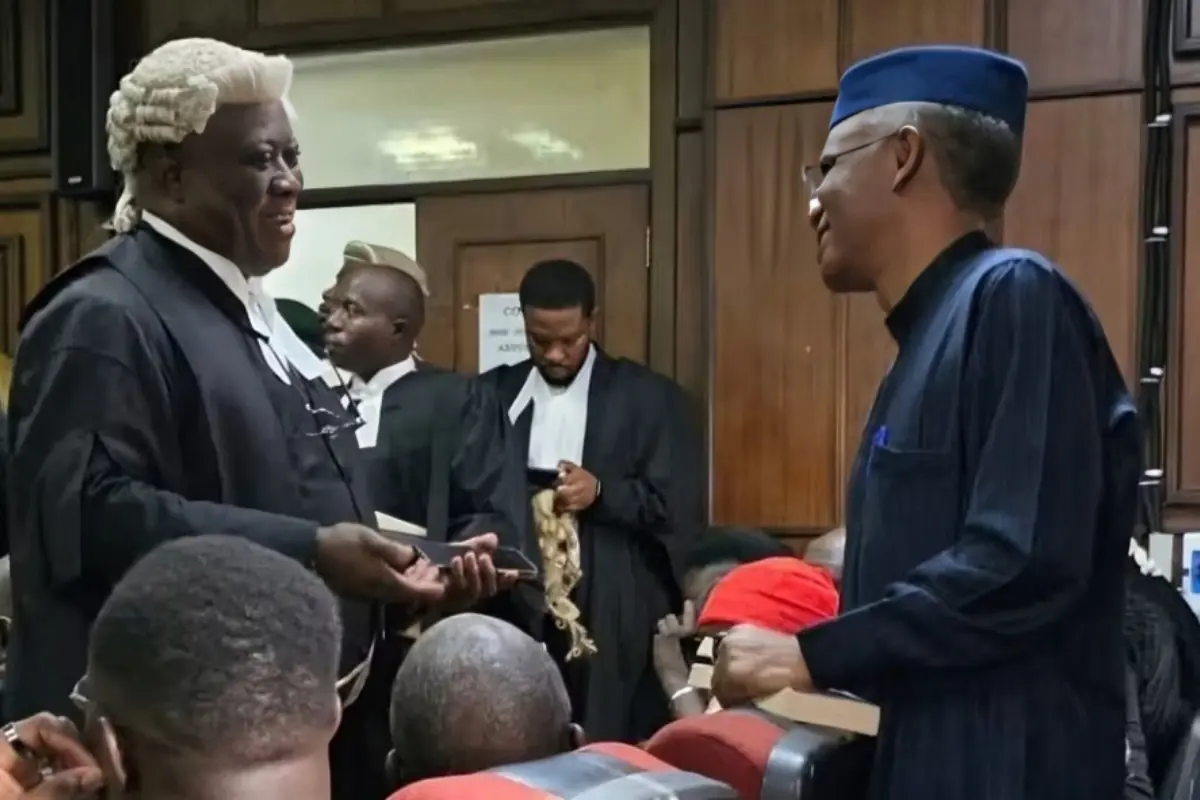
A Federal High Court sitting in Abuja has directed that excerpts of security camera recordings be demonstrated in open court amid an intense legal battle between the Independent Corrupt Practices and Other Related Offences Commission (ICPC) and former Kaduna State Governor, Nasir El-Rufai, regarding alleged curbs placed on his family members while he was held in custody.
Presiding over the matter on Thursday, Justice Chigozie Onah approved an application brought by the ICPC seeking leave to show segments of Closed-Circuit Television (CCTV) recordings. The video material has become central to determining the former governor's N10 billion fundamental human rights enforcement suit against the anti-graft agency. However, the court declined El-Rufai's demand to play the entirety of the recordings publicly, which span over six hours, resolving instead to grant both legal teams 20 minutes each to highlight footage deemed pertinent to their respective arguments.
Judicial Compromise Over Security Footage
In narrowing the presentation of the video evidence, Justice Onah emphasized that the bench would not permit judicial proceedings to devolve into an extended screening session. The judge remarked that the court could not be converted into a "viewing centre" and lacked the luxury of time required to sit through more than six hours of unedited surveillance tape.
The court upheld the submissions of ICPC prosecuting counsel, Yetunde Mosunmola, who warned that broadcasting the complete security recordings in open court could expose vulnerable operational layouts and sensitive infrastructure within the commission's premises. Justice Onah ruled that if reviewing the full archival material became strictly indispensable to resolving the dispute, such a viewing could take place privately in chambers. To maintain decorum and safeguard against overcrowding, the court instructed that the 40-minute demonstration be conducted at 1:00 p.m., an hour when courtroom attendance typically recedes.
Justice Onah also dismissed an application brought by El-Rufai's legal team seeking to issue subpoenas against two ICPC officials for cross-examination regarding affidavits and the compilation of the video exhibits. El-Rufai had pushed to question Sadiq Baba, the official who certified the digital exhibit, and John Uche, a deponent to the anti-graft body's counter-affidavit. The former governor sought to interrogate the criteria behind selecting three specific video segments and uncover why additional surveillance records spanning key periods had not been brought forward.
Turning down the request, Justice Onah reaffirmed that applications initiated under fundamental rights enforcement rules are sui generis and predominantly resolved through affidavit evidence rather than witness cross-examinations. Consequently, the court struck out the application alongside associated reliefs, adjourning the substantive dispute to November 3 at 1:00 p.m. for a definitive hearing.
The N10 Billion Rights Suit and Competing Claims
The substantive suit, designated FHC/ABJ/CS/1852/2026, was commenced on August 13 by legal counsel Ubong Akpan on behalf of El-Rufai. The action lists the ICPC, its Chairman Musa Aliyu, SAN, and the Attorney-General of the Federation as respondents. The former Kaduna chief executive is seeking N10 billion in compensatory damages, contending that the agency unlawfully breached his constitutionally protected liberties by denying his wife, Aichatou Asabe, and his son, Abba El-Rufai, access to him during his detention.
El-Rufai is pursuing nine specific reliefs, chief among them a judicial declaration that his fundamental rights enshrined under Chapter IV of the amended 1999 Constitution remain intact and enforceable despite his detention status, compelling institutional compliance from the ICPC.
Conversely, the ICPC and its leadership maintain that any administrative limits applied during El-Rufai's detention stemmed purely from urgent internal safety concerns rather than deliberate rights violations. In a joint counter-affidavit, John Uche, a Chief Anti-Corruption Assistant attached to the ICPC's Internal Security Support Unit, revealed that the politician was detained pursuant to an order issued by the Federal High Court's Kaduna Judicial Division under charge number FHC/KD/73C/2025.
The Conflicting Incidents at the ICPC Facility
The commission deposed that it arranged a clinical visit on July 7 following a court directive permitting El-Rufai consultations with his personal physician. The consultation involved the former governor, his private doctor, his wife, and supervising ICPC officials. Nonetheless, the ICPC alleged that intelligence reports quickly revealed the medical session had allegedly been converted into an unauthorized political gathering, undermining standard institutional protocol.
Citing this event, the agency maintained that internal access controls were compromised, requiring immediate interim restrictions on non-critical visitations while safety guidelines underwent assessment. Furthermore, the ICPC asserted that Asabe had gained unauthorized access into its detention center at approximately 7:35 p.m. on July 4, well past visiting windows, through the alleged collusion of internal operatives who are now undergoing internal disciplinary reviews. These developments led authorities to temporarily bar her presence, labeling continued unrestricted visits a safety hazard.
Another major dispute between the parties involves an altercation involving El-Rufai's son, Abba, who arrived at the premises on July 7 seeking entry. The ICPC asserted that after guards turned him away, Abba lay down inside an open drainage ditch, repeatedly scraping his leg against the concrete edge. El-Rufai's defense fiercely rebutted that narrative, claiming the video records present an entirely different occurrence.
According to the former governor's analysis, timestamps near 2:53 p.m. allegedly capture security personnel dragging his son, causing his leg to become trapped in the drain, followed by an ICPC operative falling into a ditch around 2:54:55 p.m. El-Rufai maintains that these details flatly contradict the statements contained in the ICPC's counter-affidavit.
Breakdown of Contested Evidence and Footage Demands
The agency tendered the video records on a flash drive marked as Exhibit ICPC B, accompanied by an affidavit from David Efut, a litigation officer in the ICPC Legal Services Department. The commission stated that demonstrating these clips would clarify the exact timeline, establish the identities of those involved, and showcase the conduct of the individuals outside the facility.
| Party | Video Evidence / Exhibits Sought | Primary Legal Argument |
|---|---|---|
| ICPC | Three specific segments: "The Scuffle," "The Son Being Taken Away," and "Unauthorized Entry." | Clips provide necessary clarity on the disputed events while withholding sensitive site architecture. |
| Nasir El-Rufai | Uncut recordings spanning June 7 (7:00 p.m.–11:00 p.m.), July 4 (6:00 p.m.–9:00 p.m.), and July 7 (12:00 p.m.–6:00 p.m.), plus visitor logs. | ICPC selectively extracted clips; withholding full tapes should trigger adverse presumptions under Section 167(d) of the Evidence Act. |
To substantiate his claims of bad-faith suppression, El-Rufai called upon the bench to apply Section 167(d) of the Evidence Act, 2011, which permits a court to presume that evidence withheld by a party holding custody of it would be unfavorable to that party if produced. He maintained that because the ICPC operates the recording equipment, digital storage infrastructure, and entry logbooks, three curated clips could not represent the true state of affairs.
Conclusion
Justice Onah's decision to permit a tightly regulated 20-minute visual presentation for each party strikes a careful balance between preserving institutional security protocols and upholding transparency in fundamental human rights litigation. By declining to summon certifying officers for cross-examination, the court has firmly reaffirmed the summary nature of rights enforcement actions under Nigerian jurisprudence.
When the Federal High Court reconvenes on November 3 for the definitive hearing, the screening of the surveillance tapes will play a pivotal role. The demonstrated recordings are expected to shed light on whether the former governor suffered an unlawful deprivation of familial access, or if the ICPC acted within justifiable administrative powers to preserve internal security.
Reporting based on coverage by The Will Nigeria.
Category: Legal