Can Anyone Other Than Christopher Nolan Shoot a Film Entirely on Imax?
By CelebUD Newsroom —
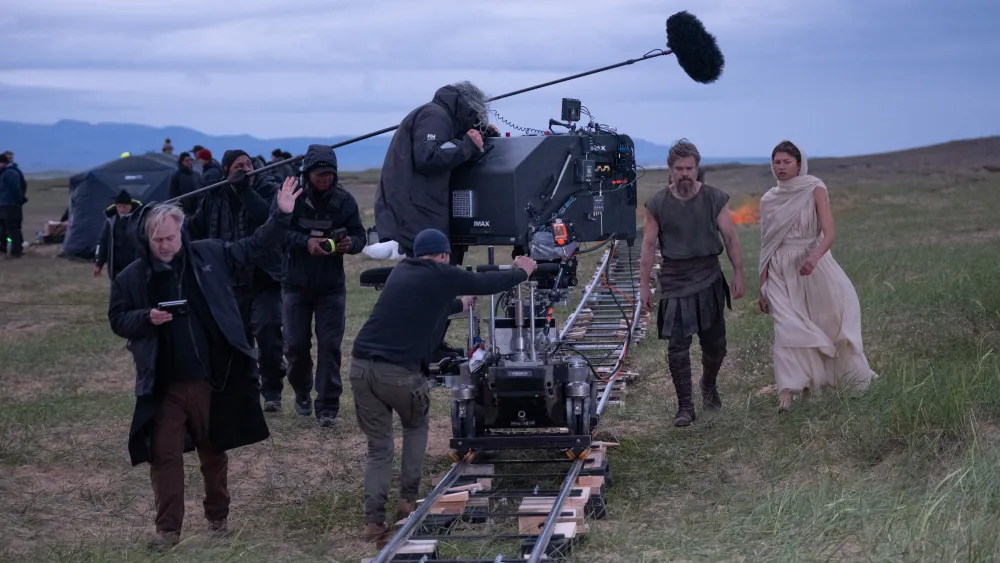
When visionary director Christopher Nolan revealed back in May 2025 that his upcoming epic “The Odyssey” would make history as the first feature film shot entirely using Imax 70mm cameras, he pushed the boundaries of modern cinema technology. That ambitious gamble has delivered massive commercial dividends, with the film sailing toward nearly $650 million globally—including an impressive $140 million on Imax screens alone—while the company's coveted 70mm theatrical showings remain sold out weeks in advance. The sweeping success has prompted a source at Imax to suggest that the film could trigger heightened enthusiasm among other leading filmmakers interested in capturing their entire movies on native Imax celluloid. However, monumental budgets, heavy equipment, and complex technical demands leave Hollywood asking whether any other auteur possesses the resources and technical mastery to accomplish the same feat.
The Technical Hurdles and Staggering Costs of Full Imax Film
Attempting to shoot a full-length blockbuster on analog 70mm Imax film cameras involves financial and operational hurdles that very few Hollywood directors can convince studios to finance. Producing “The Odyssey” required a massive $250 million production budget, establishing it as the most expensive project of Nolan’s career to date. A substantial portion of that capital went directly into physical celluloid acquisition. Raw film stock alone carries a price tag of roughly $1.50 per foot, and because Nolan's production went through approximately two million feet of film, that raw material cost alone added up to roughly $3 million.
In addition to the expense of the raw stock, Imax celluloid cameras are notoriously massive, heavy, and exceptionally loud on set, requiring special soundproofing enclosures known as blimps to deaden motor noise during dialogue scenes. Developing and processing the footage adds further multi-million-dollar line items to production accounting. Producing a single physical 70mm print of “The Odyssey” costs $50,000, with the Imax source pointing out that
“it’s up to the studio how many prints they actually want to create.”
| Production Factor | Standard Digital / Formatted Production | Full Imax 70mm Film Production |
|---|---|---|
| Raw Stock Cost | Negligible digital media storage | ~$1.50/ft (Total ~$3 million for 2M ft) |
| Physical Camera Mechanics | Compact, quiet digital rigs | Heavy, cumbersome, high-decibel motorized cameras |
| Physical Print Unit Cost | Digital Cinema Package (DCP) distribution | ~$50,000 per physical 70mm theatrical print |
| Production Budget Level | Standard tentpole ($100M–$180M) | Requires ultra-blockbuster backing ($250M+) |
Denis Villeneuve and the Call of Large-Format Cinema
Among contemporary directors, Denis Villeneuve stands as one of the most logical contenders to take on an all-Imax film shoot. Villeneuve revealed that a major portion—though not the entirety—of December’s upcoming “Dune: Part Three” was captured on Imax 70mm film stock. Speaking at a trailer event for the film, the director reflected on his choice to blend formats:
“A big part of it was shot in Imax film, which was the first time for me, but I kept the desert in digital because I like the brutality of the digital Imax.”
Villeneuve expressed immense admiration for the visual power of large-format celluloid cameras, stating that
“When you see the result on screen, it’s quite unmatchable,”before adding,
“I hope I will have the chance to do it again.”With Villeneuve slated to helm the newest James Bond installment, the iconic spy franchise could offer him the expansive scale needed to attempt a complete Imax film feature.
Ryan Coogler and Marvel’s Historic Step into 70mm
Another candidate capable of taking on the format is Ryan Coogler. Coogler, collaborating with his trusted cinematographer Autumn Durald Arkapaw, captured select sequences of his blockbuster “Sinners” using a hybrid setup of 15-perf Imax film (yielding a towering 1.43:1 aspect ratio) alongside Ultra Panavision 70 (for a 2.76:1 ultra-wide frame). Coogler is currently preparing Marvel Studios’ superhero tentpole “Black Panther 3”.
During its Hall H presentation at Comic Con, Marvel Studios confirmed that “Black Panther 3” will be partially shot in large format on 70mm film, marking the very first time a Marvel Cinematic Universe film has used that format. While it has not yet been confirmed whether Durald Arkapaw will serve as cinematographer on the project, Imax executives expressed enthusiastic support for Coogler:
“Ryan is an amazing partner. We were deeply involved in ‘Sinners’ and very supportive of that film. He shot sequences on film. We hope that he would do it again without question.”
Addressing whether directors like Coogler or Villeneuve might take on the challenge of filming an entire movie exclusively with Imax celluloid cameras, the source at Imax affirmed the company's hardware readiness:
“We cannot speak at all to whether they’re interested in the challenge of taking it on fully. But we have enough cameras and we have enough blimps that if those guys wanted to do it, we would figure out a way to make it happen.”
Digital Optimization and Diverse Approaches Across Hollywood
Even as native 70mm film remains the gold standard, audience appetite for Imax theatrical experiences has led studios to embrace various hybrid visual strategies. For instance, Michael B. Jordan’s upcoming remake of “The Thomas Crown Affair” was filmed specifically for Imax, meaning the image will be optimized during post-production. Other upcoming releases, including “The End of Oak Street,” “Resident Evil,” and “Digger,” were shot using VistaVision technology and will be presented in Imax auditoriums.
Meanwhile, this spring’s sci-fi release “Project Hail Mary” chose a digital-to-analog approach, filming on Imax-certified digital cameras before Imax struck physical film prints for specialized exhibition. These varying methods demonstrate how Imax accommodates different directorial tastes and financial boundaries.
“As long as we’re able to handle it from like a scheduling perspective in terms of the cameras, and as long we have enough time to work on each production to create the film prints, we’re willing to do as much as people want to do,”the Imax insider noted.
“If people want to create for our format, we do everything within our power to enable them to do that. We try to create a lot of different options so we can serve a variety of different filmmakers.”
Conclusion
Christopher Nolan's box office triumph with “The Odyssey” proves that audiences will pay a premium to experience features shot entirely on 70mm Imax film. However, because raw celluloid expenses run into millions and physical prints add tens of thousands per screen, very few filmmakers command the studio trust needed to justify such enormous budgets. Directors like Denis Villeneuve and Ryan Coogler are continuing to push large-format boundaries in releases like “Dune: Part Three” and “Black Panther 3”. While shooting 100% on Imax film remains a rare commitment, Imax stands fully prepared to supply the cameras and support whenever another filmmaker decides to take on the challenge.
Reporting based on coverage by Variety Entertainment.
Category: Entertainment