Benue Killings: Senate Raises Alarm As 113 Reportedly Die, Demands Urgent Security Action
By CelebUD Newsroom —
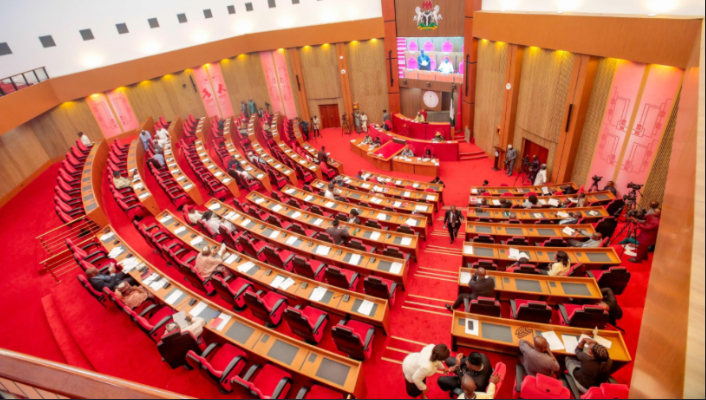
Nigeria's Senate has issued an urgent plea to the Federal Government demanding an immediate escalation of defensive deployments in Benue State after violent rampages left at least 113 people dead across rural settlements in the state's North-East Senatorial District. Among the casualties were six officers of the Nigeria Police Force's Mobile Police unit, underscoring the lethal vulnerability confronting both civilian populations and uniformed detachments in the troubled agrarian belt.
Lawmakers Sound Alarm Over Deepening Crisis
The upper legislative chamber reached the resolution following a motion brought to the floor by Senator Emmanuel Udende, who represents the affected Benue North-East constituency. Udende detailed a grim sequence of coordinated and recurring raids spanning the local government areas of Ukum, Katsina-Ala, and Logo, warning that persistent brutality has devastated local livelihoods, wrecked property, and created a rapidly deteriorating humanitarian crisis.
Addressing the plenary, the lawmaker stressed that the escalating wave of bloodshed has effectively paralyzed rural economies, driven farmers away from their fields, and seeded profound fear among vulnerable inhabitants who now face widespread destitution alongside constant threats of displacement.
“If the security personnel are being killed, what happens to the civilians?”
Seconding the motion, Senator Jide Ikenshagba of Ondo North voiced alarm over the targeting of law enforcement, emphasizing that the lethal threat to state personnel exposes the profound peril facing defenceless locals.
“We have military personnel involved, and we have other security personnel involved. What about the civilians who have no means of defending themselves?”
Breakdown of Casualties Across Affected Communities
The legislative presentation provided a comprehensive accounting of the human toll exacted across several separate incidents within the senatorial district, highlighting attacks targeting residential settlements, transit routes, and rural farming hubs:
| Location / Local Government Area | Targeted Areas / Transit Points | Reported Casualties |
|---|---|---|
| Katsina-Ala LGA | Sai community | 24 deaths |
| Ukum LGA | Bomb and Abojo settlements | 63 deaths |
| Logo LGA | Ayilamo–Tombo Road | 15 deaths (including 6 Mobile Police personnel) |
| Additional Raids | Tse Biligi and Tse Shimiaku (October 8, 2026) | Included in overall toll of 113 |
Udende outlined that the violent sweep began with an assault on Sai in Katsina-Ala Local Government Area, where 24 victims lost their lives. Bloodshed then surged dramatically in Ukum Local Government Area, where assailants struck the neighbouring villages of Bomb and Abojo, claiming 63 lives in a devastating display of force. A subsequent strike unfolded on the transit corridor linking Ayilamo and Tombo in Logo Local Government Area, resulting in 15 fatalities, including the six fallen Mobile Police operatives. The motion further cited attacks directed at Tse Biligi and Tse Shimiaku on October 8, 2026, contributing to the aggregated death toll of 113.
Legislative Demands and Humanitarian Calls
Lawmakers broadly echoed the call for accountability and decisive state intervention. Contributing to the debate, Senator Idayat Oluoti Adebule of Lagos West commiserated with the affected families and extended sympathies to the Nigeria Police Force for the deaths of their operatives.
“It is quite unfortunate that we are still confronting this situation. However, we must not forget the sacrifices made by our security personnel in protecting our communities across Nigeria,”
Adebule maintained that law enforcement and military authorities must double their efforts to hunt down the perpetrators, while urging administrative bodies to swiftly distribute relief supplies to displaced survivors whose dwellings and economic assets were obliterated.
Following comprehensive floor discussions, the Senate formally adopted five core resolutions:
- Formally condemning the killings and associated destruction across Benue North-East.
- Demanding immediate, high-level intervention by the Federal Government to halt future bloodshed.
- Directing security agencies to heighten operational readiness, institute early-warning systems, and apprehend perpetrators.
- Mandating the National Emergency Management Agency (NEMA) to collaborate with the Benue State Emergency Management Agency (SEMA) to deliver emergency food, shelter, and medical relief.
- Observing a solemn minute of silence across the chamber in tribute to the fallen civilians and police officers.
The resolutions explicitly tasked the Inspector-General of Police, the Chief of Army Staff, and the administrative heads of intelligence services with tracking down the armed networks responsible and restoring civil order. In his summary remarks, the Senate President conveyed deep condolences to the bereaved households, praised the contributions of contributing senators, and tasked the relevant Senate committee to maintain oversight and sustained dialogue with service chiefs.
Conclusion
The parliamentary outcry reflects an intensifying urgency within Nigeria's political leadership to curb unchecked violence across key agricultural heartlands. By formally tasking the nation's military, police, and disaster management organs to act in tandem, the Senate has drawn a hard line against rural lawlessness. What happens next will depend on the speed and scale with which federal security agencies mobilize boots on the ground to secure transportation arteries, stabilize farming communities, and ensure justice for the scores of victims cut down in Benue State.
Reporting based on coverage by Leadership Nigeria.
Category: Security