Nigeria needs more bankable projects to attract capital - UNGC
By CelebUD Newsroom —
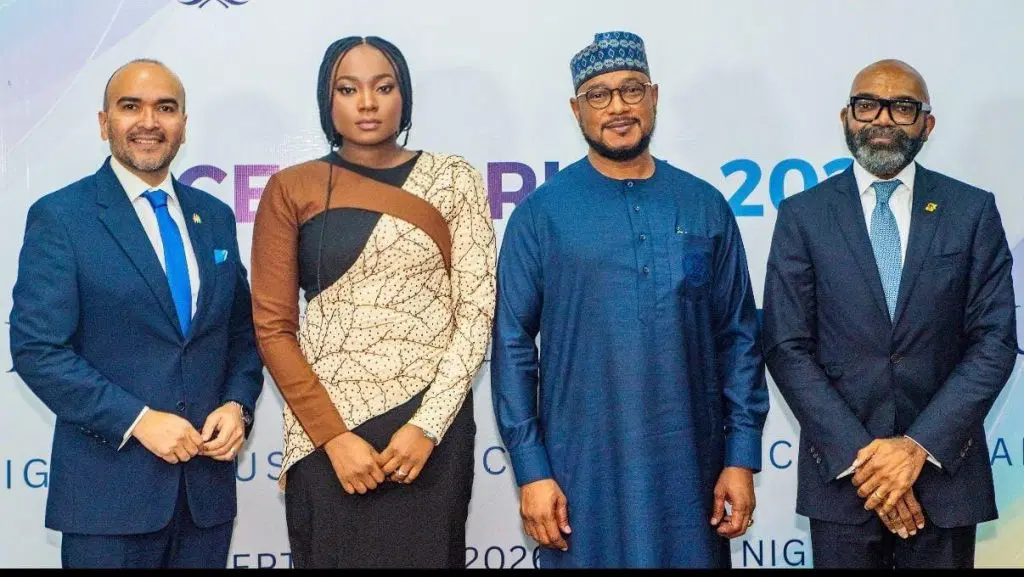
Nigeria's primary economic hurdle is not an absence of investment funding but an acute shortage of structurally viable, bankable ventures prepared to absorb available resources, financial leaders and policy experts declared at the 2026 CEO Forum hosted by the UN Global Compact Network Nigeria in Lagos.
Organised around the theme ‘Financing a Dignified Future: Aligning Capital, Policy and Business Action,’ the summit convened institutional financiers, corporate chief executives, policymakers, and regulatory authorities to establish how high-level commercial strategies and state policies can translate into tangible economic value.
Reframing the Investment Dilemma
Setting the agenda for the gathering, Naomi Nwokolo, Chief Executive Officer and Executive Director of the UN Global Compact Network Nigeria, urged participants to bypass repetitive discussions on structural hurdles and instead target actionable, immediate interventions.
“A dignified future is one in which businesses can grow and remain competitive, entrepreneurs can access capital to scale, workers earn a living wage, communities participate in economic opportunity, and the natural environment is not sacrificed for short-term gain,” she said.
Echoing this call for pragmatic engagement, Maryam Yahaya, Director-General of the North-West Governors Forum, argued that subnational governments must alter how they interact with the private sector. Rather than merely presenting high-level economic potential, Yahaya suggested that public administrations need clear feedback from the private sector regarding specific friction points.
“If it is security, tell us. If it is power, or our processes are too slow, or if a regulation does not make commercial sense, we would like to know,” she said.
Subnational Execution: The Zamfara Example
Presenting a practical framework for investment readiness, Governor Dauda Lawal of Zamfara State outlined how his administration deployed long-term planning and institutional preparation to secure foreign private capital. The state’s strategic blueprint, the 10-year development plan spanning 2025 to 2034, was designed to guarantee policy continuity and regulatory clarity.
Lawal said Zamfara has moved from conceptual pitches to real industrialisation, pointing to the ongoing construction of a lithium extraction and processing plant in Zurumi Local Government Area, funded by Chinese foreign direct investment. Also, the state has partnered with the GCL Group to roll out extensive solar utility projects.
According to the governor, the state's industrial policy deliberately prioritises internal mineral processing, employment creation, local content, and technical skills acquisition over the traditional extraction and export of raw materials.
Lawal emphasised that establishing comprehensive geophysical documentation alongside enhanced security frameworks altered the state's bargaining position, prompting private investors from both China and the United Arab Emirates to initiate project discussions independently. He noted that this systematic restructuring coincided with a major expansion in state finances, reporting that monthly internally generated revenue climbed from roughly N90 million when his tenure began to approximately N45 billion. Complementing these initiatives, an international airport was developed to simplify commercial transit and freight access.
“Don’t wait until the food is ready and then you start rushing. Come, partner and build with us,” Lawal told attendees.
The Absorption Gap: Financial Inclusion and Pension Assets
Addressing domestic liquidity from the banking sector, Ini Ebong, Deputy Managing Director of First Bank of Nigeria, warned that credit availability exceeds the pool of creditworthy enterprises. Ebong rejected the view that expanding financial access represents corporate philanthropy.
“Financial inclusion is not a CSR line item, neither is it charity. It is about building infrastructure,” he said.
Drawing on data from the World Bank’s 2025 Global Findex Report and EFInA, Ebong pointed out deep structural paradoxes in the domestic market: while 84 per cent of Nigerian adults possess mobile handsets and 63 per cent maintain bank accounts, merely 43 per cent save through formal institutions, and only nine per cent access institutional credit.
To address this, FirstBank built an agency banking network comprising 322,000 agents spanning 99 per cent of the federation's local government areas, successfully incorporating over 3.4 million previously unbanked citizens. In 2025 alone, the institution's digital platforms disbursed over N1 trillion in credit, alongside N5 billion deployed via its FirstGem revolving fund across 50,000 female-led accounts. Nonetheless, Ebong noted that micro and small enterprises frequently lack the structural capacity to absorb funds due to poor financial literacy, unseparated business and personal expenses, and inadequate documentation.
“There’s way more capital to be deployed towards lending in Nigeria than there is capacity to absorb it,” Ebong observed.
Adeniyi Falade, Group Chief Operating Officer of Custodian Investment, echoed this position regarding institutional wealth. Falade revealed that while Nigeria's contributory pension system accumulated N32 trillion over two decades, the vast majority remains locked in risk-free sovereign paper rather than productive capital assets.
| Asset Class | Approximate Pension Fund Allocation |
|---|---|
| Federal Government Bonds | ~70% |
| Infrastructure Projects | <3% |
| Real Estate Assets | ~2% |
Falade stated that deploying this institutional pool into productive commercial infrastructure requires intermediaries and promoters to assemble viable, creditworthy structures capable of meeting fiduciary thresholds.
Infrastructure and the Energy Impasse
The imperative for pipeline bankability was equally pronounced in the energy industry. Anthony Youdeowei, Managing Director of Sahara Power Group, referenced research from USAID showing that upgrading an individual distribution grid network to global standards demands an estimated $750 million across a 10-year capital expenditure horizon.
Although Sahara has completed one power generation facility and broken ground on another site within Lagos State, Youdeowei cautioned that generation investments alone cannot resolve chronic electricity deficits without proportional upgrades to distribution lines.
“If the power cannot get to the end consumer, then there really is no point,” he said.
Youdeowei concluded that sustained investment across power infrastructure hinges strictly on cost-reflective tariffs, clear regulatory rules, and commercial contract certainty that assure investors of long-term capital recovery.
Moving past informal family funding
Members of the Nigerian diaspora frequently send money into commercial ventures back home through personal wire transfers to relatives or informal partners, treating capital investments like household remittances. When projects stall or fail to generate returns, investors discover that an absence of corporate filings leaves them without legal protection, enforceable contracts, or recoverable equity.
Applying institutional standards to cross-border ventures provides a safeguard against mismanagement. Diaspora syndicates and individual angels who insist on registered shareholder agreements, formal corporate registration, and staged disbursements tied to documented milestones protect their financial exposure. Holding local partners to these commercial standards also prepares those enterprises to qualify for domestic bank credit and institutional co-investment.
Preparing commercial books for institutional debt
Commercial bank loans in Nigeria carry interest rates that frequently exceed 30 per cent, making traditional borrowing prohibitive for enterprises attempting to expand. At the same time, institutional lenders, development finance institutions, and private credit funds have capital waiting for allocation, but turn away from companies that cannot present clean, third-party audited accounts.
For business directors, qualifying for expansion funds requires a deliberate shift in internal record-keeping. Separating personal finances from corporate accounts, securing audited statements from a registered accounting firm, and registering commercial charges with the Corporate Affairs Commission (CAC) convert an informal business into a recognisable counterparty. Meeting these standards allows commercial ventures to bypass short-term merchant loans in favour of structured, longer-term debt.
Conclusion
The consensus from the 2026 CEO Forum shows a major shift in Nigeria’s economic narrative: the primary barrier to sustainable development is not a shortage of international or institutional capital, but a scarcity of structured, de-risked projects ready to use it. Moving forward, bridging this divide will require public regulators and private project developers to establish robust commercial frameworks, maintain transparent data, and enforce policy stability to convert latent wealth into productive physical infrastructure.
Category: Business