Ghana's 2027 Budget Freezes Taxes and Pledges US$10bn for Jobs
By Tunde Ibrahim Amusa —
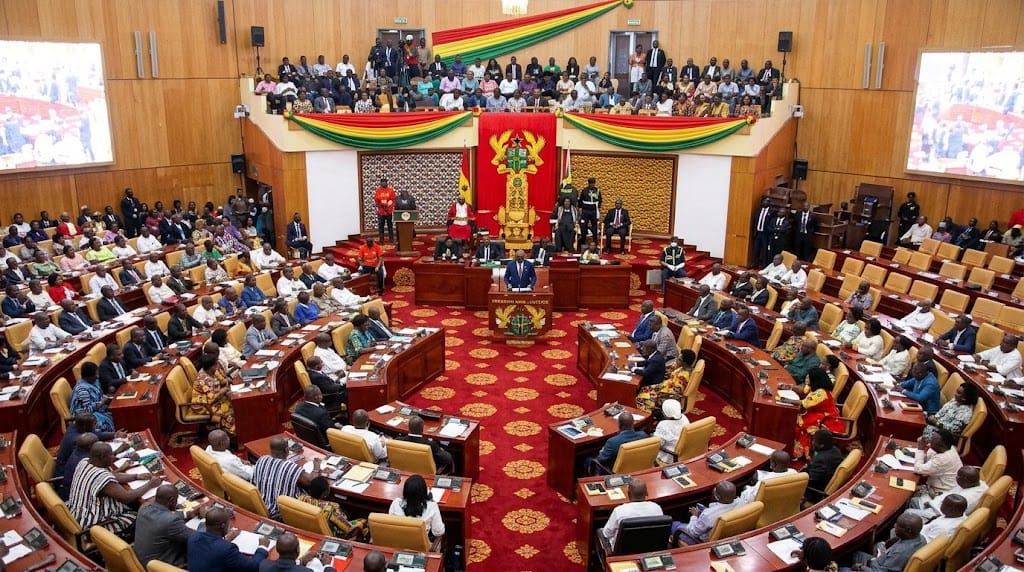
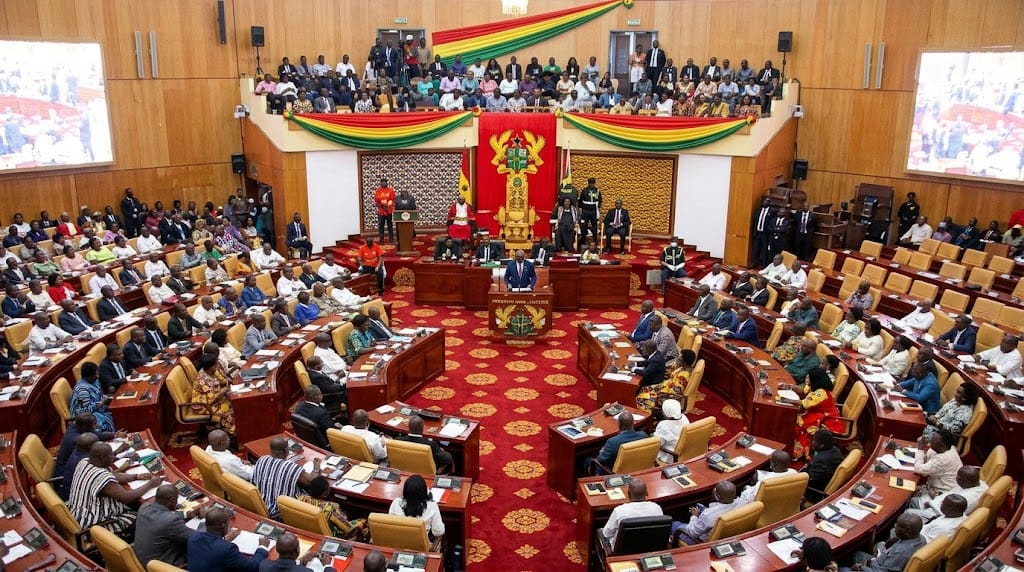
Ghana's government has presented a GH¢389.2 billion national spending plan for 2027 that contains no new taxes and sets aside billions of dollars for domestic production and employment. Presenting the budget statement to Parliament in Accra on 12 November 2026, Minister for Finance Dr Cassiel Ato Forson announced that the state will lean on tighter revenue collection, domestic spending discipline, and a four-year, US$10 billion economic plan to lift growth rather than imposing extra levies on workers and employers.
The policy document, titled The New Economy, New Ghana, Jobs and Prosperity, arrives four months after Ghana formally concluded its three-year, US$3 billion extended credit facility with the International Monetary Fund (IMF) in July 2026. Having arrested the severe currency depreciation and inflation spikes that peaked above 54 per cent in late 2022, the government is attempting to pivot from debt stabilization to factory floors, farms, and industrial payrolls.
The No-New-Taxes Policy: How Revenue Will Be Raised
Government revenue projections for 2027 stand at GH¢323.4 billion, equivalent to 17.9 per cent of gross domestic product (GDP), against expenditure of GH¢389.2 billion (21.6 per cent of GDP). To bridge this gap without raising statutory tax rates, the Ministry of Finance is targeting administrative leakages and tax avoidance.
The fiscal package continues a policy direction begun in 2025, which saw the abolition of several contentious domestic levies. These included the Electronic Transfer Levy (E-Levy), the withholding tax on betting and lottery winnings, the COVID-19 Health Recovery Levy, the vehicle emissions tax, and value-added tax on motor vehicle insurance. Rather than reversing those cuts to strengthen state coffers, the treasury plans to expand the tax net through automated compliance tools, including artificial intelligence inspection systems installed at the Port of Tema to curb undervaluation of imports.
Provisional figures for the first ten months of 2026 provided the basis for the government's stance. Domestic revenue reached GH¢218.2 billion between January and October 2026, running 4.1 per cent above target, while total expenditure on a commitment basis was held 7.6 per cent below budget ceilings. Officials argue that fair collection of existing liabilities yields higher revenue than piling new charges onto compliant firms.
Inside the US$10 Billion New Economy Programme
The centrepiece of the 2027 fiscal agenda is the New Economy programme, an investment framework designed to deploy US$10 billion between 2027 and 2030. In 2027 alone, an initial allocation of GH¢30 billion (roughly US$2 billion) will enter the system. President John Dramani Mahama has stated that the programme will rely entirely on domestic resources and petroleum receipts, avoiding new external commercial loans.
The programme targets import substitution and domestic value addition across nine designated sectors:
- Commercial Agriculture and Agro-processing: Allocated US$3 billion across the four-year window to expand output of rice, poultry, maize, sugar, and aquaculture, reducing Ghana's annual US$2 billion food import bill.
- Textiles and Garments: Capital support for export-ready apparel plants capable of absorbing large numbers of school leavers and urban workers.
- Pharmaceuticals and Vaccines: Funding to establish domestic manufacturing capacity for essential medicines, lowering dependence on imported active ingredients.
- Strategic Mineral Processing: Processing raw gold, bauxite, and lithium within Ghanaian borders before export to retain greater revenue inside the country.
- Energy Infrastructure: Upgrading transmission lines and gas distribution networks to lower industrial power tariffs.
- Tourism, Creative Arts, and Digital Technology: Direct capital for digital service hubs, software enterprises, and cultural tourism facilities.
The New Economy programme is state-financed, distinct from the administration's companion 24-Hour Economy policy. The latter relies on private businesses receiving tax rebates, off-peak power discounts, and security support to operate multiple shifts around the clock.
Macroeconomic Targets for 2027
Ghana's macroeconomic framework reflects moderate growth and continued fiscal repair after the sovereign debt restructuring of 2023 and 2024. The key targets outlined to lawmakers are summarised below:
| Indicator | 2026 Outturn / Projection | 2027 Target |
|---|---|---|
| Overall Real GDP Growth | 4.8 per cent | At least 5.2 per cent |
| Non-Oil Real GDP Growth | 5.0 per cent | 5.7 per cent |
| End-Year Inflation | 5.2 per cent (Sept 2026) | 8.0 per cent (±2 per cent) |
| Overall Budget Deficit (Cash) | 4.0 per cent of GDP | 3.6 per cent of GDP |
| Primary Balance (Commitment) | Surplus of 0.8 per cent | Surplus of at least 0.5 per cent |
| Gross International Reserves | 4.3 months import cover | At least 6.0 months import cover |
| Early Debt Redemptions | Regular debt service | GH¢29bn domestic / US$ Eurobond tranche |
Debt Relief and the Balance Sheet Clean-Up
To rebuild investor trust following the domestic debt exchange programme (DDEP), the Ministry of Finance announced an early redemption fund of GH¢29 billion for domestic bonds maturing in February 2027. An additional external settlement will retire outstanding Eurobond obligations before the end of 2026, taking total advance debt cancellations past GH¢36 billion.
This early repayment strategy aims to inject liquidity back into local commercial banks, insurance firms, and pension trustees. Yields on benchmark 91-day Treasury bills have fallen from 29 per cent down toward single digits over the past eighteen months. Lower sovereign yields mean commercial banks face less incentive to park surplus cash in government paper, opening credit channels for private companies at interest rates near 13 per cent.
Direct Impact on Ghanaian Households
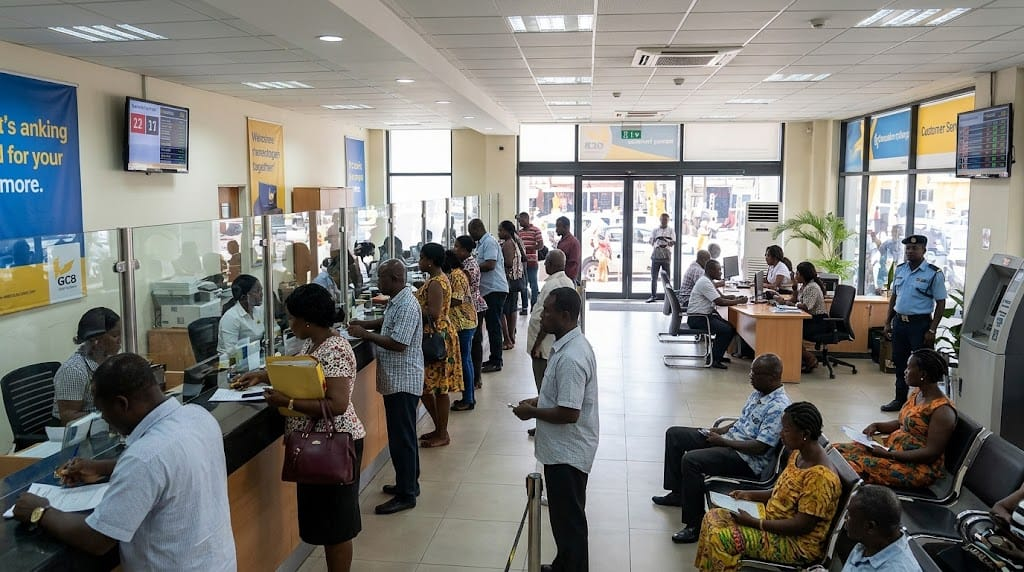
For working families, the budget offers stability in direct tax deductions. By freezing income tax bands and maintaining the zero-rate on mobile money transfers, everyday financial transactions remain untouched by new statutory levies.
The government has also directed GH¢3.5 billion toward youth enterprise and skills training, alongside a GH¢750 million seed allocation for a Young Entrepreneurs Microcredit institution. These funds provide micro-loans to trade apprentices, polytechnic graduates, and artisanal collectives. In tandem, the Women's Development Bank (WDB), initially funded with GH¢401 million, will expand retail loan operations in 2027 to finance women-led trading enterprises and cooperative food vendors.
Cost-of-living pressures will nonetheless depend on how retail food and utility tariffs move. While headline inflation dropped sharply during 2026, commercial transport fares, piped water, and electricity tariffs remain elevated. The state's plan to fund major transit links, including the complete construction of the dual-carriageway Accra-Kumasi Expressway from petroleum revenues, seeks to cut transport times between Ghana's two biggest commercial hubs, lowering freight charges over the medium term.
What Businesses and Cross-Border Traders Can Expect
Corporate leaders have welcomed the absence of fresh levies. Associations such as the Ghana Union of Traders Association (GUTA) noted that the decision gives manufacturers, retailers, and distributors operational certainty. Companies operating in West Africa often face mid-year tax reviews and emergency levies; the predictable fiscal framework allows businesses to set capital expenditure budgets for the full calendar year.
For cross-border traders and importers, trade conditions remain mixed. While import duty schedules remain unchanged, shipping agents and freight forwarders continue to voice concern over harbour charges, inspection costs, and currency conversion fees applied at coastal terminals. Importers trading between Ghana, Nigeria, Togo, and Ivory Coast will benefit if the cedi sustains the relative stability achieved in late 2026, which curbed the erratic pricing cycles that damaged regional commerce in earlier years.
Parliamentary Criticism: Fees, Charges, and Spending Credibility
The 2027 budget has faced opposition scrutiny inside Parliament. Lawmakers from the minority caucus, led by Ranking Member on the Finance Committee Dr Mohammed Amin Adam and Minority Leader Alexander Afenyo-Markin, argued that the executive's claim of introducing no new taxes ignores steep increases in non-tax revenue lines.
The minority highlighted that projected state revenue from administrative fees, departmental levies, and regulatory permits rises from GH¢1.3 billion to GH¢6.1 billion in 2027, an increase of over 350 per cent. Opposition MPs argue this surge will raise the out-of-pocket cost of routine public services, such as driver licence renewals, passport applications, vehicle registrations, and corporate filings, offsetting the benefits of steady tax rates.
Questions also surround the feasibility of funding an annual GH¢30 billion New Economy package without foreign borrowing. While the executive points to disciplined state payroll spending, cuts in political office expenses, and petroleum revenues, analysts will monitor whether domestic tax collections can meet the GH¢320.2 billion internal revenue target if cocoa yields or global oil prices encounter volatility.
Conclusion
Ghana's 2027 Budget represents an attempt to leave behind years of severe fiscal adjustment and steer public finances toward domestic production. By freezing statutory tax rates, retiring GH¢29 billion in domestic debt early, and directing US$10 billion toward local industry and agriculture, the government aims to give households breathing room and businesses cheaper credit. Delivering on these promises will depend on whether revenue agencies can plug customs leakages without increasing the cost of ordinary state services, and whether state-funded factories can generate lasting payrolls across the country.
Sources
- Ministry of Finance, Republic of Ghana: The 2027 Budget Statement and Economic Policy
- Graphic Online: No New Tax in 2027 Budget - Government Targets GH¢389.2bn Spending
- CitiNewsroom: Inside the US$10bn New Economy Programme in 2027 Budget
- GhanaWeb: 10 main points from Ghana's 2027 budget presentation
- International Monetary Fund: Ghana Country Reports and Post-Arrangement Monitoring
Disclaimer: This article reflects public policy announcements and budget proposals presented to the Parliament of Ghana in November 2026. Fiscal targets, legislation, and implementation schedules remain subject to parliamentary debate and macroeconomic developments.
Category: Business