Nigeria's ₦70,000 Minimum Wage and the Growing Push for a Fresh Review
By Gbenga Ayandare —
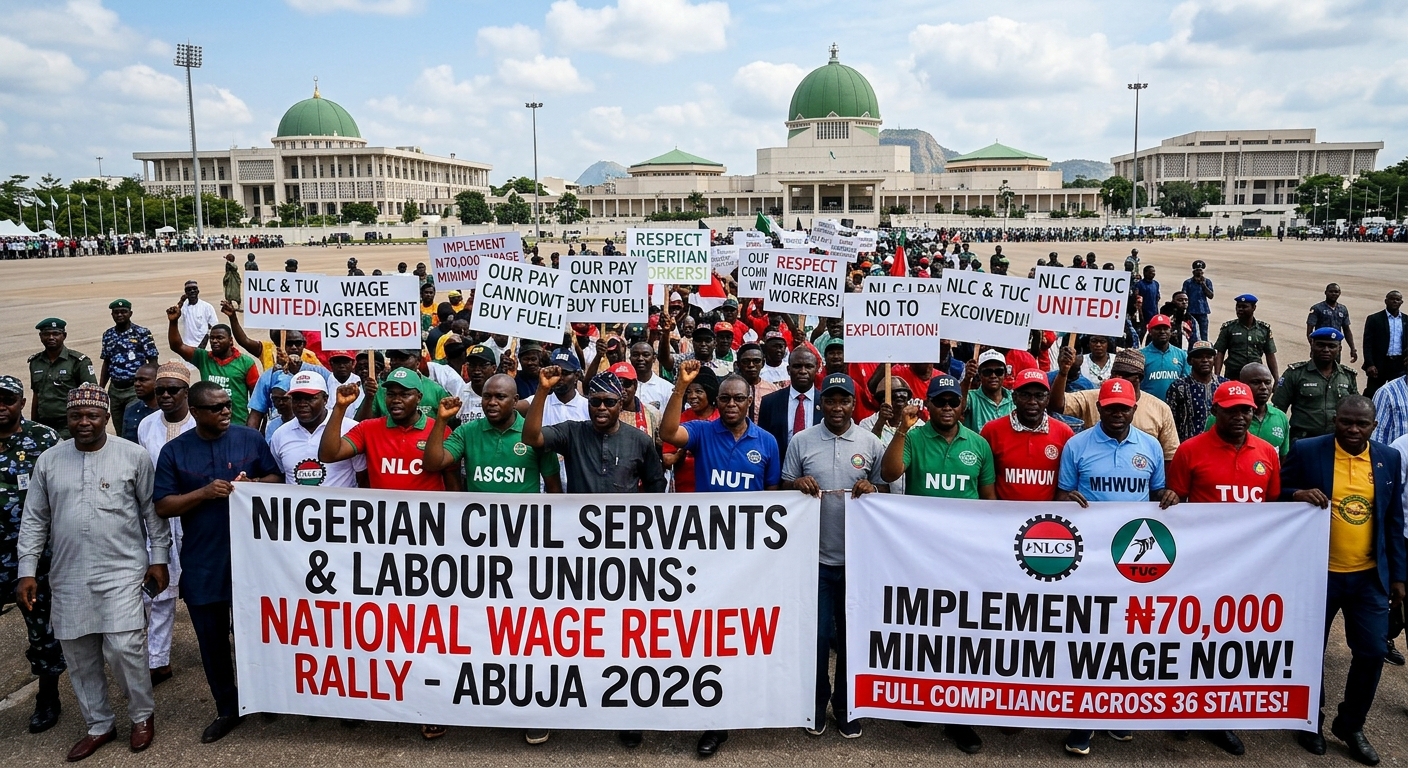
When President Bola Tinubu signed the National Minimum Wage Act into law on 29 July 2024, the legislation raised Nigeria's statutory wage floor from ₦30,000 to ₦70,000 per month. The reform also shortened the mandatory review cycle from five years to three. At the signing table, government negotiators described the figure as a realistic compromise that public treasuries and private employers could fund. Organised labour accepted the sum after months of tense strikes and tripartite committee sessions.
That settlement did not hold for long. Rapid price increases across Nigeria have wiped out the purchasing power that the statutory hike was meant to provide. Premium motor spirit, commonly known as petrol, rose past ₦1,000 per litre across major distribution centres following the removal of fuel subsidies and changes in state pricing policies. Food costs, utility charges, and intra-city transit fares climbed at comparable rates. As a result, the Nigeria Labour Congress (NLC) and the Trade Union Congress (TUC), alongside affiliate public sector unions, have opened fresh campaigns demanding an accelerated wage review well ahead of the expected 2027 statutory window.
The Breakdown of the ₦70,000 Baseline
The 2024 Act marked a nominal increase of 133 per cent over the ₦30,000 benchmark established in 2019. In foreign exchange terms, however, the sum told a different story. In 2019, ₦30,000 converted to approximately $83 at prevailing official rates. By late 2024 and through 2026, ₦70,000 converted to between $42 and $46, depending on currency fluctuations in the Nigerian foreign exchange market. For international observers and Nigerians abroad sending money home, the statutory wage remains among the lowest in nominal dollar terms across mid-sized African economies.
At the household level, the income disappears within days. In Lagos, Abuja, or Port Harcourt, an entry-level worker using public transport to commute five days a week frequently spends between ₦30,000 and ₦45,000 every month on bus and commercial tricycle fares alone. A standard 50-kilogramme bag of local rice surpassed the entire monthly minimum wage in late 2024, trading between ₦85,000 and ₦105,000 depending on regional supply chains. As basic survival costs outstripped basic pay, the real value of the wage agreement fell below the standard it replaced.
The Push for Early Talks and Higher Demands
Under the amended law, wage negotiations occur on a three-year cycle. Government officials have argued that the next formal round of tripartite negotiations should conclude in 2027. Union leaders reject that timetable. In November 2026, the Association of Senior Civil Servants of Nigeria (ASCSN) called on the Federal Government to raise the entry-level salary for federal employees to ₦300,000 per month, pointing out that piecemeal allowances fail to keep workers above the poverty line.
The NLC leadership has insisted that because the May 2024 effective implementation date backdated the agreement, preparatory talks for the next phase should begin immediately. The Federal Government attempted to ease immediate discontent by approving a temporary ₦70,000 monthly transport allowance for federal workers spanning six months, paired with commitments to resolve outstanding arrears in the health and civil service sectors. Yet differences between union federations over whether to accept stopgap cash awards or insist on an immediate statutory baseline adjustment have exposed growing friction on both sides of the negotiating table.
| Jurisdiction or State | Approved Monthly Wage Benchmark | Implementation Status | Selected Local Conditions |
|---|---|---|---|
| Federal Government | ₦70,000 | Fully implemented | Temporary transport allowances added to basic pay |
| Lagos State | ₦85,000 | Fully implemented | Commitment announced to raise rate toward ₦100,000 |
| Rivers State | ₦85,000 | Fully implemented | Funded through strong internal revenue generation |
| Imo State | ₦104,000 | Partially implemented | Broad public salary restructuring across state ministries |
| Bayelsa State | ₦80,000 | Fully implemented | Supported by derivation revenues from crude oil |
| Benue State | ₦75,000 | In progress | Delays reported in local government council payments |
| Agrarian Northern States (Sample) | ₦70,000 | Uneven / Delayed | Primary school teachers and local staff face backlogs |
Disparities Across the 36 States
The ₦70,000 minimum wage exposed deep financial divides between Nigeria's subnational governments. Nigeria operates a federal system where state governments derive monthly allocations from the Federation Account Allocation Committee (FAAC), alongside internally generated revenue (IGR). When crude oil earnings and customs duties fell in real terms, several states lacked the fiscal space to absorb substantial payroll expansions without curtailing capital expenditure.
States with high domestic commercial activity or derivation funds moved above the federal standard. Lagos and Rivers set their baselines at ₦85,000, while Imo announced a benchmark of ₦104,000 for state civil servants. Edo, Bayelsa, and Akwa Ibom also committed to sums ranging from ₦80,000 to ₦100,000. These announcements reflected local fiscal health, but they created geographic disparities across the country.
In several inland and northern states, compliance remains incomplete. Union branches in Yobe, Zamfara, Taraba, and Sokoto have reported that while state civil servants received adjusted figures, workers in local government secretariats and primary healthcare clinics continued to receive previous pay grades. The failure to apply the statutory wage to municipal staff has resulted in strike notices and public demonstrations, complicating organised labour's campaign for another national rise.
Economic Consequences of a Second Rise
Raising the minimum wage again would trigger distinct shifts across Nigeria's economic structure, affecting workers, employers, and fiscal balances in conflicting ways.
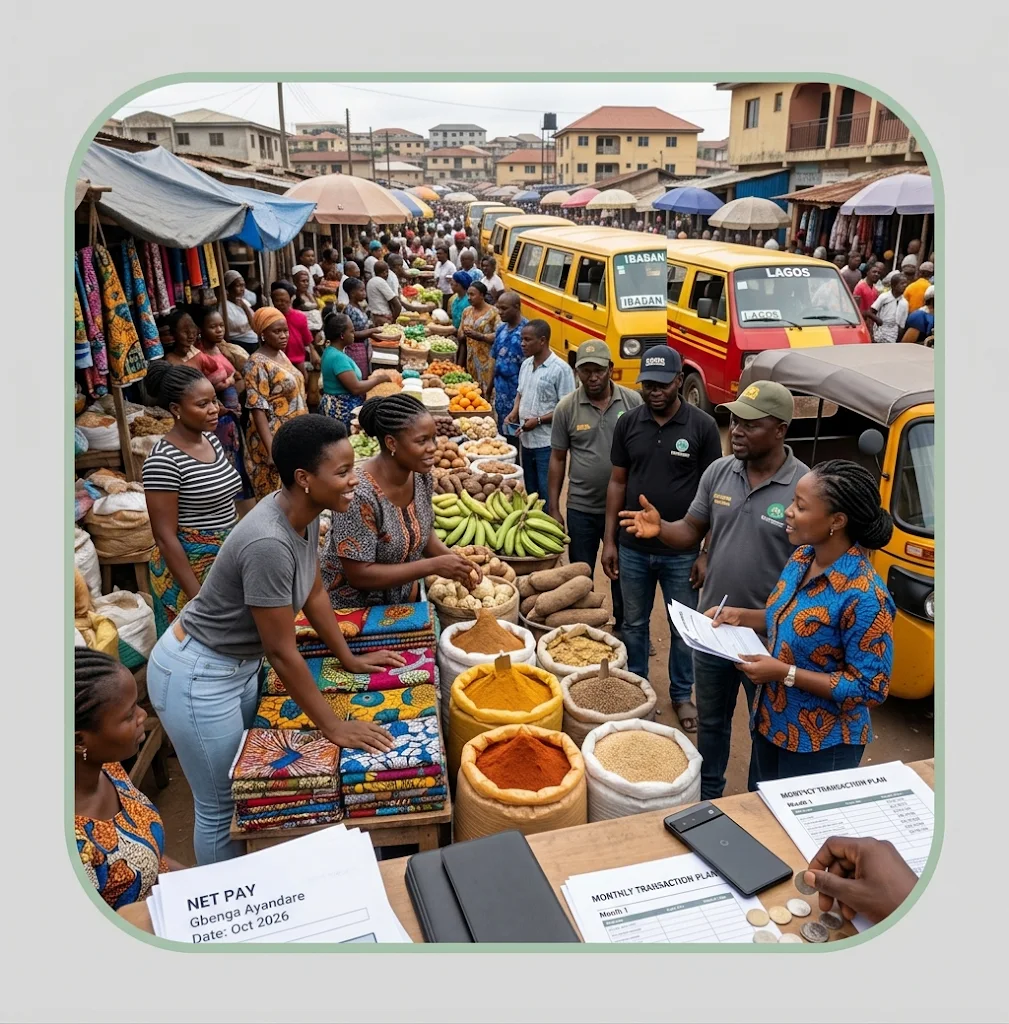
- Aggregate Demand and Local Commerce: Low-income households spend nearly their entire earnings on non-discretionary goods, including food, clothing, clean water, and transport. An increase in take-home pay puts liquidity directly into local retail markets, supporting agricultural producers, informal vendors, and neighbourhood traders.
- Subnational Fiscal Strain: State governments that rely almost entirely on FAAC disbursements face rigid budget limits. If statutory minimum wages rise toward ₦100,000 or higher without an expansion of state tax collection, regional administrations may resort to commercial borrowing or freeze public sector recruitment. In extreme scenarios, unpaid wage arrears could accumulate, repeating the salary crises observed between 2015 and 2018.
- Private Sector Compliance and the Informal Economy: Large manufacturing corporations and banks can manage structured pay adjustments, but small and medium enterprises (SMEs) face higher operating costs. Electricity tariffs under the Band A distribution tier and private diesel generation already consume high operating margins. A sharp rise in legal wage floors risks driving marginal employers into the informal economy, where labour laws and safety standards are difficult to enforce.
- The Wage-Price Spiral: Nigeria's headline inflation rate has spent prolonged periods above 30 per cent. Orthodoxy among central bankers suggests that increasing nominal incomes without an equivalent rise in domestic productivity leads retailers and landlords to lift prices immediately, neutralising the wage gains. Conversely, labour economists maintain that current inflation stems from structural import dependence, transport bottlenecks, and currency shifts, rather than excessive consumer wages.
The Global Ripple Effect and Diaspora Finances
The domestic wage debate directly shapes Nigeria's financial links with the world. Over five million Nigerians live abroad, concentrated in the United Kingdom, the United States, Canada, and various European and West African countries. Remittances sent through formal and informal corridors total billions of dollars each year, functioning as an essential private social safety net.
When domestic wages fail to cover basic costs, working professionals in the diaspora experience increased remittance obligations. Extended families turn to relatives overseas to pay for medical emergencies, school tuition, generator maintenance, and monthly food provisions. An enforceable domestic minimum wage that provides real subsistence helps stabilise family finances in Nigeria, reducing the daily welfare demands placed on diaspora earners who are managing their own rising living costs in cities such as London, Toronto, and Houston.
Conclusion
Nigeria's ₦70,000 statutory wage, secured after protracted negotiations in mid-2024, has struggled to survive the reality of double-digit inflation and higher energy costs. As the Nigeria Labour Congress, the Trade Union Congress, and professional civil service unions push for earlier talks, the central challenge remains unchanged: nominal wage increases do not protect living standards unless the macroeconomic environment protects the purchasing power of the naira. For state governors, private businesses, and millions of workers, the debate over a fresh wage review is not merely an argument over salary tables, but a struggle to determine how the costs of national economic reform are shared.
Sources
- National Assembly of Nigeria – National Minimum Wage (Amendment) Act 2024
- National Bureau of Statistics (NBS) – Consumer Price Index and Inflation Reports
- Federal Ministry of Labour and Employment – Official Communiqués on Minimum Wage Negotiations
- Nigeria Labour Congress (NLC) – National Executive Council Resolutions and Statements
- Central Bank of Nigeria (CBN) – Economic and Financial Indicators
Disclaimer: This article provides journalistic reporting and economic analysis based on available public records and statements. It does not constitute legal or financial advice.
Category: Business