Dual listings playbook raises hard questions for OPay
By CelebUD Newsroom —
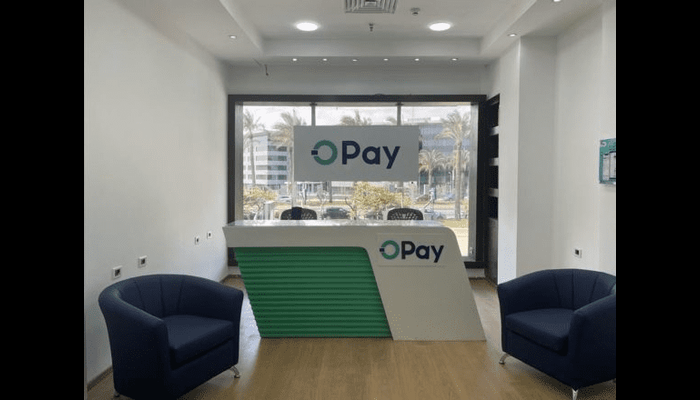
When financial technology powerhouse OPay Limited unexpectedly terminated its underwriting agreement and paused its anticipated Initial Public Offering (IPO) on the New York Stock Exchange (NYSE), corporate communications teams moved quickly to manage the fallout. The payment provider cited an emerging regulatory inquiry in a jurisdiction it described as immaterial to its central operations, expressing confidence that the issue would soon be untangled. However, following deliberations with its underwriting consortium, leadership decided that delaying the debut was the most cautious move. The planned sale of American Depositary Shares (ADS) under the proposed ticker symbol OPAY—targeting an ambitious valuation of approximately $4 billion—was abruptly frozen, leaving market observers and domestic capital regulators questioning whether the company's cross-border listing approach was flawed from the beginning.
The Stalled Wall Street Debut and Unanswered Questions
In its communication, OPay emphasised that its fundamental operations across Nigeria and other operating regions were completely insulated from the pause. The company reiterated an unwavering commitment to the Nigerian market, pointing out that its day-to-day services, millions of active users, and massive agency-banking footprint face zero disruption. Nevertheless, the development triggered widespread discussions among asset managers, market analysts, and regulatory bodies across Lagos.
The central question lingering across capital markets is structural: why would a payments institution whose core user base, transaction volume, and operational growth are almost entirely anchored in Nigeria prioritise a foreign primary listing over a local debut? In the first half of 2026, nearly 90 percent of OPay’s overall revenue came directly from Nigeria. Despite this overwhelming reliance on the local economy, the company’s regulatory disclosures—specifically its Form F-1 filed with the U.S. Securities and Exchange Commission (SEC)—outlined a sequence where an international debut came first, while a secondary entrance onto the Nigerian Exchange Limited (NGX) was treated as secondary, conditional on future market dynamics and local approvals.
Furthermore, OPay explicitly cautioned in its regulatory paperwork that shares traded in New York and any future securities in Lagos might not enjoy immediate fungibility. This disclosure flagged potential risks of liquidity fragmentation and fluctuating price disparities between both trading floors, casting doubt on whether retail and institutional Nigerian investors would reap fair value from the tech giant's milestone.
The Established Dual-Listing Playbook
OPay's choice to pursue Wall Street before establishing domestic trading directly contrasts with the proven path pioneered by corporate giants rooted in Nigeria. Over the past decade, three major entities—Seplat Energy Plc, Airtel Africa Plc, and Guaranty Trust Holding Company Plc (GTCO)—demonstrated that domestic and international capital can be courted concurrently without detaching from domestic roots.
| Company | Listing Date | Primary / Dual Mechanism | Capital Raised / Valuation |
|---|---|---|---|
| Seplat Energy | April 2014 | Simultaneous ordinary shares on NGX and London Stock Exchange (LSE) | Raised ~$535 million; valued at ~$1.9 billion |
| Airtel Africa | June 2019 | Primary IPO on LSE, followed weeks later by NGX listing | Raised ~$750 million globally |
| GTCO | July 2025 | Simultaneous ordinary shares on NGX and LSE main market | International capital raise of ~$105 million |
| OPay | Shelved (2026) | Primary NYSE IPO with conditional, later NGX secondary listing | Targeted ~$4 billion valuation |
In April 2014, Seplat made financial history by listing ordinary shares simultaneously on both the NGX and the London Stock Exchange, securing $535 million in capital and attaining a valuation near $1.9 billion. A decade on, NGX Group Chief Executive Temi Popoola praised the transaction as the market's defining operational landmark of the modern era, pointing to the sustained liquidity, expanded investor trust, and durable valuation multiples that the dual arrangement produced.
Similarly, telecom operator Airtel Africa executed a closely sequenced approach in June 2019, conducting an international IPO on the LSE that raised roughly $750 million before completing an NGX listing just weeks afterward. That inclusion quickly transformed Airtel into one of the Nigerian bourse's most heavily weighted assets, giving domestic retail and institutional investors direct participation in a corporate engine powered by local mobile airtime and data consumption.
More recently, in July 2025, GTCO advanced the framework by becoming West Africa’s first major banking group to list ordinary shares simultaneously on the NGX and the main market of the LSE. Accompanied by an offshore capital injection of approximately $105 million, GTCO terminated its traditional global depositary receipts (GDRs) in favour of direct ordinary shares, cementing the perspective that established African businesses do not need to abandon local capital markets to draw serious foreign investment.
Domestic Realities Versus Foreign Valuation Ambitions
The decision by OPay to pursue a global-first pathway rather than this balanced dual model drew criticism long before the sudden underwriting termination. Market analysts stress that the mechanics of African financial services require investors who grasp local operational nuances, such as daily cash-to-digital conversions, USSD technology reliability, local currency dynamics, and fierce rivalry with peers like Moniepoint and PalmPay.
“The Nigerian capital market has attained a level of depth and sophistication where companies with strong domestic fundamentals can successfully raise capital locally,” said David Adonri, vice chairman of Highcap Securities. “For a company like OPay, whose operations, customer base and revenue are substantially rooted in Nigeria, a domestic listing would provide stronger alignment between the business and the investors who best understand its market realities.”
Adonri points out that institutions such as local pension funds, insurance providers, and domestic investment banks are uniquely suited to value Nigerian financial services accurately. Offering local ordinary shares also invites everyday users and field agents to purchase equity, turning loyal platform users into institutional advocates and mitigating customer attrition.
Compounding these valuation questions is the complex international lens placed on OPay's ownership foundation. Founded by Chinese entrepreneur Zhou Yahui and backed by international investment vehicles including Japan's SoftBank, the fintech has routinely encountered heightened Western regulatory scrutiny concerning data governance, cybersecurity, and global financial linkages. While OPay has not tied its current regulatory pause to these specific geopolitical concerns, analysts caution that relying exclusively on a Western exchange leaves an African-focused company exposed to external political and regulatory pressures that a strong home-market presence can mitigate.
The issue has caught the attention of leadership at the exchange. In discussions with the Nigerian Presidency earlier in 2026, NGX Group's Popoola urged high-growth fintechs to build domestic value, highlighting that value created through domestic infrastructure should yield returns for local citizens:
“While we encourage free and open markets, let’s make sure our locals can also benefit. As they list abroad, they should also list in our country.”
The Track Record of Pure Offshore Listings
Precedents for African-operating platforms executing pure offshore listings without a local exchange partner offer mixed signals. E-commerce operator Jumia made a high-profile debut on the NYSE but opted out of an NGX dual-listing, while telecom infrastructure provider IHS Towers pursued an identical path to New York while keeping its stock inaccessible on the Nigerian bourse. Neither entity captured the regulatory insulation or domestic retail backing enjoyed by dual-listed peers like Seplat or Airtel Africa, who weathered broader emerging-market volatility through shared local and foreign liquidity pools.
What this means for the diaspora looking to invest in African tech
For many Nigerians living in Canada and the wider diaspora, high-profile Wall Street listings offer the easiest way to invest in home-grown African tech. With accounts on North American platforms like Wealthsimple or Questrade, buying an American Depositary Share on the New York Stock Exchange feels far simpler than navigating Nigerian stockbroker accounts, foreign exchange restrictions, or local tax filings. When OPay announced its plans to list in New York, it promised a direct route to back one of West Africa’s fastest-growing fintechs using Canadian or US dollars.
However, OPay’s sudden pause highlights the hidden friction of investing in Africa-dependent businesses exclusively through Western exchanges. Despite generating nearly 90 percent of its revenue in Nigeria, pure offshore plays like Jumia and IHS Towers have historically shown that foreign listings disconnected from local exchanges can struggle with regulatory scrutiny, valuation disconnects, and market volatility. OPay itself noted that any future Lagos shares might not be immediately interchangeable with New York shares, creating risks of fragmented liquidity.
If you are looking to build wealth by investing in African innovation from Canada, this delay is a reminder to look closely at listing structures. Are the companies you back bridging capital between home and abroad like Seplat or GTCO, or are they relying entirely on offshore appetite that might cool when regulatory headwinds hit?
Conclusion
OPay's decision to step away from its NYSE underwriting agreement represents more than a routine delay caused by offshore red tape; it provides an opportune crossroads. By pausing its initial plan, OPay now has an opening to reassess its path forward. Structuring a concurrent domestic listing on the NGX—or listing locally before reviving an international push once regulatory inquiries are cleared—would re-align the platform with proven capital market blueprints.
Such a pivot would reassure domestic regulators, win back the support of local asset managers, and dismantle criticisms that Nigerian consumers were being treated merely as transaction sources rather than eventual shareholders. How OPay moves to recalibrate its public-listing timetable over the coming months will demonstrate whether the fintech view of Nigeria remains a short-term commercial theatre or the genuine foundation of its long-term corporate identity.
Reporting based on coverage by BusinessDay Nigeria.
Category: Business