Everything new coming to Meta's AI agent Muse
By CelebUD Newsroom —
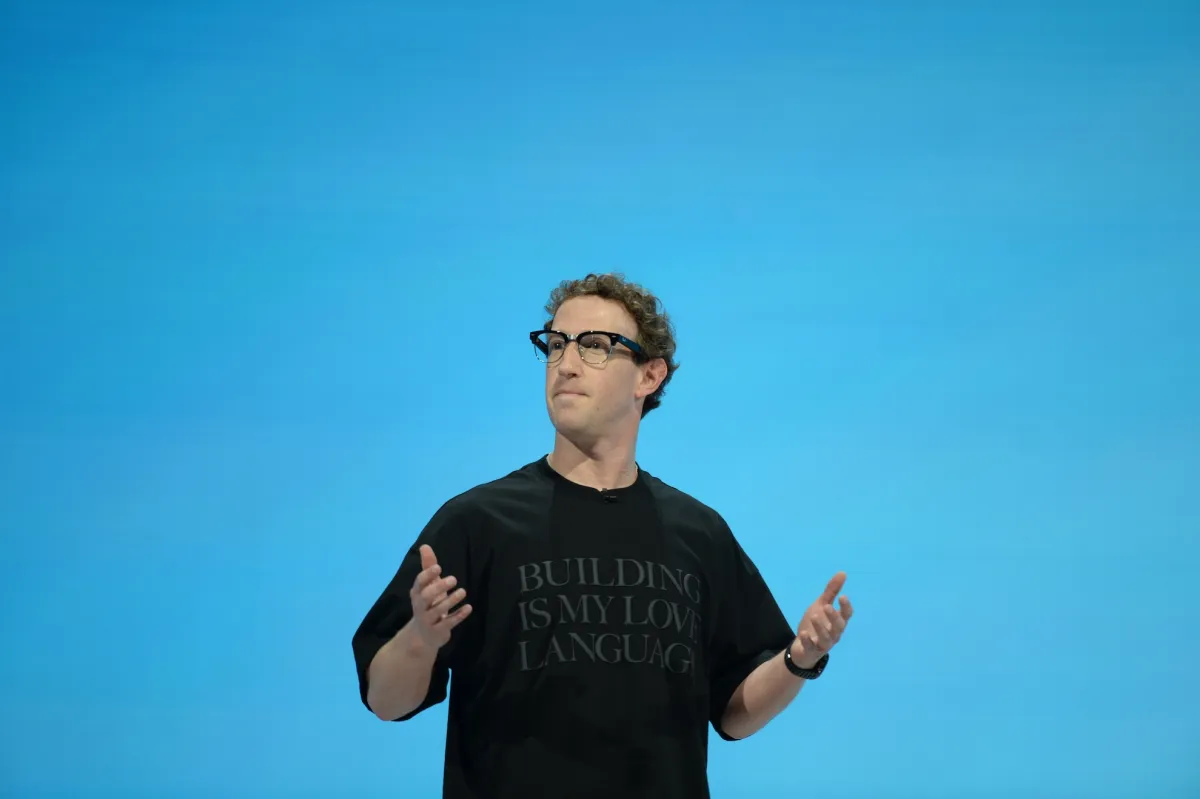
Meta has unveiled an expansive slate of upgrades for Muse, its flagship consumer artificial intelligence agent, outlining plans to embed the software across personal computers, wearable hardware, e-commerce platforms, and daily digital workflows. Speaking at the tech giant's annual Connect conference in Menlo Park, Chief Executive Officer Mark Zuckerberg positioned the young software system as the focal point of the enterprise's long-term artificial intelligence strategy, forecasting that it will evolve into a ubiquitous personal assistant for billions of users globally.
The Core Vision Behind Muse
Initially rolled out in early September, Muse operates across connected accounts and devices to handle day-to-day coordination such as scheduling and electronic correspondence. The software is driven by Muse Spark, a specialised multimodal engine engineered by Meta specifically to carry out complex agentic tasks on behalf of users. Unlike standard text-based conversational bots, agentic systems are designed to independently perform series of actions across multiple applications without requiring step-by-step human intervention.
Taking the stage in Menlo Park dressed in khakis and a black shirt bearing the phrase “Building is My love Language,” Zuckerberg described the agent as the foundational pillar of the company's consumer software ambitions.
“The centerpiece of our vision for what we’re building is Muse,” Zuckerberg said. “In the coming years, I expect that Muse is going to grow into the personal superintelligence that billions of people around the world are going to use to accomplish their goals and improve their lives.”
Addressing the business model underpinning the product, Zuckerberg explained that Meta intends to distribute Muse widely at little to no upfront cost before turning toward commerce-driven monetization. Rather than gating basic access behind expensive software subscriptions, the company plans to provide substantial usage allotments free of charge, generating revenue later by collecting commissions on transactions helped through the agent.
“We’re standing behind this by making Muse free for a huge number of tokens, with the expectation that over time we will profit by taking a small fee from transactions,” Zuckerberg stated.
Interactive Avatars and Wearable Hardware Integration
Among the most visually striking additions demonstrated during the Connect keynote is a feature that endows the assistant with an interactive visual identity. While Zuckerberg noted that the agent's physical avatar has been dubbed Jolly, users will soon be able to generate unique visual personas for their personal assistants and engage with them directly over live video calls. This capability is underpinned by a dedicated underlying model named Muse Realtime Avatar, designed to animate humanlike physical forms, facial expressions, and spoken voices in real time, shifting Meta's assistant away from purely text- or voice-only interfaces.
Meta also detailed how Muse will bridge into consumer hardware through its family of smart glasses. Wearers will be able to summon the agent using an audible wake phrase. Once active, the wearable system can oversee a range of ambient tasks, such as:
- Providing live instructions during customized physical fitness routines
- Cataloging nutritional intake and daily meals
- Scheduling calendar bookings and personal appointments
- Identifying real-world items in the wearer's line of sight and initiating purchases
The company emphasised that the agent operates autonomously in the background while users carry on with their routines, proactively returning to report once an assignment is finished. While Meta did not specify an exact launch date for the smart glasses deployment, the capability is slated to roll out in the coming months.
Desktop Computer Control and Dedicated Inboxes
Beyond mobile interfaces and wearables, Meta is extending Muse into desktop environments, beginning with macOS. By integrating direct computer controls on Mac machines, Muse will mirror capabilities recently popularized by competing labs such as Anthropic and OpenAI, enabling the system to take command of desktop applications to complete multi-step digital work.
Alexandr Wang, Meta’s chief AI officer, highlighted the enterprise utility of delegating desktop processes directly to the agent during the keynote presentation.
“You can have it help you run your small business, or just get work done for you,” Wang said. “You can walk away from your computer and it keeps working for you on all the jobs you lined up.”
To support sustained independent operation, Meta is preparing to assign individual email addresses directly to Muse instances. This planned functionality will permit people to loop their AI assistant into ongoing email conversations or forward messages straight to the agent, which can then read, interpret, and resolve administrative requests without constant manual prompting.
Commercial Ecosystem and Developer Expansion
Commerce constitutes the central pillar of Meta’s monetization blueprint for Muse. Through formal partnerships with financial infrastructure provider Stripe and e-commerce leader Shopify, the agent can search comprehensive merchant inventories and finalise purchases automatically. By using integrations with Lync, Shop Pay, and PayPal, the software can execute end-to-end checkout sequences on behalf of consumers.
Meta has also established direct connectivity with several high-profile retailers and digital platforms to widen the assistant's everyday utility.
| Category | Partner Services & Integrations |
|---|---|
| Retailers | Best Buy, Gap, Sephora, Walmart, Wayfair |
| Travel & Delivery | Expedia, Instacart (upcoming) |
| Productivity & Code | GitHub, Granola, Notion |
| Payments & Checkout | Shopify (Shop Pay), Stripe (Lync), PayPal |
To accommodate smaller merchants and external tech firms, Meta recently established a developer framework that allows outside creators to build custom software connectors linking their services directly to Muse. According to Wang, the program attracted over 1,500 developer submissions in under a week, demonstrating substantial third-party appetite to interface with Meta's burgeoning infrastructure.
“I think this could be a generational opportunity to start building for a new platform as it takes off, and the response so far has been really great,” Wang remarked.
Privacy risks for professional correspondence
Setting up a dedicated email inbox for an autonomous agent poses immediate compliance issues for employees and contractors. In the UK and across the European Union, handling personal data falls under the General Data Protection Regulation (GDPR), which requires explicit safeguards regarding where information travels and who processes it. Forwarding customer correspondence, contract drafts or private client details to an external artificial intelligence inbox means routing sensitive records directly through Meta's processing servers.
Many corporate IT policies strictly prohibit sharing proprietary files or system credentials with third-party software agents that execute desktop commands. Granting software permission to control macOS applications allows the program to read visible documents, open internal spreadsheets, and alter stored files. Workers who integrate these tools into their daily duties without prior clearance from compliance officers risk disciplinary action or data breach liabilities under employment agreements.
Unclear consumer protection on automated spending
Allowing an artificial intelligence agent to complete checkouts through stored payment methods changes how banks evaluate disputed charges. In the UK, purchases made with credit cards are protected under Section 75 of the Consumer Credit Act for amounts between £100 and £30,000, holding the card provider jointly liable for breaches of contract or misrepresentation. However, third-party payment layers and automated instructions can blur the legal definition of cardholder consent.
Similar friction exists for cardholders in the US and Canada. If an agent misinterprets a sizing choice, purchases the wrong airline ticket via Expedia, or falls victim to automated price surges while running background tasks, reversing the transaction may prove difficult. Banks routinely deny fraud claims when card details are deliberately shared with an active software program authorised to execute payments. Account holders must decide whether the convenience of unattended purchases outweighs the loss of direct oversight at checkout.
Conclusion
Meta's broad expansion of Muse signals an aggressive push to transform consumer artificial intelligence from occasional chat prompts into an autonomous operational layer across desktop operating systems, smart eyewear, and global retail platforms. By combining transactional monetization with developer access and free high-volume token tiers, the company is positioning Muse to compete directly against rival agents across productivity, communication, and electronic commerce. As features such as desktop execution, real-time video avatars, and dedicated email routing roll out in the months ahead, the real test will be whether consumers and merchants embrace an autonomous assistant handling sensitive everyday tasks and purchases in the background.
Reporting based on coverage by TechCrunch.
Category: Business