Google launches Project Suncatcher, a step towards AI data centers in space
By CelebUD Newsroom —
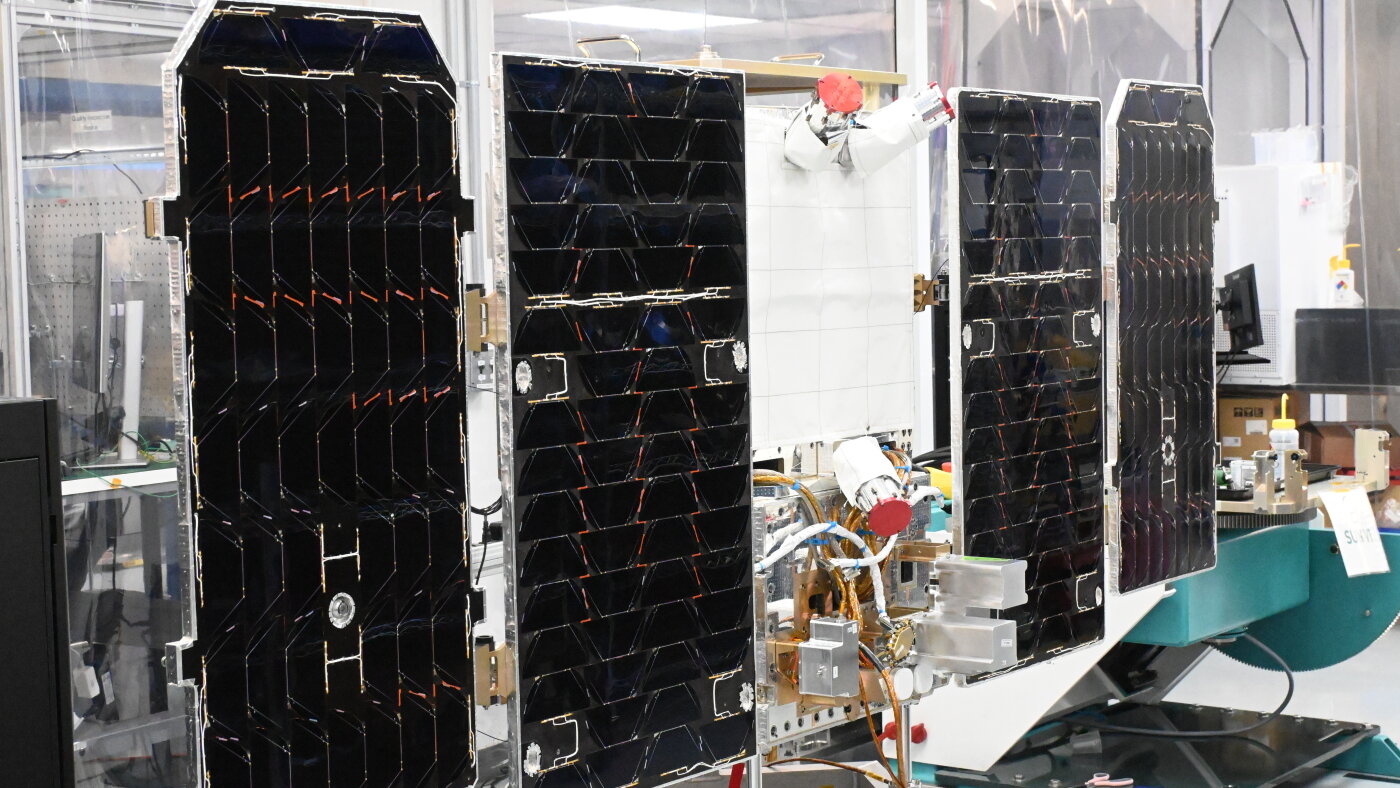
Google has deployed an experimental spacecraft into low Earth orbit under a new research initiative named Project Suncatcher, testing the feasibility of operating solar-powered artificial intelligence data centres in space. The refrigerator-sized test craft, launched atop a SpaceX rocket, carries specialised machine learning processors designed to assess whether orbital hardware can overcome mounting land-based power constraints and severe thermal hurdles.
The Vision Behind Project Suncatcher
As advanced machine learning workloads accelerate globally, technology companies face unprecedented demand for electricity and physical infrastructure. Terrestrial server hubs consume immense grid capacity and face growing public pushback over regional power consumption, water usage, and land development. At Google's annual developer conference in May, Chief Executive Sundar Pichai stated that global demand for AI processing currently outpaces available supply, projecting Google's annual capital expenditures to land between $180 billion and $190 billion—a figure more than six times its 2022 level.
Project Suncatcher aims to bypass terrestrial grid limits by relocating intensive computing clusters directly into orbit, where uninterrupted solar energy is abundant. Travis Beals, senior director and project lead for Suncatcher, highlighted the sheer scale of energy available beyond Earth's atmosphere:
"The sun puts out almost all of the power in our solar system. All of the other power sources that humanity has tapped into are just a tiny fraction of a percent. So in some sense, this project is about tapping into the best way to use solar power to run AI compute."
The prototype has been placed into a sun-synchronous orbit, positioning its solar panels so they remain almost continuously bathed in direct sunlight. This constant solar exposure eliminates the operational necessity of hauling heavy battery systems or auxiliary power generators into space, reducing the spacecraft's launch weight.
Hardware and the Orbital Heat Barrier
The craft carries four of Google's proprietary Tensor Processing Units (TPUs), the specialised silicon chips normally deployed across its ground-based server facilities. Developed in partnership with San Francisco-based aerospace and imaging company Planet Labs PBC, the vehicle underwent testing inside thermal vacuum chambers on Earth before launch. Planet is managing initial operational setup in orbit, after which Google engineers will activate and evaluate the TPUs over a planned 12-month operational lifespan.
In orbit, the hardware will process queries using a lightweight, open-weight iteration of Google's Gemma model. However, operational windows will be capped at 15 minutes per session due to severe thermodynamic limitations. In a company publication, Google explained that the trial aims to record how its silicon withstands "the physical stress of spaceflight and the radiation and thermal extremes of space."
Thermal dissipation represents the foremost engineering roadblock. On Earth, server farms shed waste heat into air streams or liquid coolant networks. In the vacuum of space, convection is impossible, meaning excess thermal energy can only be expelled via thermal radiation. Brandon Lucia, a professor of electrical and computer engineering at Carnegie Mellon University, observed that while the core engineering concepts have been demonstrated in laboratory environments, physical implementation remains difficult:
"In a satellite in particular, using more power to do the computations means dumping more heat into the confined environment inside of the satellite."
Google has designated heat regulation as "a crucial research challenge," deploying internal conduits and external radiator fins to disperse heat from the processor core. Beals noted that these radiator units constitute one of the heaviest segments of the test payload. Because launch pricing scales directly with weight, designing lighter cooling apparatuses remains vital for long-term viability.
Orbital architecture and the competitive market
Project Suncatcher reflects an expanding race among aerospace and computing enterprises seeking to establish compute clusters in orbit. Several ventures are targeting the same commercial frontier:
| Company / Initiative | Hardware / Model Demonstrated | Timeline & Operational Goals |
|---|---|---|
| Google (Project Suncatcher) | 4 Google TPUs running Gemma AI | Initial prototype in orbit; two linked satellites launching next year; 1-year mission lifespan. |
| Starcloud | Nvidia H100 chip running Google Gemini | Conducted orbital computing test in November. |
| SpaceX | Proprietary orbital AI compute satellites | Publicly targeted orbital deployment starting as early as 2028. |
Google's technical roadmap involves assembling distributed constellations where individual satellites house dozens of TPUs. These craft would communicate with each other and route results back to Earth using high-bandwidth optical laser links. The company plans to launch two additional spacecraft next year to validate inter-satellite laser networking.
Economic Obstacles and Logistical Challenges
Despite the promise of unlimited solar power, industry specialists remain cautious about the economic fundamentals of orbital infrastructure. Terrestrial server hubs allow technicians to immediately service defective components, replace dead boards, and expand floor capacity. In contrast, orbital failures are permanent unless costly servicing missions are mounted.
"Those all have their cost and complexity amplified by a factor of 10, maybe a factor of 100. And so there has to be a big payoff," Lucia said.
Significant communication constraints also persist. Transmitting processing tasks and model outputs through Earth's atmosphere via laser transceivers across hundreds of miles introduces latency compared to underground fibre-optic cables. Also, building equivalent capacity to modern terrestrial server hubs would necessitate placing thousands of interconnected satellites into orbit.
Environmental researchers also note atmospheric trade-offs. Although satellites use green solar energy while active in orbit, their deployment requires orbital rockets burning hydrocarbon fuels. Eventually, decommissioned satellites re-enter and incinerate in the upper atmosphere, introducing metallic particulates and chemical byproducts.
Beals acknowledged that economic parity with terrestrial operations remains a distant objective. He characterised the venture as a classic technological moonshot that will not undercut ground-based processing prices in the near term:
"It doesn't help a lot if this is technically possible, if it's always going to be too expensive to be practical. I don't see this being something where it's cheaper to do this in the next five years. I think it will take longer than that."
Rather than supplanting terrestrial data centres, Beals foresees an extended period where both systems divide workloads according to logistical suitability:
"I think that there are going to be use cases that make more sense to do on Earth and use cases that make more sense to do in space. In the really-long run, perhaps the set of things you do in space gets larger and larger until that's where most of the compute is happening. But I think for a long time you'll have both coexisting."
Capital expenditure and cloud service fees
Massive capital budgets, such as Google's projected $180 billion to $190 billion annual expenditure, directly influence the economics of everyday software services. Start-ups and established enterprises across the UK, Canada, Nigeria, and Kenya depend on cloud platforms and artificial intelligence application programming interfaces to power their digital operations.
When technology giants commit enormous sums to speculative, high-risk hardware ventures, investor scrutiny intensifies. Cloud providers frequently offset rising infrastructure costs by adjusting enterprise price tiers, reducing complimentary usage allowances, or raising token fees for machine-learning queries.
For small business owners and independent software engineers, these shifts mean that the rising cost of next-generation infrastructure research can filter down directly into higher monthly operating expenses, forcing companies to budget more conservatively for third-party cloud services.
Uncertain borders for cloud data
National privacy regulations, including the UK General Data Protection Regulation and the Nigeria Data Protection Act, bind companies to strict rules regarding where personal data travels and where it is stored. These legal frameworks rely on terrestrial borders to assign accountability, audit server security, and limit transfers to jurisdictions without adequate legal safeguards.
Operating processing nodes in low Earth orbit complicates those legal baselines. When satellite clusters handle customer records, payroll data, or medical queries above national airspace, determining which regulatory body possesses jurisdiction becomes difficult. International space treaties govern objects in orbit, but they offer little guidance on commercial data rights or digital security breaches.
For businesses handling regulated customer information, orbital processing could create compliance hurdles rather than technical shortcuts. Enterprise compliance officers will require clear guidance from domestic regulators before routing sensitive data through orbital transceivers.
Conclusion
Project Suncatcher marks an initial, calculated step into the future of extra-terrestrial computation. While the prototype demonstrates that modern AI accelerators can survive rocket transit and operate in the harsh thermal vacuum of low Earth orbit, significant commercial viability barriers remain. Resolving heavy radiator payloads, managing high launch expenses, perfecting inter-satellite laser links, and mitigating atmospheric pollution from rocket launches will dictate whether orbital compute ever rivals land-based facilities. Over the next twelve months, data gathered from this single satellite—and the paired laser-link test craft scheduled for next year—will determine whether space-based data centres move from speculative engineering experiments into practical operational infrastructure.
Category: Business