Nigeria at 66: Reflections on Strength, Broken Promises, and the Path to True Greatness
By Gbenga Ayandare —
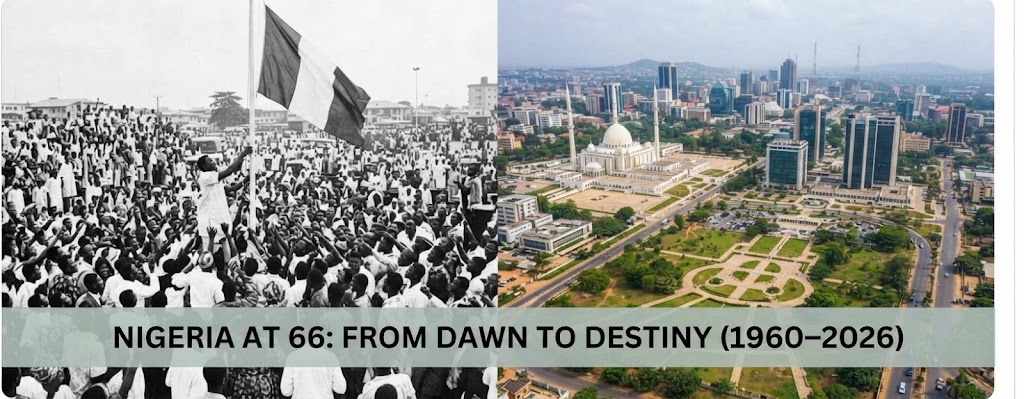
On October 1, 1960, the green-and-white banner replaced the Union Jack across the skies of Lagos, heralding the birth of Africa's most populous nation. Jubilant crowds spilled into the streets, filled with unrestrained optimism that the newly sovereign federation would serve as the economic beacon and political vanguard of the Black world. Sixty-six years later, that foundational optimism sits in tension with enduring frustration. Nigeria at 66 presents an acute paradox: an undeniable cultural and demographic titan populated by exceptionally talented people, yet tethered to recurring governance crises, fiscal precarity, and pervasive insecurity. Commemorating this milestone demands more than ceremonial pomp; it calls for a candid audit of our triumphs, our catastrophic missteps, and the definitive reforms required to redeem the promise of our founding fathers.
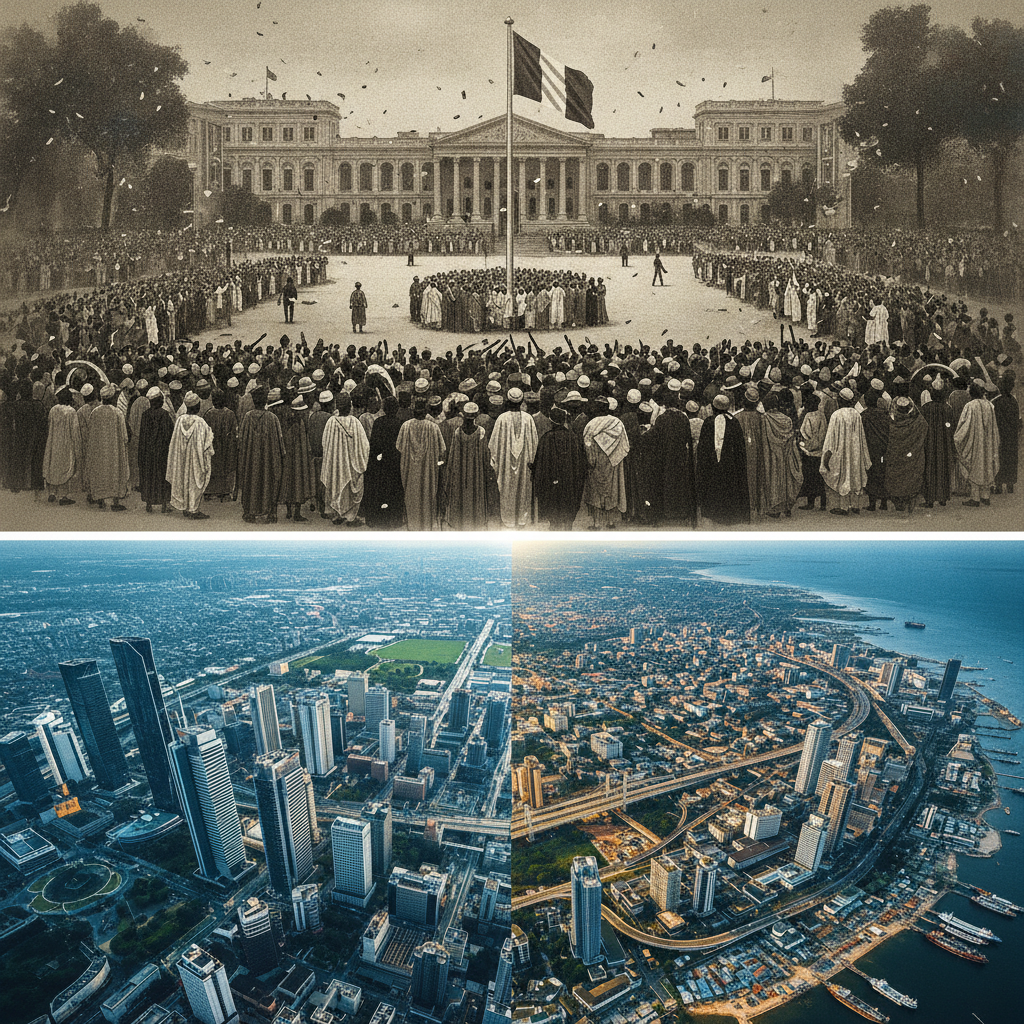
Where We Got It Right: Resilience, Culture, and Democratic Continuity
Despite decades of existential tremors, Nigeria has consistently demonstrated a rare capacity to withstand internal fracture. The preservation of the union following the devastating 1967–1970 civil war remains a baseline achievement, even as the structural wounds of that era continue to heal. In the geopolitical arena, Nigeria forged a proud reputation as the moral spine of liberation in Southern Africa, committing immense diplomatic capital and financial resources to dismantle apartheid and restore peace across West Africa through pioneering missions in Liberia and Sierra Leone.
Domestically, the unbroken run of civilian rule since May 1999 represents the longest democratic stretch in the nation's history. While elections have often been contentious and fraught with logistical vulnerabilities, the institutionalization of civilian transfers of power has relegated the spectre of military coups to the history books. Furthermore, the private sector has continually defied institutional headwind. Nigeria’s homegrown banks, telecommunications giants, and fintech pioneers have expanded across the African continent and into global financial capitals, showcasing what Nigerian ambition can achieve when freed from bureaucratic strangleholds.
Equally extraordinary is Nigeria's cultural hegemony. Through Nollywood, Afrobeats, literature, and visual arts, Nigerian creatives have achieved what state diplomacy could not: turning the country into an undisputed global soft-power heavyweight. From Grammy stages in Los Angeles to sold-out arenas across Europe and North America, the creative brilliance of Nigerian youth reflects the boundless vitality of a people who thrive against the steepest odds.
The Anatomy of Bad Leadership: Where We Missed the Mark
The tragedy of modern Nigeria is not a lack of talent or resources, but an acute, multi-generational failure of governance. The late literary icon Chinua Achebe captured this reality with surgical precision when he observed that the Nigerian problem is simply and squarely a failure of leadership. At nearly every historical junction where bold vision was required, successive ruling elites prioritized personal enrichment, prebendal patron-client networks, and short-term political survival over institutional nation-building.
"The trouble with Nigeria is simply and squarely a failure of leadership. There is nothing basically wrong with the Nigerian character. There is nothing wrong with the Nigerian land or climate or water or air or anything else." — Chinua Achebe
The original sin of Nigeria's post-colonial trajectory began with the destruction of fiscal federalism following the 1966 military interventions. The First Republic, despite its intense regional tensions, operated on healthy economic competition. Regions retained the majority of their generated revenues, funding world-class universities, robust agrarian exports, and groundbreaking infrastructure. The military command structure replaced this productive dynamic with an over-centralized, rent-distributing unitary framework that turned states into lazy administrative dependents lining up in Abuja for monthly federal allocations.
Compounding this structural flaw was the arrival of the petrodollar boom in the 1970s. Rather than investing oil revenues into human capital, sovereign reserves, and industrial infrastructure, successive administrations allowed Nigeria to plunge headfirst into the Dutch disease. Agriculture and local manufacturing were abandoned. A culture of consumerism, state-sanctioned graft, and rent-seeking took root, leaving millions in vulnerable poverty while a narrow political elite hoarded public wealth.
Systemic Weaknesses and Urgent Contemporary Challenges
As Nigeria marks its 66th anniversary, the compound interest of decades of deferred maintenance and poor leadership is evident across key sectors of national life:
- Fiscal and Macroeconomic Vulnerabilities: Prolonged periods of currency volatility, crippling public debt servicing ratios, double-digit inflation, and energy cost spikes have severely eroded the purchasing power of the middle class and driven millions beneath the poverty line.
- Pervasive Insecurity: The national security architecture remains overstretched. From persistent extremist threats in the Northeast and organized banditry and kidnappings in the Northwest to farmer-herder conflicts in the Middle Belt and crude oil theft in the Niger Delta, security deficits threaten agricultural food sovereignty and deter vital foreign direct investment.
- Human Capital Deficits and the "Japa" Phenomenon: Public health and education systems suffer from chronic underfunding. The resulting brain drain—popularly termed the "Japa" wave—has seen Nigeria’s finest doctors, software engineers, nurses, and academics emigrate in droves to Canada, the United Kingdom, and the United States, depriving the domestic economy of essential expertise.
- Institutional Decay and Corruption: Anti-corruption agencies have often been weaponized for partisan battles rather than operating as independent pillars of institutional integrity. Weak enforcement of contracts and judicial bottlenecks continue to dampen business confidence.
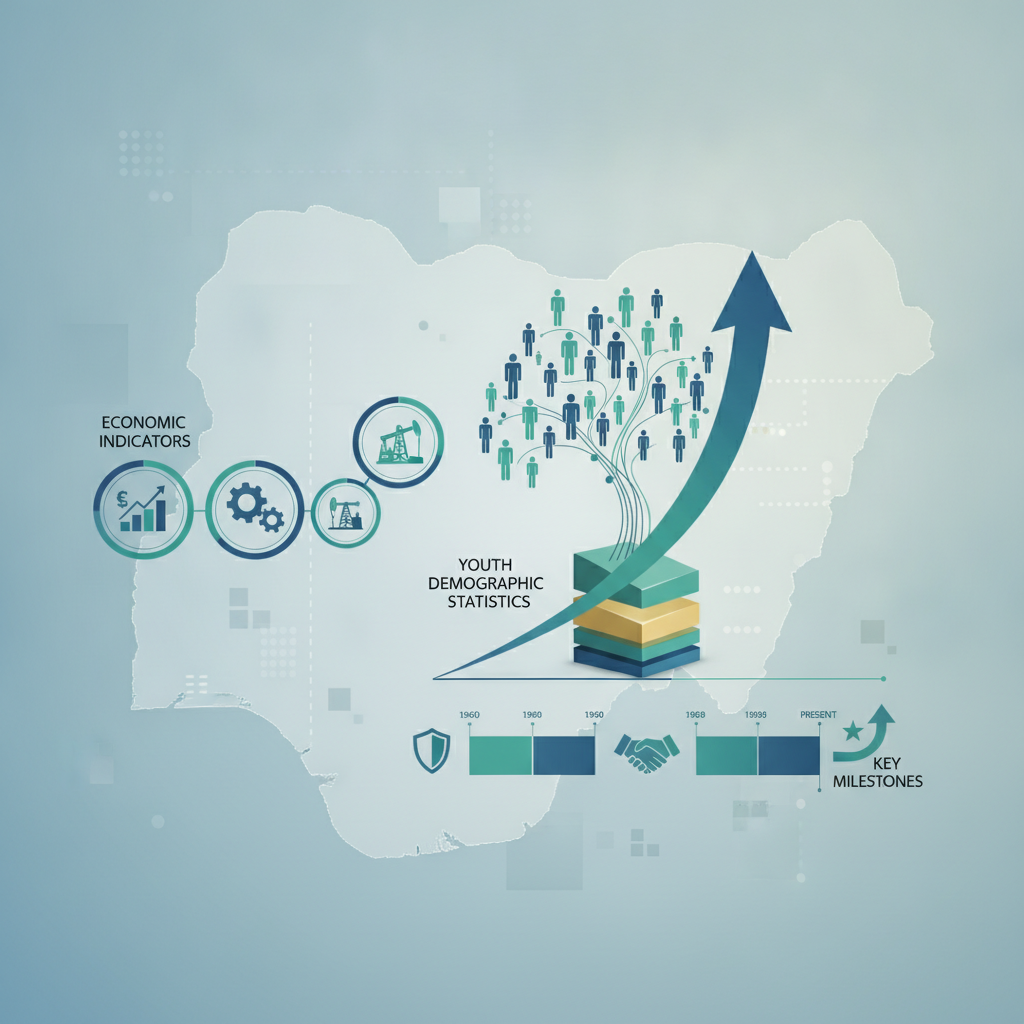
Historical Snapshot: Nigeria Across the Eras
To understand where the nation stands at 66, it is vital to contrast the distinct epochs of Nigeria's post-independence governance landscape:
| Historical Era | Key Defining Characteristics | Major Triumphs | Core Failures and Setbacks |
|---|---|---|---|
| First Republic (1960–1966) | Parliamentary democracy, robust regional fiscal federalism, agrarian base. | Rapid regional industrialization, world-class educational institutions. | Severe regional frictions, census controversies, electoral violence leading to military coup. |
| Military Interregnum (1966–1979, 1983–1999) | Centralized command structure, decree-based governance, petrodollar windfalls. | National infrastructure expansion, establishment of ECOWAS, peacekeeping abroad. | Erosion of federalism, deep-seated human rights abuses, rampant institutional corruption. |
| Fourth Republic (1999–Present) | Sustained civilian rule, constitutional democracy, liberalized market reforms. | Telecommunications revolution, banking consolidation, uninterrupted democratic transitions. | Severe debt burdens, unchecked insecurity, mass youth underemployment, widespread brain drain. |
The Way Forward: A Blueprint for Structural Renewal
Diagnosing Nigeria's malaise is meaningless without a pragmatic, executable agenda for national transformation. Rescuing the country from managed decline requires decisive policy interventions that address root causes rather than symptoms:
1. Constitutional Devolution and True Federalism
Nigeria cannot run a 21st-century continental economy using a centralized governance framework designed by military administrators. Critical items on the Exclusive Legislative List—including state policing, mineral resource extraction, railway networks, and power distribution—must be substantially devolved to the federating units. States must be transformed from passive allocation-sharing entities into competitive, revenue-generating economic zones capable of securing their jurisdictions and exploiting their comparative advantages.
2. Ruthless Public Sector and Electoral Reform
Combating corruption requires moving beyond theatrical public arrests to structural automation and transparency. The full digitisation of public procurement, the aggressive consolidation of redundant parastatals as recommended by landmark administrative reviews, and complete autonomy for electoral management bodies are non-negotiable. When leaders realize that credible ballots dictate their political survival, responsiveness to citizen welfare will increase exponentially.
3. Industrialization Anchored on Energy and Food Security
No nation has ever developed by exporting raw commodities and importing finished goods. Nigeria must resolve its lingering electricity supply conundrum by decentralizing the national grid and incentivizing commercial renewable microgrids and gas-to-power projects. Concurrently, agricultural value chains must receive targeted infrastructure support—such as cold-storage transportation and agro-processing hubs—to eradicate post-harvest losses, tame runaway food inflation, and restore rural productivity.
4. Investing in Youth and Reversing the Brain Drain
Over sixty percent of Nigeria's population is under the age of thirty. This demographic profile is either the nation’s greatest strategic weapon or its most volatile ticking time bomb. The federal and state governments must prioritize technical and digital education, create accessible credit facilities for small enterprises, and actively collaborate with the vast Nigerian diaspora. Rather than viewing the diaspora merely as a source of remittance inflows, policymakers must construct formal conduits for institutional knowledge transfer, dual-citizen voting, and direct technological investment.
Conclusion
At sixty-six, Nigeria stands at an existential crossroads. The romantic nostalgia for the 1960s can no longer obscure the severe governance crises of the present day, nor can cynical defeatism build the prosperous homeland that over two hundred million citizens deserve. The trials of our nation are profound, yet they are neither permanent nor insurmountable. Nigeria's most potent asset has never been the sweet crude resting beneath the mangrove swamps of the Niger Delta; it is the indefatigable spirit, intellectual brilliance, and stubborn resilience of everyday Nigerians who wake before dawn to build, innovate, and persevere. If our political class summons the courage to implement structural reforms, and if citizens hold power accountable with relentless focus, Nigeria will rise above its historical missteps. The road ahead demands grit, visionary leadership, and collective purpose—yet the promise remains bright: this beloved giant will, without question, rise to claim her rightful place in the world. Happy 66th Independence Anniversary to the Federal Republic of Nigeria.
Sources
- Central Bank of Nigeria — Historical Macroeconomic and Trade Reports
- National Bureau of Statistics (NBS) — Demographic and Economic Indicator Archives
- Independent National Electoral Commission (INEC) — Electoral Trends in Nigeria’s Fourth Republic
- World Bank — Nigeria Development Update and Economic Perspectives
Disclaimer: This article provides analytical commentary on historical governance and socio-economic developments in Nigeria and does not constitute formal financial, investment, or legal advice.
Category: Society