Delving into the history of Canada's prime ministers
By CelebUD Newsroom —
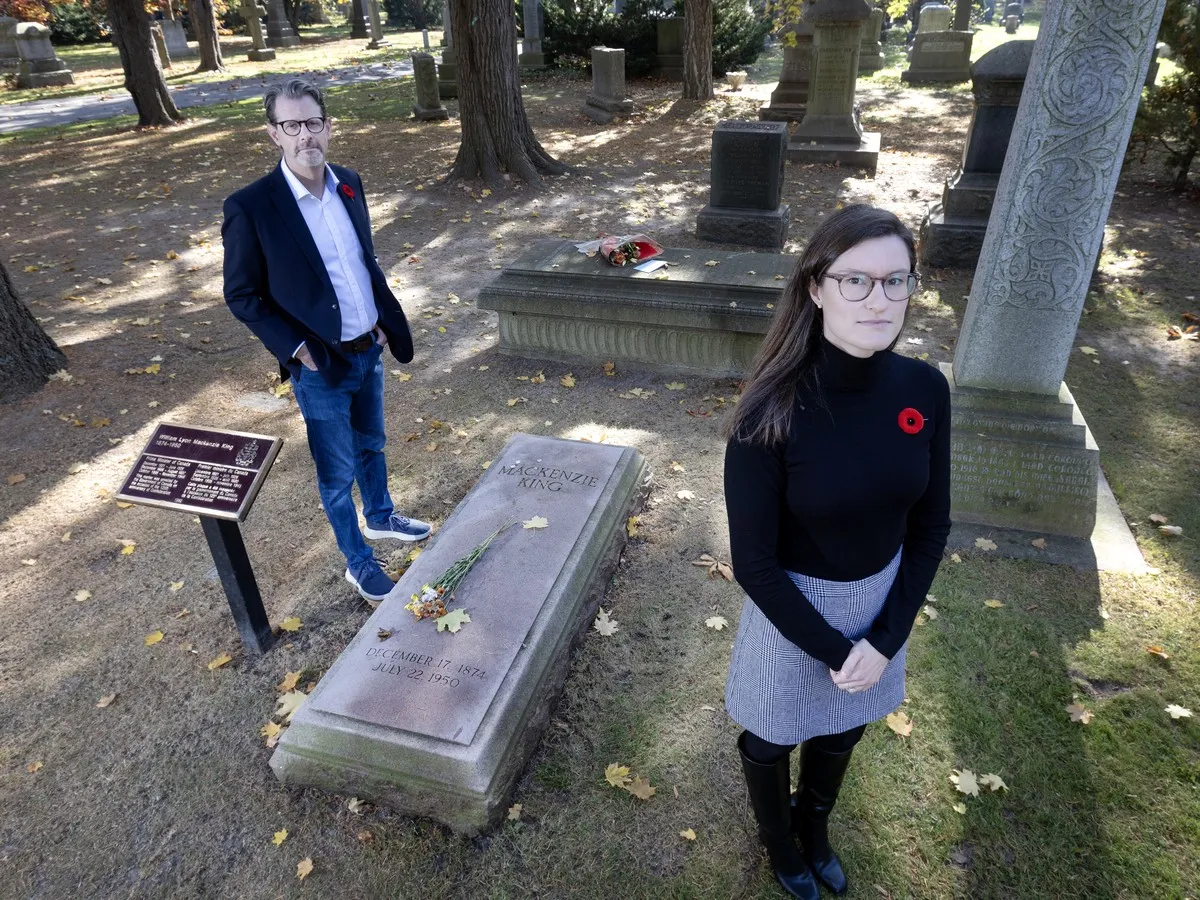
A pair of Canadian educators and historians have established a dedicated non-partisan initiative aimed at reviving public interest in the country's past national leaders. The newly created Prime Ministers Institute (PMI) seeks to bring historical education and research back into mainstream civic dialogue, addressing what its founders view as an alarming erosion of historical awareness among younger generations. Operating under the auspices of the Canadian Institute for Historical Education, a registered charity, the non-partisan organization intends to document and explore the country’s political journey through the careers, achievements, and shortcomings of those who have governed from the nation's capital.
Addressing the Memory Gap in Canadian Leadership
The concept for the organization took shape beside the grave of William Lyon Mackenzie King in Mount Pleasant Cemetery in Toronto. Historian James Stewart, a retired educator who taught at Toronto's Bishop Strachan School and has written two books focusing on Canadian prime ministers, observed that even King—a Liberal who stands as Canada's longest-serving prime minister with over twenty-one years across three terms—has largely faded from public awareness.
"He’s not talked about in public discourse as much as someone like Mackenzie King should be, and like a lot of our prime ministers, they don’t take up a lot of space in the public square," Stewart noted.
Stewart partnered with former student Joanne Archibald to launch the project. Archibald, now a professional historical consultant, holds a Master’s degree from the London School of Economics, where she focused her thesis on Pierre Elliott Trudeau, alongside a doctorate from Queen’s University examining the leadership tenure of Canada's 12th prime minister, Louis St. Laurent.
Archibald pointed out that examining national leaders requires looking beyond dry legislative records to investigate personal motives, domestic backgrounds, and character development.
"It’s important for us to understand who these people are," Archibald explained. "What makes them tick? Why did they get out of bed in the morning? How did they grow up? What’s their background? What influences them from a family structure point of view?"
Sovereignty and Forgotten Foundations
Stewart argued that an understanding of history is intrinsically linked to national independence, arguing that citizens cannot safeguard what they do not comprehend. While Pierre Trudeau retains cultural visibility among older generations, and founding prime minister Sir John A. Macdonald frequently surfaces in modern controversies regarding monument removals, broad public knowledge of other key figures remains thin.
"None of them get talked about," Stewart said. "You might say there’s an exception with Pierre Trudeau because he still seems to loom large in the memories of the baby boomers and others, but the other prime ministers, we don’t really hear about them in the public conversation. And that could be anyone from Louis St. Laurent, to John Diefenbaker, even to a lesser extent Brian Mulroney, although he has been talked about a little bit because of his recent death. And then of course, John A. Macdonald gets talked about because of controversies about the removal of the statues and such, but we don’t have a good grasp of what kinds of legacies prime ministers left behind and what the consequences of their decisions have been, both for the good and the ill, and how they’ve managed the federation."
Stewart stressed the contemporary relevance of this knowledge deficit:
"So, if we can bring more conversation to the public sphere, it’s going to be useful for us, particularly at this time where we’re trying to figure out what actually made Canada. What actually are we trying to defend when we say we want to protect our own sovereignty? And part of protecting your sovereignty is knowing your history and knowing your culture."
The knowledge gap is particularly apparent among younger Canadians in their twenties and thirties. Many are unfamiliar with crucial policies instituted by leaders such as Lester B. Pearson, who led the nation from 1963 to 1968. Pearson’s administration introduced transformative pillars of contemporary Canadian society, including the establishment of universal public healthcare and the adoption of the national Maple Leaf flag.
Similarly, single-term administrations laid fundamental structural groundwork. Stewart cited Alexander Mackenzie, the Liberal leader who governed from 1873 to 1878 following Macdonald's first administration. Despite holding office for only one term, Mackenzie instituted the secret ballot in federal elections and created the Supreme Court of Canada.
"Everything that a prime minister does is laying a foundation for building the country and sometimes they’re a little bit minor but still have a role to play when you look at the grand scheme," Stewart observed.
Key Prime Ministerial Milestones Highlighted by the Founders
| Prime Minister | Term in Office | Major Institutional Contributions Cited |
|---|---|---|
| Alexander Mackenzie | 1873–1878 | Created the Supreme Court of Canada; instituted the secret ballot. |
| William Lyon Mackenzie King | 1921–1926, 1926–1930, 1935–1948 | Longest-serving prime minister; steered federal social and wartime structure. |
| Louis St. Laurent | 1948–1957 | Advanced personal post-war diplomatic ties with U.S. presidents. |
| Lester B. Pearson | 1963–1968 | Established national universal healthcare; introduced Canada's distinct flag. |
Precedents for Modern Bilateral Relations
The institute also intends to demonstrate how past political dynamics offer valuable insights into present challenges, including bilateral diplomacy between Canada and the United States. In light of contemporary diplomatic frictions involving current Prime Minister Mark Carney and U.S. President Donald Trump, Archibald highlighted how earlier leaders managed White House interactions through distinct personal styles.
Louis St. Laurent cultivated close relationships with both Harry S. Truman and Dwight D. Eisenhower. In 1956, St. Laurent played golf alongside Eisenhower at Georgia's Augusta National Golf Club, later recounting to the House of Commons that fairway transit and discussions between shots served as fertile ground for productive statecraft.
In another instance of personal outreach, St. Laurent and his wife, Jeanne, attended an Ottawa concert given by Truman’s daughter, Margaret Truman, an accomplished classical coloratura soprano.
"Harry Truman wrote a letter back to Louis St. Laurent saying how much he appreciated that Louis St. Laurent and his wife, Jeanne, went to support Margaret Truman in her performance in Ottawa," Archibald noted. "So, you can really see the personal connections between these leaders and the way in which that shapes their relationship."
Conversely, Canadian-American ties have experienced sharp historical friction. Stewart highlighted the frosty dynamic between John F. Kennedy and John Diefenbaker during the early 1960s, driven by sharp generational differences, as well as the later strain between Pierre Trudeau and Richard Nixon.
During an address to the Canadian Parliament in 1972, Nixon abandoned traditional diplomatic platitudes to outline hard geopolitical realities.
"If you look at Nixon’s speech to Parliament in 1972, he throws a lot of cold water on the relationship and says we need to get by the sentimental past and just look at both these countries that have different interests and different identities," Stewart noted. "He took all the sugar off and said we’re not always going to get along. So, he didn’t really push the rhetoric of the great relationship between the two countries."
Structure and Upcoming Public Events
Rather than maintaining a brick-and-mortar headquarters, the Prime Ministers Institute will function as a virtual entity centered on public and academic outreach. It plans to collaborate with academic departments, civic organizations, journalists, and historians nationwide to organize debates, educational initiatives, and public forums.
The organization will host its debut public session on Tuesday, November 24, at 6:00 p.m. The inaugural panel, convened at the Royal Canadian Military Institute in Toronto, will center on the historical significance and stewardship of 24 Sussex Drive, the official residence of Canada's prime ministers.
What this means for diaspora advocacy and community engagement
For the Nigerian diaspora in Canada, participating in policy discussions—whether on trade, immigration, or foreign relations—requires a clear sense of how federal power operates. The institute’s focus on how past leaders managed cross-border diplomacy with the United States and maintained the federation offers a useful blueprint for community advocates seeking to influence modern policy.
Understanding historical precedents, from Louis St. Laurent’s personal diplomacy to Pierre Trudeau’s navigation of frosty international relations, shows how individual leadership styles directly impact national stability and economic policy. As the diaspora grows in political visibility, effective lobbying and community advocacy depend on understanding how past administrations handled federal-provincial power struggles and bilateral pressures.
As you advocate for policies affecting your community, are you leveraging an understanding of Canada’s federal structure to direct your efforts toward the right level of government?
Conclusion
The establishment of the Prime Ministers Institute marks a concerted effort to prevent the lives, decisions, and legacies of Canada's political leadership from slipping into obscurity. By examining the complete record of past prime ministers—encompassing both their profound policy successes and their significant failures—the organization intends to provide modern citizens with the historical literacy needed to understand the country's governance. As Canada contends with complex sovereignty questions and shifting international dynamics, the founders argue that examining the triumphs and missteps of historical leadership is not merely an academic exercise, but a civic necessity.
Reporting based on coverage by National Post.
Category: Society