How AI drones are influencing the course of the Ukraine war
By CelebUD Newsroom —
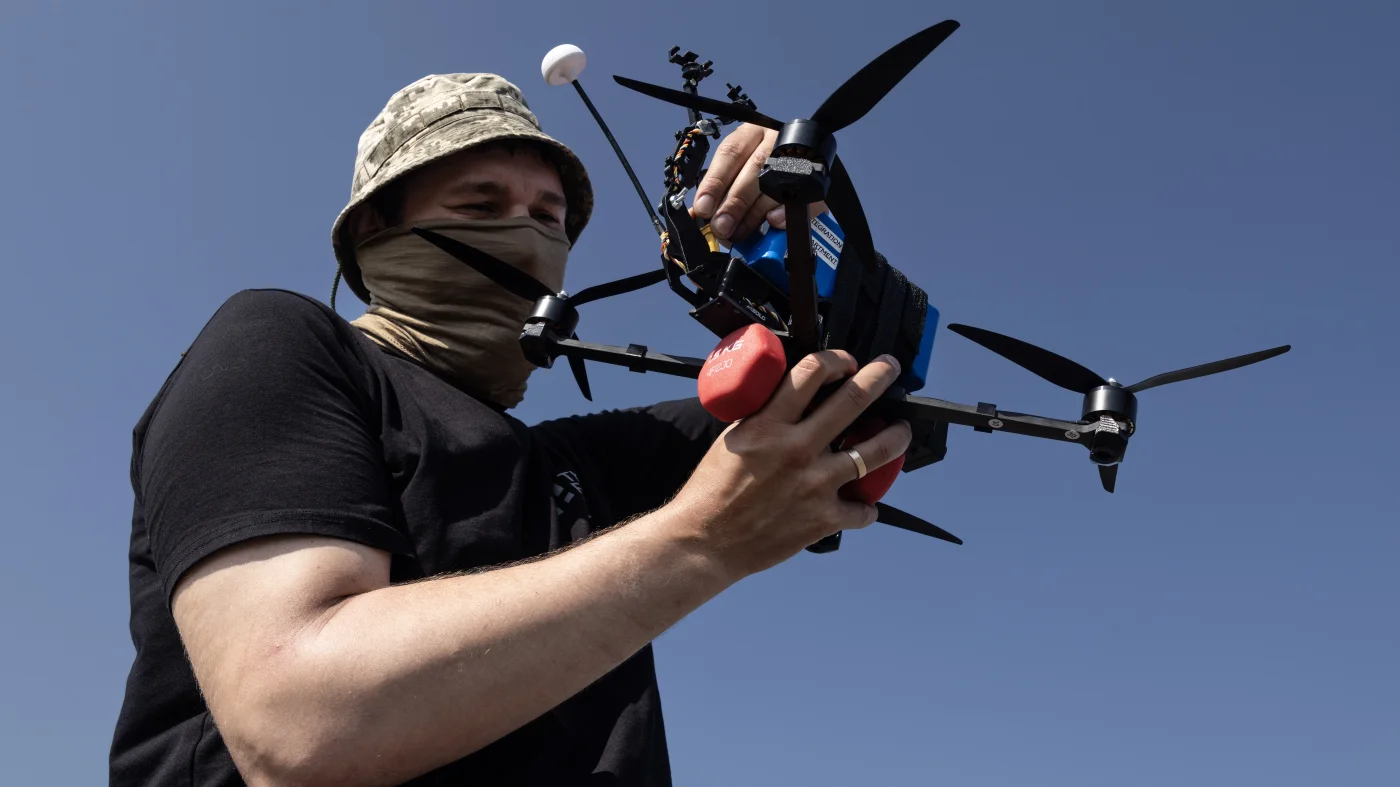
On the modern front lines across Ukraine, the character of aerial combat is shifting rapidly from remote-controlled gadgets to algorithmic machines capable of independent tracking and striking. As Russia's full-scale assault continues, domestic technology firms are aggressively integrating artificial intelligence into low-cost first-person-view (FPV) drones. These autonomous systems are engineered to solve the most pervasive tactical obstacle facing operators today: relentless electronic warfare and signal jamming that regularly severed the vital digital links between human pilots and their explosive payloads.
The Pivot from Silicon Valley Consumer Gadgets to Munitions
Among the key figures driving this tactical revolution is Yaroslav Azhnyuk, a 37-year-old Ukrainian computer scientist and serial entrepreneur. Raised in a household of academics and researchers, Azhnyuk previously made his name in Silicon Valley as a co-founder of Petcube. That company gained widespread international popularity—shipping around one million consumer units, largely in the United States—by manufacturing interactive pet cameras equipped with laser toys, snack-dispensing mechanisms, and machine-learning software to track and entertain domestic animals.
Following Moscow's 2022 invasion, Azhnyuk turned his attention entirely to national defense, directing his technical background toward military manufacturing. Operating in Kyiv under tight security protocols, he now manages two prominent Ukrainian defense ventures: The Fourth Law and Odd Systems. His focus has moved from remote pet care to designing thermal imaging systems and autonomous targeting modules capable of defeating invading armor.
“I was like, OK, I’ve got to move on from Petcube and do something to protect my country,” Azhnyuk explained. “And so now we’re making not cameras that fling treats but cameras that fling explosives at people who came to occupy our land.”
Azhnyuk views rapid automation as a crucial leveling mechanism against an adversary with vastly larger stockpiles of conventional materiel. In his assessment, introducing automated software enables an outgunned military to operate up to 10,000 times more effectively, offering an asymmetric defense against a quantitatively superior military force.
How Terminal Guidance Overcomes Battlefield Jamming
Today, dozens of front-line Ukrainian military detachments are deploying The Fourth Law's flagship system, designated the Lupynis-10-TFL-1. Unlike hypothetical humanoid war machines or massive server clusters running expansive frontier models, the Lupynis relies on lean, targeted software combined with an onboard terminal guidance module.
During an engagement, human remote pilots initiate the sortie and guide the craft until it approaches within striking range. The system's integrated intelligence takes absolute control over the final 500 meters (roughly 0.3 miles) of the approach vector. This terminal phase is historically where conventional FPV signals degrade or drop out completely due to Russian signal-jamming equipment or ground-level topographical interference.
In field demonstrations conducted outside Kyiv by a testing and integration crew—operating under field call signs such as Stab and a pilot known as Professor—the mechanism functions through a disciplined sequence:
- Manual Ingress: The human pilot uses traditional control sticks to navigate the aerial vehicle into proximity with the designated objective via video feed.
- Visual Target Acquisition: The operator centers the target—such as a vehicle or defensive structure—on the display monitor until a visible confirmation flash confirms the lock.
- Algorithmic Terminal Flight: Once locked, the pilot completely relinquishes manual flight controls. The compact internal processor actively recalculates flight paths and adjusts control surfaces in real time to guarantee impact.
The core computational system relies on a deep-learning neural network trained on hundreds of hours of raw operational video. The model is specifically optimized to recognize military targets, including tanks, lightly armored transports, transport cars, and airborne objects, ensuring the strike reaches the target even if radio communications are severed entirely.
The Cultural Symbolism Behind the Arsenal
The Fourth Law has deliberately rooted its technical creations in Ukraine's cultural past. The Lupynis-10-TFL-1 is named after Anatoliy Lupynis, an acclaimed 20th-century Ukrainian poet and human rights dissident who spent decades surviving Soviet labor camps, forced incarcerations, and punitive psychiatric institutions.
The defense venture has made it a systematic policy to name its strike systems and defensive components after historic Ukrainian writers, artists, and public intellectuals who were persecuted, exiled, or murdered under imperial and Soviet Russian authorities. For Azhnyuk and his colleagues, embedding these figures into their defense infrastructure serves as an enduring symbolic resurrection, returning their names to active resistance on the battlefield.
The Arms Race and the Ethics of Autonomous War
The deployment of machine learning on European battlefields has sparked significant unease among international military observers and senior state officials, including Ukrainian President Volodymyr Zelenskyy. The head of state has publicly cautioned that artificial intelligence could begin driving core tactical decisions across combat zones in the very near future. The race is mutual, as Russian forces are simultaneously integrating automated flight software and machine vision into their own drone fleets.
Ethical critics remain alarmed by the potential reduction of human oversight in lethal actions. Yet, Azhnyuk disputes claims that his firm's current products constitute rogue autonomous weapons, drawing a strict parallel between smart targeting modules and historical munitions.
| Operational Aspect | Conventional FPV Drone | AI-Assisted Lupynis-10-TFL-1 |
|---|---|---|
| Guidance Method | Continuous manual human radio link | Human targeting with algorithmic terminal lock |
| Terminal Resistance to Jamming | Vulnerable; loss of signal causes blind crash | High; internal computer flies the final 500 meters |
| Target Identification | Exclusively relies on real-time pilot sight | Onboard neural network trained on combat video |
| Pilot Intervention at Impact | Required throughout trajectory | Pilot releases controls once target is acquired |
Addressing the broader debate surrounding artificial intelligence ethics, Azhnyuk insists that toolmaking has always presented dual-use dilemmas, stretching back through the development of fire and metallurgy. However, he warns that self-imposed hesitation in wartime presents immediate survival dangers against an enemy pursuing similar automation.
“Our adversaries are using the very same technologies, and if they use AI for decision-making in an offensive scenario, and if we refuse to use AI in decision-making in a defensive scenario, we’ve lost, right?” Azhnyuk stated, observing that digital calculations happen in microseconds while human administrative loops take hours or days. “If Ukraine loses, there’s no way for us to argue about the ethics of AI.”
What low-cost autonomous drones mean for Nigeria's security battles
For years, Nigeria's fight against banditry, pipeline vandalism, and insurgencies across the North-East and Lake Chad basin has depended on expensive foreign procurements, such as attack helicopters and fighter jets. Ukraine's battlefield reality demonstrates a radical shift: off-the-shelf, low-cost drones paired with local computer vision code can neutralize heavy threats at a tiny fraction of conventional military budgets.
Crucially, the Ukrainian development addresses signal jamming and remote communication loss—problems identical to the rough terrain and dead communication zones in places like Sambisa Forest or the vast forests of the North-West. When guidance systems run on lightweight, local chips rather than constant satellite or cellular links, tactical surveillance and targeted strikes become far more dependable for troops on the ground.
As African militaries reconsider their procurement strategies, readers following national security spending should ask: Will Nigerian authorities begin funding domestic robotics hubs and local engineering faculties to build low-cost tactical tools, or will public funds continue flowing into multi-million-dollar foreign contracts?
The pivot from consumer apps to dual-use software and critical defense tech
The trajectory of Yaroslav Azhnyuk—moving from building Silicon Valley pet cameras to engineering autonomous flight modules—signals a broader structural shift across the global technology industry. For thousands of Nigerian software engineers, product managers, and data scientists living in Canada and the United States, tech careers have traditionally centered on consumer fintech, enterprise SaaS, and e-commerce platforms.
Today, venture capital, government grants, and institutional funding in North America and Europe are pivoting aggressively toward dual-use technology, edge computing, and sovereign defense resilience. Experience in training computer vision models, optimizing machine learning for low-power edge processors, and building hardened communication software is quickly becoming more valuable and resilient against routine industry layoffs than typical web development skill sets.
Takeaway: Diaspora tech workers reviewing their long-term career growth should consider whether building expertise in embedded systems, computer vision, and robotics could open broader opportunities in emerging dual-use and defense-adjacent sectors.
Conclusion
The introduction of algorithmic strike drones like the Lupynis-10-TFL-1 signals an irreversible threshold in contemporary military engagements. As electronic jamming blankets active battlefields, standard remote-controlled weaponry is rapidly being superseded by localized, autonomous processing. While developers acknowledge that future iterations may eventually possess the capacity to designate targets independently without human intervention, current efforts remain centered on tactical survival. For Ukrainian developers facing mass mobilization and aggressive technological adaptation from Russia, maintaining an edge in automated warfare has become a prerequisite to remaining on the battlefield.
Reporting based on coverage by NPR News.
Category: Technology