Solar for a Nigerian Home: What a 3kVA System Costs and When It Pays Back
By Tunde Ibrahim Amusa —
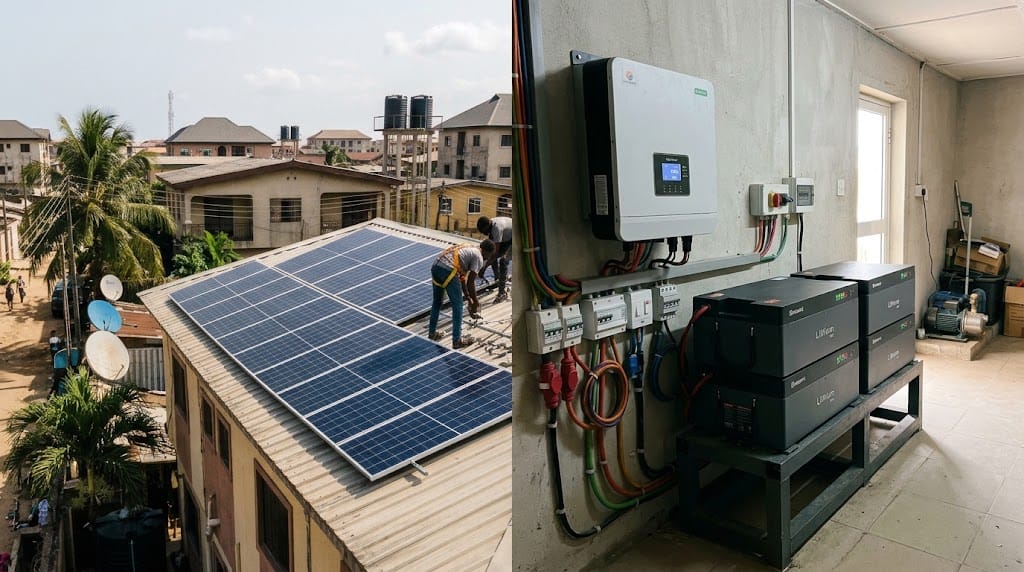
Across Nigerian cities and towns, petrol generators have long provided the soundtrack to everyday life. Rising fuel costs and regular national grid collapses have pushed households to seek cleaner, quieter alternatives. For a three-bedroom flat or a modest bungalow, a 3kVA (kilovolt-ampere) solar setup has become the most common entry point into renewable power.
A 3kVA inverter system delivers roughly 2,400 watts of continuous electrical load. That capacity bridges the gap between running bare essentials like LED lights and operating an energy-efficient refrigerator, workstation, television, and fans without interruptions. While the upfront investment is significant, the removal of national petrol subsidies and steep tariff hikes on the national grid have altered the financial arithmetic of domestic energy.
What a 3kVA System Can and Cannot Power
Understanding system limits prevents early equipment failure. Inverter capacity indicates the peak simultaneous electrical demand the system can supply, while battery storage determines how many hours that equipment can run without active sunlight or grid input.
A properly installed 3kVA system comfortably supports essential household electronics, including:
- All interior and exterior LED lighting points
- Three to four standing or ceiling fans
- One modern 43-inch to 55-inch television set, alongside a satellite decoder and soundbar
- Home office equipment, including two laptops, a Wi-Fi router, and mobile phones
- One inverter-type refrigerator or energy-efficient chest freezer (during daylight hours or with adequate battery capacity)
Certain high-draw inductive and resistive appliances remain off-limits. Traditional electric cookers, boiling rings, electric irons, electric water heaters, and pumping machines exceeding one horsepower draw excessive startup surge currents that trip a 3kVA inverter. Conventional air conditioners also overload a system of this size, though some energy-saving 1HP inverter units can run during peak afternoon sunshine if other appliances remain switched off.
The Anatomy and Price Breakdown of a Complete Setup
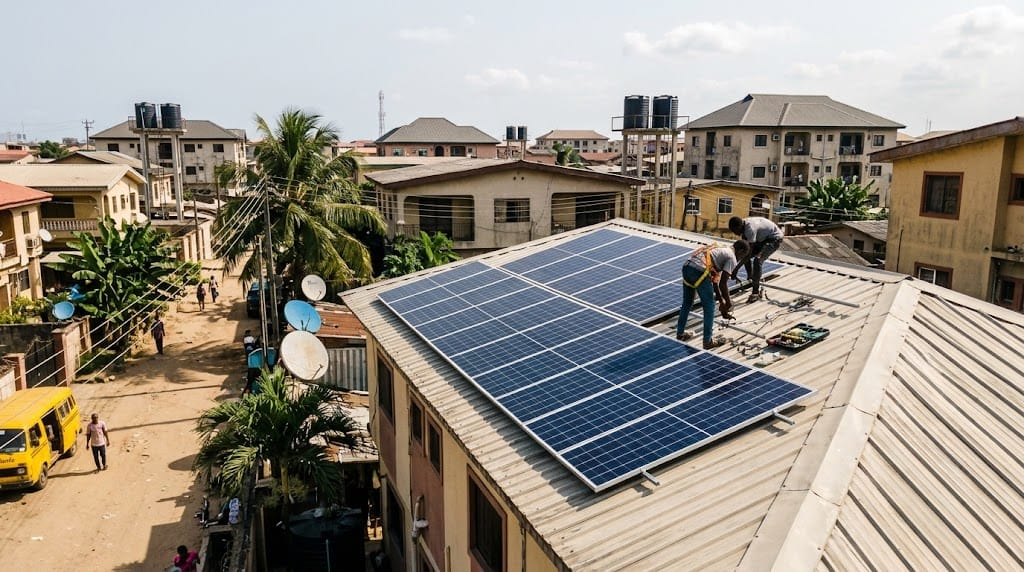
A functional solar installation requires four main component categories: the inverter, battery storage, photovoltaic (PV) solar panels, and balance-of-system electrical accessories with professional labour. In Nigeria, total turnkey costs range between ₦2,200,000 and ₦3,400,000 (roughly $1,450 to $2,250), depending heavily on the chosen battery chemistry.
The table below outlines the component costs for a standard 3kVA residential setup based on current market averages across major commercial hubs such as Lagos, Abuja, and Port Harcourt.
| Component | Specification | Tubular Setup (₦) | Lithium Setup (₦) |
|---|---|---|---|
| Pure Sine Wave Hybrid Inverter | 3kVA / 24V or 48V with built-in MPPT | ₦400,000 – ₦600,000 | ₦400,000 – ₦600,000 |
| Energy Storage Battery | 2x 220Ah Tubular vs 1x 5kWh LiFePO4 | ₦700,000 – ₦850,000 | ₦1,300,000 – ₦1,750,000 |
| Monocrystalline Solar Panels | 4 to 6 units (500W – 550W Tier-1 panels) | ₦500,000 – ₦720,000 | ₦500,000 – ₦720,000 |
| Balance of System (BOS) | Mounting rails, surge protectors, breakers, DC cables | ₦150,000 – ₦250,000 | ₦150,000 – ₦250,000 |
| Labour and Logistics | Professional installation and electrical separation | ₦100,000 – ₦180,000 | ₦100,000 – ₦180,000 |
| Total Estimated Cost | Turnkey Package | ₦1,850,000 – ₦2,600,000 | ₦2,450,000 – ₦3,500,000 |
Tubular Deep-Cycle Versus Lithium Iron Phosphate
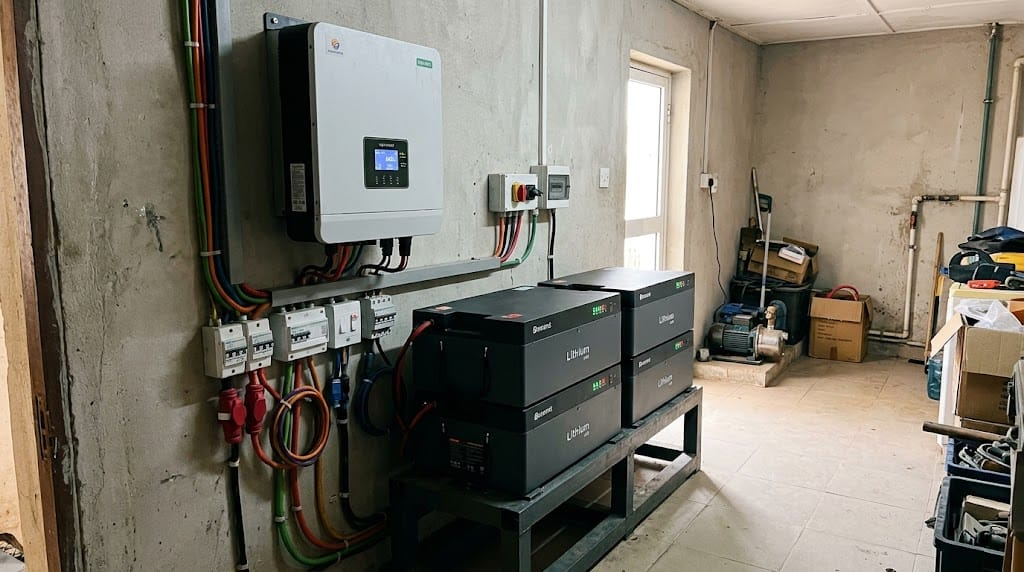
The battery bank represents the single largest variable in system cost and long-term satisfaction. Buyers choose primarily between lead-acid tubular wet-cell batteries and Lithium Iron Phosphate (LiFePO4) storage.
Tubular batteries carry lower initial price tags, requiring an upfront payment of roughly ₦700,000 to ₦850,000 for a 24-volt pair. However, they possess a usable depth of discharge (DoD) of only 50 per cent. Discharging a tubular battery beyond that threshold causes plate sulfation and slashes operational lifespan. They require regular checks to top up distilled water and typically need full replacement after 18 to 30 months.
Lithium iron phosphate packs offer an 85 to 90 per cent depth of discharge, meaning a 5kWh lithium battery provides nearly double the usable daily runtime of two 220Ah tubular batteries. Lithium units support over 4,000 charge cycles, delivering seven to ten years of service under normal residential operating temperatures. While a lithium battery requires about ₦1,400,000 upfront, it eliminates the mid-cycle battery replacements that quickly erode the perceived savings of lead-acid systems.
Calculating the Payback Period
To determine how fast a 3kVA system pays for itself, the capital expenditure must be weighed against current spending on alternative power sources: generator fuel, engine servicing, and public electricity bills.
The Generator Comparison
Prior to switching, many small households rely on a 2.5kVA to 3.5kVA petrol generator (commonly manufactured by brands such as Sumec Firman or Elepaq). A generator of this size consumes approximately 1.0 to 1.2 litres of petrol per hour under normal load.
With petrol selling between ₦1,050 and ₦1,150 per litre at filling stations across Nigeria, running a small generator for seven hours each day costs:
- Daily fuel burn: 8 litres × ₦1,100 = ₦8,800
- Monthly fuel expense (30 days): ₦264,000
- Monthly engine oil changes, spark plugs, and routine servicing: ₦16,000
- Total monthly operating cost: ₦280,000
A household that installs a complete lithium-based 3kVA solar system at ₦2,800,000 and cuts daily generator reliance from seven hours down to zero saves ₦280,000 per month.
₦2,800,000 investment ÷ ₦280,000 monthly savings = 10 months to reach break-even.
Even if that household still runs a generator for two hours on exceptionally overcast days during the peak rainy season, monthly fuel savings average ₦200,000. Under this conservative scenario, the payback period stretches slightly to 14 months. Every month of operation after that threshold represents direct savings.
The Grid Comparison (Band A Feeders)
For homes connected to Band A electricity feeders regulated by the Nigerian Electricity Regulatory Commission (NERC), electricity tariffs sit above ₦200 per kilowatt-hour for a target minimum supply of 20 hours daily. A household drawing a modest 250kWh monthly incurs a bill of over ₦52,000. While grid electricity remains cheaper than running a petrol generator, frequent transformer faults and distribution line failures still force urban homes to maintain secondary power sources. Solar removes this dependency entirely while locking in generation costs against future tariff reviews.
Longevity and Recurring Maintenance
Solar panels have the longest working life of any domestic technology component. Tier-1 monocrystalline panels retain roughly 80 to 85 per cent of their initial generation capacity after 25 years. Maintenance involves rinsing dust and harmattan haze off the glass surfaces with clean water and a soft mop every two to four weeks.
Modern hybrid inverters typically run without major faults for five to eight years, provided the installer incorporates proper surge protection devices and earth grounding to shield electronics from lightning strikes. With a quality lithium pack lasting upwards of eight years, a homeowner enjoys five to six years of electricity after the system has completed its payback cycle before any major component requires replacement.
Conclusion
Investing in a 3kVA solar system in Nigeria requires substantial capital, typically between ₦2,200,000 and ₦3,500,000 for a reliable setup. Given elevated fuel prices, the system recovers its complete purchase cost within 10 to 15 months by replacing daily petrol generator use. Choosing durable lithium battery chemistry over tubular alternatives increases initial expenses but secures nearly a decade of reliable, low-maintenance electricity.
Sources
- Nigerian Electricity Regulatory Commission (NERC)
- Rural Electrification Agency of Nigeria
- International Energy Agency (IEA) – Nigeria Energy Profile
Disclaimer: Equipment prices, fuel costs, and electricity tariffs vary by vendor, exchange rate fluctuations, and geographical location. This article provides general financial and technical estimates and does not constitute formal engineering or financial advice.
Category: Technology