Nigeria should price domestic crude at production cost, says Donald Duke
By CelebUD Newsroom —
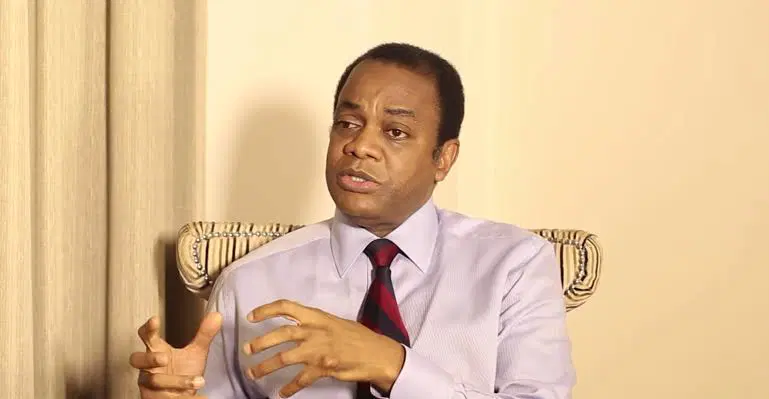
Former Cross River State Governor Donald Duke has urged the Nigerian government to provide crude oil to domestic refineries strictly at production cost rather than global market benchmarks, arguing that such an approach could dramatically bring down the pump price of Premium Motor Spirit (petrol) to between N200 and N300 per litre. Duke, who contested the 2019 presidential election on the platform of the Peoples Redemption Party (PRP), voiced his proposal during a media engagement in Abuja, entering the intensifying national discussion surrounding the complete deregulation of the downstream petroleum sector.
The Multi-Product Economics of Refining
Central to Duke's proposal is an economic principle that treats Nigeria's hydrocarbon resources as public heritage rather than merely an export commodity. He contended that the concept of a fuel subsidy fundamentally misrepresents domestic resource allocation, arguing that citizens should directly benefit from the extraction of their own natural assets.
“I don’t believe there is a subsidy. I have said it at several forums. This oil is our own. It belongs to all of us. It is our commonwealth. Don’t look at the price of oil in the international market.”
Duke outlined a operational framework based on Nigeria's national output figures. Out of the nation's estimated crude production of roughly 1.7 million barrels per day, Duke explained that around 300,000 barrels daily would fully satisfy internal processing and consumption needs, leaving an export balance of 1.4 million barrels for the international market. Rather than charging domestic processors prevailing global prices—which fluctuate between $70 and $80 per barrel—the state should invoice local refineries based on upstream extraction expenses.
“While we sell oil at $70 or $80 a barrel, the cost of production may not exceed $40 a barrel. That barrel has about seven by-products.”
The former governor argued that petrol represents only one derivative from a refined barrel and should not bear the entire weight of raw material acquisition costs. By selling other high-value yields—including diesel, aviation fuel (Jet A-1), kerosene, naphtha, and liquefied petroleum gas (LPG)—at full commercial market rates, the proceeds can offset the baseline expenditure, making heavily discounted petrol economically viable without operating at an overall loss.
“Give it to us at the cost of production, not at the market price. Take into cognisance the cost of refining and distribution and put five or 10 per cent above it. Sell the five other by-products from a barrel of crude at commercial rates. You will find that you can easily amortise the petrol and give it to your people at N200 or N300.”
Breaking Down the Illustrative Refining Model
To demonstrate the mathematical feasibility of this mechanism, Duke pointed to an analytical breakdown attributed to energy analyst Chief Ekpenyong Eyo. The model explores how cross-subsidisation among different refined outputs operates across a standard 159-litre barrel of crude.
According to this analysis, a standard barrel yields roughly 55 litres of petrol, alongside a larger collective volume of commercial by-products. Assuming a sample input cost of N150,000 per barrel, marketing the non-petrol fractions at competitive open-market values would recover approximately N136,350. This leaves a residual burden of only N13,650 to be amortised across the 55 litres of petrol, translating to a baseline crude component of roughly N248 per litre prior to factoring in refinery processing fees, logistics, and retail distribution margins.
| Operational Metric | Standard Export Benchmark | Proposed Domestic Allocation Model |
|---|---|---|
| Daily Volume Allocation | ~1.4 million barrels per day | ~300,000 barrels per day |
| Pricing Mechanism | International spot price ($70–$80/barrel) | Extraction cost (~$40/barrel + 5–10% margin) |
| Non-Petrol Yields (Diesel, Jet A-1, LPG) | Sold at commercial international rates | Sold at commercial rates to absorb crude costs |
| Projected Petrol Retail Target | Market-clearing price (N900–N1,100+) | Amortised domestic rate (N200–N300/litre) |
While industry commentators recognise that refinery configuration complexity, crude grading (such as sweet Bonny Light versus heavier blends), and operational yields vary widely across facilities like the Dangote Refinery or state-owned complexes, Duke maintained that the core financial principle remains solid: all revenue streams from a barrel must be evaluated holistically.
National Competitiveness and Border Security
Duke stressed that affordable fuel should serve as the primary engine for industrial stimulation rather than a fiscal balance-sheet tool for governments. In his view, cheap domestic energy represents Nigeria's greatest natural competitive advantage, lowering production overheads for manufacturers, farmers, and transporters.
“Why is it important? That is what drives your economy. That is what drives the country. You have got to use what you have to get what you want.”
Addressing critics who argue that low domestic fuel prices inevitably fuel cross-border smuggling into neighbouring West African countries, Duke dismissed the notion that domestic consumers should be penalised for regulatory and enforcement shortcomings. Instead, he recommended technical interventions to track Nigerian fuel.
“Are you going to punish your people because you cannot police your borders? You can dye your petrol. You can say petrol from Nigeria is purple, blue, yellow or red. It does not affect the engine. If you find that colour of petrol in Chad or Niger, you know it came from Nigeria. Your security agencies should find out how it got there.”
The Widening Political Debate on Fuel Subsidies
Duke's remarks add another voice to an increasingly polarising macroeconomic debate ahead of Nigeria's 2027 electoral cycle. The issue was reignited after former Vice-President Atiku Abubakar publicly pledged that, if elected to the presidency in 2027, he would reintroduce a structured petrol subsidy, arguing that the financial savings from the current administration's deregulation policy have failed to yield visible investments in healthcare, education, security, or job creation.
President Bola Tinubu has consistently defended his inaugural decision of May 29, 2023, to end fuel subsidies, asserting that the legacy system brought public finances to the brink of sovereign default and diverted trillions of naira away from essential infrastructure. Meanwhile, Peter Obi, former Labour Party presidential flagbearer and candidate of the Nigeria Democratic Congress (NDC) for the 2027 elections, supported ending the old arrangement in principle but maintained that deregulation should have been phased in gradually, coupled with targeted safety nets to protect household incomes.
Duke also challenged the economic orthodoxies advanced by multilateral lenders, cautioning Nigerian policymakers against uncritically following external structural advice.
“Don’t follow the Bretton Woods institutions, the World Bank and IMF, when they tell you that subsidy is why you are poor. They subsidise food because they have to keep their people productive. Whatever keeps your people alive and you have in abundance, use it. I am not saying sell it at a loss. Sell it at the cost of production and add maybe 10 per cent. That subsidy issue has to be revisited, and we have to understand what subsidy really means.”
The legal barrier of the Petroleum Industry Act
Duke's formula faces an immediate statutory hurdle in the Petroleum Industry Act 2021. The legislation explicitly requires all crude oil sales to domestic refiners, including supplies managed under national crude quotas, to follow prevailing market rates on a willing-buyer, willing-seller basis.
Putting cost-plus pricing into effect would require Nigeria's National Assembly to amend primary energy legislation. Upstream producers, including international companies operating joint ventures with the state-owned NNPC Limited, hold commercial concessions that protect their entitlement to open-market returns. Forcing operators to part with crude at extraction cost would risk arbitration claims or prompt companies to trim future exploration spending in deepwater and onshore basins.
Without legislative reform, NNPC Limited would have to absorb the price difference entirely from its own equity crude share. That would turn the national oil company back into an off-balance-sheet subsidiser, the very structure the 2021 energy reforms sought to dismantle.
Conclusion
Donald Duke’s proposal reframes the debate over downstream petroleum pricing from a straightforward choice between national budget strain and market prices to one centred on industrial resource strategy. By recommending that Nigeria segregate its 300,000-barrel daily domestic consumption from export allocations and price it based on extraction cost, he presents an alternative economic path aimed at curbing inflation and reviving domestic industry. As high energy costs continue to shape public debate and political agendas ahead of 2027, the challenge of balancing affordable consumer energy with upstream oil revenues will remain a central economic question for the country.
Category: Business