Tinubu: Nigeria Has Witnessed Major Drop In Crude Oil Revenue Reliance
By CelebUD Newsroom —
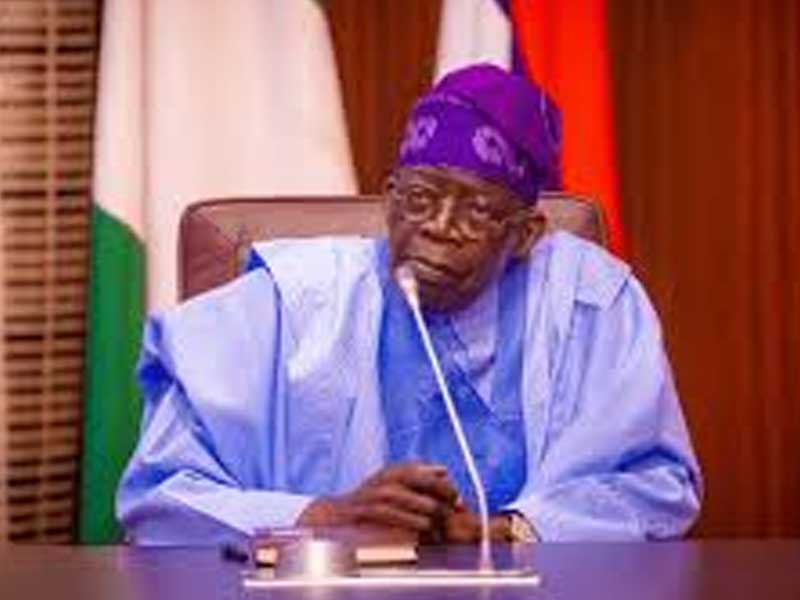
President Bola Tinubu has announced a substantial decline in Nigeria’s fiscal dependence on crude oil earnings, framing the milestone as tangible evidence that his administration's broad-based economic reform agenda is taking root. Delivering an address through Vice President Kashim Shettima in Abuja at the fifth anniversary of the Nigerian Upstream Petroleum Regulatory Commission (NUPRC), the Nigerian leader maintained that the country is aggressively steering away from its longstanding monoculture economy toward sustained multi-sector expansion.
Economic Diversification and the Shift Away from Crude Monoculture
For decades, Nigeria's public finances and foreign currency reserves have remained vulnerable to the volatile swings of global crude pricing. Addressing industry leaders, public officials, and international delegates, President Tinubu stated that the federal government's policy framework—driven by the Renewed Hope Agenda—is deliberately pivoting national productivity toward manufacturing, agriculture, and the digital and creative spaces.
While noting that the federal purse has achieved a significant reduction in crude receipts as a percentage of total state income, Tinubu emphasised that the hydrocarbon sector remains vital as an enabler of domestic industrial growth rather than the sole driver of budgetary survival.
"These gains matter well beyond the oil and gas industry. Under the Renewed Hope Agenda, we are building a diversified economy in which agriculture, manufacturing, the digital and creative industries all play their part. We have already reduced our dependence on oil revenue, and we intend to go further. But a diversified economy still needs energy, foreign exchange and investment, and that is where this sector serves the nation. Our gas can power homes and factories. Petroleum earnings support a stable naira and help fund the Federation."
The president highlighted that an efficiently supervised upstream industry creates extensive domestic supply chains, offering substantial employment to local engineers, industrial fabricators, and specialised service firms across the federation.
Energy Transition, Gas Expansion, and Investor Commitments
Addressing international climate goals, Tinubu reiterated his administration's commitment to what he characterised as a balanced, equitable energy transition tailored to the country's domestic realities. Proclaiming the current era as the nation's Decade of Gas, the President highlighted that Nigeria holds the largest proven natural gas deposits on the African continent.
"With the largest gas reserves in Africa, we will expand gas supply for power, industry and clean cooking, reduce flaring and methane emissions, and grow renewable energy alongside it. Nigeria will meet its climate responsibilities without sacrificing the development and energy access our people deserve."
On the commercial front, Tinubu reported that collaborative security arrangements involving armed forces, host communities, upstream operators, and regulatory authorities have established stability in production zones. Consequently, capital that had previously fled to competing jurisdictions is flowing back into the country, positioning Nigeria as the leading upstream destination in Africa for incoming capital for two consecutive years.
However, the President issued a stern warning regarding regulatory compliance, promising that the next era of sector management will enforce strict accountability:
"Operators who enjoy incentives must deliver on their commitments to work programmes, local content, the environment and host communities, and the Commission must also account publicly for its own performance. We will uphold the rule of law and the sanctity of contracts, so that disputes are fewer and, where they arise, are resolved quickly and fairly."
Regulatory Evolution Under the Petroleum Industry Act
The legislative cornerstone of the ongoing industry transformation remains the Petroleum Industry Act (PIA). Tinubu observed that statutory enactments merely create operating boundaries, while commercial investors make final decisions based on economic risk and return.
"Investors told us plainly that good rules were not enough while costs remained high, contracting took too long and fiscal terms for complex projects were uncertain. We listened, and we acted."
Describing the NUPRC as "the bridge between government policy and investment on the ground," the President charged the regulator to maintain transparent processes, preserve predictable administrative timelines, eliminate friction across inter-agency boundaries, and exercise resolute operational impartiality.
Key Operational and Sector Benchmarks
| Operational Metric | Current Benchmark / Industry Status |
|---|---|
| Daily Crude Oil Production | Approximately 1.7 million barrels per day |
| National Crude Oil Reserves | Over 37 billion barrels |
| African Gas Reserve Ranking | Largest proven reserves in Africa |
| Upstream Investment Ranking | Number one upstream destination in Africa (2 consecutive years) |
| Foundational Legal Framework | Petroleum Industry Act (PIA) |
Stakeholder Perspectives and Regulatory Performance
Contributing remarks at the ceremony, the Minister of State for Petroleum Resources (Oil), Senator Heineken Lokpobiri, credited the administration's decisive reform package for revitalizing the upstream space. Lokpobiri pointed out that while current output sits around 1.7 million barrels per day alongside more than 37 billion barrels in reserve, the country must actively pursue new licensing rounds, step up frontier exploration, and eliminate red tape to fully maximise its subsurface assets.
Senator Magnus Abe, Chairman of the NUPRC Governing Board, praised the presidency for protecting the regulatory body against partisan interference. Abe highlighted that the creation of the commission from the former Department of Petroleum Resources (DPR) demonstrated clear progress under the PIA, commending the commission's workforce for professional diligence and transparency over its five-year tenure.
From the legislative arm, Senator Jarigbe Agom Jarigbe, Chairman of the Senate Committee on Gas, confirmed that the National Assembly remains satisfied with the NUPRC's stewardship, noting that statutory reforms have heightened certainty and renewed investor confidence. Representing the Minister of State for Petroleum Resources (Gas), Ekperikpe Ekpo, the Ministry's Permanent Secretary, Mrs. Patience Oyekunle, emphasised that the formal delineation of commercial, policy, and oversight responsibilities under the PIA has permanently strengthened regulatory stability across the gas value chain.
The commemorative gathering concluded with honorary presentations acknowledging former Directors of the Department of Petroleum Resources, celebrating their technical contributions to the modern regulatory architecture.
Domestic consumers face commercial energy pricing
The government's plan to direct natural gas into domestic power stations and factories depends on commercial operators securing reliable returns. For years, domestic gas was sold to power producers at capped prices, leading to unpaid debts and chronic electricity shortages across the country. Shifting gas from an export-focused commodity to a domestic fuel source requires Nigerian consumers to pay cost-reflective tariffs for both electricity and piped energy.
Households already feel this realignment in the cost of liquefied petroleum gas (LPG) for cooking and rising kilowatt-hour charges for grid electricity. While the long-term aim is a more dependable power supply and less reliance on imported refined petrol, the immediate effect is that domestic energy consumption is treated as an unsubsidised commercial market, raising monthly overheads for ordinary families.
Conclusion
President Tinubu’s announcement reflects a broader strategic realignment: using oil and gas receipts as an economic launchpad rather than relying on them as a fiscal crutch. Moving forward, the federal government faces the task of holding upstream operators to strict contract and local-content delivery, while the NUPRC must continue cutting regulatory friction to keep capital flowing into domestic gas infrastructure and industrial power generation.
Category: Business