UK Visitor Visa for Christmas: How African Travellers Avoid Refusals
By Matthew Ayandare —
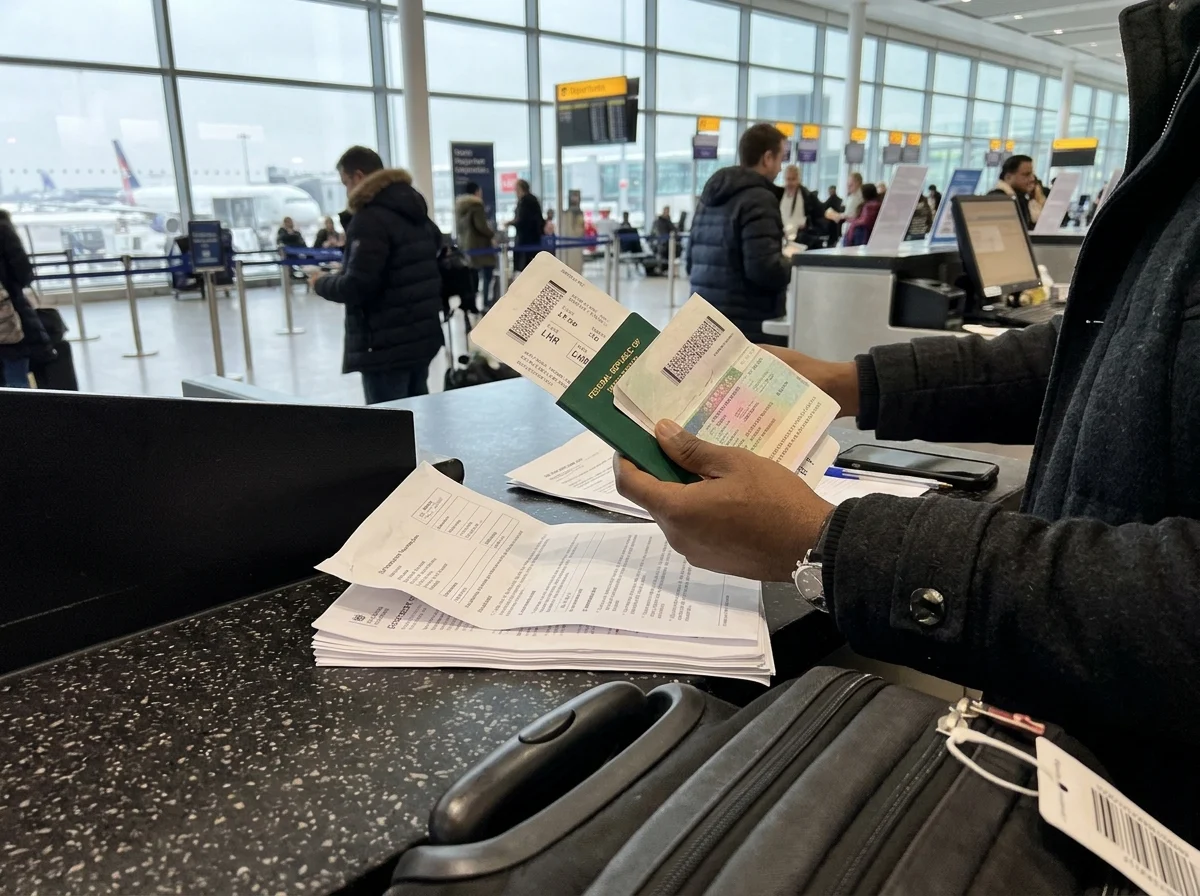
Every winter, thousands of travellers in Lagos, Abuja, Accra, and Nairobi submit paperwork to spend the Christmas holidays with relatives across the United Kingdom. Festive gatherings, church conventions, weddings, and winter breaks drive a sharp surge in Standard Visitor visa applications between September and November. Yet UK Visas and Immigration (UKVI), the division of the Home Office responsible for border control, turns down a substantial proportion of these submissions.
Unlike student or skilled worker routes, a Standard Visitor visa application rarely includes an interview. An entry clearance officer decides an applicant's fate strictly on the documents uploaded to the portal. A single unexplained deposit, an incomplete employer letter, or a poorly worded invitation from a host in London or Birmingham can ruin months of holiday planning. Understanding how decision-makers assess applications under Appendix V of the Immigration Rules allows visitors to submit files that satisfy official requirements.
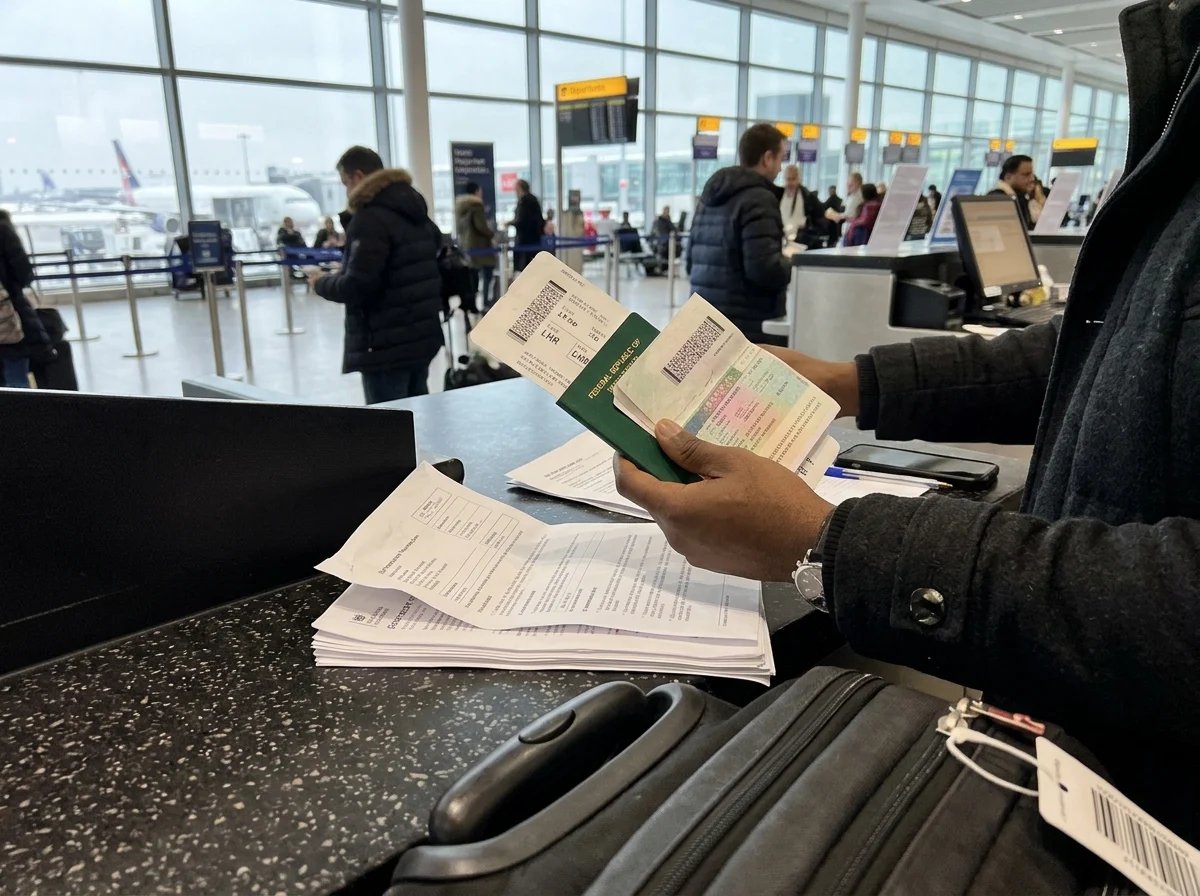
Who Needs a Visa and How Winter Application Deadlines Work
Citizens of Nigeria, Ghana, and Kenya require a Standard Visitor visa to enter the United Kingdom for tourism, family visits, or short business trips. This applies regardless of whether the traveller holds valid visas for the United States, Canada, or the Schengen Area. Travellers who hold British passports, certificates of entitlement to the right of abode, or settled status under the EU Settlement Scheme do not need a visa.
Standard Visitor visas cost £135 for a six-month duration. Longer multi-entry options cost £506 for two years, £903 for five years, and £1,128 for ten years. Choosing a longer duration does not grant permission to stay in the country for longer than six months on any single visit, and applicants must demonstrate a recurring need to travel.
Official UKVI processing times stand at three weeks (15 working days) once biometrics are enrolled at a visa application centre. In Ghana, Kenya, and Nigeria, VFS Global operates the application centres. During the fourth quarter of the year, appointment slots fill quickly, and postal couriers handle heavy volumes. An applicant intending to arrive in the UK by mid-December ought to complete biometric enrolment no later than the first week of November. Priority processing, which delivers a decision within five working days, is available at an extra fee of £500, while super-priority next-day service costs £1,000 where available.
Proving Concrete Ties to Your Home Country
The core legal test for any visitor visa is paragraph V 4.2 of the Immigration Rules. The applicant must satisfy the decision-maker that they are a genuine visitor who will leave the UK at the end of their visit and will not live in the UK through frequent or successive visits.
Entry clearance officers approach applications from emerging economies with a default concern regarding economic migration. Overcoming this requires showing that your personal, economic, and social life is firmly rooted in your home country.
Employment and Professional Commitments
Employed applicants need a formal letter from their employer printed on corporate letterhead. The document must state:
- Your job title, commencement date, and gross monthly or annual salary.
- Approval for specific dates of annual leave covering the full period of the UK stay.
- The exact date you are expected back at your desk.
- Contact details of a verifiable human resources officer or director, including an official corporate email address rather than a generic public webmail address.
Accompany this letter with payslips covering the past three to six months. The net pay reflected on these slips must correspond precisely with the salary deposits into your submitted personal bank account.
Business Ownership and Self-Employment
Entrepreneurs cannot rely on simple registration certificates. In Nigeria, enclose your Corporate Affairs Commission (CAC) status report, certificate of incorporation, and company tax clearance certificate. In Ghana, provide the Registrar General’s Department business profile and current tax receipts. In Kenya, submit your Business Registration Service (BRS) CR12 document along with your Kenya Revenue Authority (KRA) tax compliance certificate.
Self-employed applicants must also furnish company bank statements alongside their personal bank accounts, accompanied by contracts, invoices, or audited financial reports demonstrating that the enterprise actively trades and demands their physical presence in January.
Family and Property Ties
Social ties demonstrate clear reasons to return. Marriage certificates and birth certificates of dependent children who will remain behind provide strong evidence of domestic stability. If you own property or land, include deed titles or land registry documents. If you rent, a tenancy agreement showing an active lease that continues beyond your holiday dates helps prove an ongoing domestic base.
Bank Statements and the Funds Parking Red Flag
Refusals routinely occur because of how personal finances are presented. The Home Office does not look solely at the closing balance of your account; caseworkers scrutinise the origin of the funds and the movement of money over the preceding six months.
“The decision-maker must be satisfied that the funds you hold are genuinely available to you and that your stated income matches the deposits across your accounts.”
A frequent error is known as “funds parking”. This happens when an applicant borrows a large sum of money from a friend, relative, or cooperative society weeks before applying, deposits it into their account to inflate the balance, and prints the statement. Caseworkers detect this immediately. If a sudden deposit appears on your statement that dwarfs your regular monthly income, UKVI will view it as artificial wealth unless you provide complete documentary evidence of its origin.
If you legitimately sold a vehicle, received a property dividend, or cashed in an investment to fund your holiday, include the bill of sale, investment maturity advice, or bank draft confirmation. Explain the transaction clearly in your personal cover letter. The account must show a stable balance capable of covering the trip without emptying your life savings.
Structuring a Sponsor Letter Properly
Visiting family in the UK often involves staying in their home or having them cover living expenses. A UK sponsor can support an application, but a sponsorship letter alone does not guarantee a visa. The applicant remains solely responsible for proving their own intention to return home.
When a UK-based relative offers accommodation or funds, the sponsor must provide a focused document pack:
- Letter of invitation: This letter must detail the relationship between the sponsor and the visitor, the specific dates of the stay, the exact address where the guest will sleep, and who will pay for food, transport, and emergencies.
- Proof of legal status in the UK: A copy of the sponsor’s British passport biodata page, Indefinite Leave to Remain card, or an official share code verifying their digital eVisa status through the Home Office online system.
- Adequate accommodation evidence: A copy of the sponsor’s council tax statement, mortgage statement, or a tenancy agreement along with written permission from the landlord allowing the guest to stay. The accommodation must not breach statutory overcrowding regulations under the UK Housing Act 1985.
- Financial proof: If the sponsor is paying for the holiday, they must supply six months of their own UK bank statements and payslips showing surplus disposable income.
Application Assessment Matrix
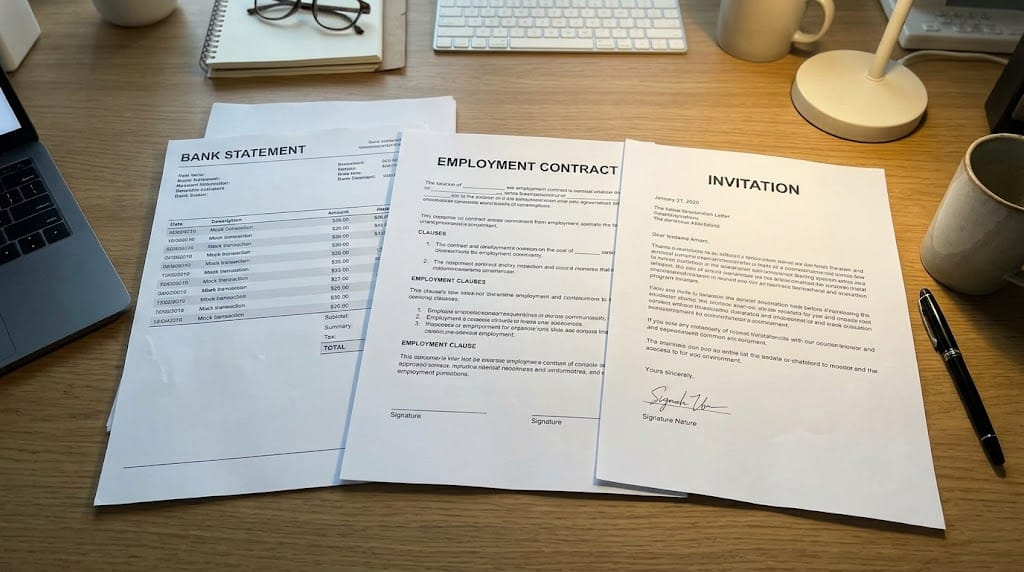
Entry clearance officers balance positive factors against potential warning signs when assessing an applicant's dossier:
| Assessment Factor | Evidence That Secures Approval | Red Flag That Invites Refusal |
|---|---|---|
| Financial Profile | Consistent salary credits matching payslips, clear sources for all deposits, sufficient savings after trip costs. | Unexplained lump-sum deposits shortly before application; expenses exceeding annual disposable income. |
| Ties to Home | Confirmed employment with approved holiday dates, active registered business, dependents staying behind. | Unemployed status, informal work without verifiable paper trail, lack of family or property commitments. |
| UK Accommodation | Tenancy agreement or property deeds confirming ample space without statutory overcrowding. | Vague addresses, informal promises to stay with friends with no lease proof or landlord consent. |
| Travel Itinerary | Specific, realistic day-to-day plan with budgeted excursions and identified flight reservation paths. | Generic itineraries, excessively long trips incompatible with an employer leave allowance. |
| Immigration History | Full disclosure of prior refusals to any country, compliant previous travel to the UK or other jurisdictions. | Failure to declare an old visa refusal, which triggers mandatory rejection under deception rules. |
Common Grounds for Refusal Under Appendix V
Refusal notices for African applicants frequently rely on standard phrases that point to specific evidentiary failures:
Disproportionate Expenditure Relative to Income
If an applicant earns the equivalent of £400 a month in Nairobi, Accra, or Lagos, and proposes spending £3,000 on a two-week London holiday, UKVI will often refuse the application. A caseworker will calculate that spending six to eight months of net earnings on a short winter break makes little economic sense for a genuine traveller, concluding that the trip is an excuse to seek unauthorised work.
Unverified Employment
Home Office staff regularly ring the phone numbers listed on company letterheads. If the receptionist has no record of you, if the phone rings out continuously, or if the employer cannot verify the exact salary figures written on the visa application, a refusal under paragraph V 4.2(a) follows immediately. Ensure your company’s human resources department is aware of your application.
Failure to Disclose Immigration History
Paragraph 9.7.1 of the Immigration Rules requires refusal if an applicant makes false representations or fails to disclose material facts. If you were refused a visa to the UK, Canada, the US, or a European country ten years ago, you must declare it on the digital form. UKVI shares intelligence through the Five Country Conference data exchange, which links immigration databases across the UK, the US, Canada, Australia, and New Zealand. Omitting a previous refusal invites a mandatory refusal and can lead to a ten-year ban on grounds of deception.
Remedies If UKVI Refuses the Application
Standard Visitor visa refusals carry no statutory right of appeal to the First-tier Tribunal, nor is there a right to administrative review, unless an applicant raises an explicit human rights claim, which visit visas rarely satisfy.
When faced with a refusal, an applicant has two avenues:
- Submit a fresh application: This is the fastest and most practical path. Review the refusal letter line by line. Obtain fresh, targeted evidence that answers every single concern raised by the caseworker. If the officer complained about an unexplained ₦2,000,000 or GH₵15,000 deposit, provide bank receipts and a signed affidavit explaining the source. If the officer doubted your employment, secure a more detailed letter from your employer with official corporate tax filings.
- Pre-Action Protocol for Judicial Review: If the entry clearance officer made a perverse factual error, such as overlooking a clear bank document that was properly uploaded, you can instruct an immigration barrister or solicitor regulated by the Solicitors Regulation Authority (SRA) to send a Pre-Action Protocol (PAP) letter. This formal legal warning gives the Home Office 14 days to reconsider the decision before facing High Court proceedings. For a short-term Christmas holiday, however, legal review timelines rarely conclude before the festivities end.
Conclusion
A UK Visitor visa application for the Christmas season succeeds or fails based on the quality of documentation rather than good intentions. For travellers applying from Nigeria, Ghana, and Kenya, demonstrating a genuine visitor profile requires transparent finances, an unblemished immigration record, and verified personal ties that prove you will return home in the New Year. By presenting verifiable employment records, explaining every large bank transaction, and aligning host invitations with UK housing regulations, applicants can secure their approvals and avoid painful festive disruptions.
Sources
- UK Visas and Immigration: Standard Visitor Visa Guidance
- UK Visas and Immigration: Immigration Rules Appendix V (Visitor)
- UK Visas and Immigration: Visa Processing Times Outside the UK
- VFS Global: Official Partner for UK Visas and Immigration
Disclaimer: This article provides general informational guidance on UK immigration regulations and does not constitute formal legal advice. Readers should verify current requirements on the official UK government portal or consult a regulated immigration solicitor before submitting their applications.
Category: Immigration