Fake Job Offers Abroad: How Scammers Target Applicants in Kenya, Ghana and Nigeria
By Gbenga Ayandare —
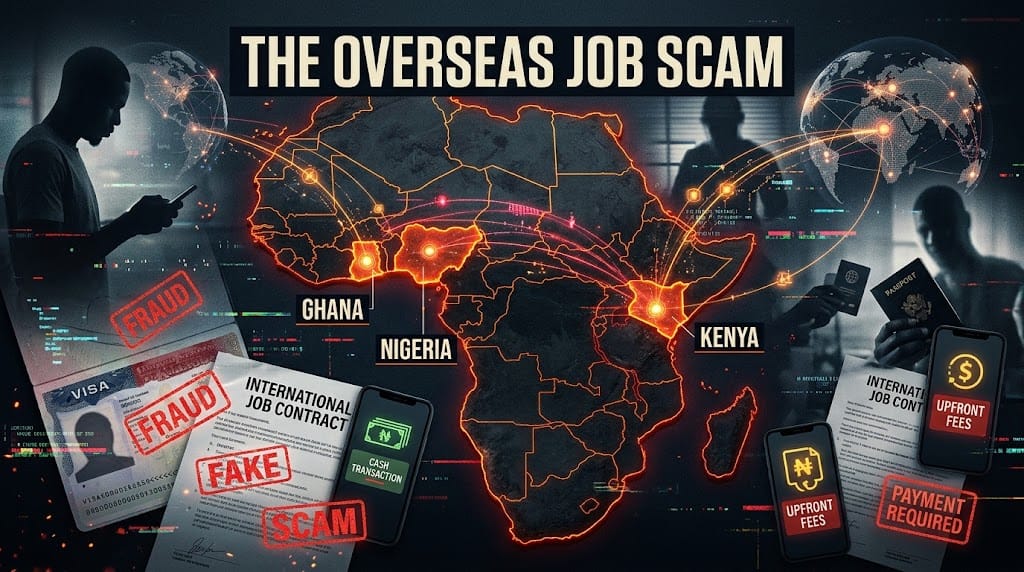
Fraudulent overseas job offers have grown into an organised cross-border industry, draining millions of pounds, dollars and local currencies from job seekers across East and West Africa. In Nairobi, Accra and Lagos, recruitment syndicates run sophisticated operations that mimic established corporate brands, international healthcare systems and government immigration departments. The victims, who frequently liquidate family assets or secure high-interest loans to finance relocation costs, often find themselves holding worthless pieces of paper or stranded at transit hubs with fraudulent travel documents.
The mechanics of these swindles depend on creating an impression of legal authenticity. Unscrupulous operators exploit legitimate visa routes, including the United Kingdom Health and Care Worker visa, Canadian work permits, and domestic or hospitality pathways to the Gulf states. Understanding the methods used by these illicit networks reveals how they evade regulatory enforcement and extract cash at every stage of the hiring process.

The Anatomy of an Overseas Employment Scam
International recruitment fraud rarely begins with an obvious demand for money. Scammers first build credibility by circulating convincing job listings on social media networks, professional platforms and regional classified boards. These adverts target high-demand professions: nurses, care assistants, agricultural labourers, construction workers and truck drivers.
Once an applicant submits a curriculum vitae, the response arrives swiftly. Unlike legitimate multinational recruiters that conduct multiple rounds of technical interviews, rogue operators often issue an offer letter within forty-eight hours. The correspondence carries high-resolution corporate logos, forged company registration numbers, and signatures copied from public filings. In Kenya, scammers routinely forge documents from fruit farms in the UK or healthcare trusts in the National Health Service (NHS). In Nigeria and Ghana, fraudsters fabricate offers from Canadian engineering and hospitality firms, using legitimate business names without the knowledge of the genuine owners.
The trap closes once the contract is signed. The fraudulent agent informs the applicant that the employer has agreed to pay their salary, flights and accommodation, but local processing fees must be covered immediately. These demands are framed as administrative expenses: medical clearances, criminal background verifications, expatriate quota clearances, or visa processing levies.
The Canadian Work Permit and LMIA Trap
Canada remains one of the most sought-after destinations for professionals and skilled tradespeople in Africa. Exploiting this demand, scammers rely heavily on fake Labour Market Impact Assessment (LMIA) documents. Under genuine Canadian immigration rules overseen by Employment and Social Development Canada (ESDC) and Immigration, Refugees and Citizenship Canada (IRCC), an LMIA is a document that an employer in Canada may need to get before hiring an overseas worker. A positive LMIA confirms that there is a need for a foreign worker to fill the job.
Under Canadian federal law, employers are strictly prohibited from charging job applicants for an LMIA or recovering the 1,000 Canadian dollar application fee from foreign recruits. Scammers ignore this distinction entirely. Agents in Lagos and Accra frequently demand between 1.5 million and 4 million Nigerian naira, or between 15,000 and 40,000 Ghanaian cedis, claiming the payment covers an official "LMIA allocation fee".
The documents provided to applicants are often crude replicas of ESDC confirmation letters. When the victim attempts to verify the document number through official channels, the fraud is revealed. Those who do not verify the letter pay further sums for biometric bookings and bogus priority processing, only to discover at the visa application centre that no record of their case exists on the IRCC system.
| Feature | Legitimate Overseas Hiring Process | Fraudulent Recruitment Syndicate |
|---|---|---|
| Initial Interview | Multiple technical rounds via video call or accredited agency | Immediate job offer after CV submission; no formal interview |
| Upfront Application Fees | Zero charges; legitimate employers absorb recruitment costs | Demands for "file activation", "visa processing" or "guarantee" fees |
| Labour Approvals (e.g., LMIA, CoS) | Paid entirely by the employer under host country laws | Applicant instructed to pay the agency or intermediary for approval |
| Correspondence Domain | Corporate email matching the official employer website | Generic webmail accounts (Gmail, Yahoo) or misspelled domain names |
| Payment Destination | Registered institutional accounts or direct government portals | Personal bank accounts, cryptocurrency wallets, or mobile money lines |
UK Care Sector Exploitation and Certificate of Sponsorship Abuse
Following changes to the UK immigration system that brought the Health and Care Worker visa into prominence, demand for sponsorship in the adult social care sector increased across Commonwealth nations. The UK Home Office assigns an electronic record known as a Certificate of Sponsorship (CoS) to licensed employers, who then assign them to qualified candidates.
Rogue intermediaries in Kenya and Nigeria established shadow networks that purchase genuine CoS allocations from struggling British care homes, or fabricate entirely false certificates. These middlemen charge applicants up to 8,000 British pounds (often converted to over 1.3 million Kenyan shillings or 15 million Nigerian naira) for a single certificate.
Applicants who arrive in the UK on these arrangements frequently discover that the underlying business does not have enough work to sustain them. In worse cases, the Home Office revokes the employer's sponsor licence before or shortly after the worker lands, leaving the migrant without legal status, recourse, or the money spent to secure the role.
Middle East Domestic Labour Networks in East and West Africa
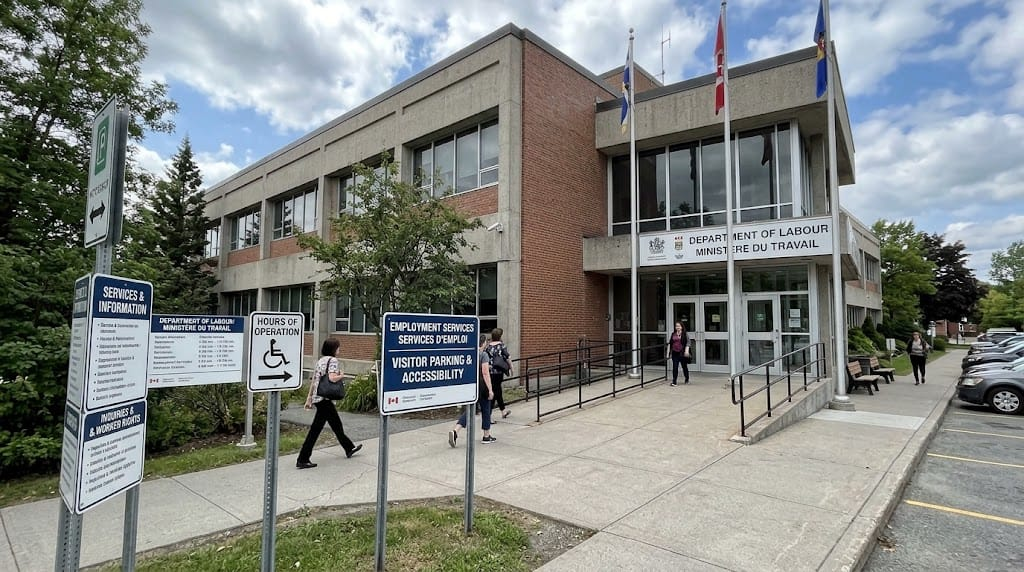
In Kenya, the exploitation surrounding recruitment for positions in Gulf states, particularly Saudi Arabia, Qatar and the United Arab Emirates, involves licensed and unlicensed recruitment agencies operating in parallel. While the Ministry of Labour and Social Protection in Nairobi sets regulations through the National Employment Authority (NEA), enforcement struggles against unlicensed brokers operating in rural counties and urban slums.
Unregistered sub-agents promise administrative or retail positions in Dubai or Doha. Candidates pay substantial sums for medical examinations and travel paperwork. Upon arrival in the Gulf, workers have their passports confiscated and are placed into unpaid domestic servitude or gruelling construction positions under conditions vastly different from the contracts signed at home.
Ghanaian applicants face comparable risks. The Labour Department under the Ministry of Employment and Labour Relations in Accra has repeatedly issued warnings regarding unregulated travel agencies advertising overseas vacancies. Brokers collect between 10,000 and 25,000 Ghanaian cedis per applicant, promising guaranteed employment upon arrival. When these contracts fail to materialise, deportations follow, leaving families saddled with debt to local money lenders.
Common Red Flags in Overseas Contracts
Recognising how fraudulent recruitment campaigns are structured helps applicants spot illegitimacy before parting with funds. The following signs indicate a suspicious recruitment process:
- Unsolicited employment offers: Receiving a job offer without ever having applied for the role, or after sending an unsolicited message on an informal social media group, is an immediate indicator of fraud.
- Free flights and housing with upfront deposits: Scammers attract victims by offering packages that sound too generous to be true, such as free furnished apartments and paid annual flights, but condition these perks on an immediate "refundable bond" or security deposit.
- Generic email addresses: Legitimate global firms communicate using company domain names. Communications from addresses ending in free webmail extensions or slight variations of corporate names should be treated with scepticism.
- Payments requested via personal accounts: No accredited recruitment firm or overseas government department instructs candidates to send administrative payments to personal bank accounts, mobile money numbers, or through international money transfer services.
- Pressure to act instantly: Fraudsters apply artificial urgency, stating that a work quota expires within twenty-four hours to prevent applicants from consulting family members, legal counsel or regulatory authorities.
Official Verification and Regulatory Channels
Each country maintains statutory bodies designed to regulate foreign recruitment. Applicants should cross-reference any agency or offer with these organisations before paying fees or handing over original personal documents.
In Nigeria, the Federal Ministry of Labour and Employment regulates private employment agencies. The National Agency for the Prohibition of Trafficking in Persons (NAPTIP) also investigates cases of deceptive recruitment. Legitimate private recruiters must hold a valid recruiter's licence issued by the ministry.
In Kenya, the National Employment Authority maintains an online register of accredited private employment agencies. Job seekers can verify whether an agency has an active licence and whether the specific job order has been vetted and approved by the government.
In Ghana, the Labour Department oversees recruitment licences under the Labour Act of 2003. Applicants can verify recruiters directly with the department's public employment centres across the regions.
For international verification, the destination country's official portals provide transparent rules: the Canadian government does not charge job seekers for job matches through its Job Bank portal, and the UK Home Office publishes an updated list of registered sponsors licensed to hire from abroad. Cross-referencing an employer against these government databases confirms whether an organisation actually holds legal authority to issue work permits.
Conclusion
Overseas employment scams continue to thrive by preying on the ambitions of workers seeking professional advancement and higher earnings abroad. Scammers exploit regulatory gaps and imitate official legal processes, leaving applicants in Kenya, Ghana and Nigeria vulnerable to financial loss and personal danger. Verifying an employer's licence with national labour ministries, refusing to pay fees for work permits, and cross-checking documentation through official government immigration portals remain the most dependable defences against international recruitment fraud.
Sources
- Immigration, Refugees and Citizenship Canada (IRCC)
- UK Visas and Immigration (UKVI)
- National Employment Authority Kenya (NEA)
- National Agency for the Prohibition of Trafficking in Persons Nigeria (NAPTIP)
- Ministry of Employment and Labour Relations Ghana
Disclaimer: This article provides general informational guidance on international recruitment practices and is not legal or immigration advice. Regulations and visa criteria vary by jurisdiction and change frequently; consult an accredited immigration lawyer or official government department for specific cases.
Category: Immigration