Can't find your Ontario ancestor's birth record? Other records can support your citizenship by descent claim
By CelebUD Newsroom —
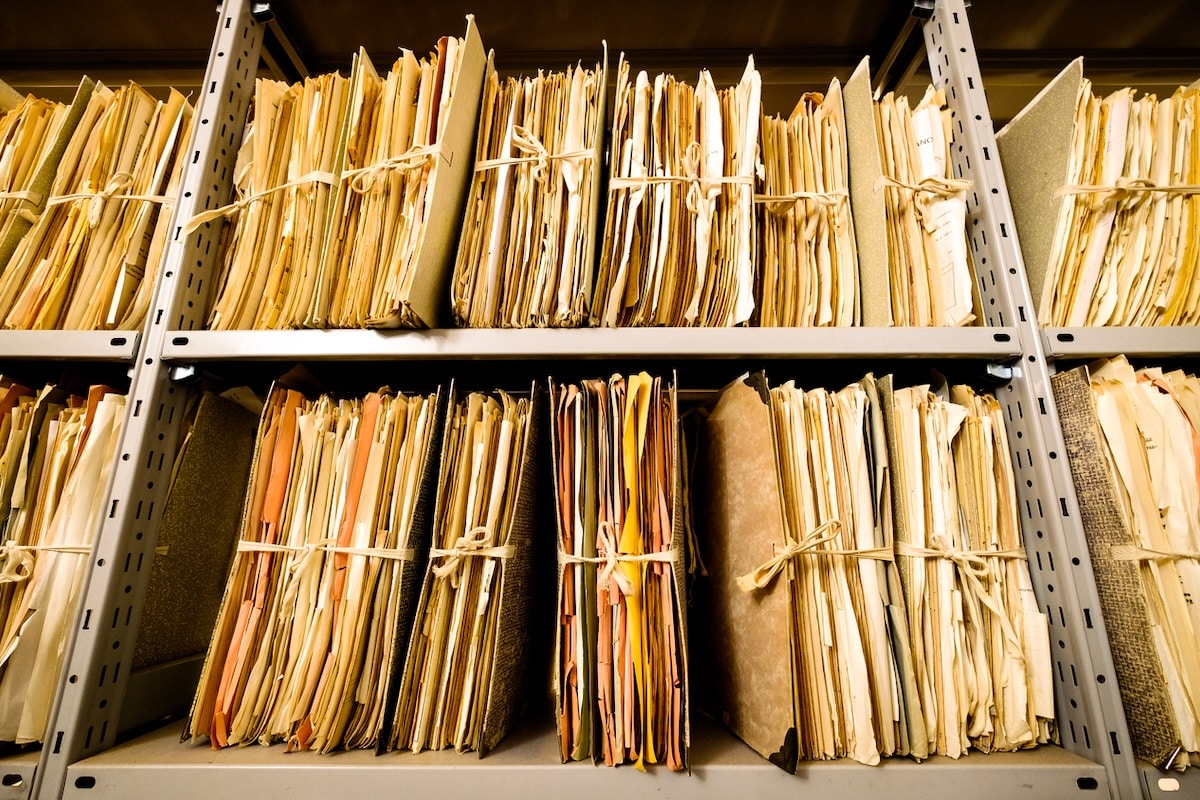
Applicants pursuing Canadian citizenship by descent frequently encounter a sudden obstacle: the birth registration for a parent or grandparent born in Ontario simply cannot be found. Historical gaps in provincial record-keeping mean that an absent civil birth record does not automatically close the door on a citizenship claim. By turning to substitute documents and demonstrating exhaustive efforts to retrieve original files, applicants can still assemble a credible, legally sound case for Immigration, Refugees and Citizenship Canada (IRCC).
The Historical Gaps in Ontario Civil Registration
Civil birth registration officially started across Ontario on 1 July 1869. In practice, widespread compliance took decades to establish. Remote rural settlements, limited regional administrative oversight, and widespread indifference meant that numerous households never formally recorded the arrival of their children with the government.
Demographic research conducted in 1930 by Robert Kuczynski estimated that civil authorities in Ontario captured only about two-thirds of actual births between 1875 and 1895. Historian George Emery later examined these numbers, calculating that registration completeness rose to roughly 86 per cent by 1900 and reached 94 per cent by 1920. Tens of thousands of people born in the late 19th and early 20th centuries were never entered into provincial ledgers at the time of their birth.
Later legal requirements eventually pushed many Ontarians to file delayed registrations decades after the event. Emery highlighted the passage of a 1924 United States immigration statute, which demanded verified documentation of Canadian origin for cross-border traffic, as a primary catalyst for retroactive filings. When searching official archives, applicants should note that Ontario recorded events based on the year the entry was registered rather than the year the child was born. Delayed filings from later decades were routinely placed in distinct provincial record groups, such as the "50" and "90" series. Searching indexes several years or decades past the actual birth date often yields a late registration that initial inquiries missed.
How IRCC Weighs Documentary Evidence
IRCC evaluates evidence for citizenship applications using a balance of probabilities standard. Officers assess the entire portfolio of records rather than relying on a single document in isolation. In mid-2026, IRCC briefed the Association of Canadian Archivists (ACA) regarding how citizenship officers categorise and assess proof into distinct primary and secondary tiers.
All supporting items must originate directly from the primary authority that maintains custody of the records, such as an official civil archive or a church registry office. Uncertified printouts from third-party genealogical platforms like Ancestry or FamilySearch cannot satisfy evidentiary thresholds on their own.
| Evidence Tier | Evidentiary Weight and Mandatory Rules | Accepted Documents |
|---|---|---|
| Primary | Carries the highest weight. Applications must provide one or more primary documents for each generational link, obtained from the original custodial authority. |
|
| Secondary | Considered by officers to support a chain of descent where primary documents are incomplete or unavailable. Carries less weight individually but builds a collective case. |
|
Navigating Repositories for Secondary Proof
When civil birth records do not exist, secondary records that link the subject to their parents and place of birth become crucial. The first step typically involves locating the family in Canadian census returns, which pinpoint both geographical locations and religious affiliations.
Library and Archives Canada (LAC) maintains digital images of Canadian decennial censuses from 1871 through 1931. The 1901 census is uniquely valuable because it recorded the exact calendar day, month, and year of birth for every individual. The 1911 census records the birth month, year, and province. IRCC does not require certified copies of census pages; applicants may submit a clean download alongside the official LAC catalogue description sheet.
A confirmed religious affiliation directs researchers toward church baptismal rolls, which often represent the earliest written record created following an infant's arrival. Archival access and fee schedules current as of November 2026 include:
- United Church of Canada Archives: Holds Methodist, Presbyterian, and Congregational parish records predating the 1925 church union, covering Ontario with the exception of Ottawa and the Seaway Valley. Certified transcripts carry a search fee of $25, followed by a certificate charge of $50 for records pre-dating 1900, or $30 for later entries. Processing timeframes remain open-ended.
- Roman Catholic Dioceses: Registers remain under the control of individual parishes or regional chancery archives. The Archdiocese of Toronto provides online access to sacramental registers dated before 1910. The Diocese of London permits direct descendants to request records with proof of identification, though processing backlogs exceeded 1,000 pending inquiries by late summer.
- Anglican Church of Canada: Managed at the diocesan tier under local policies and fees. The Diocese of Toronto archives department handles limited research requests for remote researchers.
- Baptist Records: Maintained at the Canadian Baptist Archives at McMaster Divinity College. Because Baptists practise believer's baptism rather than infant christening, these files omit birth details. Inquiries require a specific town and date range.
- Evangelical Lutheran Church: The Laurier Archives at Wilfrid Laurier University curates these collections. Inquirers must supply the congregation name, subject's full name, parents' details, and approximate dates. The university observes a 104-year closure window before releasing baptismal files.
Where Ontario Vital Records Are Preserved
Official vital records in Ontario are divided across different institutions depending on when the event took place. Understanding the chronological divisions prevents misdirected searches.
| Vital Event | Archives of Ontario Holdings | Ancestry Availability | FamilySearch Availability |
|---|---|---|---|
| Births | 1869 to 1920 | Events up to 1919 | Events up to 1912 |
| Marriages | 1869 to 1945 | Events up to 1943 | Events up to 1927 |
| Deaths | 1869 to 1955 | Events up to 1953 | Events up to 1937 |
All vital events occurring after the cutoff years held by the Archives of Ontario fall under the custody of ServiceOntario's Office of the Registrar General. For historical years within the provincial archives' mandate that do not appear on web portals, the Archives of Ontario accepts research requests directly.
Other provincial documents can substitute effectively. An Ontario marriage registration documents the specific birthplace of both partners, their religious traditions, and the full names of both sets of parents. Death certificates also report the birth location. Researchers can also consult military records; LAC has scanned approximately 622,000 service files from the Canadian Expeditionary Force of the First World War, which contain signed attestation papers listing dates and places of birth.
Documenting Search Efforts for IRCC
When an essential civil document cannot be secured from the primary authority, IRCC requires the applicant to submit a formal written explanation explaining the absence, backed by tangible proof of attempted searches. Officers need verification that the applicant carried out reasonable due diligence before resorting to secondary materials.
Citizenship applicants do not need a formal certificate of search failure or "no-record letter" to satisfy this requirement. Guidance shared by the ACA confirms that written correspondence or email exchanges with archives, parish offices, or the Office of the Registrar General serve as sufficient proof. When an agency does provide an official confirmation that no file exists, that letter should be included in the submission.
Researchers should keep an orderly log of every communication. The log should detail the date of inquiry, the exact repository contacted, the parameters submitted, and the response received. When paired with church records, census schedules, or siblings' birth registrations that corroborate the family's presence in Ontario, this paper trail enables an immigration officer to accept the claim on a balance of probabilities.
What IRCC's approach means for non-standard birth documents
Many Nigerians preparing visa, permanent residency, or citizenship files know the frustration of missing birth paperwork. Civil registration in Nigeria has historically faced regional gaps, leaving thousands of people to rely on National Population Commission attestations, baptismal cards, or court affidavits filed years after the event. The way IRCC handles missing Ontario records offers a reassuring look at how Canadian officers weigh evidence. The department does not reject a claim simply because a primary civil certificate is absent, provided you can prove you made genuine efforts to find it and can supply credible secondary records.
The standard IRCC uses is the balance of probabilities. That means officers weigh the total weight of evidence rather than demanding perfection from one paper. Just as an applicant tracing an Ontario ancestor must present census data and church registers, an applicant dealing with missing or late Nigerian vital records must build an unbroken paper trail. Hospital discharge cards, early school records, and baptismal certificates carry real weight when submitted alongside official proof that a registry search took place.
Keep a detailed log of every letter or email sent to registry offices, as IRCC accepts correspondence as proof of effort. If your family relies on late registrations or secondary attestations, are your supporting records backed by contemporaneous paper from the time the event actually happened?
Conclusion
An ancestor's missing civil birth record complicates a Canadian citizenship application, but it does not invalidate it. Because Ontario's late-19th-century civil registration was incomplete, immigration authorities accept well-researched secondary sources that establish lineage and place of birth. Applicants should systematically search censuses, church records, and delayed registration series, while documenting every inquiry made to provincial archives. A well-corroborated file supported by clear proof of an exhaustive search gives citizenship officers the necessary evidence to approve a claim.
Reporting based on coverage by CIC News - Immigration.
Category: Immigration