Why Canadian citizenship by descent claims through female ancestors often need more documents and attention
By CelebUD Newsroom —
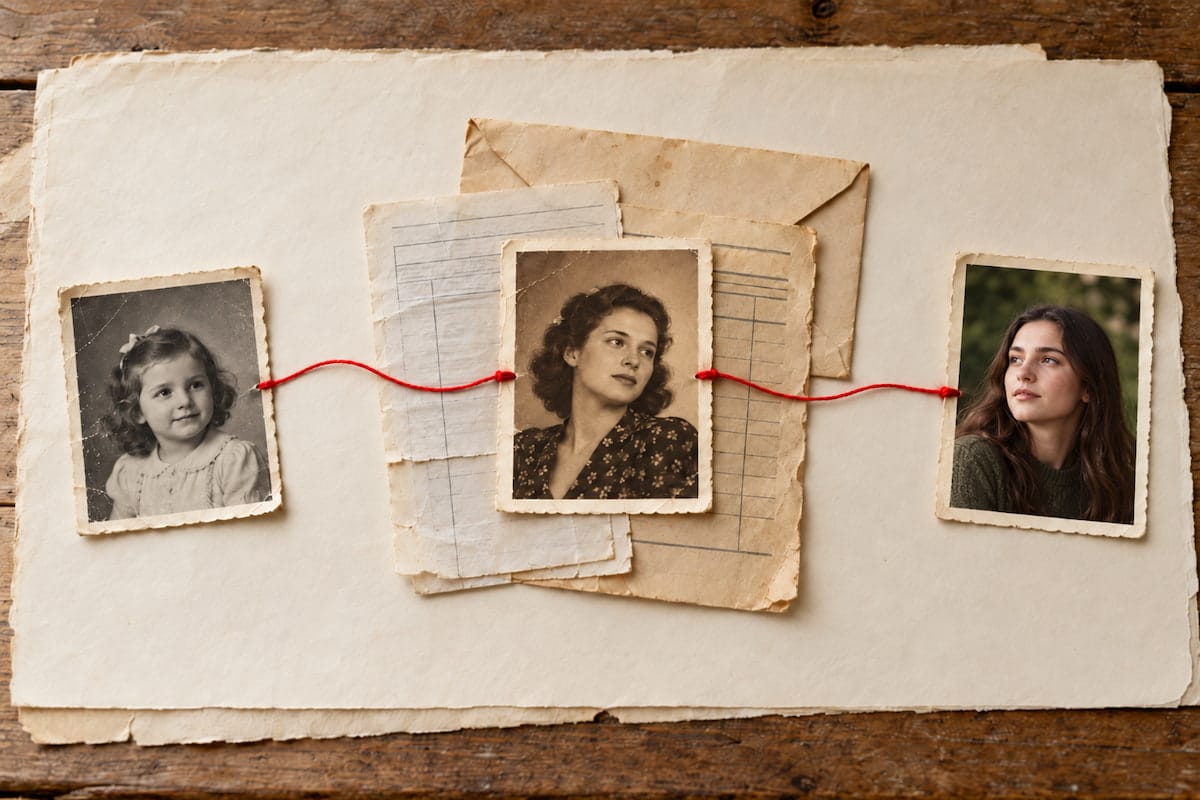
When individuals living outside Canada investigate whether they qualify for Canadian citizenship by descent, two applicants sharing an identical generational distance from a Canadian-born forebear can encounter starkly different bureaucratic hurdles. The divergence frequently depends on whether a family’s lineage travels predominantly through female or male ancestors. Due to centuries-old customs of marital surname changes and a complicated web of historical nationality laws that once discriminated based on gender, matrilineal lines of descent generally demand significantly more documentary evidence, genealogical validation, and legal reconciliation before Immigration, Refugees and Citizenship Canada (IRCC) will approve a certificate of citizenship.
The Documentary Impact of Marital Surnames
In proof of citizenship applications, IRCC mandates an unbroken, verifiable paper trail that connects the original Canadian ancestor directly to the modern-day applicant. Each link in this chain consists of a child-to-parent relationship established through civil registration records. While this requirement applies universally across all lineages, tracing ancestry through women introduces paperwork complications that rarely affect male-dominated genealogies.
Historically, a woman's legal surname changed upon marriage across North America and much of the Western world. When this occurred, the documentary continuity between generations fractured on paper. A daughter registered at birth under her father’s family name later appeared on her own child’s birth certificate under her husband’s family name. To demonstrate to an immigration officer that these two records refer to the exact same individual, applicants must supply bridging documents, typically in the form of official civil marriage certificates.
In August 2026, IRCC updated its official application forms to remove standardized questions regarding grandparents’ marriage ceremonies. Nevertheless, evaluating officers retain full authority to request these marriage records whenever an evidentiary gap arises or when an applicant must establish the continuity of generational links. Furthermore, when lineages run through French-Canadian families, male surnames were occasionally anglicized over time—such as translating names or altering spelling upon migration to the United States—which similarly demands supplemental proof to reconcile variations.
The Unique Archival Landscape in Quebec
Families tracing roots back to the province of Quebec face distinct regional legal traditions. In 1981, Quebec enacted legislation stipulating that spouses retain their birth surnames for all legal and administrative transactions. As a consequence, provincial archives, vital statistics registries, and death records within Quebec routinely record women exclusively under their maiden names.
This civil practice frequently generates documentary mismatches for emigrant families. For instance, a woman born in Quebec may be recorded by her birth name throughout Canadian civil archives, yet appear under a spouse's married surname across American vital statistics such as census returns, local church records, and U.S. death certificates. The marriage certificate functions as the single legal instrument that reconciles her Quebec identity with her foreign records. Additionally, IRCC strictly rejects any civil status certificates issued by Quebec authorities prior to 1994, requiring applicants to obtain modern certified copies directly from the Directeur de l’état civil before submitting a citizenship file.
Comparing Lineages: Case Examples
The practical realities of these archival demands become clear when comparing two illustrative scenarios involving applicants tracing ancestry from their respective great-grandparents:
Consider Laura, a hospital pharmacist residing in Columbus, Ohio. Her claim relies upon her paternal great-grandmother, born with the surname Thibodeau in Quebec’s Bas-Saint-Laurent region in 1899. In 1921, the great-grandmother migrated to Woonsocket, Rhode Island, where she married an American citizen named Albert Dupré. Decades later, her daughter also married, taking another new family name before giving birth to Laura’s father. To validate her entitlement, Laura must supply two distinct marriage certificates simply to account for the consecutive surname shifts connecting her great-grandmother to her father. Concurrently, the 1921 union introduces specific historical legal inquiries regarding nationality that require Laura to locate records proving her American great-grandfather's foreign status.
By contrast, Dennis, a retired insurance adjuster living in Tucson, Arizona, claims citizenship through his maternal great-grandfather, Angus MacLeod, who left Pictou County, Nova Scotia, for Massachusetts before the First World War. In Dennis’s case, the MacLeod surname remained static across civil birth registries for two entire generations. A surname change occurred only once, when Dennis’s mother married his father. Although Dennis must supply his mother’s marriage certificate—alongside his great-grandparents’ marriage record to resolve parentage questions under earlier statutory rules—his lineage avoids the compounding name adjustments that complicate Laura’s dossier.
| Evaluation Factor | Female-Dominant Lineage | Male-Dominant Lineage |
|---|---|---|
| Surname Continuity Across Records | Alters with most marriages, requiring documentation for each change. | Generally remains identical across generations unless altered by anglicization or adoption. |
| Primary Bridging Evidence | Civil marriage records for each married woman in the ancestral chain. | Parents' marriage record, principally required to establish recognized legal parentage. |
| Pre-1947 Statutory Risks | Involuntary loss of British subject status via marriage to a foreign national. | Children born out of wedlock, or paternal acquisition of foreign citizenship. |
| IRCC Pre-1947 Guidance Evidence | Woman's marriage certificate and documentation of her husband's foreign nationality. | Father's British subject documentation and parents' legal marriage record. |
| Pre-1977 Transmission Statutory Rules | Transmitted citizenship to children born abroad exclusively if parents were unmarried. | Transmitted citizenship to children born abroad exclusively if parents were married. |
The Evolution of Canadian Nationality Legislation
Prior to January 1, 1947, Canadian citizenship did not exist as an independent legal concept. Those residing or born within Canada held the status of British subjects, governed by imperial statutes shared throughout the British Empire. Under this regime, female British subjects suffered deep legal disadvantages. A Canadian-born man who married the mother of his child could automatically pass his imperial subject status to offspring born abroad, whereas a Canadian woman held no corresponding right to transmit her status to her foreign-born children.
When Canada established its initial standalone nationality statute on New Year's Day in 1947, these gender discrepancies persisted in revised forms. Up until February 14, 1977, children born outside Canada to married parents derived Canadian citizenship exclusively through their father. Mothers could transmit citizenship to foreign-born offspring only if the child was born outside of wedlock.
This legislative framework faced a definitive judicial challenge in 1997, when the Supreme Court of Canada delivered its landmark ruling in Benner v. Canada. The high court determined that subjecting descendants of Canadian mothers to stricter screening procedures and disparate treatment relative to descendants of Canadian fathers violated the Canadian Charter of Rights and Freedoms. Following the decision, Canadian statutes and policies were revised to replace gender-specific references to mothers or fathers with the neutral phrase "a parent," removing the marital status prerequisite for those historical periods.
Statutory Loss of Status Through Marriage
An additional obstacle for matrilineal genealogies involves the historical loss of subject status upon marriage. Before 1947, any British subject woman who married a man outside the British Empire automatically forfeited her imperial subject status under Canadian law. A woman also lost her status if her husband subsequently naturalized as a foreign citizen during their marriage.
Federal lawmakers addressed this historical wrong through legislative reforms enacted in 2015. Under modern guidelines administered by IRCC, women stripped of their standing under these archaic rules were retroactively restored and recognized as Canadian citizens, effective June 11, 2015. Moreover, their children born outside Canada prior to 1947 became eligible for recognition.
However, to verify an individual claim stemming from these restored rights, IRCC caseworkers follow specialized instructions. Officers are directed to review three foundational documents: the woman’s birth record, her civil marriage certificate, and formal verification of her foreign husband’s nationality at the time of their union. In practice, this forces citizenship applicants to hunt down foreign civil, military, or naturalization archives for a historical male relative who held no personal connection to Canada, an investigative burden never imposed on male ancestral lines.
A parallel restriction applied between 1947 and 1977, during which children born abroad forfeited their Canadian status if their "responsible parent" adopted a foreign nationality. In cases involving married parents, the statute defined the responsible parent strictly as the father. Although legislative updates have since restored citizenship to the vast majority of these individuals, IRCC continues to inspect legacy files to ensure that all historical losses have been properly documented and accounted for under the relevant statutes.
The Impact of Bill C-3 on Intergenerational Transmission
The procedural environment governing transmission across multiple generations shifted substantially when Bill C-3 came into effect on December 15, 2025. This legislation, functioning alongside prior statutory reforms, affirmed that individuals born prior to December 15, 2025, can inherit Canadian citizenship across unlimited generations, effectively ending the earlier first-generation limit for older birth cohorts.
Although modern statutory law no longer penalizes an applicant simply because their lineage runs through women, historical dates remain paramount. An officer must determine precisely which version of the Citizenship Act governs each ancestral birth and marriage. As a result, the specific date of an ancestor's wedding and the contemporary citizenship of her husband remain decisive legal criteria that dictate how a file is processed.
Building an Application Strategy
Given the detailed evidentiary burdens that arise along female lines, prospective applicants must approach their documentation methodically. The most effective approach involves outlining the full line of descent, noting every surname change that occurred across the entire generational chain:
- Lineage Mapping: Chart each generational link from the Canadian-born progenitor down to the applicant, identifying every legal, adopted, or married name used by every individual in the succession.
- Vital Records Assembly: Secure official birth certificates naming both parents for every generation, replacing any older Quebec vital records predating 1994 with modern certified copies.
- Bridging Changes of Name: Procure certified marriage records, legal change-of-name decrees, or court orders to account for every surname discrepancy between parents and children.
- Addressing Missing Files: If an essential archival record cannot be located, IRCC guidelines mandate that applicants supply a formal written affidavit explaining the absence, accompanied by verifiable proof that an exhaustive search was conducted with the appropriate government authorities.
Siblings and cousins sharing the same Canadian lineage can share the labor of researching and requesting foundational ancestral records from provincial and national repositories. However, because Canadian immigration law treats every individual file independently, every applicant must provide their own self-contained package of certified records.
What this means for applicants claiming Canadian citizenship by descent
With Canada's recent implementation of Bill C-3 ending the old first-generation transmission limit for those born before December 15, 2025, more diaspora families are reviewing whether inherited citizenship reaches them. However, applicants tracing descent through maternal lines face a far more demanding archival burden than those claiming through fathers, due to the lingering effects of historical nationality laws that once restricted how women passed on status.
Because previous statutes treated married and unmarried mothers differently across distinct legal eras—such as pre-1947 British subject rules and the 1947 to 1977 Citizenship Act—IRCC officers must assess the exact legal regime in place when an ancestor married or gave birth. In practice, this means applicants must locate historical marriage records and even evidence of an ancestor's spouse's nationality to prove that citizenship was never lost under outdated provisions.
Before lodging a proof of citizenship application, chart your family tree backwards and verify whether every maternal link has both an official birth record and the corresponding marriage certificates needed to bridge historical legal tests.
Conclusion
While Canadian citizenship legislation has evolved to treat male and female ancestry with theoretical equality, the physical reality of assembling an application continues to place heavier demands on matrilineal lines. Between customary marital surname transitions and the necessity of documenting pre-1947 marriage dates to satisfy retroactive legal restorations, applicants tracing ancestry through mothers and grandmothers must construct a far more comprehensive documentary bridge. As IRCC continues to process applications under the post-Bill C-3 framework, prospective citizens should anticipate these evidential hurdles early, ensuring that every historic name change and archival requirement is fully corroborated before submitting their claims.
Reporting based on coverage by CIC News - Immigration.
Category: Immigration