Vandalism threatens $13bn Lagos-Calabar coastal highway amid security gaps
By CelebUD Newsroom —
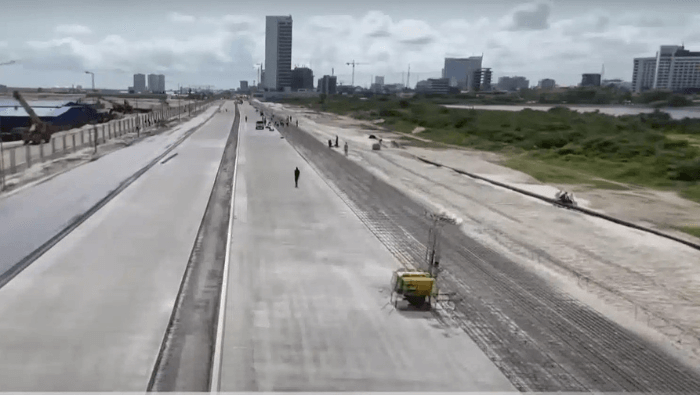
Less than twelve months after traffic was first permitted onto its inaugural segment, Nigeria’s flagship $13 billion Lagos-Calabar Coastal Highway is confronting an escalating wave of asset stripping, violent confrontations, and structural vandalism. Scrappers and criminal gangs have already plundered kilometres of metal fencing and heavy concrete protection slabs, exposing severe operational and security gaps across what is intended to be a transformative commercial transport corridor.
Scale of Asset Stripping on the Lagos Corridor
The extent of the devastation was outlined on Monday during an official media tour of the motorway led by Olufemi Dare, the Federal Ministry of Works controller of works for Lagos State. Government inspections confirmed that thieves have systematically dismantled at least five kilometres of high-security ClearVu mesh fencing alongside roughly 18 kilometres of concrete duct covers along the finished Lagos segment.
The plundered components were originally installed to demarcate the high-speed roadway from adjacent residential zones and to keep motorists and pedestrians safe. Stripped down under cover of darkness, the components are predominantly redirected into the lucrative, unregulated domestic scrap metal trade.
“They come in the night, they remove the ClearVu fence that was used to barricade the communities from the coastal highway,”
Dare explained to reporters during the inspection. He emphasised that the brazen thefts have created hazardous breaches along what is designed to be Nigeria's premier coastal arterial link.
Project Scope and Implementation Realities
Started in March 2024 under the administration of President Bola Tinubu, the ambitious 700-kilometre highway is engineered to run through nine littoral states, connecting commercial hubs from Lagos in the South-West across the Niger Delta to Calabar in the South-South. The national leadership has continually framed the initiative as a catalyst for marine logistics, industrial development, eco-tourism, and prime coastal real estate. However, the project has also generated public debate regarding overall capital outlay, procurement methods, and the demolition of commercial properties along the right-of-way.
The Lagos territory is split into two primary operational sections covering roughly 103 kilometres:
- Section One: Spanning 47.474 kilometres, where primary roadway asphalt has been completed while bridge infrastructure remains under active construction.
- Section Two: Extending approximately 56 kilometres, where engineering and earthworks continue to advance.
The following table outlines the current status and security breaches documented across the project’s pilot segments:
| Highway Dimension | Official Metric / Status | Identified Security & Structural Vulnerabilities |
|---|---|---|
| Total Planned Corridor | 700 km across 9 states | Projected exposure across isolated littoral expanses |
| Lagos Section 1 Length | 47.474 km | Road complete; ongoing bridge construction |
| Lagos Section 2 Length | 56.000 km | Active corridor civil works |
| Fencing Stolen | 5+ km of ClearVu mesh | Dismantled overnight for illicit metal salvage |
| Protective Covers Looted | ~18 km concrete covers | Removed from roadside drainage and utility service bays |
| Operational Speed Limit | 30 km/h (interim) | Routinely ignored, resulting in severe fatal collisions |
Violent Pushback Against Security Details
Government initiatives to checkmate the illegal scavenging have met violent resistance. In early August, Works Minister David Umahi commissioned a specialised 40-member detachment known as the Coastal Highway Guards. This civilian taskforce was charged with preventing informal hawking, curtailing unauthorised highway access, and halting asset stripping.
While the enforcement unit has secured several suspects, the confrontation on the ground has deteriorated rapidly. Dare revealed that criminal elements have confronted patrols with firearms and knives:
“Two of the guards have been stabbed,”
Dare stated, confirming that armed vandals frequently resort to lethal force to protect their operations. In response, federal authorities are overhauling the team’s operating structure. The guard network is being formally integrated into the direct command structure of the Lagos State Police Command, alongside provisions for greater tactical deployment and additional recruitment drives as later road phases open up.
Tactical Shifts and the Challenge of Encroaching Shanties
Given the systematic stripping of metallic components, the Federal Ministry of Works is now reassessing its architectural designs. Planners intend to replace easily detachable mesh barriers with structural masonry:
“We have to change the strategy. In areas where we have block work today, we do not have any problem with them,”
Dare acknowledged, noting that solid concrete masonry blocks have proven resilient against scavengers. The federal administration is also exploring wide-area closed-circuit television (CCTV) surveillance arrays to monitor unlit stretches.
Compounding the asset theft is the spontaneous expansion of roadside informal settlements. At the Marwa waterfront junction, journalists observed sprawling shanties populated by thousands of residents running unregulated markets and food stalls.
“It is a community. We’ve cleared this place several times but they keep returning,”
Dare stated. Civil engineers caution that unless reclaimed strips are permanently repurposed into green zones, landscaped parks, or utility reserves, cleared populations will continually re-establish shanties, functioning as staging hubs for illicit salvaging.
Speeding and Threat of Corridor Closure
The stripping of barrier materials is colliding with reckless driving along the partially opened expressway. Because interchange spans and bridges are still incomplete, the Ministry of Works established a strict speed ceiling of 30 kilometres per hour across Section One. Despite warnings, high-speed driving has led to frequent, severe road casualties.
Citing ongoing public safety violations, Dare issued an ultimatum to users and surrounding coastal communities, warning that the federal administration will not hesitate to pull the emergency brake on traffic:
“Within two weeks, if there’s no improvement on all these issues, then we have no option than to come back and shut this road,”
Systemic Parallels in National Infrastructure Security
The challenges besetting the Lagos-Calabar corridor mirror systemic infrastructure vulnerabilities across the country. Over recent years, Nigeria’s revitalised standard-gauge rail network has faced severe sabotage, where organised cartels uncouple track fasteners, sleepers, and electrical cables to supply black-market foundries. Despite high-profile seizures and prosecutions, illicit trade networks continue to siphon components from unguarded infrastructure.
For the $13 billion Atlantic corridor, the removal of utility access covers and dividing fences creates immediate perils for commercial freight and everyday commuters. If security forces struggle to protect accessible, densely populated sections in central Lagos, authorities face a far more daunting challenge when construction pushes into hundreds of kilometres of remote wetlands and creeks across the Niger Delta.
Fallout for Lekki commuters and freight
If federal authorities carry out their threat to shut Section One, daily commuters and transport operators will lose an essential escape valve from the congested Lekki-Epe corridor. Commercial hauliers moving supplies between Victoria Island, the Lekki Free Trade Zone, and eastern Lagos have relied on the new link to bypass persistent bottlenecks around Ajah junction.
Diverting all vehicular traffic back onto the older expressway will immediately lengthen journey times, increase vehicle running costs, and push up commercial mini-bus fares. Fleet managers and distribution firms servicing supermarkets and construction sites across the peninsula will face delivery penalties and higher diesel expenses, costs that inevitably filter down to consumer prices in local markets.
For workers commuting daily into commercial districts, extra hours spent in traffic will directly reduce productivity and personal downtime.
Conclusion
The early crisis confronting the Lagos-Calabar Coastal Highway illustrates that building mega-infrastructure in emerging economies is only half the battle; maintaining and securing operational assets demands equal investment. Moving away from scrap-friendly metallic mesh toward reinforced concrete masonry and digital monitoring marks a pragmatic tactical adjustment by the Ministry of Works. Over the coming fortnight, the corridor faces an existential test. Unless police mobilisations, task force realignments, and municipal eviction efforts curb both the nightly plunder and fatal speeding, the government may follow through on its threat to seal off its prize $13 billion artery, dealing an embarrassing setback to regional transit and commerce.
Category: Business