Before you apply for a study permit: three tips to boost your chance at Canadian permanent residence
By CelebUD Newsroom —
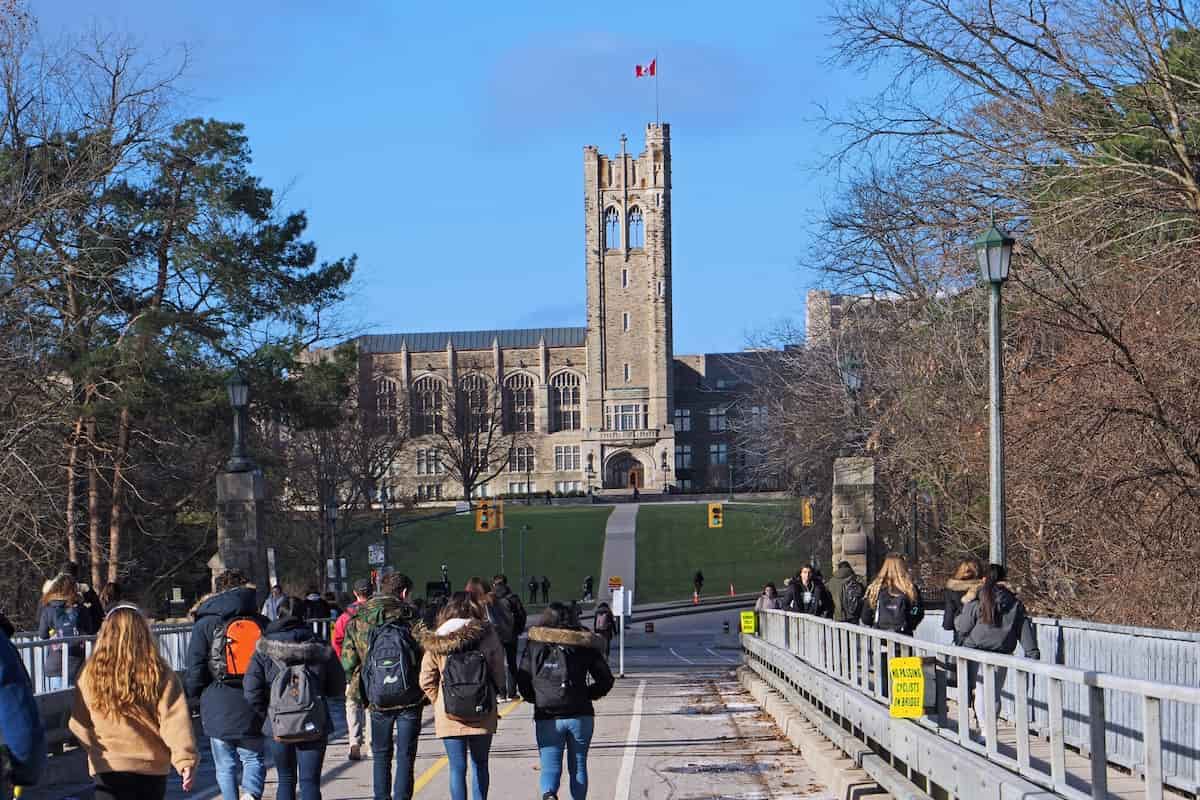
Securing permanent residence in Canada through the international student track has become increasingly competitive, requiring prospective applicants to plan well before submitting an initial study permit application. The traditional path of arriving for postsecondary studies and transitioning smoothly to immigration status now demands foresight and strategic positioning. By understanding how the federal points system operates and selecting programs that provide distinct regulatory advantages, incoming students can dramatically elevate their Comprehensive Ranking System (CRS) scores and accelerate their long-term settlement prospects.
Building Skilled Foreign Work Experience Prior to Departure
One of the most consequential steps an aspiring immigrant can take happens long before setting foot on Canadian soil. Under Canada's primary federal selection mechanism, Express Entry, candidates receive substantial credit for professional experience gained outside the country under the skill transferability matrix.
Aside from tradespersons who hold an official certificate of qualification, securing two to three years of foreign professional experience stands as the singular avenue to claim the full 100 points allotted for skill transferability under the CRS framework. Depending on an individual's broader credential profile, two years may suffice to optimize these metrics, while others require three full years to unlock the ceiling.
Crucially, Canadian immigration authorities assess whether employment is skilled based entirely on day-to-day duties rather than formal job titles. Under the National Occupational Classification (NOC) system, work qualifies as skilled if it aligns with the upper four tiers of the Training, Education, Experience, and Responsibilities (TEER) framework:
- TEER 0: Executive and managerial roles spanning corporate, operational, and institutional leadership.
- TEER 1: Professional occupations that customarily require completion of a university degree.
- TEER 2: Technical occupations requiring two to three years of postsecondary education or formal apprenticeship training.
- TEER 3: Skilled trades and intermediate occupations that call for at least six months of targeted on-the-job training or a college credential under two years.
The Strategic Superiority of a Canadian Master's Degree
Choosing an academic credential requires balancing time, financial outlay, and downstream immigration benefits. Selecting a master's program over an undergraduate degree or entry-level diploma yields immense operational benefits for permanent residence seekers.
Academically, pursuing a master's degree allows an applicant to first finish a bachelor's degree in their home country, concurrently accumulating the skilled foreign employment needed to optimize CRS scores. Economically, Canadian master's programs generally run for just one or two years, contrasting sharply with the standard four-year duration of a Canadian undergraduate degree. This truncated timeline reduces expected Canadian living costs by 50 to 75 percent.
Furthermore, research-based and academic master's degrees in Canada routinely provide significant institutional funding packages. These financial arrangements frequently cover full tuition and administrative fees alongside living stipends, a benefit virtually unheard of in undergraduate programs.
| Evaluation Metric | Canadian Master's Degree | Four-Year Bachelor's Degree |
|---|---|---|
| Program Duration | 1 to 2 Years | 4 Years (typical) |
| PGWP Length | Full 3-Year Open Work Permit | 3-Year Open Work Permit |
| PGWP Field Restrictions | Exempt from field-of-study rules | Subject to standard criteria |
| CRS Education Bonus Points | Maximum 30 points (in 1-2 years) | 30 points (requires 3+ years study) |
| Living Cost Burden | Substantially lower (short duration) | High (multi-year overhead) |
| Institutional Funding Offers | Common (tuition waivers, stipends) | Extremely rare for foreign students |
From an immigration policy standpoint, master's credentials enjoy unique protections. Even a one-year master's program allows graduates to obtain a full three-year Post-Graduation Work Permit (PGWP). Master's graduates remain entirely exempt from field-of-study restrictions tied to PGWP issuance across eligible designated learning institutions. Within Express Entry, master's graduates also unlock the top-tier 30-point educational bonus in half the time required by bachelor's or extended college programs.
Accelerating Careers Through Co-Op Placements
Graduating from a Canadian institution does not automatically guarantee employment. Securing an initial skilled position represents one of the steepest hurdles foreign graduates face when attempting to establish economic roots and qualify for permanent residency pathways.
Enrolling in a structured co-operative education (co-op) or work-study program mitigates this risk, particularly for those pursuing bachelor's degrees. Co-op frameworks alternate academic coursework terms with periods of paid employment directly relevant to the student's field of study. These placements provide reliable income while establishing crucial professional networks inside Canadian industry.
To successfully finish a co-op track, students must meet rigorous benchmarks across classroom terms and employer performance evaluations. High performers frequently receive binding post-graduation job offers from their placement employers, eliminating post-study employment gaps.
Prospective applicants must note that while hours logged during full-time student status do not count toward Canadian work experience requirements under core permanent residence pathways, co-op programs expedite entry into skilled, permanent employment immediately upon graduation. Structures vary by school; for instance, the University of Waterloo extends co-op undergraduate degrees across five years of rotating terms, compared to conventional four-year models. Due to these discrepancies, prospective students must research institutional curricula carefully.
Why a co-op placement is your best hedge against unemployment
One of the hardest shocks for newly arrived African graduates in Canada is discovering that a Canadian credential alone does not guarantee a job. Many international graduates struggle to transition from school to a qualifying skilled role before their work permits tick away. This makes program structure just as important as the institution's name.
Enrolling in a program with a mandatory co-operative education (co-op) component directly addresses this hurdle. While hours worked during full-time study do not count toward Canadian work experience for core permanent residence streams, co-op terms provide paid Canadian workplace experience, build professional networks, and often lead to direct, binding job offers upon graduation.
Takeaway: When shortlisting Canadian programs, ask the admissions office specifically whether the course includes an accredited co-op track rather than leaving your post-graduation job search entirely to chance.
Conclusion
Canada's immigration landscape evolves constantly, and federal criteria can shift between the day an international student receives a study permit and the day they complete their degree. No outcome is permanently guaranteed. Nevertheless, the federal government has steadfastly favored candidates with verifiable foreign and domestic skilled work experience, advanced credentials, and strong domestic employment prospects.
Prospective applicants can assess their baseline standing and track qualifications using analytical tools like CanadaVisa+. By acquiring skilled employment prior to arrival, prioritizing post-graduate credentials like master's degrees, and leveraging co-op work terms, prospective immigrants can navigate shifting immigration policies and stand out as elite candidates for permanent residency.
Reporting based on coverage by CIC News - Immigration.
Category: Immigration