TechCrunch Founder Summit’s agenda revealed: Unlock fundraising, hiring, and AI insights in Boston on November 4
By CelebUD Newsroom —
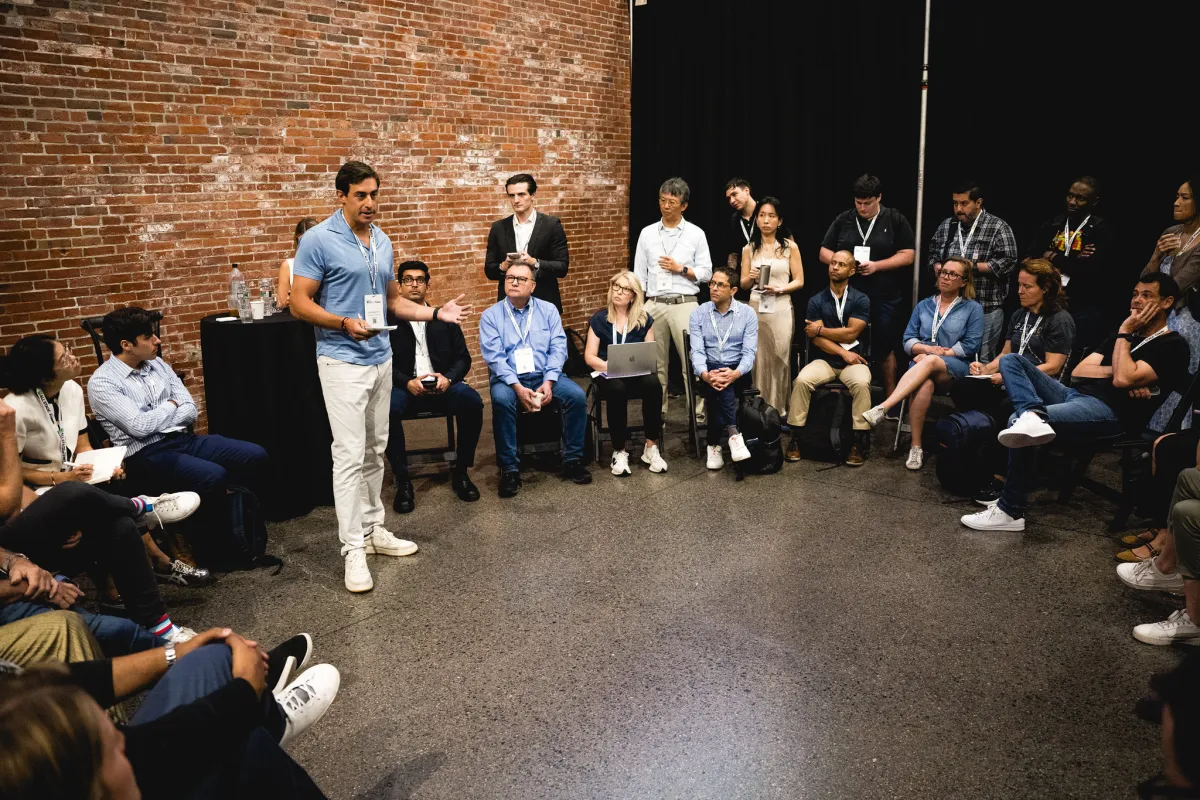
TechCrunch has revealed the complete schedule for its upcoming Founder Summit, scheduled to take place on November 4 at the SoWa Power Station in Boston, Massachusetts. Designed as an intensive one-day masterclass for emerging entrepreneurs, the gathering brings together seasoned venture capitalists and veteran company operators to discuss critical hurdles facing modern business builders, including seed financing, talent acquisition, leadership adaptation, and artificial intelligence integration.
Dealing with today's fundraising realities.
Securing external capital remains one of the most perilous phases of building a young enterprise, particularly as investment criteria shift across the global tech sector. At the summit, Brian Devaney, a partner at Show VC, will deliver an analytical breakdown of modern investor expectations. Devaney plans to examine how early-stage teams can differentiate themselves in crowded applicant pools, the exact dynamics surrounding initial checks and formal term sheets, and the operational missteps that cause founding teams to unintentionally surrender bargaining power.
Complementing this investor lens, Vineet Edupuganti, co-founder and chief executive officer of Cogent Security, will offer an operator's perspective on capitalization strategies. Following Cogent Security's successful $11 million funding round, Edupuganti will discuss the practical differences between supportive venture backers and disruptive capital partners. His presentation will emphasise why entrepreneurs must look beyond headline enterprise valuations when curating their capitalization tables, illustrating the long-term governance consequences of selecting the wrong financial backers.
Building for Long-Term Scale and Scaling Outside Silicon Valley
Organisational resilience and geographical strategy form another major pillar of the Boston agenda. Brian Halligan, co-founder of marketing software giant HubSpot and a partner at Sequoia Capital, will lead a leadership-focused session on how founding chief executives must fundamentally reinvent their roles as their organisations mature through explosive growth phases. Halligan will share practical frameworks for evading typical executive pitfalls and constructing durable corporate structures that outlast early momentum.
Addressing the mechanics of headhunting during volatile expansion cycles, Melissa Taunton, a partner at New Enterprise Associates (NEA), will outline strategic hiring doctrines. Taunton will unpack methods for identifying cultural cornerstones during initial recruitment, avoiding detrimental team-building errors, and fostering workforce resilience during uncertain market conditions.
Challenging the assumption that top-tier tech firms must reside exclusively on the United States West Coast, Chase Garbarino, co-founder and chief executive officer of HqO, will deliver a case study on regional execution. Garbarino has successfully secured $200 million in private backing and expanded HqO's footprint across more than 30 countries while maintaining headquarters in Boston. His session will dissect the tangible benefits and potential friction points of scaling outside Silicon Valley, offering tactical guidance for non-traditional tech hubs across North America and internationally.
Validating Product-Market Fit and Core AI Architectures
Achieving verifiable commercial resonance before overspending capital remains a primary determinant of startup survival. Kent Bennett, a partner at Bessemer Venture Partners, will guide attendees through the complex process of identifying true product-market fit. Bennett’s discussion will examine minimum viable product (MVP) design, distinguish between deceptive vanity statistics and genuine usage indicators, and emphasise the dangers of prematurely scaling operations before foundational customer demand is proven.
On the frontier of technology integration, Lior Div, co-founder and chief executive officer of 7AI, will tackle the structural distinction between companies that merely incorporate artificial intelligence utilities and those engineered from the ground up as AI-native entities. Div will analyse the structural, operational, and go-to-market shifts necessary when deep learning models serve as a company's structural core rather than a cosmetic feature.
Also, Tina Tosukhowong, investment director at TDK Ventures, will present her firm's proprietary "King of the Hill" investment framework. Tosukhowong will demonstrate how disciplined capital allocators assess deep-tech and industrial-scale opportunities based on unit economics, commercial timing, and market viability, drawing from real-world evaluations in advanced sectors such as nuclear fission and fusion technology.
Key Sessions at the Founder Summit
| Topic Area | Featured Speaker | Affiliated Organization | Core Focus |
|---|---|---|---|
| Fundraising Tactics | Brian Devaney | Show VC | Meeting modern investor expectations and protecting cap table use. |
| Executive Evolution | Brian Halligan | HubSpot / Sequoia Capital | Moving from early-stage founder to enterprise chief executive. |
| AI-Native Architecture | Lior Div | 7AI | Structuring operations, products, and commercialization around native AI. |
| Investor Selection | Vineet Edupuganti | Cogent Security | Assessing cap table partners following an $11 million institutional round. |
| Category Dominance | Tina Tosukhowong | TDK Ventures | Using the King of the Hill methodology in deep tech, fission, and fusion. |
| Talent & Culture | Melissa Taunton | NEA | Establishing foundational hiring practices during rapid growth. |
| Decentralized Growth | Chase Garbarino | HqO | Raising $200 million and reaching 30+ nations outside Silicon Valley. |
| Product-Market Fit | Kent Bennett | Bessemer Venture Partners | Validating early demand and avoiding premature operational scaling. |
Travel and visa constraints for foreign founders
Entrepreneurs based outside the United States face practical constraints when considering a one-day gathering in Boston. Securing a US B-1 business visitor visa in cities such as Lagos, Nairobi, or London can involve interview waiting times that stretch across months, making late event registrations impractical unless a valid visa is already held.
Flight tickets, hotel rates in central Boston, and summit admission fees add up to thousands of dollars in hard currency. For early-stage businesses conserving cash, this expenditure must be justified by tangible outcomes. American venture capital firms frequently require foreign startups to establish a Delaware holding company before writing an initial cheque, which introduces legal expenses that founders must balance against the prospect of an introductory meeting.
Entrepreneurs weighing in-person attendance often find that unless they have active customer meetings or investor discussions lined up across Massachusetts, the immediate financial return on a single-day international trip remains limited.
What regional scale means outside Western markets
The concept of scaling outside Silicon Valley takes on a very different meaning outside North America. While regional US firms in cities like Boston still benefit from a large domestic market, shared corporate law, and a unified currency, founders in African, Caribbean, and British markets operate under starkly different conditions.
In markets such as Nigeria, Kenya, or South Africa, building a tech company away from global capital centres means coping with currency depreciation, high local interest rates, and shallower private funding pools. Startups in these environments cannot rely solely on domestic corporate contracts to sustain long-term growth. They are frequently pushed to sell services into the US, the UK, or the wider European market early in their lifecycle to earn foreign exchange.
Studying how American firms expand beyond traditional tech corridors offers useful guidance on remote team management, yet founders based abroad must adapt those frameworks to manage international banking friction, double-taxation treaties, and remote cross-border compliance.
Conclusion
The TechCrunch Founder Summit at SoWa Power Station arrives at an inflection point for the broader venture ecosystem, where disciplined balance sheets, pragmatic unit economics, and transformative artificial intelligence capabilities are displacing reckless growth strategies. By coupling rigorous diagnostic presentations with targeted peer networking among founders and early-stage financiers, the November 4 event aims to furnish operators with repeatable methodologies rather than theoretical advice. For startup leaders facing an increasingly discerning funding market, the operational frameworks unveiled in Boston are likely to shape strategy heading into the coming business cycle.
Reporting based on coverage by TechCrunch.
Category: Business