Significance of Ogun’s $7bn Deep Seaport and Blue Marine SEZ, By Kayode Akinmade
By CelebUD Newsroom —
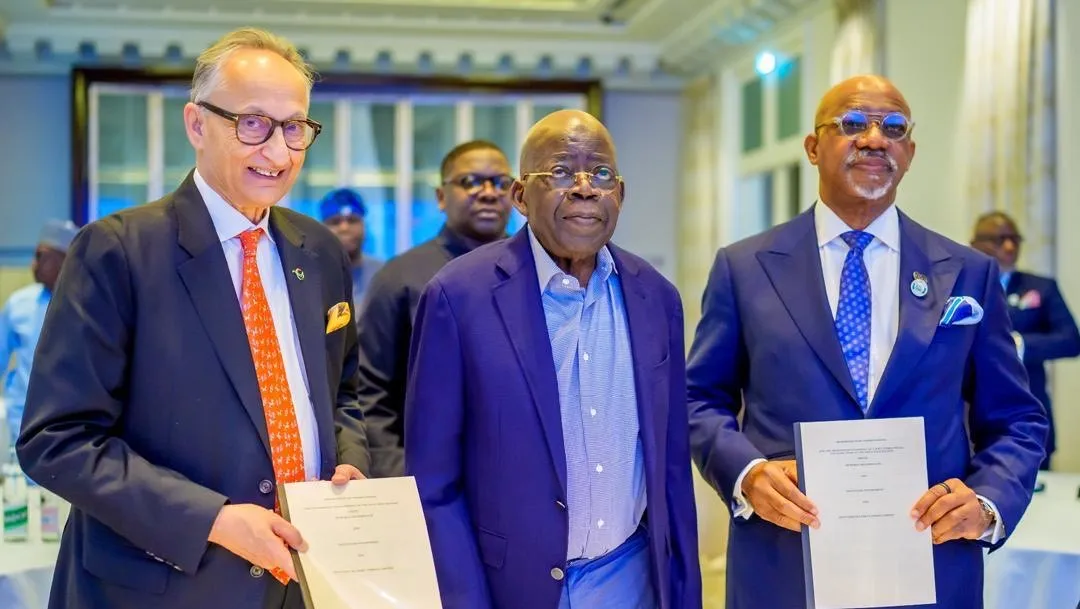
In an ambitious move to reshape West African trade and overhaul Nigerian industry, the Ogun State Government has agreed a major partnership with multinational logistics giant DP World to establish the Gateway Deep Sea Port alongside the Ogun State Blue Marine Special Economic Zone (SEZ). Formalized through Memoranda of Understanding executed in Paris, the multi-billion-dollar project integrates state-of-the-art maritime infrastructure with a dedicated export processing corridor, aiming to turn raw production capacity into tangible economic value.
The Paris Accord: Scale and Strategic Scope
As one of the largest private-sector-backed infrastructure projects in modern Nigerian history, the joint venture involves an initial capital commitment exceeding $7 billion. Officials project the initiative will generate upward of 50,000 direct employment opportunities, with tens of thousands more expected across ancillary service sectors.
Rather than functioning merely as a container transit point, the venture pairs modern maritime logistics directly with productive industrial real estate. President Bola Ahmed Tinubu highlighted the deliberate design during the signing engagement, remarking:
“A port moves cargo; a port integrated with a special economic zone helps to build an economy.”
The marine terminal is planned around an 18-metre natural draft alongside a four-kilometre berth, technical dimensions engineered to receive the world’s largest container ships and bulk carriers. By expanding deep-water capacity outside metropolitan Lagos, the facility aims to alleviate systemic gridlock at traditional terminals, curb marine demurrage, and drive down overall logistics expenses for regional manufacturers.
| Project Metric | Specification / Projection |
|---|---|
| Initial Projected Investment | Over $7 Billion |
| Economic Zone Footprint | 10,000 Hectares |
| Berth Length | 4 Kilometres |
| Operational Draft Depth | 18 Metres |
| Direct Employment Impact | 50,000+ Direct Jobs |
| Connecting Highway Segment | 28 Kilometres (Ogun Section) |
Creating an Integrated Industrial Ecosystem
Directly flanking the deep harbour is the 10,000-hectare Blue Marine Special Economic Zone. The vast industrial park is planned as a transformation destination where imported intermediate goods can be assembled into finished products and domestic Nigerian raw materials refined for international trade. Rather than exporting unprocessed primary produce and losing downstream value abroad, the zone seeks to capture processing margins at home.
According to development planners, this model creates multiple compound benefits across the regional economy:
- Industrial Expansion: Efficient maritime connectivity gives manufacturers reliable inbound logistics for raw inputs and outbound channels for finished goods, spurring clusters in petrochemicals, light engineering, food processing, and specialised packaging.
- Extended Job Markets: Beyond direct dock and plant roles, employment will expand through trucking, warehousing, equipment maintenance, construction, technology support, security, and corporate services.
- SME Integration: Small and mid-sized enterprises across Ogun will gain opportunities to serve as Tier-2 and Tier-3 suppliers, providing parts, materials, and services to large industrial tenants.
- Agritech and Value Addition: By providing cold-chain logistics, processing factories, and containerized export handling, the zone allows farmers to process cash crops locally, reducing post-harvest losses and fetching higher global returns.
- Broadened Public Revenues: Expanded industrial enterprise naturally widens the state's commercial tax and non-tax base, supporting public revenue diversification away from volatile federal resource allocations.
Multimodal Transport and Regional Hub Ambitions
The industrial strategy behind the port extends beyond coastal facilities. Under Governor Dapo Abiodun, Ogun has pursued a multimodal master plan integrating the deep seaport with the existing Gateway International Airport, proposed inland dry ports, and modern arterial expressways.
A critical link in this network is the 28-kilometre Ogun section of the Lagos-Calabar Coastal Highway, which President Tinubu singled out as vital for ensuring swift cargo transit between maritime quays, mainland production centres, and interior trade routes. Taken together, these assets position the state to emulate world-renowned port models such as DP World's flagship Jebel Ali Free Zone in Dubai.
Beyond national borders, the project takes aim at regional maritime dominance. Despite possessing extensive Gulf of Guinea coastline, Nigeria has historically lost transit and trans-shipment business to neighbouring regional ports. With deep-draft berths and high-speed cargo evacuation, the Gateway facility aims to capture regional trans-shipment trade and position domestic enterprises to capitalize on the African Continental Free Trade Area (AfCFTA).
Collaborative Federalism and Next Steps
The realization of the Paris pact follows more than three decades of unfulfilled deep-sea port proposals in the region. Governor Abiodun credited federal intervention under President Tinubu for resolving institutional hurdles and acknowledged the Nigerian Ports Authority alongside Minister of Marine and Blue Economy Adegboyega Oyetola for technical alignment.
The investment vehicle also brings together a technical consortium comprising DP World, SkyCapital, Supo Sasore Projects, and legal-advisory group ALP, backed by local host communities who provided site access and project stability. President Tinubu characterised this cross-tier alignment as “cooperative federalism”—a framework in which subnational administrations pioneer strategic investments while federal authorities provide regulatory backing and sovereign logistics links.
Governor Abiodun emphasised that execution remains the decisive metric, stating:
“History will judge us not by the elegance of documents signed, but by the transformation that follows. Ceremonies proclaim intentions; only implementation creates prosperity.”
Title risks and speculative land pressures
Large infrastructure projects of this scale inevitably set off waves of land speculation across adjoining communities. As commercial attention turns towards the Ogun coastal boundary near the Lekki corridor in Lagos, domestic buyers and members of the Nigerian diaspora seeking property for warehousing, rental housing, or private enterprise will face rapidly shifting asking prices.
Because the special economic zone covers 10,000 hectares, state authorities place extensive perimeters under government acquisition to secure the project footprint. Private buyers purchasing acreage from customary landowners risk severe financial losses if plots sit within uncommitted government land or lack formal excision gazettes. Verifying survey plans and title status at the Ogun State Bureau of Lands and Survey is necessary before entering transactions along the transport axis.
Conclusion
The signing of the $7 billion pact in Paris marks a decisive turning point for Ogun State's economic blueprint and Nigeria's broader maritime posture. By connecting an 18-metre draft deep-sea port with a 10,000-hectare manufacturing zone, dry ports, and coastal expressways, the project moves Nigeria toward a production-focused trade model. As DP World and state authorities move from bilateral agreements to building work, success will depend on rapid site development, finishing the coastal road connections on time, and delivering the promised 50,000 direct industrial jobs.
Reporting based on coverage by Premium Times Nigeria.
Category: Business