Alberta craft whisky lands on Costco shelves as trade war looms
By CelebUD Newsroom —
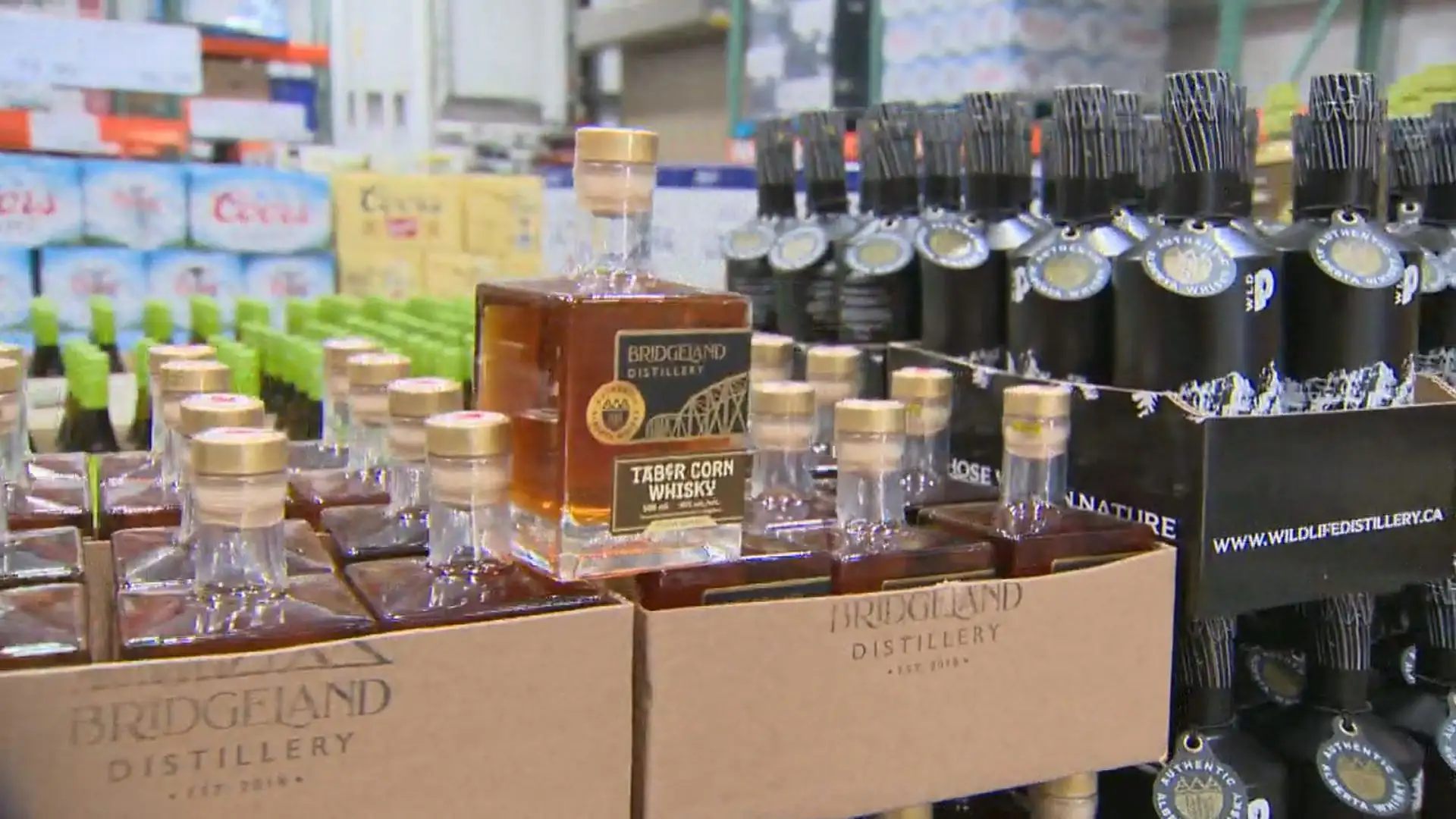
Independent whisky makers across Alberta have secured a major retail breakthrough as bulk retail giant Costco began carrying craft spirits in all 15 of its provincial liquor locations. The retail partnership offers local craft distilleries unprecedented exposure at a critical juncture, providing a domestic commercial cushion ahead of the busy holiday shopping period and an impending United States prohibition on Canadian alcohol shipments slated for September 29.
A Breakthrough Partnership for Provincial Distillers
Securing shelf space inside Costco represents an extraordinary triumph for artisan spirit producers. While standard big-box retail competitors such as Walmart often manage inventories exceeding 100,000 distinct items, Costco maintains a tightly curated footprint of approximately 4,000 unique products across its warehouses. To earn an inventory spot, prospective vendors are expected to show that their items provide exceptional value to warehouse club members, boast reliable supply chain logistics, maintain significant turnover, and can be produced at massive commercial scale—a standard that frequently excludes boutique manufacturers.
Despite those stringent operational hurdles, 15 Costco liquor outlets extending from Grande Prairie in northern Alberta down to Medicine Hat in the south have initiated sales featuring eight specific offerings from seven small regional producers. Store managers have tailored offerings so inventory varies by location, turning store visits into an exploratory experience for spirits enthusiasts.
“If you’re into Alberta whisky, you’re gonna see it’s slightly different at each Costco. Every Costco is a little bit different — a bit of a treasure hunt.”
That assessment comes from Bryce Parsons, who serves as president of the Alberta Craft Distillers Association and co-founded True Wild Distilling, which landed shelf space at Costco's Heritage location in Calgary. Parsons noted that establishing ties with an international retail giant gives domestic makers powerful brand visibility across Alberta precisely when market support is vital.
Distilleries Featured Across Alberta Warehouses
Participating craft operations span several distinct geographical regions of the province, reflecting the varied microclimates and agricultural grain sources used in Alberta distillation. Rather than carrying an identical lineup in every store, individual outlets highlight different provincial distillers.
| Distillery Name | Primary Location | Key Show Retail Outlets |
|---|---|---|
| True Wild Distilling | Calgary | Costco Heritage (Calgary) |
| Wild Life Distillery | Canmore | Costco Tsuut’ina (SW Calgary) |
| Bridgeland Distillery | Calgary | Costco Tsuut’ina (SW Calgary) |
| Anohka Distillery | Parkland County (near Stony Plain) | Costco Tsuut’ina (SW Calgary) |
| Eau Claire Distillery | Diamond Valley | Costco Tsuut’ina (SW Calgary) |
| The Maligne Range | Jasper | Select Alberta Warehouses |
| Burwood Distillery | Calgary | Select Alberta Warehouses |
At the Tsuut’ina warehouse store in southwest Calgary, warehouse liquor manager Brian Lerner observed that shoppers are deliberately seeking regional alternatives. According to Lerner, shoppers understand what they like but welcome chances to experiment with homegrown merchandise. Lerner pointed out that consumers are enthusiastic about goods manufactured locally with visible craftsmanship and dedication.
To support warehouse workers, distilleries created reference materials to help staff discuss flavor profiles, mash bills, and regional origins with curious buyers. Also, craft producers have travelled directly to retail warehouses to conduct on-site tasting sessions and educate club members on regional whisky production.
Regulatory Foundations: The Alberta Whisky Act
The push to elevate local distillers gained major momentum earlier this year when provincial lawmakers enacted the Alberta Whisky Act. The legislation sets strict production guidelines outlining precisely what criteria a product must fulfil to carry the formal Alberta Whisky designation, functioning much like historical legal protections that define Canadian Whisky broadly.
During a July reception held to reveal the association's official Alberta Whisky emblem, a Costco purchasing representative was in attendance. According to Parsons, that presence served as the catalyst that got business negotiations off the ground, eventually unlocking shelf access across the province.
Tackling Market Barriers and Impending U.S. Restrictions
The timing of the warehouse partnership arrives alongside sharp trade anxieties. The United States has planned a ban on Canadian alcohol imports set to take effect on September 29. The cross-border disruption poses a severe hazard for northern spirit manufacturers. While Canadian breweries, wineries, and distilleries sell the bulk of their aggregate volume domestically, foreign exports are heavily reliant on the American market.
Official trade metrics highlight the extent of that market dependence. Figures recorded by the Government of Canada’s Trade Commissioner Service show that Canada exported $1.36 billion in alcoholic beverages throughout 2023. Of that total, 90 per cent crossed the border into the United States, with distilled spirits—specifically rye whisky, vodka, and gin—constituting fully two-thirds of all export revenue.
“Whether we’re selling there or not, it’s quite important because all of us plan to sell in the U.S. So now there’s uncertainty.”
Compounding the cross-border trade friction are persistent inter-provincial trade restrictions inside Canada, which hinder small alcohol brands from easily distributing cases outside their home provinces. At the same time, Alberta maintains an open, deregulated retail marketplace with intense competition. While this market structure provides shoppers with vast international selection, it makes securing shelf space difficult for independent homegrown labels.
Capitalizing on the Critical Autumn Sales Window
Despite geopolitical headcurrents, distillers view Costco's commercial platform as a turning point. The three months leading up to late December represent the peak commercial sales cycle for distilled spirits, meaning high-volume sales between late September and Christmas can determine annual profitability for small distillers.
Civic and business organisations see the collaboration as part of a wider consumer preference shift toward domestic production. Ruhee Ismail-Teja of the Calgary Chamber of Commerce emphasised that shoppers and commercial entities are coordinating efforts to strengthen domestic industries. Ismail-Teja highlighted that current economic solidarity represents a rare environment where large enterprises, niche producers, and retail consumers share an identical mission to back homegrown enterprises.
The hurdle of buying across provincial borders
Readers living outside Alberta will find it difficult to sample these craft whiskies, even if they hold an active warehouse membership in their home province. Canada's internal liquor market remains divided by provincial boundaries, with government agencies such as the Liquor Control Board of Ontario (LCBO) and British Columbia's Liquor Distribution Branch controlling retail access and wholesale distribution.
Because direct interprovincial shipping of spirits to private residences remains restricted under provincial trade frameworks, consumers in Toronto, Vancouver, or Montreal cannot simply order these bottles online from Alberta retailers for home delivery. Commercial couriers cannot transport personal spirit orders across provincial borders without passing through each province's official liquor monopoly, which routinely blocks unsanctioned deliveries.
For those living outside Alberta, the only legal way to obtain these bottles is to purchase them in person while travelling through the province and transport them home within personal possession allowances, or wait for individual distilleries to negotiate separate distribution listings with their home province's state-run liquor board.
Accessing the shelves without warehouse membership
In Alberta, provincial liquor licensing rules require alcohol retail premises to operate with separate exterior entrances and serve the wider public. Because provincial regulations prohibit private liquor retailers from restricting entry solely to club subscribers, shoppers do not need an active Costco membership card to buy spirits at the company's liquor stores.
For households across the province that do not hold an annual warehouse subscription, this structure removes the usual upfront membership barrier. Anyone of legal drinking age can enter the detached liquor buildings, pay at the till, and purchase these regional craft whiskies at the bulk discounter's shelf rates.
Payment terms also differ from the main warehouse floors. While Costco's primary retail warehouses restrict accepted credit cards to specific payment networks, its provincial liquor outlets accept broader payment methods, including cash and standard debit cards. That allows casual shoppers and whisky collectors alike to sample the regional selection without taking on long-term retail commitments.
Conclusion
The arrival of Alberta craft whisky on Costco shelves demonstrates how strategic collaboration between independent manufacturers and international warehouse clubs can counteract difficult trade disputes. While the impending September 29 import ban by the United States clouds cross-border expansion plans, regional producers have reinforced their domestic footprint ahead of the high-demand holiday season. Backed by the legal framework of the Alberta Whisky Act and active consumer backing, provincial distillers are proving resilient against international turbulence by solidifying their foundation at home.
Reporting based on coverage by Global News Canada.
Category: Business