SERAP Tells Tinubu to Probe ₦94.4bn Allegedly Diverted, Unremitted Oil Funds
By CelebUD Newsroom —
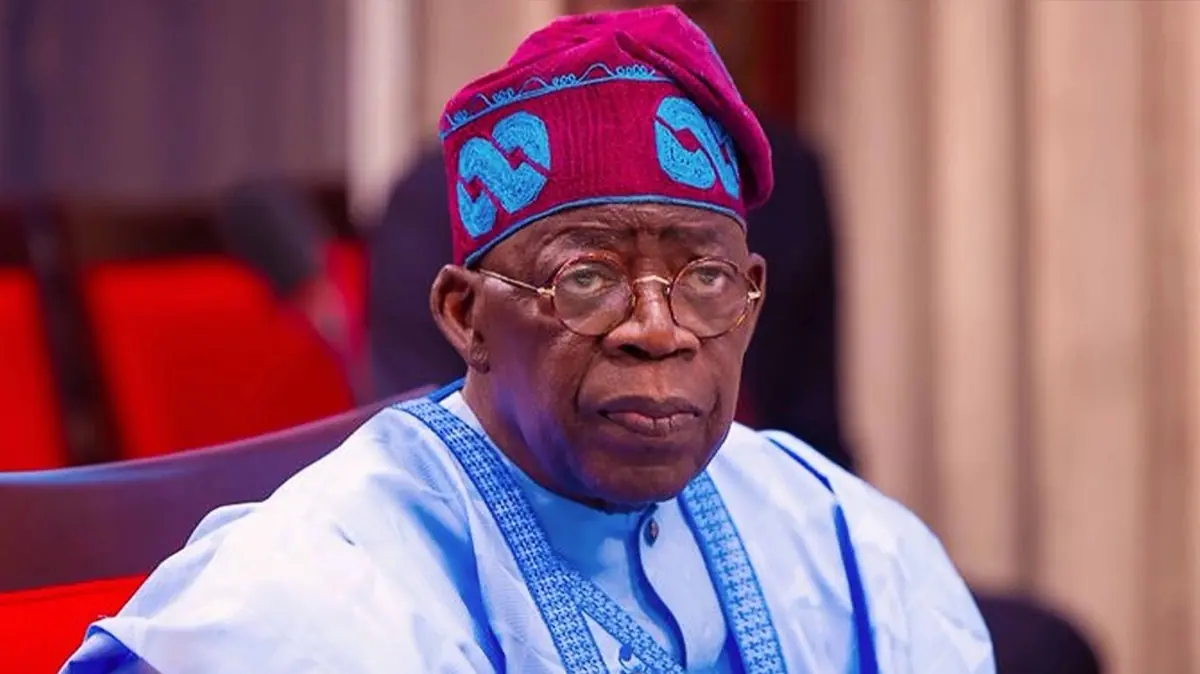
A prominent civil society watchdog, the Socio-Economic Rights and Accountability Project (SERAP), has formally called on President Bola Tinubu to initiate an immediate inquiry into the suspected diversion, non-remittance, and irregular expenditure of over ₦94.4 billion in public revenues derived from Nigeria's hydrocarbon sector.
The demand was detailed in an official petition dated October 3, 2026, authorised by Kolawole Oluwadare, the organisation's Deputy Director. The appeal relies heavily on disclosures published in the 2024 Volume II Annual Report of the Auditor-General of the Federation, released on August 7, 2026, which documented systemic financial discrepancies spanning operations between January 2022 and December 2024.
Breakdown of Unremitted and Irregular Oil Revenues
The Auditor-General's assessment uncovered substantial shortfalls across state energy regulatory and development bodies, notably the Midstream and Downstream Gas Infrastructure Fund (MDGIF) and the Nigerian Upstream Petroleum Regulatory Commission (NUPRC). The flagged amounts consist of statutory penalties for environmental pollution, uncollected gas earnings, and questionable consultancy engagements.
According to the findings, the MDGIF failed to surrender ₦26.549 billion realised from petroleum product marketing between January 1, 2022, and December 31, 2024. The state auditor flagged the discrepancy as a potential diversion of public assets and urged that the sum be retrieved and transferred back into the national Treasury.
Significant lapses were also noted in the handling of gas-flaring fees intended to curb ecological devastation in oil-producing localities. The MDGIF reportedly omitted the reporting and transfer of ₦12.480 billion gathered in 2023. Concurrently, NUPRC stands accused of neglecting to forward an additional ₦38.610 billion in flaring levies earmarked for the MDGIF, directly violating provisions outlined under Section 52(8) of the Petroleum Industry Act 2021.
| Description of Questioned Fund | Responsible Agency | Approximate Amount (NGN) | Identified Audit Concern |
|---|---|---|---|
| Petroleum Product Sales (2022–2024) | MDGIF | ₦26.55 billion | Non-remittance; suspected diversion to private accounts |
| Gas-Flaring Levies (2023) | MDGIF | ₦12.48 billion | Unreported, unremitted environmental penalties |
| Gas-Flaring Net Collections | NUPRC to MDGIF | ₦38.61 billion | Statutory breach of Section 52(8), Petroleum Industry Act |
| Uncollected Natural Gas Sales (2024) | MDGIF | ₦12.94 billion | Failure to collect and account for state asset proceeds |
| Recovery Consultant Honorarium | MDGIF | ₦3.52 billion | Hired without executive approval or procurement compliance |
| Transaction Advisory Allocations | MDGIF | ₦261.85 million | Disbursed without verifiable proof of service rendered |
| Irregular Advisory Payments (Aug 2024) | MDGIF | ₦65.80 million | Apparent breach of public procurement statutes |
The Auditor-General highlighted that withholding dedicated gas-flaring levies jeopardizes ecological restoration and deepens communal vulnerabilities by starving remediation schemes of vital capital. Compounding this, the audit documented that MDGIF failed to collect and account for ₦12.940 billion earned from natural gas sales during the 2024 fiscal cycle.
Procurement Lapses and Questionable Consultancies
Beyond missing revenues, the watchdog group highlighted questionable administrative expenditures within the MDGIF. The fund disbursed ₦3.518 billion to an external consultant hired to reclaim outstanding flaring fines. State auditors discovered that the contract bypassed presidential authorisation entirely, leaving behind zero trace of required due diligence or compliance with standard civil service procurement protocols.
Also, internal records documented that ₦261.852 million was handed over to various transaction advisers without any verifiable work trail or documented deliverables. An additional payment of ₦65.8 million, disbursed in August 2024 for advisory activities, also bypassed mandatory procurement controls. In response, the Auditor-General suggested that the Executive Director of the MDGIF be made directly accountable for the outlay.
“Every naira identified in the Auditor-General’s report must be properly accounted for,” SERAP stated, insisting that any funds diverted or misapplied must be recouped and returned to the federal treasury without exception.
Executive Accountability and the Petroleum Portfolio
SERAP placed institutional responsibility squarely on the executive branch, drawing attention to President Tinubu's dual role as both the nation’s Head of State and the sitting Minister of Petroleum Resources.
“These findings concern petroleum-sector institutions and revenues over which the President, as Minister of Petroleum Resources, has a particular responsibility to ensure effective oversight, transparency and accountability,” the group noted in its petition.
The civil society organisation urged the administration to mobilise anti-graft bodies, trace every leaked kobo, and aggressively bring criminal indictments against culpable parties, emphasising that sanctions must be applied “irrespective of status, position or institutional affiliation.”
To restore institutional credibility, SERAP insisted that both MDGIF and NUPRC make public an exhaustive schedule showing every transaction date, total collections, outstanding sums, designated banking portals, and the public officials involved. Also, it demanded that the MDGIF swiftly publish its overdue audited financial statements spanning 2022, 2023, and 2024, warning that failing to do so infringes on statutory checks by the National Assembly’s Public Accounts Committees.
Seven-Day Legal Ultimatum
SERAP granted the Federal Government a period of seven days from the publication of its petition to act decisively on the Auditor-General's recommendations. The body pledged to launch legal actions to secure court orders compelling the executive branch, NUPRC, and MDGIF to comply if adequate progress is not demonstrated before the deadline expires.
The advocacy group reaffirmed that while every allegation requires definitive proof via impartial administrative and forensic investigations, leaving statutory audit observations unresolved creates grave governance risks and impairs public trust in national resource management.
State borrowing and the tax burden
Unremitted energy earnings put immediate strain on the federal budget. To plug gaps left by missing public revenues, the Debt Management Office relies on costly borrowing through local treasury bonds and external loans. Nigeria's debt service obligations already consume a heavy portion of total state income, limiting what is left for hospitals, roads, and federal schools.
Those shortfalls ultimately shift onto ordinary taxpayers. Fiscal authorities have expanded electronic tax tracking, increased value added tax oversight, and tightened deductions on formal businesses to lift non-oil revenues. When statutory bodies fail to surrender mineral proceeds to the national treasury, the burden of funding the state falls on private firms and wage earners through more aggressive collection drives and rising administrative charges.
The effect on domestic gas and transport
The Midstream and Downstream Gas Infrastructure Fund was established under the Petroleum Industry Act 2021 to finance local pipelines, processing plants, and distribution networks. The core purpose was to expand domestic gas supply, moving factories and transport fleets away from expensive imported petrol and heavy diesel.
When billions earmarked for gas development go uncollected or sit unaccounted for, capital projects across the gas supply chain slow down. Federal plans to roll out compressed natural gas for commercial buses and private cars depend on pipeline connections and retail filling stations. Delays in completing that network mean transport operators and hauliers continue to run on dearer fuels, passing those transport bills straight to consumers in daily food and market prices.
Without that midstream gas network in place, industrial manufacturers also remain tied to private diesel generation, adding heavy operational expenses to locally produced goods.
Conclusion
The disclosures compiled by the Auditor-General depict widespread administrative breakdown in the accounting mechanisms intended to supervise Nigeria's energy sector wealth. At a time when national revenues face structural pressure, the disappearance or non-remittance of over ₦94.4 billion underlines deep vulnerabilities within statutory bodies created by recent industry reforms.
The ball now sits in the presidency's court. Whether the administration engages anti-corruption agencies to trace these accounts, enforces procurement discipline, and submits overdue financial audits will serve as a decisive bellwether for executive transparency and resource governance in the post-Petroleum Industry Act era.
Category: Business