Bringing Your Family: A Step-by-Step Spousal Sponsorship Guide for Nigerians
By Gbenga Ayandare —
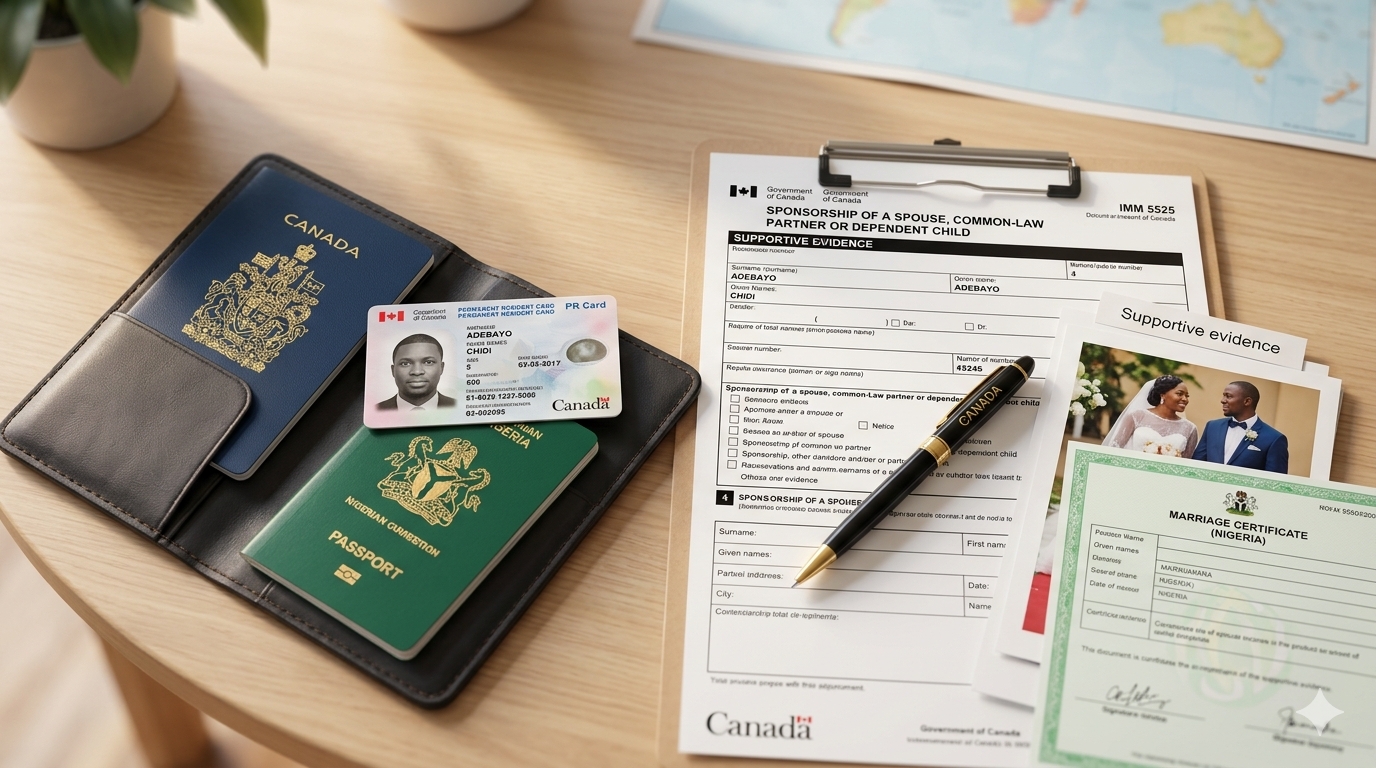
For Canadian citizens and permanent residents who have married a partner from Nigeria, navigating the family reunification process is both deeply personal and highly bureaucratic. The Canadian government remains firmly committed to family reunification, yet the spousal sponsorship pathway requires clearing some of the strictest document audits in the entire immigration system. This is because immigration officers are legally mandated to scrutinize files for indicators of what IRCC terms a "marriage of convenience"—a union entered into solely to obtain legal status in Canada.
A recent operational update issued to the visa processing office in Lagos directs officers to execute incredibly thorough checks on traditional weddings and long-distance relationships. It is not enough to simply submit a legal marriage certificate. To secure approval, you must build an overwhelming, authentic narrative of your shared life. For Nigerian couples, failure to properly document cultural and family traditions is the leading cause of prolonged processing delays or outright application denials.
This comprehensive guide details the exact mechanical and structural rules necessary to navigate a successful spousal sponsorship application from Nigeria. Following this blueprint ensures that your documentation satisfies immigration fraud audits and keeps your family's reunification timeline on track.
Choosing Your Pathway: Inland vs. Outland Sponsorship
The first critical decision you must make is determining where your Nigerian spouse will reside while the application is actively being processed by the government. IRCC divides spousal immigration into two separate operational streams: Inland and Outland sponsorship. Choosing the wrong stream can severely impact your partner’s ability to travel, work, or maintain legal status during the processing window.
The Inland stream requires your spouse to be physically present inside Canada with valid temporary status (such as a visitor or worker) throughout the entire processing duration. The major benefit of this route is eligibility for an Open Work Permit, allowing them to work while awaiting a final decision. Conversely, the Outland stream is designed for spouses currently living in Nigeria or abroad. While they must wait outside Canada, Outland applications retain the right to an administrative appeal if the file is refused, a legal shield that Inland applicants do not possess.
Before initiating either pathway, review the mandatory foundational requirements that the sponsor must satisfy to qualify:
- Confirm that the sponsor is at least 18 years of age and holds valid Canadian citizenship or a permanent resident status.
- Verify that the sponsor does not possess active criminal convictions related to domestic violence, sexual offenses, or violent bodily harm.
- Sign a legally binding 3-year Undertaking confirming you will provide for your spouse's basic food, clothing, and shelter needs, ensuring they do not rely on provincial social assistance.

The Data Advantage: Overcoming the Unique West African Audit Matrix
When assessing a marriage involving a Nigerian citizen, IRCC case officers utilize a specialized anti-fraud assessment framework. They look for specific regional anomalies that do not align with conventional West African relationship norms. To win an approval, your document package must explicitly satisfy every layer of this operational matrix.
The table below outlines the core evidence categories immigration officers analyze, along with the precise documentation needed to clear their vetting process:
| IRCC Audit Focus Category | Common Refusal Pitfall | Mandatory Winning Evidence Requirement |
|---|---|---|
| Traditional Weddings (Yoruba/Igbo/Hausa) | Small, isolated ceremonies lacking extended family presence look artificial to auditors. | Submit extensive photo evidence showing both sets of parents present, alongside community letters validating the customary rites. |
| Long-Distance Cohabitation | Unexplained gaps in communication during periods of physical separation. | Provide continuous, dated communication logs (WhatsApp, email) spanning the entire history of the relationship without interruption. |
| Financial Interdependence | Maintaining completely separate financial profiles with zero shared accounts. | Show active wire transfers from the sponsor, shared Nigerian bank accounts, or designated insurance beneficiary profiles. |
Navigating the Visa Interview and Document Vetting
If an immigration officer reviews your submitted paperwork and still harbors doubts regarding the genuine nature of your marriage, they will issue a formal request for an in-person interview. For Outland applications, this session is conducted directly at the Canadian Deputy High Commission in Victoria Island, Lagos. During this high-stakes meeting, the applicant—and occasionally the sponsor via teleconference—will be questioned separately about intimate details of their relationship.
To avoid triggering an interview, your initial application package must be flawlessly organized. Do not simply dump hundreds of unorganized photos into your portal. Every photo uploaded must feature a typed caption detailing the exact date, location, and full names of all family members present. Furthermore, ensure that your spouse undergoes their immigration medical examination and biometric capture immediately upon receiving the official tracking prompts to prevent structural processing bottlenecks.
Do not treat the document checklist as optional. Providing fewer than the requested number of family photos, omitting letters of support from close relatives, or failing to explain why certain family members missed your wedding will result in an immediate procedural fairness letter or an application refusal.

Questions & Answers
How long does it take to process a spousal sponsorship visa from Nigeria?
The standard global processing standard published by IRCC for both inland and outland spousal sponsorship applications is **12 months**. However, because the visa processing center in Lagos experiences incredibly high file volumes and executes deep background verifications, complex Nigerian applications that require an interview or secondary document checks can occasionally take 14 to 18 months to finalize.
Can I sponsor my partner if we only had a traditional wedding in Nigeria?
Yes, IRCC fully recognizes customary and traditional marriages performed in Nigeria, provided the ceremony complies with the local laws of the state where it occurred. However, to satisfy federal guidelines, you must register the traditional marriage with the local government registry (such as the Ikoyi Registry) and obtain an official Ministry of Interior Marriage Certificate to upload with your file.
What happens if the sponsor loses their job during the application process?
Unlike economic immigration streams, there is no minimum necessary income (MNI) requirement to sponsor a legal spouse or dependent child. If the Canadian sponsor loses their job or experiences a drop in income, the application remains fully valid, provided the sponsor is not currently receiving provincial social assistance for reasons other than a disability.
Can we apply for a visitor visa for my spouse while the sponsorship file is active?
Yes, under IRCC's dual intent policy guidelines, officers are explicitly instructed to look favorably upon visitor visa applications submitted by spouses with an active, passing PR sponsorship file. This policy allows your Nigerian partner to wait with you inside Canada while their permanent residency application undergoes final background processing.
How many chat logs and photos should we include to prove our relationship?
IRCC enforces strict electronic page limitations within the online application portal. You should select a maximum of 20 to 30 highly descriptive family photos that span the entire duration of your relationship. For communication histories, compile a concise document showing 1 to 2 pages of message logs per month over the past one to two years to prove consistent communication.
Key Takeaways
- Register Promptly: Secure an official government marriage certificate from a federal registry to legitimize your traditional nuptials.
- Caption Visuals: Add detailed captions to every relationship photo, outlining names, dates, and the specific family context.
- Document Visits: Maintain a clean paper trail of all physical trips to Nigeria, including boarding passes, hotel receipts, and passport stamps.
- Maintain Communication: Provide consistent, chronological chat histories to satisfy long-distance relationship audits.
Conclusion
Successfully sponsoring your Nigerian spouse for permanent residency requires an unyielding commitment to detailed, transparent documentation. By understanding the anti-fraud priorities of the visa office in Lagos and building a structured package that proves your relationship's authenticity, you protect your family from stressful processing delays. Assemble your historical evidence early, register your customary certificates correctly, and present a unified, comprehensive file to ensure your family is reunited in Canada seamlessly.Primary Factual References
1. Family Class Sponsorship Eligibility and Undertaking Framework: Government of Canada, Immigration, Refugees and Citizenship Canada (IRCC). "Sponsoring Your Spouse, Partner or Dependent Child: Sponsor Eligibility and Legal Obligations of the Undertaking." Updated April 2026. https://canada.ca
2. Relationship Authenticity and Customary Marriage Audits: Government of Canada, Immigration, Refugees and Citizenship Canada (IRCC). "Operational Guidelines for Visa Officers: Evaluating the Authenticity of Marriages (Marriages of Convenience) and Assessing Customary West African Unions." Policy Manual Directive, Amended March 2026. https://canada.ca
3. Dual Intent Processing Policies spouses: Government of Canada, Immigration, Refugees and Citizenship Canada (IRCC). "Dual Intent Policy Framework: Processing Temporary Resident Visa (TRV) Applications for Spouses with Active Permanent Residency Files." Ministerial Instructions, Issued May 2026. https://canada.ca
Category: Immigration