We built the factory. We forgot the economy
By CelebUD Newsroom —
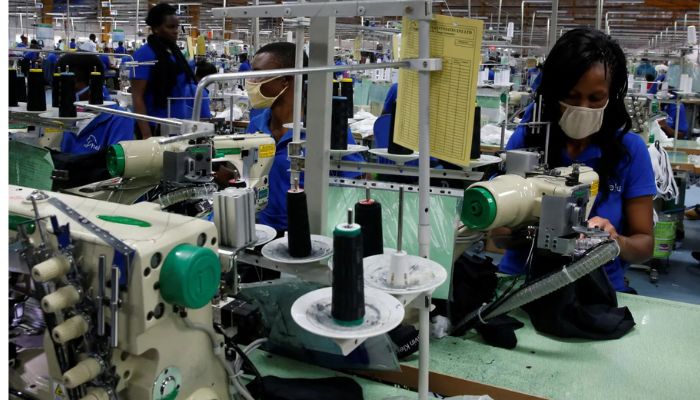
A persistent paradox sits at the heart of Nigeria’s industrial ambition: entrepreneurs are capable of establishing functional production lines, assembling machinery, and creating quality items, yet the businesses housing those operations routinely struggle to survive. Across the nation, industrial facilities are active, but systemic friction beyond factory gates consistently undermines their commercial viability. High generation costs, logistics bottlenecks, administrative hurdles, and mismatched capital markets continue to dilute the competitiveness of domestic enterprises long before finished goods ever reach retail shelves.
The Production Paradox: Operational Plants, Strained Enterprises
For years, economic discourse in West Africa’s largest economy has centred heavily on population size as an inherent guarantee of commercial success. However, sheer population numbers do not automatically constitute an accessible, functioning marketplace. That distinction served as the primary focus of the Go Local Summit 2.0, organised by BusinessDay in Lagos on September 17 under the theme, “From Market Power to Market Systems.”
Stakeholders at the gathering emphasised that the primary hurdle facing domestic enterprise is no longer a deficit of technical skill or entrepreneurial initiative. Instead, the central obstacle is a profound breakdown in economic coordination. While Nigeria has active agricultural producers, industrial fabricators, creative artisans, and broad consumer appetite, the connective tissue linking these elements remains fragmented.
Consider an enterprise operating out of an industrial hub like Enugu. The company may manufacture an item efficiently at factory-gate prices. Yet, as that inventory moves across state borders toward distribution nodes such as Benin City, transport delays, multi-agency checkpoints, inadequate intermediate storage, and high freight tariffs erode any initial cost advantage. For perishable goods, these bottlenecks frequently cause outright loss, trapping essential working capital inside immobile inventory.
The Compounding Cost of Weak Supporting Systems
The operational overheads confronting domestic producers illustrate why output capacity alone cannot guarantee profitability. According to figures presented by the Manufacturers Association of Nigeria (MAN), domestic producers expended approximately ₦1.34 trillion on alternative energy sources in 2025. Captive power generation and off-grid solutions have ballooned to consume roughly 50 percent of overall industrial operating overhead.
| Operational Hurdle | Direct Commercial Consequence | Systemic Impact |
|---|---|---|
| Power Deficits | Overreliance on expensive alternative energy (₦1.34T in 2025) | Overhead consumes up to 50% of operating expenditure |
| Transit & Checkpoints | Prolonged travel times, freight markups, perishable spoilage | Erosion of factory-gate pricing advantage |
| Underdeveloped Storage | Fragmented regional warehousing, inventory bottlenecks | Illiquidity from trapped working capital |
| Credit Mismatch | Private-sector loans at roughly 12% of national GDP (2025) | Short-term instruments misapplied to long-term assets |
| Standards Verification | Inability to establish documented traceability and certification | Exclusion from institutional retail and export channels |
Financial intermediation presents an equally formidable challenge. Even when balance sheets or consumer orders justify expansion, commercial lending frameworks frequently fail to align with operational realities. Short-duration financing is routinely deployed toward long-term capital investments. Simultaneously, widespread accounting deficits and absent governance records leave many micro, small, and medium enterprises (MSMEs) unable to verify their creditworthiness to institutional lenders.
International assessments underline the depth of this financing disconnect. Data from the International Monetary Fund (IMF) covering 2025 indicated that while domestic credit extended to the private sector recorded growth, it remained suppressed at roughly 12 percent of Gross Domestic Product (GDP). National savings have consistently failed to translate into scalable productive output, stranding viable enterprises between operational demand and scarce long-term liquidity.
Verification Over Volume: Standards and Value Addition
Beyond capital and infrastructure lies the barrier of market compliance. A core tenet articulated during the summit noted:
“Power is what you produce. Systems are what you can prove.”
This principle clarifies why an economy can lead in the output of raw agricultural commodities or unrefined minerals while failing to establish an enduring footprint in value-added export markets. Upstream production is insufficient without verifiable provenance, formal quality certification, and administrative predictability. A food processor requires verifiable health and safety certifications; apparel designers require enforceable intellectual property protections; institutional retailers require dependable delivery timelines; and commercial banks require auditable cash-flow statements.
The discussion around domestic enterprise must therefore move beyond basic import-substitution rhetoric. The fundamental economic objective is value capture. Exporting raw hides while importing finished footwear forfeits the wealth generated along intermediate processing stages. Similarly, harvesting agricultural crops while depending entirely on imported packaged provisions represents raw output rather than an integrated industrial ecosystem.
The Core Pillars Required for Functional Market Systems
Transforming standalone factories into an integrated industrial economy requires policy shifts across several interdependent domains:
- Holistic Industrial Metrics: National performance indicators must evaluate manufacturing capacity use, employment figures, local raw material integration, and export capability rather than viewing headline GDP figures in isolation.
- Industrialized Energy Architecture: Mini-grids, dedicated industrial corridors, and localized distributed energy infrastructure must be financed and managed as foundational public utilities rather than stopgap survival mechanisms.
- Enterprise Governance and Adaptive Finance: Small-scale operators must establish clear accounting separations, verifiable inventory protocols, and cash-flow reporting, while financial institutions must structure products that match enterprise operating cycles.
- Transparent Regulatory Oversight: Administrative agencies must eliminate discretionary delays. Businesses require explicit, standardized guidance regarding certification fees, requirements, and compliance timelines across all regulatory bodies.
- Logistics Integration: Regional transit corridors, coastal ports, interstate borders, and temperature-controlled storage must be treated as direct components of the industrial chain rather than detached service sectors.
- Demand Structuring and Public Procurement: Institutional consumption must be intentionally linked to domestic capacity. Aligning government procurement with certified local suppliers creates immediate anchor demand, while private retail distribution networks can scale local integration.
Using Regional Trade Beyond National Borders
The imperative to build institutional infrastructure becomes even sharper under the African Continental Free Trade Area (AfCFTA). While the treaty provides preferential market access across the continent, cross-border commerce cannot be realised by diplomatic signatures alone. Exporters cannot capitalize on tariff reductions without authenticated quality controls, functioning regional payment networks, reliable transit routes, and scalable production capacity.
True industrial policy does not demand that a nation fabricate every imaginable consumer good, nor does it require shielding inefficient domestic producers from all external competition. Rather, it requires establishing an enabling environment in which competitive local businesses can reliably operate, clear regulatory scrutiny, move their output swiftly to market, and capture enduring value from the resources they process.
Conclusion
Constructing a factory floor and installing machinery solves only the initial stage of industrial development. Until road corridors, electrical grids, regulatory agencies, banking systems, and retail pipelines operate in concert, individual manufacturing plants will remain isolated islands of productivity contending against systemic friction.
For Nigeria’s industrial ambitions to mature, the focus must shift from celebrating raw plant capacity to repairing the broader economic machinery that supports it. Sustainable economic independence will not be measured by the machines standing inside factory gates, but by whether the supply trucks leaving those gates can reach domestic and regional markets swiftly, competitively, and at prices that allow enterprises to thrive.
Category: Business