What to do if a crucial Canadian citizenship by descent document isn’t in English or French
By CelebUD Newsroom —
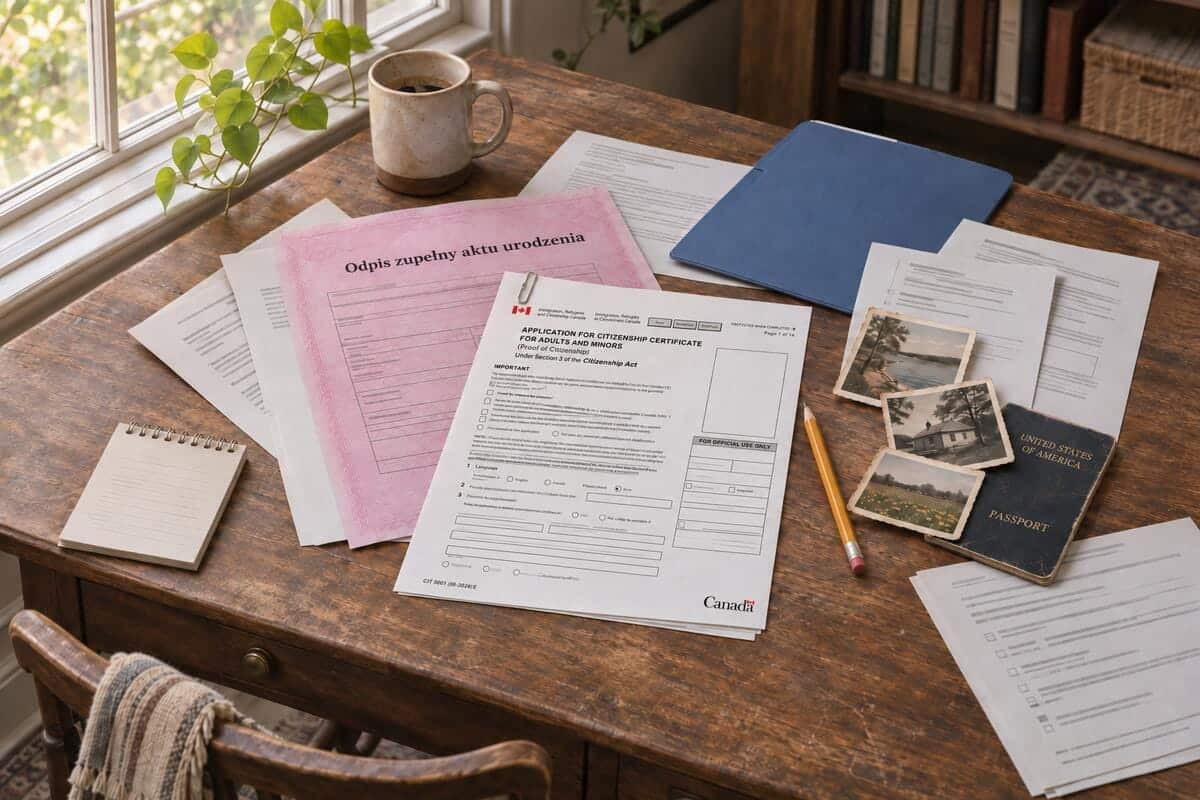
Securing Canadian citizenship through lineage frequently involves tracing ancestry across borders, a process that regularly yields vital civil records produced in languages other than English or French. While prospective applicants often worry that non-official language records will be rejected by Immigration, Refugees and Citizenship Canada (IRCC), immigration authorities routinely accept these documents provided they meet strict translation, certification, and attestation protocols.
The Core Translation Rules for IRCC
For any foreign-language record submitted to substantiate a citizenship by descent claim—such as birth, marriage, baptismal, or death certificates—IRCC requires that applicants submit a complete package verifying the record's authenticity. Unless an exemption applies, every foreign-language document must be accompanied by two supporting items: a complete, word-for-word translation into either English or French, and a sworn affidavit from the translator attesting to the accuracy of the translated text.
Because Canada recognizes both English and French as official languages, any civil registry document issued natively in French requires no translation whatsoever. This standard streamlines the application process for descendants whose lineage traces through Quebec, historical Acadian populations in the Maritime provinces, or francophone nations and regions such as France, Belgium, Haiti, and francophone West Africa.
Exemption for Certified Canadian Translators
The standard requirement to provide a sworn affidavit is waived if the applicant hires a certified translator based in Canada. Under IRCC guidelines, a professional in good standing with a provincial or territorial regulatory body does not need to execute an affidavit before an official commissioner.
Professional regulation in Canada is administered regionally rather than at the federal level. Most provincial associations operate under the umbrella of the Canadian Translators, Terminologists and Interpreters Council (CTTIC), whereas Quebec regulates the profession independently through the Ordre des traducteurs, terminologues et interprètes agréés du Québec (OTTIAQ). When hiring professionals from these directories, applicants must verify that the practitioner holds full certified status rather than an associate, student, or candidate membership tier.
Understanding the Translator's Affidavit
If an applicant opts not to use a Canadian certified translator—such as when hiring a local professional in the United States or overseas—an affidavit is mandatory. This document is a formal declaration in which the linguist swears under oath that they are proficient in both tongues and that the completed rendering represents a faithful, precise translation of the original source document.
The legal execution of this oath depends heavily on geographic location:
- Within Canada: The declaration must be witnessed and signed by a notary public, a commissioner of oaths, or a commissioner for taking affidavits, depending on the legal designations recognized within the specific province or territory.
- Outside Canada: The sworn statement must be executed in the physical presence of a notary public. In jurisdictions like the United States, notaries public are commissioned at the state level and are widely accessible at modest cost through local legal offices, shipping outlets, or banking institutions.
Document Review and Comparison Guidelines
Before committing funds to professional translation, applicants are advised to review the raw documents received from foreign civil registries or state archives. Foreign agencies frequently issue condensed extracts or short-form certificates rather than the comprehensive, long-form registrations preferred by IRCC. Utilizing automated text-recognition or mobile translation applications allows applicants to preliminary check that vital details—including spelling of names, relationships, and dates—align with family records before commissioning certified translations.
| Translator Classification | Affidavit Required? | Authorized Witnessing Official |
|---|---|---|
| Canadian Certified Translator (CTTIC / OTTIAQ) | No | None needed (exemption applies) |
| Non-Certified Translator (Inside Canada) | Yes | Notary public, commissioner of oaths, or commissioner for taking affidavits |
| Independent / Foreign Translator (Outside Canada) | Yes | Notary public authorized under local jurisdiction |
| Relative or Family Member | Invalid | Not accepted under any circumstances |
The Strict Exclusion of Family Members
A frequent error that leads to rejected citizenship applications involves the use of bilingual family members. IRCC enforces a strict prohibition barring relatives from translating documents, irrespective of their professional credentials or linguistic competence. The exclusion list includes parents, guardians, siblings, spouses, common-law partners, conjugal partners, grandparents, children, aunts, uncles, nieces, nephews, and first cousins.
This restriction catches many genealogy researchers off guard, as family historians often rely on multilingual relatives who first discovered the international records. Submitting a translation completed by any excluded relative will invalidate the submission. When families submit multiple citizenship applications grouped in a single mailing parcel, an error or deficiency in one file can result in the entire parcel being returned unprocessed by IRCC.
What the strict family ban means for shared applications
When tracing family lineage, it is completely natural to turn to relatives for help. A cousin who is fluent in another language or an uncle who carefully preserved old family paperwork often steps forward to interpret or translate vital records. However, IRCC draws an absolute line here: no relative—from parents and siblings down to first cousins—is permitted to translate your documents, regardless of how fluent or professionally qualified they might be.
The larger operational risk comes when families apply together. When you send multiple citizenship by descent applications in a single mailing parcel to save on courier fees, IRCC treats the package as a collective unit. If even one record carries a translation done by a family member, or lacks the required affidavit, immigration authorities may return the entire bundle unprocessed. That single oversight can set back citizenship timelines for every relative in the package by months.
Before you seal and dispatch a family application parcel, have you verified that every single translated document was prepared by a completely unrelated professional?
Conclusion
Navigating the documentary hurdles of Canadian citizenship by descent requires meticulous adherence to IRCC evidentiary standards. Receiving a foreign-language civil record is not a roadblock, but handling it correctly requires either contracting a provincial certified translator in Canada or securing a properly notarized affidavit from an independent linguist while avoiding the pitfall of using relatives. Ensuring all foreign records are fully translated, certified, and authenticated prior to dispatch protects claims from costly procedural delays or complete rejections.
Reporting based on coverage by CIC News - Immigration.
Category: Immigration