Map reveals which provinces and territories are changing their clocks this year
By CelebUD Newsroom —
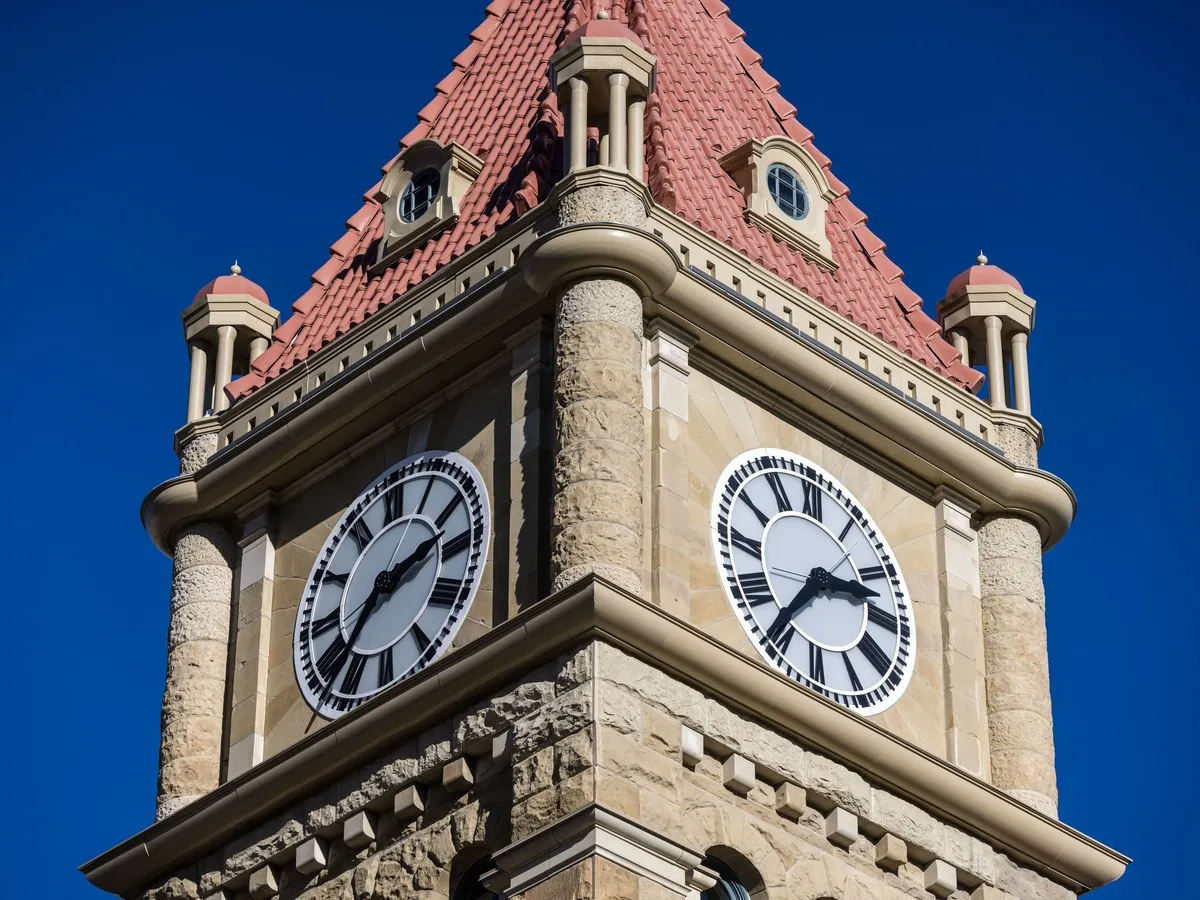
Canada is bracing for an unprecedented shift in its seasonal timekeeping this November, as a sweeping wave of provincial and territorial decisions creates a patchwork of competing time zones from coast to coast. While Canadians have traditionally set their clocks back one hour on November 1 to mark the return to standard time, several western provinces, northern territories, and regional pockets have officially opted out of the biannual ritual altogether. By choosing to remain on daylight saving time indefinitely, these jurisdictions are fundamentally altering longstanding time differences across the country and ushering in an era of newfound complexity for cross-border commuters, businesses, and travellers alike.
The Western and Northern Push Toward Permanent Daylight Time
The movement to abandon the twice-a-year clock adjustment has gained decisive momentum throughout western and northern Canada. Alberta, British Columbia, Manitoba, Saskatchewan, the Northwest Territories, and Yukon have all committed to halting the cycle of alternating between daylight and standard hours. Consequently, residents living across these vast regions will not be turning their clocks back on November 1.
While this marks a dramatic nationwide turning point, the departure from standard time adjustments is not entirely unprecedented. Saskatchewan famously led the country by abolishing seasonal changes back in 1966. Decades later, Yukon followed suit by cementing permanent daylight saving time in 2020. Over the past twelve months, Alberta, British Columbia, and the Northwest Territories joined the ranks of jurisdictions adopting year-round daylight time, with Manitoba formalising its own departure just last month.
Public sentiment has served as the primary catalyst behind these legislative changes across the West:
- British Columbia: A comprehensive public engagement initiative conducted in 2019 revealed that 93 per cent of participants supported moving to permanent daylight saving time.
- Yukon: A survey showed that 93 per cent of respondents wanted an immediate halt to seasonal adjustments, with 70 per cent favouring permanent daylight saving time.
- Northwest Territories: Leaders resolved to eliminate clock alterations based directly on public consultation data gathered throughout 2022.
- Manitoba: A provincial engagement study in May revealed that 92 per cent of surveyed residents demanded an end to seasonal transitions, with 58 per cent backing permanent daylight saving time.
- Alberta: Provincial authorities adopted year-round "Alberta Time" (formerly Mountain Daylight Time) to foster stability, minimise disruptions, and better coordinate commercial activities with neighbouring trading partners.
Provincial Exceptions and Internal Regional Divides
The time zone landscape is further complicated by internal boundaries and regional carve-outs, meaning single provinces no longer adhere to a uniform clock. In Ontario, the provincial government announced on October 13 that communities throughout the northwestern corner—including Kenora—will break away from the rest of the province to adopt permanent daylight saving time. Because northwestern Ontario has historically aligned its schedule with neighbouring Manitoba, provincial officials determined that keeping Kenora in sync with Manitoba would prevent operational friction for regional businesses and ensure convenient scheduling for residents travelling across the border for medical visits and commerce.
A similar internal division is playing out in Quebec. While the vast majority of the province plans to reset its clocks on November 1, its northern territory of Nunavik chose over the past year to permanently remain on daylight saving time. In British Columbia, the southeastern East Kootenay region will remain aligned with Alberta, adopting the year-round Alberta Time standard.
Canada’s sprawling Arctic territory of Nunavut continues to span three separate time zones. All three zones will roll their clocks back on November 1, with the sole exception of Southampton Island, which continues its long-standing practice of observing Eastern Standard Time year-round. However, Nunavut's current regime may soon shift as well; Cambridge Bay MLA Fred Pedersen confirmed plans to introduce a formal resolution during the legislative assembly's upcoming sitting to eliminate seasonal adjustments territory-wide.
How Canada's Shifting Time Map Compares
Because some provinces are remaining on daylight saving time while others fall back to standard time, the customary hour differences that Canadians have relied on for generations are changing dramatically for the winter months.
| Jurisdiction / Region | November 1 Status | Winter Time Zone Characteristics |
|---|---|---|
| British Columbia & Yukon | Permanent Daylight Saving Time | 7 hours behind UTC; matches western Nunavut |
| Alberta & Northwest Territories | Permanent Alberta Time | Matches Saskatchewan year-round; 1 hour ahead of B.C. |
| Saskatchewan | Permanent Standard Time (No change) | Matches Alberta & N.W.T.; 1 hour ahead of B.C. |
| Manitoba & NW Ontario (Kenora) | Permanent Daylight Saving Time | Matches standard-time Ontario and Quebec this winter |
| Most of Ontario & Quebec | Falls Back to Standard Time | 1 hour ahead of Alberta; 2 hours ahead of B.C. |
| Atlantic Canada (NB, NS, PEI, NL) | Falls Back to Standard Time | 1 hour ahead of Ontario/Quebec; 3 hours ahead of B.C. |
| Nunavik (Northern Quebec) | Permanent Daylight Saving Time | Remains on daylight time year-round |
| Southampton Island (Nunavut) | Permanent Eastern Standard Time | Remains on EST year-round without seasonal shifts |
Under this recalibrated alignment, British Columbia, Yukon, and western portions of Nunavut will share the identical time this winter at seven hours behind Coordinated Universal Time (UTC). Consequently, the gap between B.C. and major economic hubs in Ontario and Quebec will temporarily shrink from three hours down to two. Alberta and the Northwest Territories will sit just one hour behind Ontario and Quebec, while Manitoba will share the exact same clock time as central Canadian centres during the winter season. Atlantic Canada—encompassing New Brunswick, Nova Scotia, Prince Edward Island, and Newfoundland and Labrador—will be three hours ahead of B.C., two hours ahead of Alberta, and one hour ahead of standard-time Ontario and Quebec.
Health Debates, Economics, and the Future of Clock Changes
Daylight saving time was originally conceived as an energy-conservation measure designed to align working hours with natural daylight, cutting electricity costs by providing extended daylight in the evening at the expense of darker mornings. Over recent decades, however, medical professionals and business groups have increasingly argued that the physiological shock of adjusting internal circadian rhythms twice a year outweighs any historical energy savings.
During Manitoba's announcement on September 17, business groups strongly supported the transition. Loren Remillard, president and chief executive officer of the Winnipeg Chamber of Commerce, highlighted the economic upside of longer evenings:
“Permanent daylight saving time is good for Manitoba businesses. More daylight in the evening means more opportunity for restaurants, retailers, farmers, and communities across our province to make the most of the day.”
Public health bodies have raised similar arguments against the status quo. An official assessment conducted by Manitoba Health, Seniors and Long-Term Care concluded that ending the twice-yearly disruption yields superior population-level health outcomes compared to the seasonal shift, which has frequently been linked to acute spikes in cardiovascular stress, sleep deprivation, and vehicular collisions following clock changes.
Yet, full national consensus remains elusive. Ontario previously approved legislation in 2020 to end clock adjustments permanently, but inserted a trigger clause requiring neighbouring Quebec and New York State to enact identical measures before the law takes effect. Because neither partner has fully transitioned, southern and eastern Ontario remain bound to the November standard-time rollback alongside most of Quebec and the Maritimes.
How the changing map affects work across provinces
A growing number of African newcomers have moved to cities like Calgary, Edmonton, and Winnipeg to take advantage of cheaper rent and property prices, while working remotely for employers located in Toronto, Ottawa, or Montreal. If you are balancing a remote contract across provincial boundaries, this winter's time patchwork directly alters your workday.
Because western provinces are holding their clocks steady while central Canada falls back, the working gap has narrowed. Workers in Manitoba will share the exact same clock hour as their colleagues in Toronto and Montreal all winter. In Alberta, remote workers will be only one hour behind headquarters instead of two, while British Columbia will sit just two hours behind rather than three. That means fewer rushed 6:00 a.m. starts to make 9:00 a.m. Eastern team meetings, offering parents more breathing room for morning school runs.
However, digital scheduling tools and shared workplace calendars may experience glitchy invite times if software updates have not caught up with provincial legislation. Have you confirmed your core meeting hours with your manager and checked that your laptop's time zone settings reflect your exact location?
Conclusion
The fragmented response to daylight saving time signals that the era of coordinated, uniform Canadian timekeeping has effectively come to an end. By prioritizing regional economic ties, personal lifestyle preferences, and health outcomes, western and northern governments have initiated a historic break from tradition. Unless hesitant eastern provinces and neighbouring American states follow suit, Canadians will need to navigate an intricate, multi-layered national clock each autumn and spring for the foreseeable future.
Reporting based on coverage by National Post.
Category: News