Your governments are to blame for high gas prices: Benchmark Canada
By CelebUD Newsroom —
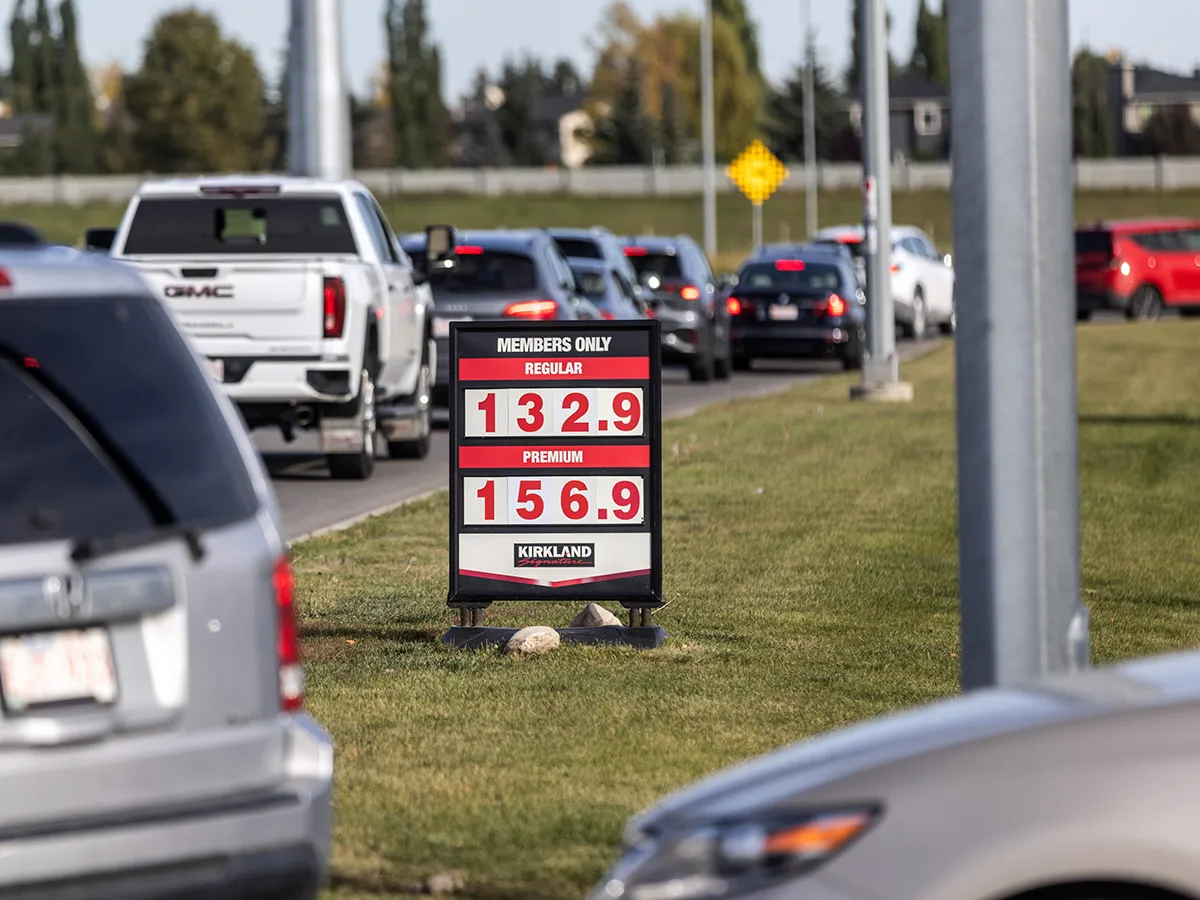
Skyrocketing retail gasoline prices across Canada are largely the product of government duties, environmental mandates, and currency headwinds rather than raw extraction costs, according to an extensive multi-nation evaluation released by Benchmark Canada, an initiative under the Macdonald-Laurier Institute. While domestic motorists often lament paying elevated sums at filling stations, international comparisons indicate that Canadian rates sit in the middle of democratic oil-producing peers, trailing high-tax jurisdictions like Norway, the United Kingdom, Australia, and Mexico, while sitting above pricing seen in the United States and Brazil.
How Canadian Fuel Costs Compare Internationally
By mid-autumn, Canadian drivers faced an average retail expense of approximately $1.85 per litre at the pump. While painful for household budgets, that figure falls below the totals confronted by consumers in several fellow energy-producing democracies. Norway—which boasts the highest volume of crude per capita among the seven democratic nations reviewed—exacts the steepest toll on motorists, with taxes alone accounting for 51 percent of its retail fuel pricing.
The core cost of unrefined petroleum remains relatively consistent on the international market, meaning variances between jurisdictions typically stem from sovereign fiscal interventions rather than the commodity itself.
“The underlying cost of the commodity is roughly the same. It may vary slightly, but it’s all in taxes and potential rules and regulations.”
To quantify the international disparities observed in the Benchmark Canada report, the following table illustrates the breakdown across major markets surveyed:
| Country | Estimated Pump Price (CAD Equiv.) | Approximate Tax Share (%) | Domestic Energy Status |
|---|---|---|---|
| United States | ~$1.57 / litre | ~12% | Major Producer |
| Canada | ~$1.85 / litre | 17%–21% (base) | Major Producer |
| Norway | Substantially higher than $1.85 | 51% | Highest Oil per Capita |
| United Kingdom | Substantially higher than $1.85 | Above Canadian levels | Producer / Importer |
| Australia | Substantially higher than $1.85 | Above Canadian levels | Resource Producer |
| Mexico | Substantially higher than $1.85 | Above Canadian levels | Major Producer |
| Brazil | Lower than $1.85 | Below Canadian levels | Major Producer |
The Disconnect Between Crude Reserves and Domestic Pumps
A frequent point of frustration for Canadian consumers is why immense domestic crude oil reserves in provinces such as Alberta fail to shield national drivers from global pricing shocks. Industry analysts emphasize that crude operates within an integrated international marketplace. As petroleum expert Patrick De Haan, head of petroleum analysis at GasBuddy, explained, crude extracted within Canada does not simply remain captive to domestic consumers; it trades openly across global networks, meaning Canadian refiners purchase crude at going market values.
This dynamic is further exacerbated by the performance of the national currency. Refined products are typically bought and sold in U.S. dollars. In historical commodity booms, surging crude values above $100 per barrel lifted the Canadian dollar—commonly referred to as the petro-dollar—offsetting import and refining expenses. However, recent economic conditions saw the Canadian dollar flirt with dropping below 70 cents against the U.S. greenback, removing that protective cushion entirely.
“I’ve been doing this for a long time, and never have I seen the Canadian dollar not respond to an energy crunch. It did this time. It refused to move.”
Provincial Disparities and the Debate Over Hidden Taxes
Within Canada itself, regional pump costs diverge wildly due to varying provincial tax structures and environmental policies. Benchmark Canada data indicates that drivers in Alberta—where the provincial government suspended its fuel duty—enjoyed costs near $1.55 per litre. Conversely, motorists in Metro Vancouver faced bills reaching $2.12 per litre, while drivers in Newfoundland and Labrador saw rates touch $2.165 per litre.
Under standard conditions, formal taxes represent approximately 21 percent of the pump total in Canada, dipping temporarily to 17 percent when specific excise exemptions are enacted. However, Dan McTeague, a former Member of Parliament and current president of Canadians for Affordable Energy, contends that official calculations understate the government's true footprint. McTeague points to clean fuel regulations—rules that require refiners to reduce their carbon intensity through ethanol blending or the procurement of carbon credits—as indirect fiscal levies that artificially lift prices.
“There’s no way you can consider that this isn’t a tax.”
By McTeague's calculations, factoring in both direct duties and indirect carbon policy mandates elevates the government share of the retail fuel bill to nearly 25 percent in markets such as Ontario and British Columbia. Compounding this is the application of the Harmonized Sales Tax (HST) in Eastern Canada, which charges a percentage fee on top of an already elevated total, creating what critics describe as a compounding tax on fuel.
Debating the Remedy: Tax Cuts Versus Geopolitics
Industry observers remain divided on how best to provide relief to consumers. Data from fuel tracking firm Kalibrate established that average Canadian pump prices rose to $1.843 per litre by late September—up roughly 40 cents year-over-year—while commercial diesel climbed by more than a dollar per litre over the same window. This broad surge ripples directly into supply chains and retail consumer goods.
While consumer advocacy figures like McTeague argue that terminating sales taxes like the HST is the quickest route to easing pressure on families, market analysts caution that cutting levies carries unintended consequences. De Haan warned that artificially lowering pump taxes while international crude supplies remain constrained could unintentionally fuel extra demand, thereby driving baseline market prices even higher. Instead, De Haan suggests that authentic financial relief will only materialize once global geopolitical conflicts—specifically diplomatic standoffs involving the United States and Iran, or the war between Russia and Ukraine—subside enough to restore equilibrium to world supplies.
Analysts also caution drivers against directing their anger at local station operators. Retail gas stations operate on narrow margins, often taking in roughly 10 cents per litre before end-of-day overhead whittles that margin down to mere pennies. Most retail locations rely almost entirely on convenience store sales, including coffee, confectionery, and car washes, to maintain profitability.
How fuel levies squeeze newcomer gig workers and small operators
Many African newcomers and international students in Canada rely on rideshare driving, food delivery, and logistics to establish an income foothold while building their resumes. These roles depend entirely on personal vehicles, where every cent added to the pump price directly eats into take-home pay. With combined duties and carbon mandates making up nearly 25 percent of the bill in major markets like Ontario and British Columbia, drivers face operating expenses that platform apps rarely fully absorb.
The report also underscores that station owners operate on paper-thin retail margins, making only pennies per litre after overhead. That means drivers cannot expect relief or price flexibility at the neighborhood pump. For small African caterers, mobile service providers, and courier drivers, fuel remains an unavoidable cost that directly compresses bottom-line earnings.
Takeaway: If driving is a primary source of your income, make sure you track all fuel receipts and mileage meticulously for your Canadian tax return, and regularly assess whether your net hourly earnings after gas still justify the wear on your vehicle.
Conclusion
The findings from Benchmark Canada highlight that elevated Canadian fuel costs are fundamentally an outcome of state policy choices, global currency dynamics, and broader international energy markets rather than price gouging at the neighborhood service station. While motorists in Canada pay less than their counterparts in several major democracies, tax policies and environmental compliance mandates ensure prices remain elevated well above American benchmarks. Moving forward, sustained relief for drivers will hinge on whether provincial and federal administrations choose to adjust their fiscal frameworks, or whether shifting international geopolitical tensions finally ease the strain on global crude supplies.
Reporting based on coverage by National Post.
Category: News