WHOLE LIFE VS UNIVERSAL LIFE INSURANCE A Comprehensive, In‑Depth Comparison of Their Advantages and Disadvantages
By Matthew Ayandare —
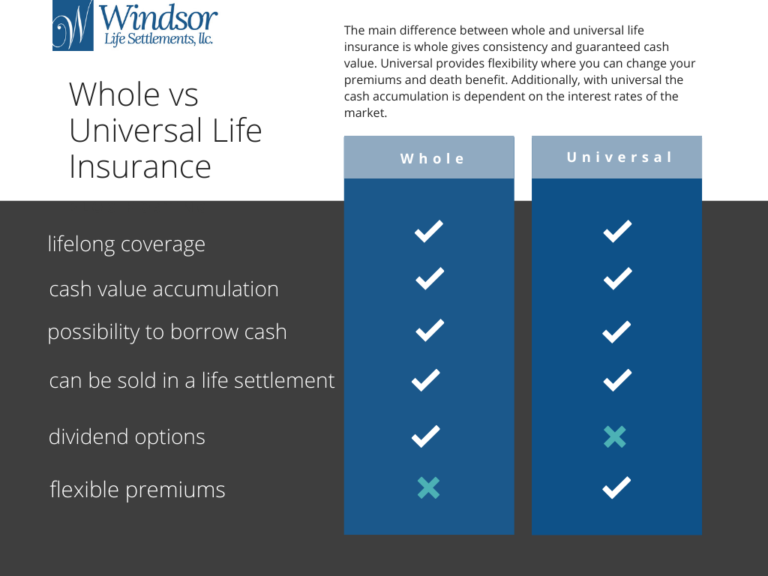
1. FOUNDATIONS OF PERMANENT LIFE INSURANCE
Before comparing them, it’s important to understand what each policy fundamentally represents. Although both are forms of permanent life insurance, they operate on very different philosophies.
1.1 What Is Whole Life Insurance?
Whole life insurance is the most traditional form of permanent life insurance. It is built on the principle of guarantees — guaranteed premiums, guaranteed cash value growth, and a guaranteed death benefit.
A whole life is structured so that:
The insurer assumes all investment risk
The policy owner receives predictable, stable growth
Premiums remain fixed for life
Cash value grows at a guaranteed rate
The death benefit is contractually guaranteed
Many whole life policies are "participating", meaning they may pay dividends based on the insurer’s financial performance. These dividends can be used to increase cash value, increase death benefit, reduce premiums, or purchase paid‑up additions.
A whole life is often chosen by individuals who value:
Stability
Predictability
Long‑term guarantees
Minimal maintenance
Conservative financial planning
1.2 What Is Universal Life Insurance?
Universal life insurance is a more modern, flexible form of permanent insurance. It separates the policy into three moving parts:
Premiums
Cost of insurance (COI)
Cash value growth
This separation gives UL its defining characteristic: flexibility.
Policy owners can:
Adjust premiums
Adjust death benefits
Choose investment options
Access cash value more freely
Overfund or underfund the policy
Adapt the policy to changing financial circumstances
Depending on the type of UL, cash value may grow based on:
Guaranteed interest
Market‑linked index accounts
Actively managed investment funds
Universal life is often chosen by individuals who value:
Control
Flexibility
Higher growth potential
Ability to customize the policy
Tax‑efficient wealth accumulation
2. STRUCTURAL DIFFERENCES BETWEEN WHOLE LIFE AND UNIVERSAL LIFE
Understanding the structural differences is key to understanding their advantages and disadvantages. These differences affect everything from premium stability to long‑term performance.
2.1 Premium Structure
Whole Life
Premiums are fixed and guaranteed for life
Cannot be reduced or skipped
Designed for predictability and stability
Universal Life
Premiums are flexible
Can be increased, reduced, or skipped
Must be managed to avoid underfunding
2.2 Cash Value Growth
Whole Life
Guaranteed minimum growth
May earn dividends
Stable, predictable, low‑risk accumulation
Universal Life
Growth depends on investment choices
Options include guaranteed, indexed, or managed funds
Higher potential returns, but also higher risk
2.3 Death Benefit Structure
Whole Life
Guaranteed death benefit
Typically level
Increases only with dividends
Universal Life
Adjustable death benefit
Options: Level or Increasing
Can be changed as needs evolve
2.4 Cost of Insurance (COI)
Whole Life
COI is built into the premium
Never increases
The insurer absorbs mortality risk
Universal Life
COI increases with age
Deducted monthly from cash value
Must be monitored to avoid erosion
3. ADVANTAGES OF WHOLE LIFE INSURANCE
Whole life insurance offers several powerful benefits, especially for individuals who value stability and guarantees.
3.1 Guaranteed Premiums and Death Benefit
A whole life provides absolute certainty. Premiums never change, and the death benefit is guaranteed. This makes it ideal for long‑term planning, especially for families who want predictable financial protection.
3.2 Guaranteed Cash Value Growth
Whole life policies accumulate cash value at a guaranteed minimum rate. This makes a whole life attractive for conservative investors who want stable, predictable growth without market volatility.
3.3 Dividends (Participating Policies)
Participating whole life policies may pay dividends, which can significantly enhance long-term value. Dividends can be used to:
Increase cash value
Increase death benefit
Reduce premiums
Purchase paid‑up additions
3.4 Ideal for Estate Planning
'Whole life' is often used for the following:
Tax‑efficient wealth transfer
Funding trusts
Equalizing inheritances
Covering estate taxes
Its guarantees make it a reliable estate planning tool.
3.5 Low Maintenance — Why Whole Life Requires Minimal Oversight
One of the most understated advantages of whole life insurance is its low‑maintenance nature, especially when compared to more flexible products like universal life. A whole life policy is designed to operate almost entirely in the background, requiring little to no intervention from the policy owner once the policy is properly funded.
This simplicity is engineered into the product’s structure. The insurer takes full responsibility for:
Managing the investment portfolio
Absorbing market volatility
Maintaining guaranteed cash value growth
Ensuring the death benefit remains intact
Keeping premiums level and predictable
Because the insurer carries the investment and mortality risk, the policy owner does not need to make decisions about:
Asset allocation
Premium adjustments
COI increases
Market performance
Policy sustainability
Whole life behaves like a self‑managing financial instrument. Once established, it quietly builds cash value, maintains coverage, and fulfils its long‑term purpose without requiring ongoing strategic decisions from the owner.
4. ADVANTAGES OF UNIVERSAL LIFE INSURANCE
Universal life offers powerful benefits for policy owners who want flexibility and control. These advantages stem from UL’s adaptable architecture — a structure designed to evolve with the policy owner’s financial life.
4.0 The Structural Power of UL — Why Flexibility Matters
Universal life insurance is often misunderstood because its advantages are tied directly to its flexible architecture. Unlike whole life, which is rigid and predictable, UL is designed to adapt to the policy owner’s financial life over decades.
The advantages of UL stem from three structural freedoms:
Freedom to control premiums
Freedom to control death benefits
Freedom to control investment strategy
These freedoms allow UL to serve multiple financial roles simultaneously:
A long‑term insurance solution
A tax‑advantaged investment vehicle
A flexible liquidity source
A corporate planning tool
A retirement income supplement
UL is uniquely suited for individuals whose financial circumstances evolve — business owners, high‑income professionals, and families with fluctuating income.
4.1 Flexible Premiums — How UL Adapts to Your Financial Life
The flexibility of UL premiums is one of the most powerful — and most misunderstood — features of the product. Unlike whole life, where premiums are fixed and mandatory, UL allows policy owners to control how much they contribute and when.
This flexibility exists because UL separates the following:
The cost of insurance (COI)
The cash value accumulation
The premium payments
This separation allows the policy owner to:
Increase premiums
Accelerate cash value growth and reduce future funding pressure.
Reduce premiums
Temporarily lower contributions during financial hardship.
Skip premiums
Allow the policy to pay for itself using accumulated cash value.
Resume higher premiums later
Rebuild cash value once finances stabilise.
This flexibility is invaluable for:
Entrepreneurs
Commission‑based professionals
Families navigating life transitions
Business owners managing cash flow cycles
UL rewards owners who understand how to balance flexibility with long‑term sustainability.
4.3 Liquidity and Access to Funds — UL as a Living Financial Asset
One of the defining advantages of universal life insurance is its superior liquidity. UL provides broad, flexible access to accumulated cash value, transforming it into a living financial asset.
Policy Loans
Tax‑advantaged borrowing without credit checks or repayment schedules.
Withdrawals
Direct access to cash value for major expenses or emergencies.
Collateral Loans
Banks often accept UL cash value as collateral for business or investment financing.
Why UL Liquidity Matters
UL behaves like a private, tax‑advantaged reserve fund that grows over time and remains accessible when needed.
5. DISADVANTAGES OF UNIVERSAL LIFE INSURANCE
Universal life insurance offers powerful advantages, but these advantages come with equally significant risks. UL is not a passive product. It requires understanding, engagement, and ongoing management.
5.0 The Core Risks of UL — Why Mismanagement Leads to Failure
UL’s flexibility is a double‑edged sword. When managed properly, UL is one of the most powerful financial tools available. When neglected, it can become one of the most problematic.
The core risks include the following:
Rising COI
Investment underperformance
Policy lapse risk
Loan mismanagement
Complexity and misunderstanding
Each of these risks is expanded below.
5.1 Rising Cost of Insurance — The Hidden Pressure That Builds Over Time
COI increases every year as the policy owner ages. If cash value is insufficient, premiums must rise. This is the most common reason UL policies lapse.
5.2 Investment Underperformance — When Markets Don’t Support the Policy
If returns fall short of projections:
Cash value grows slowly
COI consumes more of the cash value
Premiums must increase
Policy sustainability becomes threatened
5.3 Policy Lapse Risk — The Most Dangerous Outcome
A UL policy can lapse if:
Cash value reaches zero
Premiums are insufficient
COI exceeds available funds
A lapse is catastrophic because:
The death benefit disappears
Decades of premiums may be lost
Outstanding loans become taxable immediately
5.4 Loan Mismanagement — When Borrowing Backfires
Loans reduce the death benefit and accumulate interest. If loan balances grow too large:
Cash value erodes
COI increases
Policy may lapse
A loan becomes taxable
5.5 Complexity and Misunderstanding — Why Many UL Policies Fail
UL requires understanding:
COI mechanics
Investment performance
Funding strategies
Tax implications
Loan rules
Death benefit options
UL is a participatory product that rewards informed owners and punishes neglect.
CONCLUSION
Whole life and universal life are both powerful financial tools — but they serve different purposes.
Whole Life offers stability, guarantees, and simplicity.
Universal Life offers flexibility, control, and higher growth potential.
The right choice depends on:
Income stability
Risk tolerance
Long‑term goals
Estate planning needs
Desire for flexibility vs guarantees
When used correctly, both can become cornerstones of a strong financial plan.
About the Author
Matthew Ayandare is a seasoned financial advisor and insurance agent licensed in Ontario. He has extensive experience helping individuals and families assess financial risks, understand insurance products, and choose solutions that are practical and appropriate for their needs. His writing is focused on education, clarity, and informed decision-making for everyday readers.
Disclaimer
The views expressed in this article are provided solely for general educational purposes and should not be relied upon as legal, tax, investment, insurance, or other professional advice. Every reader’s circumstances are unique, and any insurance or financial decision should be based on personal objectives, risk tolerance, policy terms, and applicable laws or regulations. Readers are encouraged to conduct their own due diligence and consult appropriately qualified professionals before making any financial or insurance-related decisions.
Category: Fin-Advisor