The Uniqueness of a Universal Insurance Policy: What Every Policy Owner Should Know
By Matthew Ayandare —
Universal life insurance occupies a rare and fascinating space in the financial world. It is neither a simple protection product nor a pure investment vehicle. Instead, it is a hybrid financial instrument—a flexible, tax‑advantaged, long‑term planning tool that can adapt to the evolving needs of individuals, families, and business owners.
Yet this very flexibility is what makes universal life insurance (UL) both powerful and misunderstood. Many policy owners enter into UL contracts without fully appreciating how the moving parts interact, how the policy must be managed over time, or how the product can be strategically leveraged to build wealth, protect estates, and create intergenerational advantages.
This article explores the unique architecture of universal life insurance, the mechanics that drive its performance, the responsibilities of ownership, and three real‑world scenarios that illustrate how UL can either flourish or falter depending on how it is used.
1. What Makes Universal Life Insurance Unique?
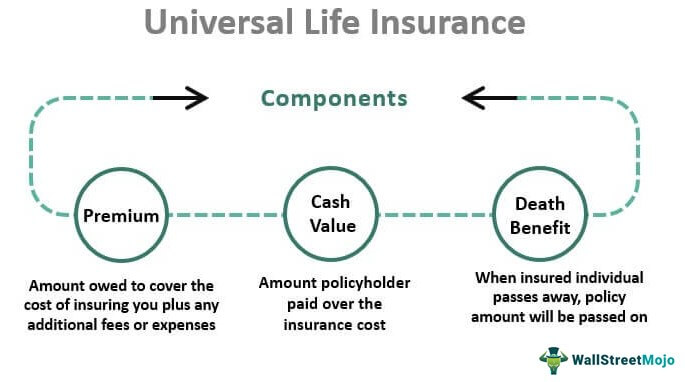
Universal life insurance is unique because it is built on three interdependent pillars:
Flexible premiums
Adjustable death benefits
A tax‑deferred cash value account
These elements give UL a level of adaptability unmatched by term or whole life insurance. But they also introduce complexity that requires ongoing attention.
1.1 A Policy That Evolves With You
Unlike term insurance, which expires, or whole life insurance, which is rigid and predictable, universal life is designed to evolve. It can be:
Overfunded to accelerate cash value growth
Underfunded temporarily during financial hardship
Adjusted to increase or decrease death benefits
Rebalanced to shift investment allocations
This makes UL ideal for people whose financial lives are dynamic—entrepreneurs, high‑income professionals, business owners, and individuals with long‑term estate planning goals.
1.2 The Cash Value Engine
At the heart of UL is the cash value account, which grows tax‑deferred. Depending on the policy type, the cash value may be tied to:
Guaranteed interest rates
Market‑linked index accounts
Actively managed investment options
This investment component is what gives UL its wealth‑building potential. But it also introduces performance risk—returns may be higher or lower than projected.
1.3 The Cost of Insurance (COI): The Silent Driver
Every month, the insurer deducts a cost of insurance from the cash value. COI increases with age, meaning the policy becomes more expensive to maintain over time.
If the cash value is insufficient to cover rising COI, the policy may require higher premiums—or risk lapsing. This is where many policy owners get caught off guard.
1.4 Liquidity and Access to Funds
UL policies allow owners to access cash value through:
Withdrawals
Policy loans
Collateral loans from financial institutions
This liquidity makes UL a versatile financial planning tool. But withdrawals and loans must be managed carefully to avoid tax consequences or policy erosion.
2. The Responsibilities of Universal Life Ownership
Owning a UL policy is not like owning term insurance. It is more like owning a long‑term financial asset that requires periodic review and strategic decision‑making.
A responsible UL owner should:
Review the policy annually
Request updated in‑force illustrations
Monitor investment performance
Understand COI trends
Maintain adequate funding
Consult a licensed advisor before making changes
When managed properly, UL can be a powerful tool. When neglected, it can become a financial burden.
3. Three Deep‑Dive Scenarios That Reveal the True Nature of Universal Life
To understand UL in its full complexity, it helps to examine real‑world situations. The following three scenarios illustrate how universal life can serve very different purposes depending on the owner’s goals, financial discipline, and long‑term planning.
Scenario 1: The High‑Income Professional Who Uses UL as a Tax‑Advantaged Wealth Engine
Profile
Name: Dr Amelia Grant
Age: 44
Occupation: Orthopedic surgeon
Income: $420,000 annually
Goal: Maximize tax‑sheltered growth beyond RRSP and TFSA limits
3.1.1 Why UL Fits Her Profile
Dr Grant has already maxed out her registered accounts. She wants a long‑term, tax‑efficient way to grow wealth while securing a substantial death benefit for her children.
A universal life policy allows her to:
Overfund the policy aggressively
Build tax‑deferred cash value
Create a tax-free death benefit
Access funds later through policy loans
3.1.2 How She Structures Her Policy
Face amount: $750,000
Minimum premium: $6,000/year
Actual premium paid: $20,000/year
Investment allocation: 70% index‑linked, 30% guaranteed interest
By overfunding, she accelerates cash value growth and minimises the risk of future underfunding.
3.1.3 The Long‑Term Outcome
By age 65:
Cash value exceeds $600,000
The death benefit grows to over $1.3 million
She can borrow against the policy tax‑free to supplement retirement income
3.1.4 The Lesson
Universal life shines brightest when used by individuals who:
Have stable, high income
Can commit to long‑term funding
Want tax‑advantaged growth
Value estate planning benefits
For Dr Grant, UL becomes a strategic wealth‑building engine, not just an insurance policy.
Scenario 2: The Business Owner Who Uses UL for Corporate Tax Planning and Legacy Building
Profile
Name: David Mensah
Age: 52
Occupation: Owner of a commercial HVAC company
Corporate Structure: Incorporated
Goal: Tax‑efficient wealth transfer and corporate surplus management
3.2.1 Why UL Is a Corporate Planning Tool
David’s corporation generates significant retained earnings. If he withdraws these funds personally, he faces high taxes. Instead, his accountant recommends a corporate‑owned universal life policy.
3.2.2 How Corporate UL Works for David
The corporation pays the premiums
Cash value grows tax‑deferred
Upon death, the death benefit flows into the corporation
The death benefit (minus adjusted cost basis) creates a Capital Dividend Account (CDA) credit
The corporation can then pay tax‑free dividends to David’s heirs
This transforms UL into a corporate tax strategy, not just a personal insurance product.
3.2.3 The Long‑Term Outcome
By age 75:
Corporate cash value: $900,000
Death benefit: $2.5 million
CDA credit: ≈$2.3 million
Tax‑free dividends to heirs: $2.3 million
David has effectively turned corporate surplus into a tax‑free intergenerational wealth transfer mechanism.
3.2.4 The Lesson
Universal life is uniquely suited for:
Incorporated professionals
Business owners
Individuals with large corporate surpluses
Families seeking tax‑efficient estate strategies
For David, UL becomes a corporate wealth preservation tool.
Scenario 3: The Middle‑Income Family Who Uses UL for Flexibility—But Must Manage It Carefully
Profile
Names: Mark and Tessa
Ages: 38 and 36
Occupations: Teacher and freelance designer
Goal: Long‑term protection with flexible premiums
3.3.1 Why UL Appeals to Them
Mark and Tessa want permanent coverage but appreciate the ability to
Increase premiums during strong financial years
Reduce premiums when income fluctuates
Build cash value gradually
UL gives them flexibility that a whole life cannot.
3.3.2 The Risk They Face
Because they sometimes pay only the minimum premium:
Cash value grows slowly
COI increases each year
Investment returns vary
The policy may become underfunded in their 50s or 60s
This is a common scenario among middle‑income UL owners.
3.3.3 The Turning Point
At age 55, they receive a notice:
“Your policy is projected to lapse at age 67 unless premiums are increased.”
This is not unusual. Many UL policies require premium adjustments later in life.
3.3.4 How They Correct Course
With guidance from an advisor, they:
Increase premiums modestly
Reallocate investments to more stable options
Reduce the death benefit slightly to lower COI
These adjustments stabilise the policy.
3.3.5 The Lesson
Universal life offers flexibility, but it demands active management. For families like Mark and Tessa, UL can work beautifully—if they stay engaged.
4. The Strategic Advantages of Universal Life Insurance
Universal life insurance offers a combination of benefits that no other insurance product delivers in the same integrated way. Its unique structure allows it to function simultaneously as a protection tool, a tax‑advantaged investment vehicle, and a flexible financial planning instrument. Below are the five major advantages that make UL stand out — each explained in depth so policy owners understand not just what the benefit is, but why it matters.
4.1 Tax‑Deferred Growth: How UL Maximizes Long‑Term Compounding Without Annual Tax Drag
One of the most powerful features of universal life insurance is its tax‑deferred cash value growth. Unlike taxable investment accounts, where interest, dividends, and capital gains are taxed annually, the cash value inside a UL policy grows without yearly tax erosion.
This means:
More of your money stays invested
Compounding accelerates over time
Long‑term growth can significantly outperform taxable alternatives
Why this matters:
For high‑income earners or individuals who have already maxed out RRSPs and TFSAs, UL becomes a rare additional shelter for long‑term wealth accumulation. Over 20–30 years, the difference between taxed and tax‑deferred growth can be dramatic.
Practical example:
A policy earning 5% annually inside a UL contract grows uninterrupted. The same investment earning 5% in a taxable account may effectively grow at only 3.5% after taxes — a gap that widens exponentially over decades.
4.2 Tax‑Free Death Benefit: A Powerful Tool for Estate Preservation and Wealth Transfer
The death benefit of a universal life policy is paid tax‑free to beneficiaries. This makes UL one of the most efficient estate planning tools available.
Why this matters:
It ensures heirs receive the full value of the benefit
It offsets taxes owed on other estate assets
It creates liquidity for families without forcing asset sales
It allows business owners to equalize inheritances among children
For families with real estate, corporations, or investment portfolios, the tax‑free death benefit can be the difference between a smooth estate transition and a financially strained one.
Practical example:
A business owner with a corporation worth $3 million may leave heirs with a significant tax bill. A UL policy with a $1 million death benefit can provide the liquidity needed to settle taxes without selling the business.
4.3 Liquidity and Access to Funds: Turning Cash Value Into a Flexible Financial Resource
Unlike term insurance, which offers no living benefits, UL policies allow owners to access their cash value while alive. This can be done through:
Policy loans
Withdrawals
Collateral loans from financial institutions
Why this matters:
Cash value becomes a financial safety net. It can be used for:
Emergencies
Business opportunities
Education funding
Retirement income supplementation
Because loans are typically tax‑free, UL can serve as a strategic source of liquidity later in life.
Practical example:
A retiree may borrow $30,000 annually from their UL policy to supplement pension income — without triggering taxable withdrawals.
4.4 Premium Flexibility: Adjusting Contributions to Match Life’s Changing Financial Realities
Universal life insurance is one of the few permanent insurance products that allows flexible premiums. Policy owners can:
Increase premiums to accelerate cash value
Reduce premiums during financial hardship
Skip payments temporarily if cash value is sufficient
Resume higher payments later
This flexibility is invaluable for individuals with fluctuating income or evolving financial priorities.
Why this matters:
Life is unpredictable. UL adapts to:
Job changes
Business cycles
Family expenses
Economic downturns
Practical example:
A freelancer may overfund the policy during strong income years and pay only the minimum during slower seasons — without jeopardising long‑term coverage.
4.5 Investment Choice: Tailoring Cash Value Growth to Your Risk Tolerance and Financial Goals
Universal life policies offer a range of investment options, allowing owners to customise how their cash value grows. Depending on the policy, these may include:
Guaranteed interest accounts
Index‑linked accounts
Actively managed investment funds
This flexibility allows policy owners to align their UL policy with their broader financial strategy.
Why this matters:
Different life stages require different investment approaches:
Younger owners may choose growth-orientated options
Older owners may shift to stable, guaranteed accounts
Business owners may balance risk across multiple assets
5. The Risks and Pitfalls Policy Owners Must Understand
Universal life is powerful, but it is not foolproof. Its flexibility comes with responsibilities, and its long‑term performance depends on how well the policy is funded, monitored, and managed.
Below are the five most critical risks every policy owner must understand — not as abstract concepts, but as real‑world forces that can shape the success or failure of a UL policy.
5.1 Rising Cost of Insurance: How Age‑Based Charges Can Erode Your Policy if Left Unchecked
The Cost of Insurance (COI) increases as you age. If your cash value is strong, these deductions are manageable. If your cash value is weak, COI becomes a silent threat.
If COI outpaces cash value growth, the insurer will require higher premiums. Ignoring these notices can lead to policy lapse — even after decades of contributions.
5.2 Investment Underperformance: When Market Results Fall Short and Threaten Policy Stability
UL policies often rely on investment performance to grow cash value. When returns fall short of projections, the cash value grows more slowly — or even shrinks.
Poor returns mean less cash value to cover COI, increasing the risk of underfunding and lapse.
5.3 Policy Lapse Risk: How Insufficient Funding or Poor Cash Value Management Can Terminate Coverage
A UL policy can lapse if the cash value reaches zero and premiums are insufficient to cover COI.
A lapse can erase decades of contributions and eliminate the death benefit entirely.
This risk is preventable — but only with active oversight.
5.4 Loan Mismanagement: How Borrowing Against Your Policy Can Reduce Death Benefits or Trigger Tax Problems
Policy loans reduce the net death benefit and accumulate interest. If unmanaged, they can spiral into a tax and coverage problem.
If a policy lapses with an outstanding loan, the loan becomes taxable as income — often creating a sudden, unexpected tax bill.
5.5 Complexity and Misunderstanding: Why Universal Life Requires Active Oversight and Professional Guidance
UL is not a “set‑and‑forget” product. It requires understanding:
COI mechanics
Investment performance
Funding strategies
Tax implications
Policy loan rules
Death benefit options
Misunderstanding leads to underfunding. Underfunding leads to cash value erosion. Cash value erosion leads to lapse.
6. What Every Policy Owner Should Do Annually
To keep a UL policy healthy, owners should:
Request an in‑force illustration
Review premium adequacy
Assess investment performance
Monitor COI trends
Consult a licensed advisor before making changes
UL is a living financial instrument. It must be reviewed like any other long‑term asset.
7. Final Thoughts: Universal Life as a Strategic Financial Asset
Universal life insurance is unique because it blends protection, investment, tax efficiency, and flexibility into a single long‑term financial tool. But its power lies not in its structure alone—it lies in how it is used.
For high‑income earners, UL can be a tax‑advantaged wealth engine.
For business owners, it can be a corporate estate planning strategy.
For families, it can be a flexible protection plan—if managed responsibly.
The key is understanding that universal life is not a passive product. It is a strategic asset that rewards informed, engaged, and disciplined ownership.
About the Author
Matthew Ayandare is a seasoned financial advisor and insurance agent licensed in Ontario. He has extensive experience helping individuals and families assess financial risks, understand insurance products, and choose solutions that are practical and appropriate for their needs. His writing is focused on education, clarity, and informed decision-making for everyday readers.
Disclaimer
The views expressed in this article are provided solely for general educational purposes and should not be relied upon as legal, tax, investment, insurance, or other professional advice. Every reader’s circumstances are unique, and any insurance or financial decision should be based on personal objectives, risk tolerance, policy terms, and applicable laws or regulations. Readers are encouraged to conduct their own due diligence and consult appropriately qualified professionals before making any financial or insurance-related decisions.
Category: Fin-Advisor