Nigeria's Judicial Rulings on Political Parties: An Agenda Worse Than a Coup?
By Gbenga Ayandare —
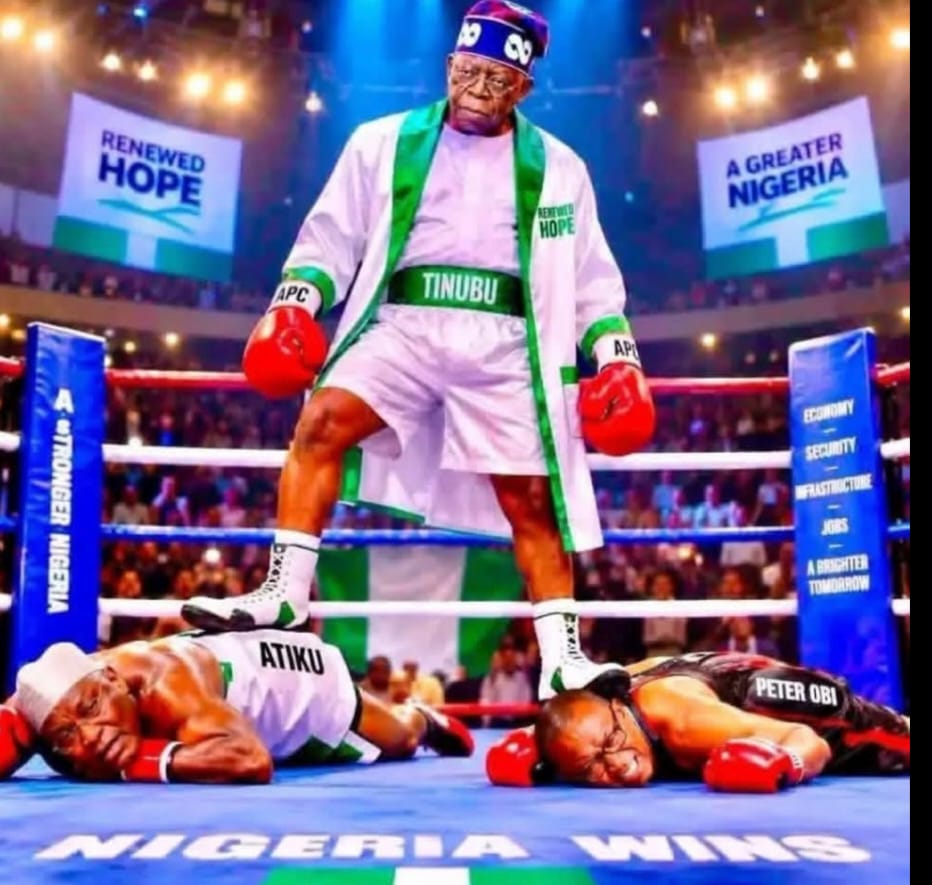
When military tanks rumbled into state capitals in decades past, Nigerians recognized the unmistakable signature of a coup d\'état. The suspension of the constitution was explicit, the suspension of parliament immediate, and the suppression of popular franchise unambiguous. Today, however, an entirely different battle is playing out across courtroom benches in Abuja. A wave of controversial judicial rulings nullifying major political parties, sacking party executives, and invalidating presidential candidacies has ignited furious national debate, leading opposition figures, civil society watchdogs, and legal scholars to warn of an insidious agenda that critics describe as far more dangerous to democracy than an outright military coup.
At the center of this gathering storm is the growing propensity of trial courts to insert themselves into internal party disputes, issue conflicting ex-parte orders, and disqualify top-tier candidates on technicalities just as election cycles accelerate. When the ballot box is repeatedly bypassed in favor of legal technicalities crafted in judge\'s chambers, the fundamental premise of multi-party constitutional rule is shaken to its foundations.
The Spark: Shock Rulings and the Invalidation of Opposition Machinery
The crisis reached a fever pitch following a cascade of controversial rulings delivered by the Federal High Court in Abuja. In a seismic decision that reverberated across Nigeria\'s political landscape, Justice Peter Lifu nullified the David Mark-led National Working Committee of the African Democratic Congress (ADC) and voided the nomination process that produced former Vice President Atiku Abubakar as its prospective presidential banner-bearer. The verdict, delivered barely forty-eight hours after massive opposition campaign rallies, dismantled the primary vehicle through which a broad coalition of opposition stakeholders sought to challenge the ruling All Progressives Congress (APC).
That ruling followed on the heels of earlier lower-court decisions directing the Independent National Electoral Commission (INEC) to deregister five political parties—including the ADC, the Action Peoples Party (APP), Action Alliance (AA), Accord Party, and Zenith Labour Party (ZLP)—on contentious grounds regarding electoral thresholds. Although the Court of Appeal swiftly overturned that deregistration judgment, blistering the lower court for what appellate Justice Abba Mohammed characterized as \"judicial impertinence\" and \"judicial insubordination,\" the damage had already rippled across the party system.
\"When political parties are disabled not by the electorate at the ballot box, but by coordinated judicial maneuvers delivered at the 11th hour, the citizen\'s vote is rendered obsolete. That is not constitutional adjudication; that is democracy under judicial siege.\"
Opposition figures and advocacy groups have leveled scathing allegations against the ruling establishment, charging that judicial levers are being weaponized to engineer a de facto one-party state. While the presidency and ruling party spokespersons have vigorously denied involvement—maintaining that internal opposition factional disputes are strictly matters of self-inflicted legal negligence—the optics of courts summarily terminating major political alternatives have left the Nigerian public deeply skeptical.
Why Observers Call It 'Worse Than a Military Coup'
To understand why seasoned legal minds and political commentators compare these judicial nullifications to military putsches—often deeming them even worse—one must examine how state legitimacy operates. In an orthodox military coup d\'état, the breach of constitutional continuity is visible, unmasked, and universally acknowledged as illegal. The public and the international community immediately grasp that sovereign power has been seized by force, establishing clear moral and political battle lines for resistance, sanctions, and eventual transition.
By contrast, a \"judicial coup\" wears the dignified robes of legality. It utilizes legal jargon, statutory interpretations, and formal courtroom orders to execute political outcomes that would be intolerable if attempted by decree. It hollows out democratic sovereignty from within while preserving a facade of institutional normalcy. Citizens are told to accept the disenfranchisement of their chosen parties because \"the courts have spoken,\" leaving voters feeling powerless against an elite consensus operating behind judicial seals.
Conflicting Judgments and the Scourge of Forum Shopping
A driving factor behind the growing crisis is the notorious prevalence of forum shopping, where aggrieved or state-backed party factions comb through jurisdictions until they find a sympathetic judge willing to entertain their suit. In several ongoing party leadership battles, Nigerians have watched courts of coordinate jurisdiction issue diametrically opposed rulings on identical questions of law.
One federal high court division will grant an order affirming a leadership congress, while another division hundreds of miles away issues an injunction barring the very same leadership from parading themselves as officers. This jurisdictional circus creates administrative paralysis within opposition structures, drains scarce campaign resources into unending litigation, and casts a dark shadow over the integrity of the bench.
Key Judicial Rulings Shaping Nigeria\'s Party Politics
The current turbulence is not an isolated event; it represents the culmination of a decade-long trajectory in which Nigeria\'s judicial system has progressively displaced the ballot box as the decisive arbiter of power:
| Year / Case | Court / Jurisdiction | Nature of the Judicial Action | Democratic Impact |
|---|---|---|---|
| 2020: Imo State Governorship | Supreme Court of Nigeria | Voided election results and declared fourth-place candidate Hope Uzodimma governor based on excluded polling unit figures. | Established precedent of judicially created governors, igniting national outrage over bench-decided election outcomes. |
| 2023: Yobe North APC Senatorial Ticket | Supreme Court of Nigeria | Recognized incumbent Senate President Ahmad Lawan, who did not participate in the original valid primary, over Bashir Machina. | Signaled that party godfathers and judicial technicalities could override grassroots democratic primary votes. |
| 2026: Five Parties Deregistration Suit | Federal High Court (Overturned on Appeal) | Lower court ordered deregistration of ADC, APP, AA, Accord, and ZLP; appellate court voided the decision as judicial insubordination. | Exposed deep rifts and jurisdictional defiance within judicial ranks concerning the right to political assembly. |
| 2026: ADC Leadership & Candidacy Nullification | Federal High Court, Abuja | Sacked David Mark-led leadership and voided Atiku Abubakar\'s presidential nomination following factional suit. | Disrupted opposition coalition strategies months ahead of nationwide general elections, sparking nationwide protests. |
The Counter-Argument: Party Lawlessness and Reckless Impunity
While public fury often lands directly upon judges, jurists and constitutional legalists argue that Nigeria\'s political parties are the true architects of their own destruction. For years, major political parties have operated as lawless empires, treating their own constitutions, guidelines, and Section 84 of the Electoral Act with brazen contempt.
Secret primary elections, unconstitutional caretaker committees, unilateral imposition of candidates by wealthy godfathers, and the flagrant exclusion of internal party rivals regularly trigger lawsuits. When parties refuse to establish transparent dispute-resolution mechanisms, they inevitably invite aggrieved members to seek redress in court. Proponents of judicial intervention maintain that judges cannot simply look away when party barons trample upon internal democratic procedures, arguing that judicial nullification is a tough but necessary remedy to compel internal democracy.
The Danger of a Disillusioned Electorate
Whatever the legal justification, the collateral damage falls squarely upon ordinary Nigerians. Voter turnout in Nigerian general elections has steadily plummeted, dropping from over 52 percent in 2011 to barely 27 percent in 2023. When citizens conclude that their votes at polling stations can be erased by midnight ex-parte motions or procedural technicalities in Abuja, civic participation collapses entirely.
Without an energized electorate and viable opposition options, the republic risks sliding into an electoral authoritarian state—one where formal elections are held periodically, but judicial filters guarantee the ruling party\'s unchallenged supremacy before a single ballot is cast.
Conclusion
Nigeria\'s democracy stands at a profound crossroads. The growing tendency of the courts to serve as the ultimate clearancehouse for political candidacies and party leaderships threatens the bedrock principle of representative governance. While party managers must urgently purge internal impunity and abide by statutory rules, the National Judicial Council (NJC) and appellate benches must rein in the reckless issuance of destabilizing judgments. If the judiciary allows itself to be perceived as a tool for executing an agenda worse than a coup d\'état—silently dismantling opposition alternatives under the color of law—it risks not only destroying its own credibility, but unraveling the Fourth Republic itself.
Sources
- The Punch Newspapers – Coverage on Federal High Court Rulings and Party Leadership Disputes
- News Central TV Africa – Appellate Reversal of Political Party Deregistration Orders
- Independent National Electoral Commission (INEC) – Statutory Guidelines on Party Primaries and Electoral Thresholds
- Premium Times Nigeria – Investigative Reporting on Judicial Interventions in Nigerian Politics
Disclaimer: This article provides analytical commentary on active political and legal developments in Nigeria based on publicly accessible reporting; ongoing litigation and party structures remain subject to further appeals and definitive judicial determinations.
Category: Politics