How to Verify Your Voter's Card and Locate Your Polling Unit in Nigeria
By Tunde Ibrahim Amusa —
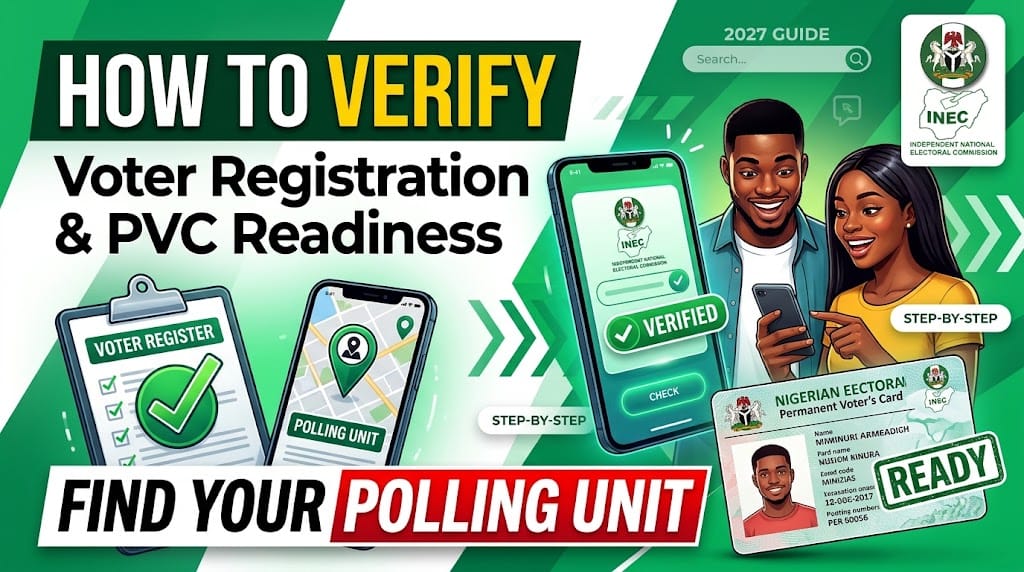
Electoral preparation in Nigeria requires voters to confirm two basic details well before election morning: that their registration is active on the national register, and that they know the exact physical venue where they must cast their ballot. The Independent National Electoral Commission (INEC), the body that conducts federal and state elections in Nigeria, maintains a voter register containing tens of millions of records spread across 36 states and the Federal Capital Territory (FCT). With recent redistributions of voters designed to decongest crowded voting centres, assuming your voting location remains unchanged can lead to confusion on polling day.
Under the Electoral Act 2022, holding a valid Permanent Voter's Card (PVC) is an absolute condition for voting. The law does not permit voting with temporary slips or printouts, and accreditation relies on the Bimodal Voter Accreditation System (BVAS), which matches the voter's PVC and biometric data at the polling unit level. Confirming that your card is printed and locating your specific polling station early helps avoid administrative hurdles when polling stations open at 8:30 am.
Understanding the Permanent Voter's Card and BVAS
The PVC contains a chip embedded with biometric details, including fingerprints and facial data, collected during the Continuous Voter Registration (CVR) exercise. On election day, polling officials use the BVAS handheld device to read the card and verify the identity of the person presenting it. If a person's name does not appear on the electronic register loaded into the BVAS device assigned to that specific polling unit, that individual cannot vote at that station.
Voters fall into distinct categories: those who registered during past cycles and already possess their cards, those who recently applied for fresh registration, and those who applied to transfer their voting location or replace damaged or lost cards. Each group must ensure that their physical PVC matches the current digital register maintained by INEC.
How to Check Your Voter Status Online
INEC provides an online verification service known as the Voter Verification Portal. The platform allows any registered citizen to query the national database and view their status. To complete an online check, follow these steps:
- Open a web browser and visit the official INEC voter verification portal at voters.inecinigeria.org.
- Select the state where you registered to vote.
- Choose your preferred search method: either by entering your Voter Identification Number (VIN) or by entering your personal details.
- If searching by personal details, enter your surname, first name, and date of birth exactly as submitted during registration.
- Complete the security verification reCAPTCHA and select the search button.
If the record exists, the screen displays your registration details. This record shows your full name, VIN, date of birth, gender, state, Local Government Area (LGA), registration area (ward), and the name and code of your polling unit. If you see your details displayed clearly, your name is present on the national database.
Locating Your Polling Unit
Nigeria contains 176,846 polling units following an expansion exercise that converted existing voting points into full polling units. This structural change eliminated many temporary annexes and moved millions of registered voters into nearby, less congested centres to shorten queues on voting day.
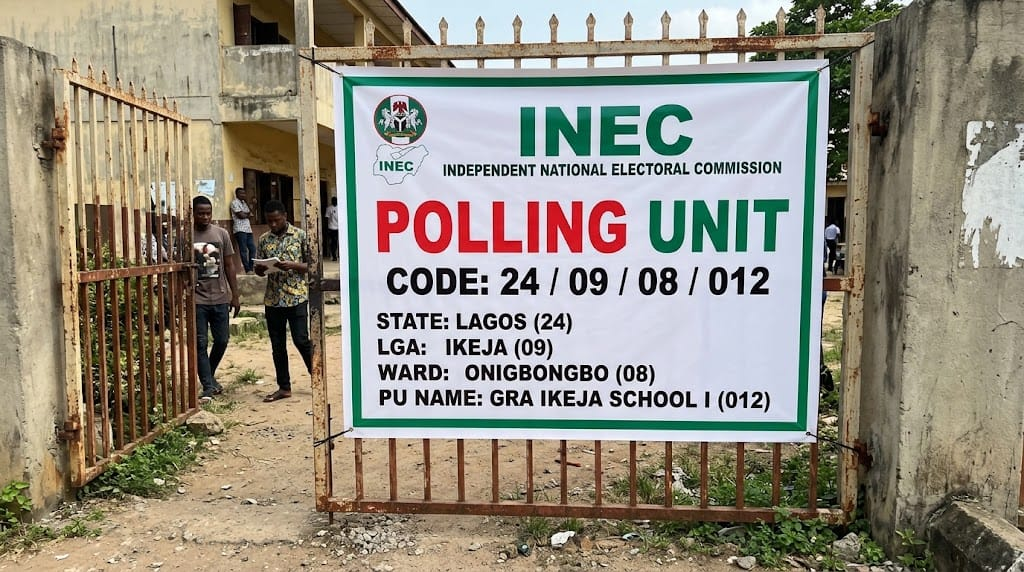
Every polling unit in Nigeria has a distinct delimitation code consisting of four pairs of numbers separated by slashes or hyphens. For example, a code written as 24-08-03-012 breaks down as follows:
- State Code (24): Identifies the state of registration or the FCT.
- Local Government Area Code (08): Identifies the local government council.
- Registration Area or Ward Code (03): Identifies the political ward within that council.
- Polling Unit Code (012): Identifies the specific polling station within that ward.
The online verification search returns both the code and the written description of the location, such as a primary school, community town hall, health centre, or public open space. Knowing the written name alongside the code is useful, as some schools host multiple separate polling units within the same compound, each serving distinct blocks of voters.
| Verification Method | Required Information | Primary Output | Best Suited For |
|---|---|---|---|
| INEC Online Portal | State, Surname, First Name, Date of Birth (or VIN) | Full delimitation data, Polling Unit name and code | Voters with internet access checking from home or abroad |
| Physical LGA Office Visit | Registration slip or temporary slip | Card readiness confirmation, register inspection | Voters whose records do not appear online |
| Ward-Level Register Display | Physical presence during public inspection periods | Printed roll pasted at registration centre | Cross-checking local community voter lists |
Tracking PVC Readiness and Collection
Checking that your details exist online confirms that you are registered, but it does not mean your card has been printed and delivered to your area. For new applicants, transfer applicants, and those seeking replacements, physical collection is required. INEC prints cards in batches at its central facility in Abuja before distributing them to state headquarters and local government offices.
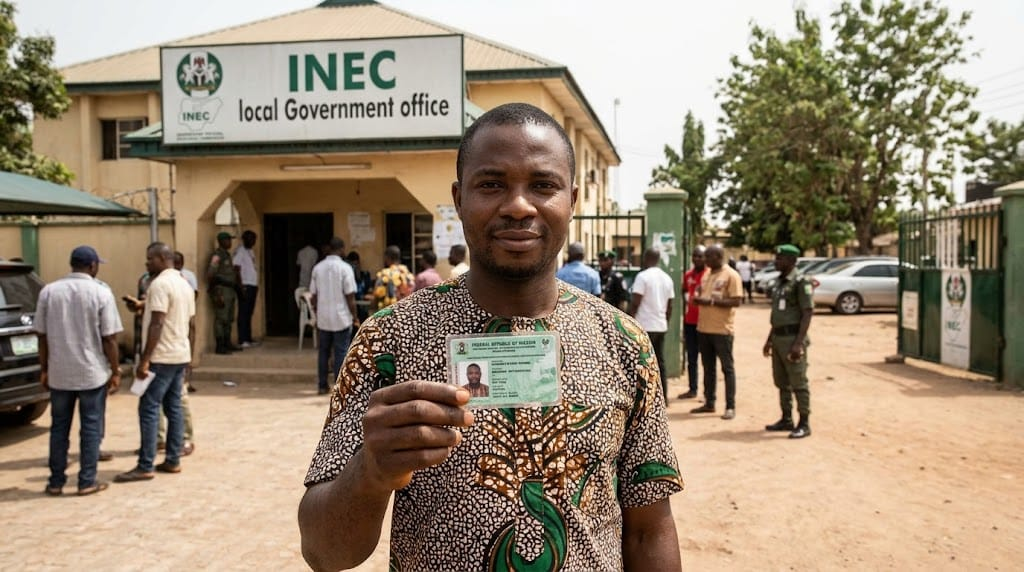
Collection of the PVC follows a decentralised process set by the commission:
- Collection Points: Distribution usually begins at the INEC office situated in the local government area headquarters where the voter registered. During designated peak collection windows ahead of general elections, INEC temporarily moves distribution down to the 8,809 political wards (Registration Area Centres) before returning uncollected cards to the LGA office.
- Identification: You must bring the paper registration slip or transaction slip issued when you completed the registration form. If the slip is misplaced, officials can search using your name and date of birth, provided you present an acceptable form of identity such as a national identity card, driving licence, or international passport.
- No Proxy Collection: Nigerian electoral regulations strictly forbid collection by proxy. A spouse, relative, or employer cannot pick up your PVC on your behalf. Every cardholder must appear in person to collect the card and sign the collection register.
If you visit the collection centre and your card cannot be found despite an active online record, request that the electoral officer examine the exception list or query the state ICT unit for your batch delivery date.
What to Do If Your Details Are Missing or Incorrect
Occasionally, a search on the voter verification portal returns an error stating that no record was found. This outcome generally stems from one of three factors: typos in name spellings, incorrect date-of-birth entries, or incomplete data capture during the registration exercise.
If a record fails to appear, try alternative spellings of your name or verify the date of birth written on your physical registration slip. In past registration exercises, day and month combinations were sometimes swapped in error. If repeated variations yield no result, take your paper registration slip directly to the INEC office in the local council area where you registered. The local electoral officer has direct access to the registry database and can conduct a deeper search using internal reference codes.
Where names are misspelled on the printed card, or where gender is recorded incorrectly, voters can request a correction of data. However, corrections must occur during official review windows announced by the commission before the register is officially certified and closed for an election.
Rules on Voting Location and the Diaspora
Under current Nigerian law, all voting must take place within the country at the specific polling unit where the voter is registered. The constitution and the Electoral Act do not contain provisions for diaspora voting. Nigerian citizens resident in the United Kingdom, the United States, Canada, Ghana, South Africa, or other countries cannot vote at Nigerian embassies or consulates abroad.
To participate, individuals living overseas who registered in Nigeria must travel to their designated polling station inside Nigeria on election day. Also, voters cannot cast ballots outside their assigned polling unit. If you moved from one city to another—such as moving from Kano to Lagos or from Enugu to Abuja—and did not file an official application for voter transfer before the CVR deadline closed, your registration remains anchored to your previous location, and your vote can only be cast there.
Conclusion
Confirming your status on the national voter register and knowing the exact location of your polling unit eliminates confusion on election morning. Using the INEC voter verification portal gives immediate access to your registration details, your delimitation codes, and your voting venue. Because Nigerian elections permit voting only with a valid physical Permanent Voter's Card and in-person verification through the BVAS device, taking the steps to verify your status, collect your printed card from the local government office, and inspect your polling station well ahead of time guarantees your ability to participate in the democratic process.
Sources
- Independent National Electoral Commission (INEC) Official Website
- INEC Voter Verification Portal
- Electoral Act, 2022 (Federal Republic of Nigeria Official Gazette)
Disclaimer: This article reflects electoral guidelines, portal configurations, and administrative procedures in place at the time of writing. Official dates, collection schedules, and polling unit allocations are determined solely by the Independent National Electoral Commission (INEC) and may change as election periods approach.
Category: Politics