Nigeria 2027: Comparing the Economic Blueprints of Tinubu, Atiku and Obi
By Gbenga Ayandare —
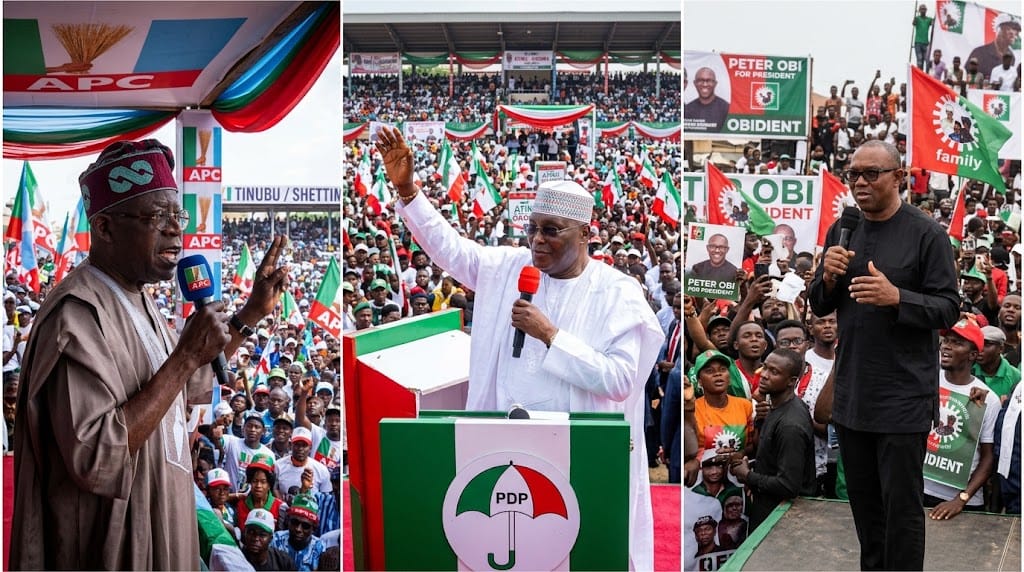
When Nigerians head to the polls on 16 January 2027, the ballot will double as a referendum on the country's economic survival. Since the inauguration of President Bola Ahmed Tinubu on 29 May 2023, bold policy shifts—chief among them the immediate withdrawal of the petrol subsidy and the unification of foreign exchange windows—have altered the everyday cost of living across the Federation. While the federal administration argues that these measures saved public finance from collapse and laid the groundwork for long-term expansion, ordinary citizens and businesses have faced steep inflation, elevated transport charges and sharp currency depreciation.
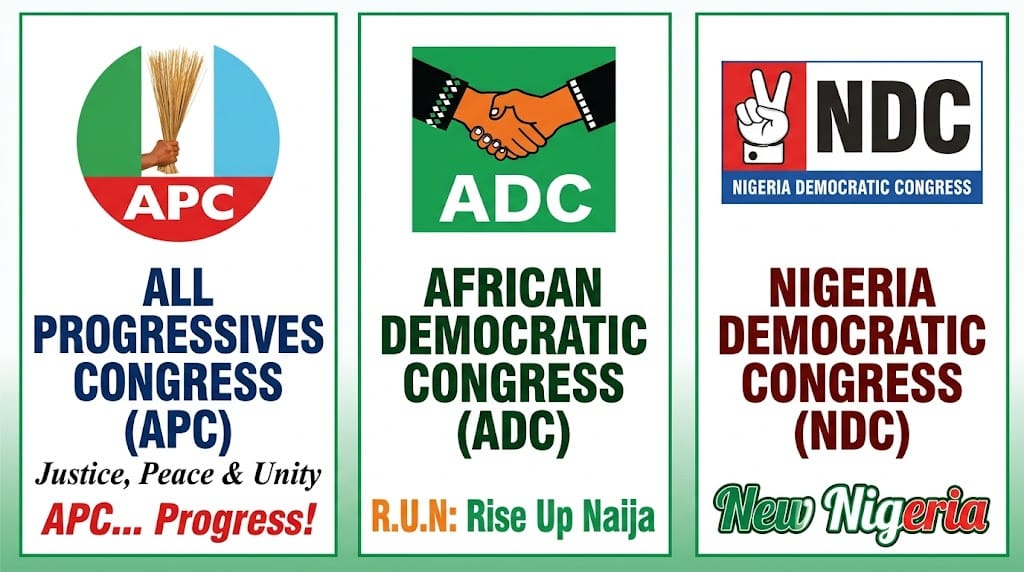
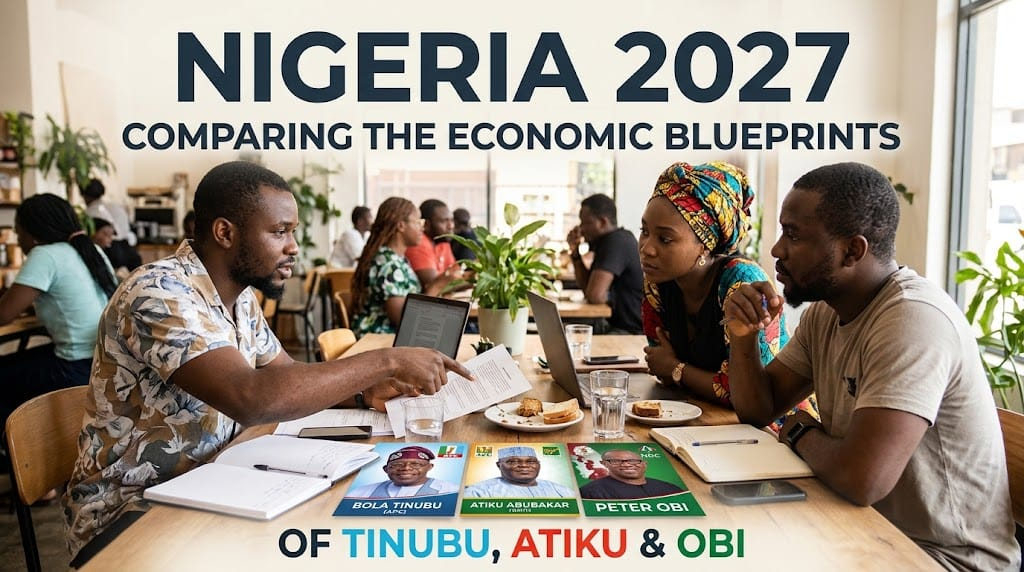
With official campaigning under way across Nigeria's 36 states and the Federal Capital Territory, economic management forms the core battleground. The race brings together three familiar contenders presenting distinct economic philosophies: the incumbent President Bola Tinubu of the All Progressives Congress (APC), former Vice-President Atiku Abubakar representing the African Democratic Congress (ADC), and former Anambra State governor Peter Obi running on the Nigeria Democratic Congress (NDC) ticket.
The Economic Baseline Facing the Next Administration
The macroeconomic environment entering this election cycle is defined by severe fiscal pressure and intense household strain. Data from the National Bureau of Statistics (NBS) showed petrol selling at an average of N238.11 per litre in May 2023. Following deregulation and currency adjustments, average pump prices surpassed N1,500 per litre by late 2026. Over the same period, food inflation repeatedly tested record highs, reducing household purchasing power and pushing millions into poverty.
Federal finances present an equally demanding test. Nigeria's debt service obligations consumed substantial shares of government revenue through 2024 and 2025, narrowing the fiscal space for capital projects. The 2026 federal budget reached N58.18 trillion, highlighting the enormous currency volumes required to sustain state operations following the naira's realignment. Voters in commercial centres like Lagos and Onitsha, agricultural belts in Benue and Kebbi, and the international diaspora remitting funds home are scrutinising how each platform intends to stabilise prices and produce jobs.
Bola Tinubu (APC): Consolidating Reforms and the 2030 Horizon
President Bola Tinubu is standing on a platform titled From Reforms to Prosperity, tied to the Renewed Hope National Development Plan running from 2026 to 2030. The administration's argument is direct: the painful structural corrections introduced since 2023 were unavoidable, and reversing them now would trigger macroeconomic instability.
Tinubu's economic platform focuses on five main pillars:
- $1 Trillion Economy by 2030: The presidency maintains that sustained growth in non-oil exports, agricultural value chains and manufacturing will push Nigeria's gross domestic product to the trillion-dollar mark before the turn of the decade.
- Exchange Rate and Subsidy Continuity: The APC rejects returning to petrol subsidies or pegged foreign exchange rates, arguing that subsidies cost trillions of naira and enriched smugglers rather than productive sectors.
- Tax Base Expansion: Guided by the Presidential Fiscal Policy and Tax Reforms Committee, the administration proposes simplifying the tax code, lowering corporate burdens for small enterprises, and raising the tax-to-GDP ratio from under 10 per cent toward 18 per cent without adding new levies on low-income earners.
- Capital Infrastructure Investments: The manifesto stresses finishing major trans-regional corridors, including the Lagos-Calabar coastal highway, the Badagry-Sokoto superhighway, and the Kano-Maradi railway connection.
- Direct Social Interventions: Initiatives such as the Nigerian Education Loan Fund (NELFUND) and consumer credit schemes are promoted as institutional tools to expand individual financial security while fiscal consolidation continues.
Critics, however, point to persistent inflation, factory closures, and the erosion of real incomes as evidence that the administration's reform timing and social buffers proved inadequate during its first term.
Atiku Abubakar (ADC): Targeted Production Subsidies and Open Borders
Former Vice-President Atiku Abubakar, contesting through the ADC following an opposition realignment, has published the Atiku Economic Recovery Plan 2027. Atiku positions himself as a market-friendly liberal with deep administrative experience, arguing that while fiscal adjustments were necessary, the Tinubu administration executed them with reckless speed and zero institutional cushions.
The core proposals in Atiku's 7-point recovery blueprint include:
- Production-Side Petrol Subsidy: Instead of reviving the discredited import subsidy scheme, Atiku plans to subsidise domestic crude refining. Under his proposal, qualifying local refiners receive domestic crude at capped, preferential prices under an open, audited budget, transferring cost relief directly to local pump prices.
- Preserving Electricity Subsidies: Atiku opposes the phased withdrawal of electricity subsidies planned for 2027, maintaining that small workshops, tailors, cold-room operators and welders cannot bear market-rate power tariffs alongside high fuel prices.
- Trade and Border Liberalisation: The ADC candidate pledges to reopen Nigeria's land borders fully, arguing that arbitrary border closures distorted commodity supply lines, fuelled extortion, and crushed regional commerce across West Africa.
- $10 Billion Youth Entrepreneurship Fund: A dedicated capital pool designed to provide micro-equity and credit to young tech founders, artisans and small businesses to tackle youth joblessness.
- Implementation of the Oronsaye Report: Atiku pledges to downsize the civil service machinery by merging duplicate federal agencies, curbing waste, and strengthening local government financial independence.
Sceptics question how Atiku plans to fund production-side crude subsidies without cutting deeper into federation account allocations shared among federal, state and local authorities.
Peter Obi (NDC): Slashing Public Waste and Powering Production
Peter Obi, candidate of the Nigeria Democratic Congress (NDC), grounds his campaign on shifting Nigeria "from consumption to production". His platform stresses fiscal discipline, public transparency, and targeting capital directly at basic human development.
Key pillars of Obi's economic agenda include:
- 10,000 Megawatt Power Target: Obi argues that economic expansion is impossible without uninterrupted power. He promises to generate, transmit and distribute at least 10,000 megawatts of electricity within four years through decentralised regional grids, public-private partnerships, and rapid commercialisation of domestic gas reserves.
- Ending Borrowing for Consumption: Obi criticises Nigeria's mounting debt profile, pledging that public borrowing will be restricted strictly to revenue-generating infrastructure.
- Rationalising Port and Customs Tariffs: The NDC candidate has condemned unpredictable customs exchange rates and multiple port fees, pledging to simplify import clearing, lower tariffs on capital machinery, and curb corrupt checkpoints that impede interstate haulage.
- Commercial Agriculture in the North: Obi views the vast, uncultivated arable land in northern Nigeria as the nation's greatest untapped asset, proposing to deploy agricultural mechanisation and agro-processing clusters to generate jobs and lower national food costs.
- Human Capital Investment: Prioritising spending on primary healthcare and Technical and Vocational Education and Training (TVET) to supply industrial firms with skilled labour.
Questions remain over how an Obi presidency would rapidly assemble the institutional use needed to boost power capacity and tame food prices without substantial initial deficit spending.
Side-by-Side Comparison of Candidate Proposals
The competing platforms offer contrasting solutions to Nigeria's economic structure. The table below outlines how each candidate proposes to handle the primary economic issues facing the country.
| Policy Area | Bola Ahmed Tinubu (APC) | Atiku Abubakar (ADC) | Peter Obi (NDC) |
|---|---|---|---|
| Fuel Subsidy & Refining | Maintain full deregulation; rely on local refiners (such as Dangote) and market forces to settle domestic pump prices. | Introduce a capped, audited production subsidy by selling domestic crude to local refineries at discounted rates. | End corrupt import structures; back domestic refining while using public savings to support agricultural and transit networks. |
| Foreign Exchange & Currency | Maintain market-driven exchange rates; build foreign reserves to narrow volatility and discourage arbitrage. | Adopt managed float mechanisms to limit extreme swings; introduce transparent forex liquidity interventions. | Stabilise the currency by expanding non-oil export production and curbing non-essential government dollar expenditure. |
| Electricity Supply | Decentralise power governance through state electricity markets under the Electricity Act 2023; phase out tariff subsidies. | Halt the proposed 2027 electricity subsidy removal; inject targeted capital to protect small enterprises. | Generate, transmit and distribute 10,000 MW through public-private partnerships and regional mini-grid investment. |
| Trade & Customs | Focus on domestic production substitution, single-window port modernisation, and regional bilateral agreements. | Reopen land borders immediately; liberalise cross-border trade to lower regional transport and commodity expenses. | Dismantle port clearing bottlenecks; end unpredictable customs duty valuation rates on capital goods. |
| Fiscal Policy & Debt | Raise tax-to-GDP ratio through tax code reforms; borrow for critical infrastructure while expanding revenue streams. | Cut cost of governance via the Oronsaye Report; create a $10 billion youth fund; restructure debt repayment terms. | Aggressively slash administrative overheads; halt non-productive borrowing; channel capital into health and TVET. |
Fiscal Realities and Implementation Hurdles
Regardless of which manifesto prevails in January 2027, the victor must balance policy ambitions against narrow fiscal room. Debt service charges continue to absorb a large share of federal revenue, leaving limited capital for direct spending. Reintroducing any form of energy subsidy, as advocated by Atiku, risks drawing resources away from sub-national allocations, potentially causing friction with state governors dependent on monthly disbursements from the Federation Account Allocation Committee (FAAC).
Tinubu's model demands patience from a population battered by persistent price increases. The promise of long-term industrial output offers little immediate succour to lower-income households spending over 60 per cent of their earnings on food. Meanwhile, Obi's plan to boost power supply to 10,000 megawatts requires solving complex gas-pricing disputes, securing transmission networks against vandalism, and restoring commercial viability across distribution companies—tasks that have frustrated successive administrations for three decades.
Conclusion
The 2027 Nigerian presidential election presents clear, contrasting paths for Africa's most populous economy. President Bola Tinubu seeks an explicit vote of confidence to consolidate his administration's painful market reforms, pointing toward a diversified, $1 trillion economy by 2030. Atiku Abubakar proposes softening the blow through state-supported domestic crude refining, open borders and institutional rationalisation. Peter Obi demands a structural transformation centred on manufacturing, human capital investment and an austere reduction in the cost of governance. As campaign teams tour the country, Nigerian voters must determine which blueprint offers the most credible path toward fiscal stability and everyday relief.
Sources
- Independent National Electoral Commission (INEC) Election Updates
- BusinessDay Nigeria: 2027 Race Pits Reforms Against Cost of Living
- Punch Newspapers: Presidential Platforms and Campaign Manifestos
- Vanguard News: Economic Agendas for the 2027 General Elections
- The Guardian Nigeria: Economic Recovery Blueprints and Policy Pronouncements
Disclaimer: This article reflects political manifestos and policy proposals available at the time of writing and may develop as election campaigns proceed. It is intended solely for journalistic analysis and does not constitute financial, investment or legal advice.
Category: Politics