Tinubu: Atiku Lacks Moral Integrity, Latitude, Ethics to Hold Public Office
By CelebUD Newsroom —
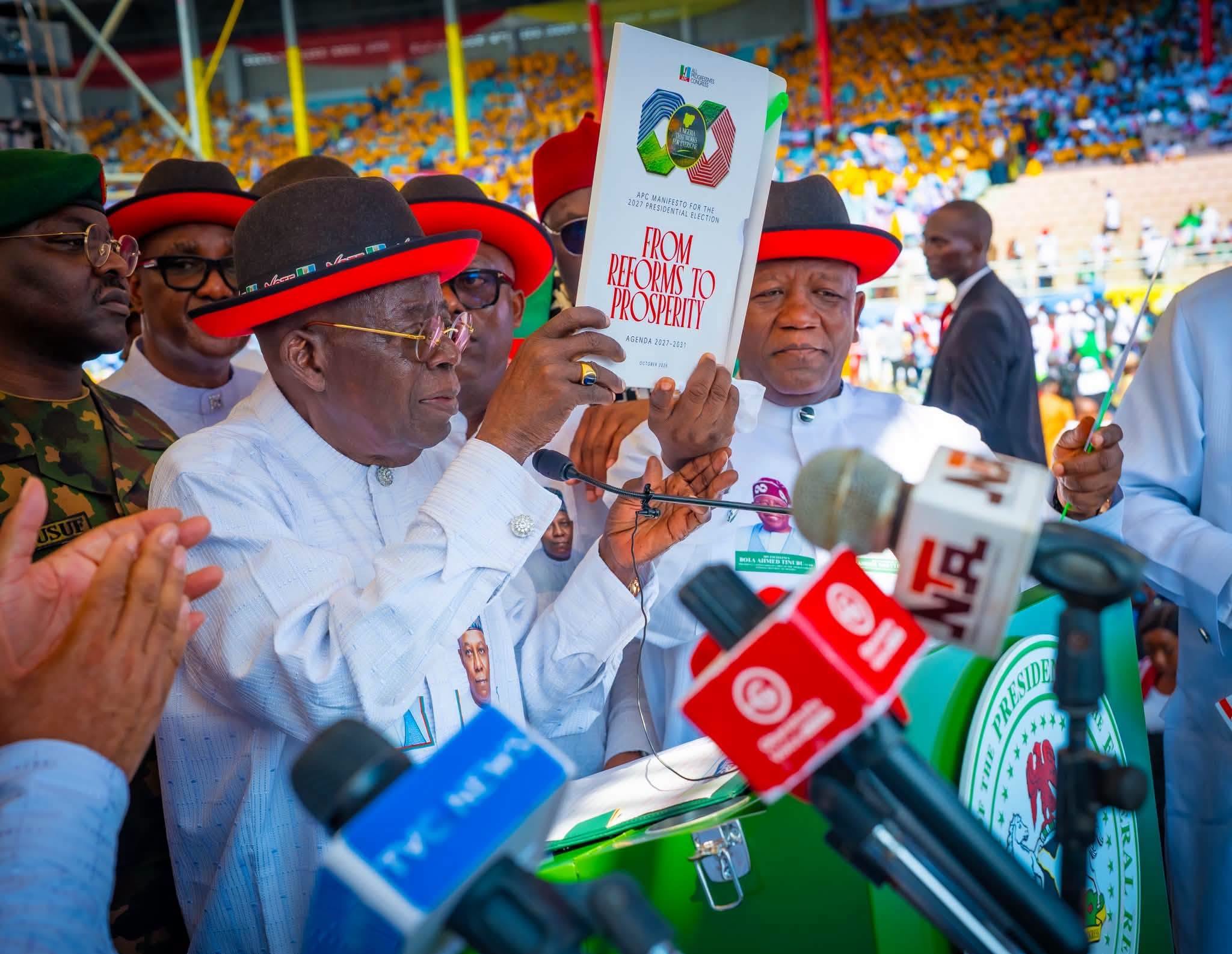
Tensions surrounding Nigeria's upcoming 2027 presidential race escalated dramatically as President Bola Tinubu and former Vice President Atiku Abubakar engaged in an aggressive exchange of accusations over personal integrity, historical wealth, and governance records. Addressing thousands of supporters at an All Progressives Congress (APC) campaign gathering in Port Harcourt, Rivers State, President Tinubu openly challenged the moral authority of Atiku, his long-time rival and standard-bearer for the African Democratic Congress (ADC), alleging that public money was diverted to finance the opposition leader's private university. The pointed assault quickly drew a fiery rebuttal from Atiku, who described the allegations as a transparent bid to divert public attention from nationwide economic distress and revived scrutiny surrounding past legal issues involving the incumbent.
Fiery Accusations at the Port Harcourt Rally
The political clash unfolded during a large-scale APC mobilization event staged at the Adokiye Amiesimaka Stadium in the Rivers State capital. The rally was spearheaded by the Rainbow Coalition, a political movement steered by the Minister of the Federal Capital Territory, Nyesom Wike, aiming to galvanize southern backing for Tinubu's second-term bid.
Taking the podium, President Tinubu launched into a direct critique of Atiku's tenure as head of the National Economic Council during his vice presidency from 1999 to 2007. The president pointedly demanded an explanation for how the former vice president funded his tertiary institution while managing state economic affairs.
“To every salary earner, there is a dependent and somebody sharing the food at home. Those people talking of hunger are talking about the mess they created. Atiku was one of them. Ask him how he built a university while in office as Vice President in charge of our economy,” Tinubu said.
Pushing the critique further, the president directly impugned Atiku's suitability for high elective office before the assembled crowd:
“Who built the university for him? It’s your money, it’s your effort. A man without moral integrity, latitude and ethics for the office,” Tinubu added.
Defending his own governance record, President Tinubu claimed his administration inherited severe economic dysfunction, noting that 27 out of Nigeria's 36 states were incapable of meeting payroll obligations when he took office in May 2023. He maintained that his fiscal reforms had reversed this vulnerability, putting the country on track toward shared prosperity. In addition, the president noted that the federal government is systematically clearing historic backlogs of unpaid gratuities and pensions totaling billions and trillions of naira, ensuring retired teachers, welders, and engineers receive delayed benefits.
Atiku Hits Back: Accusations of Distraction and Historical Scrutiny
Atiku Abubakar issued a sharp response through a formal statement released by Phrank Shaibu, Director of Strategic Communication for the ADC Presidential Campaign Council. The former vice president dismissed Tinubu's accusations as a desperate ploy to mask widespread public hardship, declaring that his philanthropic and private commercial investments in the education sector originated well before his prominent role in democratic governance.
Countering the allegations, Atiku revisited a controversial 1993 United States court case involving funds connected to the president:
“The answer is simple: My investment in education predates my time in public service. In 1993, while a U.S. court ordered the forfeiture of funds in an account in your name, describing them as proceeds of narcotics trafficking or funds involved in unlawful financial transactions, I was laying the foundation for ABTI Academy. That Academy has since grown into the American University of Nigeria (AUN),” Atiku explained.
Public institutional records from the American University of Nigeria, based in Yola, Adamawa State, outline a slightly different timeline, indicating that Atiku founded ABTI Academy as a primary and secondary school in 2002. The institution obtained its university charter as ABTI University in 2003, with physical construction commencing in October 2004.
Nevertheless, the former vice president insisted on the legitimacy of his commercial enterprise, contrasting it with the president's background:
“That moment captures the difference between us. My history is traceable. I can show Nigerians how I built my name, achieved business success and entered public leadership. Your own history remains clumsy and foggy. You cannot erase it by attacking my educational record.”
Atiku went on to criticize the administration's macroeconomic trajectory, citing high inflation, fuel subsidy removal, and currency devaluations as drivers of widespread impoverishment:
“A president who has plunged the country into a crushing cost-of-living crisis has no business asking Nigerians for another mandate. The real conversation about the 2027 election is how to repair the damage your government has done. You say Nigeria cannot return to subsidy and must move forward. But you cannot even tell Nigerians where you are taking them. Forward into deeper poverty, mounting debt, insecurity and mass unemployment?”
Concluding his rejoinder, Atiku invoked cultural imagery to characterize the current administration's stewardship:
“Since your inauguration in 2023, your leadership has become synonymous with hardship, pain and despair. Your record is a working example of how a country should not be led. You have created poverty on an industrial scale, pushing more than 79 million Nigerians into extreme poverty... In Yoruba culture, I am told, a calabash of pepper represents hostile leadership, while a calabash of honey represents hospitable leadership. Yours is a calabash of pepper.”
Rivers State Coalition and Party Politics
Beyond the personal broadsides between the principal contenders, the rally underscored major realignments within Rivers State politics following months of internal strife. President Tinubu publicly praised Governor Siminalayi Fubara for choosing reconciliation over confrontation in his dispute with his predecessor, Nyesom Wike.
“To me, I intervened on your behalf. Similarly, Fubara, Your Excellency, the host governor today, I want to thank you specifically for your maturity, understanding, and respect for the wisdom of elders. When we intervened, you respected our position. You maintained peace. You are a committed democrat, Fubara. You will not regret what you have done as long as all of us are alive,” Tinubu said.
Governor Fubara affirmed the state's political consolidation behind the administration, publicly promising to deliver three million votes for the president in the 2027 general election and declaring that past factions had resolved their grievances. Wike, highlighting the event's high attendance at the over 40,000-capacity venue, similarly stressed that Rivers State was unified in backing Tinubu's re-election.
Providing electoral context, Senator Abdulaziz Abubakar Yari, serving as Director-General of the APC Presidential Campaign Council, outlined party targets for the oil-rich state. Yari noted that Rivers State counts approximately 3.3 million registered voters, of whom 2.8 million have secured their Permanent Voter Cards (PVCs), setting the campaign's formal vote target at 2.3 million ballots.
| Metric / Political Target | Rivers State Figures |
|---|---|
| Total Registered Voters | Approximately 3,300,000 |
| Collected Permanent Voter Cards (PVCs) | 2,800,000 |
| APC Campaign Target (Announced by Sen. Yari) | 2,300,000 votes |
| Governor Siminalayi Fubara's Pledged Delivery | 3,000,000 votes |
| Adokiye Amiesimaka Stadium Seating Capacity | Over 40,000 |
Vice President Kashim Shettima also addressed the Port Harcourt gathering, dismissing opposition figures as political opportunists unable to measure up to the incumbent ticket. Shettima targeted both Atiku and Peter Obi, describing Obi's eight-year tenure as Governor of Anambra State and his subsequent commercial banking leadership as mediocre. APC National Chairman Prof. Nentawe Goshwe Yilwatda reinforced the ticket's cohesion, describing the Tinubu-Shettima pairing as one of the most capable leadership partnerships in the nation's democratic history.
President Tinubu concluded his address by urging youth participation, imploring young Nigerians to secure their voter cards to shape the country's trajectory:
“It is left for you to use the weapon you have. And that weapon is the PVC. If you have not collected yours, please go ahead and collect it. Please. I beg you. I take God to beg you.”
What early election politicking means for your remittances
When high-level political campaigning starts years ahead of the 2027 vote, governance often takes a back seat to political preservation. For Nigerians living in Canada who send money home each month, the sharp exchange between President Tinubu and Atiku Abubakar confirms that the structural economic squeeze in Nigeria will remain politically contentious rather than quickly resolved. As long as inflation and subsidy fallout remain debate points rather than stabilized realities, the pressure on diaspora bank accounts to subsidize relatives' basic needs is unlikely to drop.
Early election maneuvering also introduces currency and commercial uncertainty. State-level realignments and intense campaigning often trigger shifting public spending priorities and exchange-rate fluctuations. If you are funding family businesses, purchasing property, or supporting extended relatives back home, this is a clear cue to maintain realistic financial boundaries. Spreading out transfers rather than sending large lump sums can protect your budget against unpredictable exchange rate shifts.
Concrete takeaway: Before locking in major long-term capital investments or tuition commitments in Nigeria, assess whether your personal savings buffer in Canada can handle continued dependency requests from home through this extended political cycle.
Conclusion
The heated exchanges in Port Harcourt reveal an early and confrontational start to the 2027 campaign cycle. By attacking Atiku Abubakar's business origins and ethical fitness, President Tinubu is attempting to frame the upcoming contest around personal credibility and past administrative performance. In turn, Atiku and his campaign are channeling deep public frustration over spiraling living costs, inflation, and economic reforms, seeking to make the ballot a referendum on the administration's economic management. As major state alliances solidify behind party machineries, the battle for public trust and voter turnout will remain central to Nigeria's evolving political landscape.
Reporting based on coverage by This Day Nigeria.
Category: Politics