Telesurgery in Nigeria: We said it could be done, now comes the harder part
By CelebUD Newsroom —
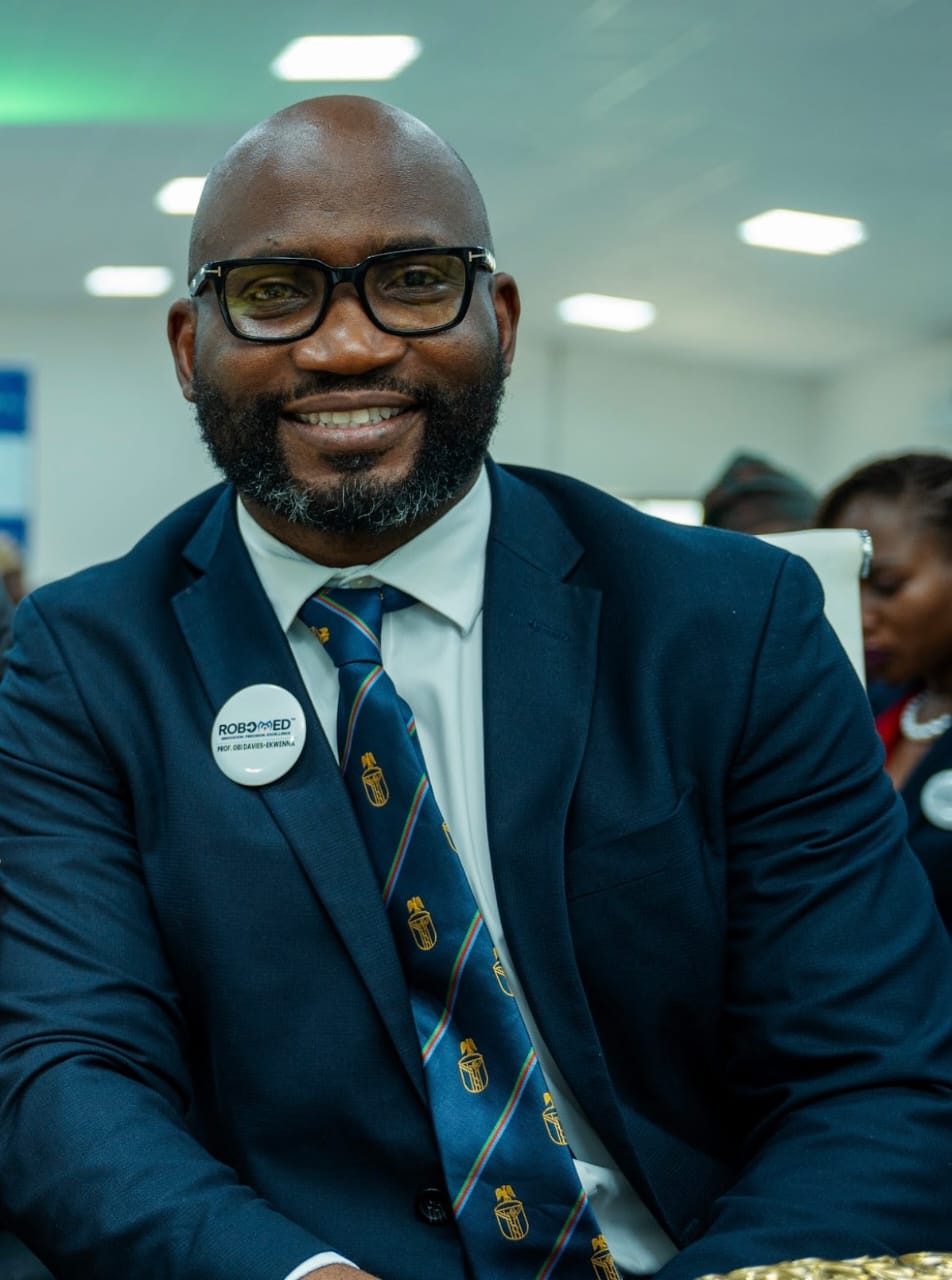
A historic medical milestone recently unfolded across the Nigerian landscape, demonstrating that geography need no longer serve as an absolute barrier to life-saving healthcare. Operating from a robotic console located at Redeemer’s Health Village in Mowe, Ogun State, Professor Obi Davies-Ekwenna successfully manipulated surgical instruments to treat a patient lying on an operating table roughly 500 kilometres away at Nisa Premier Hospital in Abuja. The groundbreaking three-hour kidney tumour resection marks West Africa’s first successful remote robotic operation and signals a bold refusal to wait decades for breakthrough medicine to arrive secondhand on the African continent.
Bridging 500 Kilometres: Anatomy of a Milestone
The successful intervention on September 19, 2026, required an intricate technical and clinical ecosystem. The remote link between Mowe and Abuja was sustained primarily via a dedicated satellite connection, reinforced with a standby mobile data network to guard against latency spikes or sudden dropouts. Early medical reports confirm the patient is recovering well, representing an undeniable proof-of-concept for the viability of high-tech intervention across vast distances.
Crucially, the feat was not an exercise in remote heroics but a disciplined, layered partnership. In Abuja, an experienced bedside surgical team maintained constant command over the theatre environment. This critical frontline was anchored by Dr. Wesley Ekeruo, a United States-based robotic surgeon, and Dr. Lemuch Nabasu, a consultant urologist, supported by a specialized anaesthesia unit. At every stage, the bedside specialists retained the authority and capability to seize direct manual control instantly if complications arose, underscoring that patient safety remains grounded in local readiness rather than distant automation.
Achieving this level of coordination required months of meticulous preparation among three primary entities: RoboMed Global, Redeemer’s Health Village, and Nisa Premier Hospital. From stringent patient selection and local surgical team conditioning to repeated fail-safe stress tests, the breakthrough rested entirely on operational rigour rather than sheer mechanical novelty.
Defining Remote Medicine: Control, Mentoring, and Guiding
Following the initial September procedure, clinical teams conducted subsequent robotic operations on October 21, 23, and 24, including a prostatectomy and a pyeloplasty. These interventions highlighted the necessity of maintaining absolute clarity regarding terminology, as misleading descriptions can compromise public trust and regulatory transparency.
- Telesurgery: A clinical setting where the remote operator directly manipulates the robotic consoles and controls the physical surgical instruments inside the patient from afar.
- Teleproctoring: An arrangement where an off-site specialist monitors an active procedure in real time to offer critical visual evaluation and procedural direction to the operating physician beside the patient.
- Telementoring: An ongoing instructional model where an experienced mentor longitudinally trains and educates a local practitioner until complete technical self-sufficiency is achieved.
Medical innovators emphasize that distant intervention should never serve as a permanent crutch. Instead, the ultimate objective of remote surgical integration is to cultivate bedside competence so thoroughly that remote assistance becomes an elective option rather than an operational necessity.
Global Parity: Nigeria and Florida on the Same Frontier
Historically, transformative medical innovations originate and mature within wealthy Western nations, only trickling into Africa twenty years later in an outdated, cost-prohibitive fashion. The timeline of this milestone disrupted that paradigm entirely.
Just five weeks after Nigeria’s remote procedure, on October 25, a prominent American team led by Dr. Vipul Patel performed a robotic prostatectomy between two hospitals spaced approximately 35 miles apart in Florida, assisted bedside by Dr. Marcio Moschovas. The American case, covered prominently by ABC News, was conducted under an investigational research permit from United States regulators to evaluate cyber safety, latency tolerances, and system disruptions.
| Procedure Detail | Mowe to Abuja, Nigeria | Florida, United States |
|---|---|---|
| Date of Operation | September 19, 2026 | October 25, 2026 |
| Primary Operating Lead | Prof. Obi Davies-Ekwenna | Dr. Vipul Patel |
| Bedside Clinical Leads | Dr. Wesley Ekeruo & Dr. Lemuch Nabasu | Dr. Marcio Moschovas & Team |
| Distance Traversed | Approximately 500 kilometres | Approximately 35 miles |
| Primary Pathology | Kidney tumour resection | Prostatectomy |
| Institutional Collaboration | RoboMed Global, Redeemer’s, Nisa Premier | Dual Florida Hospital System |
While the timing highlights that Nigerian medicine moved first in this instance, project leaders caution against viewing healthcare innovation as a nationalistic footrace. The true significance lies in simultaneous parity: an African clinical coalition working along the very edge of technological innovation concurrently with American counterparts, rather than trailing by decades.
Building Domestic Capacity: The RoboMed Academy
Lasting transformation in medical delivery hinges on education rather than imported machinery. To build self-sustaining domestic expertise, the RoboMed Academy was officially inaugurated on October 22 at Redeemer’s Health Village, established in conjunction with Redeemer’s University and the National Postgraduate Medical College of Nigeria.
Addressing the launch, the Minister of Education, Dr. Tunji Alausa, announced federal backing to sponsor eligible healthcare professionals through the Tertiary Education Trust Fund (TETFund) local scholarship scheme. This structural initiative is aimed directly at developing local surgeons, theatre scrub nurses, and bio-medical service engineers capable of maintaining intricate robotics without relying on expensive foreign service retainers.
“A field that races to declare firsts will lose the trust it needs most. A field that counts its own mistakes will earn it.”
Developing genuine regional autonomy demands rigorous internal reporting. Experts stress that clinical institutions engaging in telesurgery must transparently monitor metrics such as readmissions, network dropouts, conversion rates to open surgery, cost outlays, and long-term recovery curves. Transparent scrutiny is the only currency that will sustain innovation in the public interest.
Balancing High-Tech Ambition With Basic Healthcare Realities
The emergence of robotic medicine brings critical ethical obligations to the fore. Telesurgery cannot function as a cure-all for systemic healthcare deficiencies; it cannot replace the immediate need for reliable electrical grids, sterile surgical sets, robust blood banks, or adequate frontline anaesthetic staffing. Expanding high-tech tertiary care must run parallel to, rather than siphon resources from, primary medical infrastructure.
To navigate these complexities, stakeholders are calling for a comprehensive national regulatory framework. Formulated collaboratively between hospital administrators, licensing councils, government ministries, and patient representatives, this governance framework must explicitly standardize digital consent protocols, latency safety minimums, data privacy requirements, and clear legal liability in the event of hardware or transmission failures.
What this means for diaspora family health remittances
For many Nigerians living in Canada and elsewhere in the diaspora, a significant portion of family remittances is dedicated to urgent medical care for aging parents and relatives back home. When faced with complex diagnoses like tumours or urological conditions, families often face painful choices, from footing the bill for expensive medical tourism to India or the United Kingdom to navigating crowded tertiary hospitals in Nigeria. The demonstration that robotic surgery can be executed reliably across hundreds of kilometres offers a credible sign that top-tier specialist care can be accessed without sending loved ones abroad.
However, this transition will not lower costs immediately. Private facilities capable of hosting stable satellite links, robotic consoles, and intensive post-operative care will likely price these procedures at premium rates. While saving on international flights, visas, and accommodation eases the financial friction of medical travel, diaspora sponsors will still need to plan carefully around out-of-pocket hospital fees and rehabilitation expenses. As these capabilities expand, families can begin looking at domestic surgical centres as genuine alternatives to overseas medical trips.
If you are coordinating care for a relative back home who requires complex surgery, ask their specialist whether regional referral centres with telementoring or robotic capabilities are a viable, lower-disruption alternative to seeking treatment abroad.
Conclusion
The successful bridging of 500 kilometres between Mowe and Abuja proves that geographical isolation need not dictate the boundary of medical survival. Nigeria has demonstrated the collective discipline, institutional harmony, and clinical skill required to execute remote robotic surgery on par with international standards.
The far steeper challenge now begins. Moving from a single high-profile surgical achievement to an enduring public good requires clear-eyed self-assessment, domestic education, clear regulatory guardrails, and accessible funding. By committing to systematic training through the RoboMed Academy and insisting on transparent clinical auditing, the nation can ensure that high-technology surgery does not remain an isolated spectacle, but matures into an equitable, enduring reality for patients across the continent.
Reporting based on coverage by Blueprint Newspapers.
Category: Health