Winter Flu and COVID Vaccines: Who Can Get Them Free This Season, Country by Country
By Matthew Ayandare —
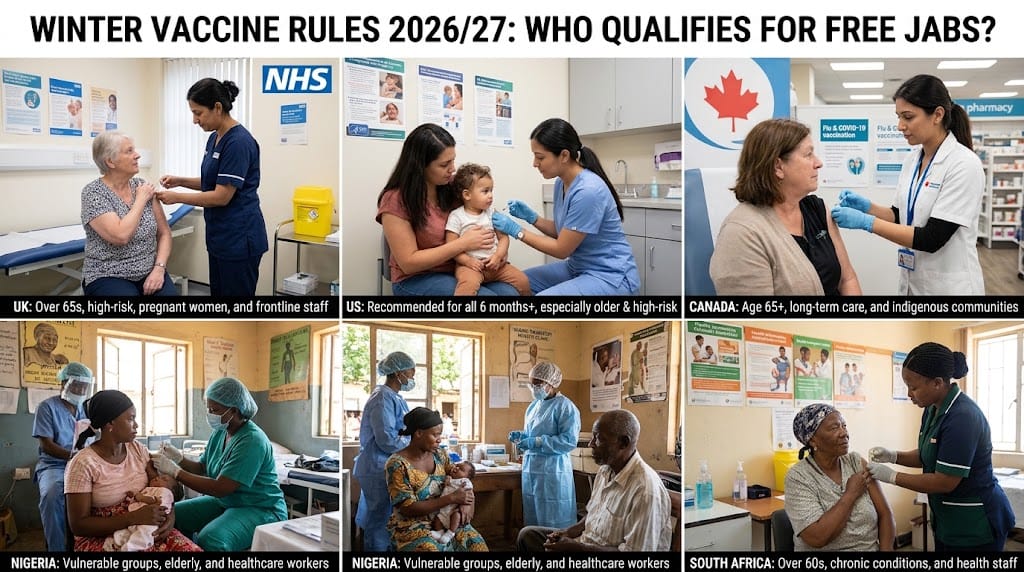
Public health authorities across the world have adjusted their seasonal vaccination strategies as winter respiratory illnesses begin their annual surge. The widespread universal distribution seen during the height of the coronavirus pandemic has shifted toward targeted immunisation campaigns in several major countries, while others continue to offer broad access through public clinics.
Because healthcare delivery and funding models vary across jurisdictions, access to free influenza and COVID-19 jabs depends directly on your location, age, employment, and underlying health status. Understanding which groups qualify for state-funded protection and which must pay out of pocket can help individuals prepare before respiratory infection rates peak.
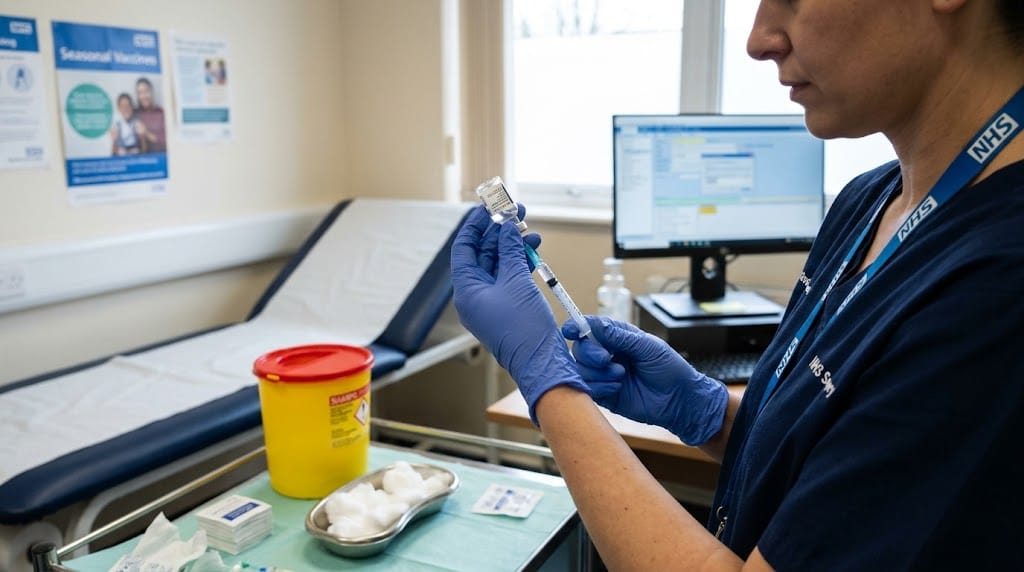
United Kingdom: Stricter Rules for Free COVID-19 Boosters
In the UK, the National Health Service (NHS) runs seasonal vaccination campaigns across England, Scotland, Wales, and Northern Ireland. Advice from the Joint Committee on Vaccination and Immunisation (JCVI) sets the eligibility thresholds for both programmes, but the qualification rules for flu and COVID-19 vaccines have diverged significantly.
For the influenza vaccine, free NHS coverage remains broad. You qualify for a free flu jab if you:
- Are aged 65 or over;
- Have certain long-term health conditions, such as asthma, diabetes, or heart disease;
- Are pregnant;
- Live in a long-stay residential care home;
- Receive a carer's allowance or act as the main carer for an older or disabled person;
- Live with someone who has a weakened immune system;
- Work on the frontline in health or social care.
Children in the UK also receive high priority for flu defence. Toddlers aged two and three on 31 August qualify for a free nasal spray vaccine at their GP surgery, while school-aged children from Reception through Year 11 receive their doses through school-based programmes.
The free COVID-19 autumn booster follows a much tighter set of restrictions. The NHS no longer offers routine seasonal COVID-19 boosters to healthy adults aged 65 to 74 or to household contacts of vulnerable people. Free COVID-19 vaccination is restricted to:
- Adults aged 75 and over;
- Residents in care homes for older adults;
- Individuals aged six months and older who are immunosuppressed due to illness or medical treatment.
Individuals in the UK who do not meet these criteria cannot obtain free NHS jabs. High street pharmacies offer private vaccinations instead. Private flu jabs generally cost between £15 and £25, while private COVID-19 vaccines retail between £45 and £95 per dose.
United States: Universal Recommendations with Insurance Gaps
In the United States, the Centers for Disease Control and Prevention (CDC) recommends that every person aged six months and older receive an updated annual flu vaccine and an updated COVID-19 vaccine. Despite this universal recommendation, the mechanism for getting vaccinated without charge depends on individual health insurance coverage.
Under the Affordable Care Act (ACA), most private health insurance plans, Medicare Part B, and Medicaid must cover both the flu vaccine and the COVID-19 vaccine with zero cost-sharing, meaning patients pay no copayment or coinsurance when using an in-network pharmacy or clinic.
For uninsured adults, securing free doses has become considerably harder. The federal Bridge Access Program, which previously funded free COVID-19 vaccinations at retail pharmacies for uninsured Americans, concluded in August 2024 due to federal budget cuts. Uninsured adults must now seek assistance through state health departments, local clinics, or Federally Qualified Health Centers (FQHCs) that receive discretionary public health funding.
Uninsured children can still obtain free vaccines through the federal Vaccines for Children (VFC) programme, which supplies immunisations to eligible minors under age 19 via enrolled paediatric clinics and public health offices.
Uninsured adults who pay full retail price at American retail pharmacies face substantial fees. A standard quadrivalent flu shot typically ranges from $25 to $60, while senior high-dose flu formulations can exceed $85. An updated COVID-19 vaccine dose carries a commercial cash price of roughly $130 to $150 before administration fees.
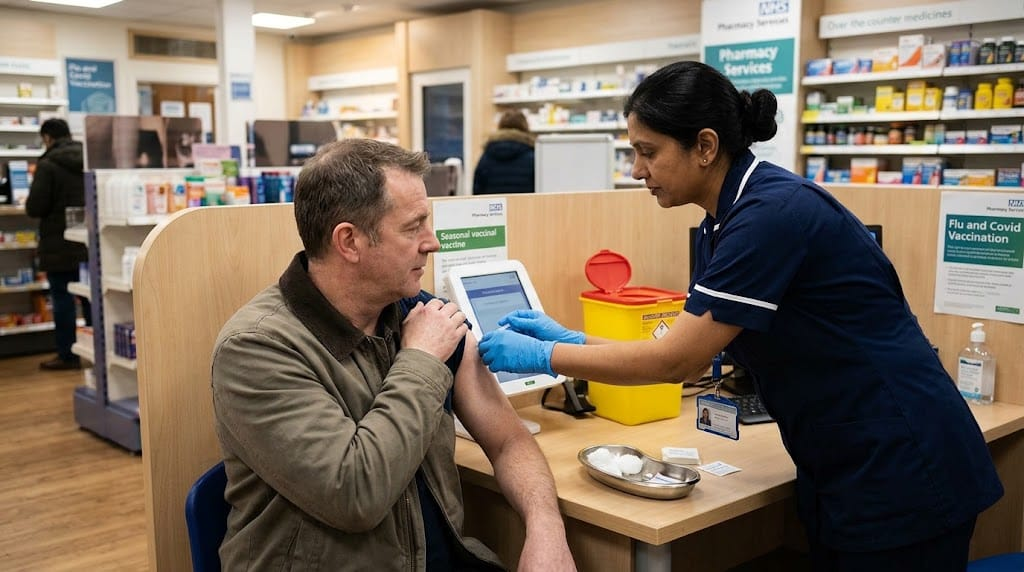
Canada: Broad Provincial Coverage Across Most Regions
In Canada, vaccination policies are established at the provincial and territorial level, guided by advice from the National Advisory Committee on Immunization (NACI). NACI recommends annual flu shots for everyone six months and older and strongly encourages seasonal COVID-19 vaccination for high-risk individuals, health workers, and seniors.
Most Canadian provinces have chosen to maintain publicly funded, universal access. In Ontario, British Columbia, and Alberta, both the seasonal flu vaccine and the updated COVID-19 vaccine remain free for all residents aged six months and older who hold a valid provincial health card. Ontarians can receive their jabs at participating community pharmacies, doctors' offices, and local public health units. Special high-dose flu shots are fully funded for residents aged 65 and over.
Some provinces apply slightly more focused criteria or stage their rollouts by risk group. In Quebec, public health campaigns prioritise free access for vulnerable populations, including people aged 60 and over, pregnant women, and chronic illness patients, before widening slots to others. Temporary foreign workers, international students, and newcomers with provincial health coverage can access these public programmes under the same rules as permanent residents.
Nigeria: Targeted Public Campaigns and Out-of-Pocket Markets
In Nigeria, the Federal Ministry of Health manages vaccination policy through the National Primary Health Care Development Agency (NPHCDA). Routine childhood immunisations and certain emergency health responses are provided free of charge across the country's network of primary healthcare centres (PHCs).
COVID-19 vaccines remain free at designated government health centres, public general hospitals, and selected outreach sites supported by international health partnerships. Any adult aged 18 and older, as well as high-risk adolescents, can receive available COVID-19 doses without payment at these accredited public facilities.
Seasonal influenza vaccines follow an entirely different arrangement. The Nigerian government does not include the annual flu vaccine in its standard public immunisation schedule. Anyone who wishes to receive a flu jab must purchase it privately. Private hospitals and retail pharmacies in major urban centres such as Lagos, Abuja, and Port Harcourt offer imported seasonal flu vaccines, with prices generally ranging between ₦15,000 and ₦35,000 per injection depending on the clinic and vaccine brand.
South Africa and Across the Continent
In South Africa, the National Department of Health (NDoH) conducts seasonal influenza vaccination campaigns that target public resources directly to groups facing elevated risks of severe disease. The southern hemisphere winter occurs earlier in the calendar year, running primarily from May through August, with vaccination programmes beginning in March and April.
Free influenza vaccines are supplied at public health clinics across South Africa for:
- Adults aged 65 and older;
- Pregnant women at any stage of pregnancy;
- People living with HIV;
- Individuals with chronic medical conditions, including diabetes, chronic heart conditions, asthma, and tuberculosis;
- Healthcare workers.
South African residents who fall outside these categories must purchase their flu shots through private pharmacy chains or general practitioners, with fees running between R100 and R250. Publicly funded COVID-19 booster doses are administered through public clinics with priority given to older citizens and immunocompromised people.
In other African nations such as Ghana and Kenya, national health services provide childhood vaccines and government-sponsored COVID-19 doses free at public facilities. Seasonal flu vaccines remain largely confined to private medical centres, where individuals pay out of pocket (in Ghanaian cedis or Kenyan shillings) if they choose to seek annual protection.
Vaccine Availability and Cost Comparison
The table below outlines how state-funded eligibility and private purchase options compare across selected nations for this vaccination season:
| Country | Free Flu Vaccine Eligibility | Free COVID-19 Vaccine Eligibility | Typical Private Cost (If Ineligible) |
|---|---|---|---|
| United Kingdom | Ages 65+, clinical risk groups, pregnant women, carers, school children | Ages 75+, older care home residents, immunosuppressed individuals | Flu: £15–£25; COVID-19: £45–£95 |
| United States | Insured adults (ACA plans), Medicaid, Medicare, eligible children (VFC) | Insured adults, Medicaid, Medicare, limited local clinic access for uninsured | Flu: $25–$60; COVID-19: $130–$150+ |
| Canada (e.g. Ontario, BC) | All residents aged 6 months and older with provincial coverage | All residents aged 6 months and older with provincial coverage | Nil for covered residents; CA$25–CA$40 (flu) for visitors |
| Nigeria | Not publicly funded; private purchase only | Eligible adults at designated public primary healthcare centres | Flu: ₦15,000–₦35,000; COVID-19: Free in public facilities |
| South Africa | Ages 65+, pregnant women, chronic illness patients, health workers | High-risk groups and vulnerable adults at public clinics | Flu: R100–R250; Private boosters vary |
Co-Administration and Scheduling
Public health agencies in Canada, the UK, and the US agree on co-administration: receiving a seasonal flu shot and an updated COVID-19 vaccine at the same appointment is medically acceptable. Administering both vaccines on the same day reduces clinic visits. Clinical guidelines advise that when both injections are given simultaneously, providers should use separate injection sites, typically administering one jab in each arm.
Adverse reactions following co-administration mirror the effects of individual shots, including temporary soreness at the injection site, mild fatigue, and low-grade muscle aches. Anyone who has developed an acute febrile illness or fever should wait until symptoms resolve before receiving either vaccine.
Conclusion
Free access to winter vaccines varies sharply around the globe. While residents in Canadian provinces enjoy broad, publicly funded access to both flu and COVID-19 jabs, patients in the UK face narrowed criteria for free COVID-19 boosters. In the US, free access depends largely on insurance status following the conclusion of federal uninsured programmes, and in countries such as Nigeria and South Africa, public funding focuses heavily on high-risk clinical populations or primary public health priorities. Knowing the specific rules in your jurisdiction helps you identify your options early in the respiratory season.
Sources
- National Health Service (NHS), United Kingdom
- UK Health Security Agency (UKHSA)
- Centres for Disease Control and Prevention (CDC), United States
- Public Health Agency of Canada (PHAC)
- National Primary Health Care Development Agency (NPHCDA), Nigeria
- National Institute for Communicable Diseases (NICD), South Africa
Disclaimer: This article provides general public health information and does not constitute medical advice. Readers should consult a qualified local healthcare professional or public health authority for personal immunisation decisions.
Category: Health