World Diabetes Day: Early Signs People Miss and Cheap Tests That Catch Them
By Bola Eboh —
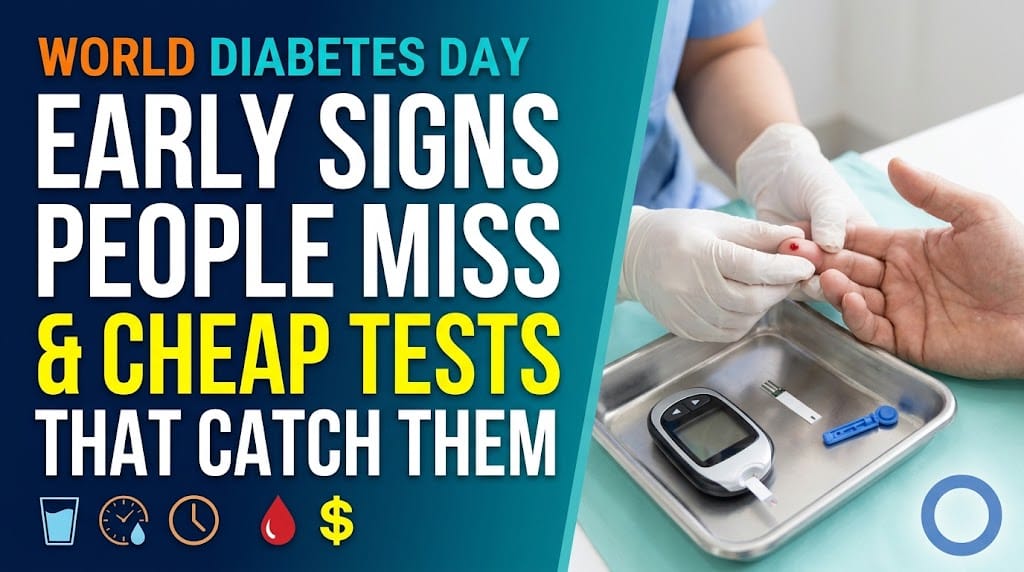
More than 540 million adults worldwide live with diabetes, and the International Diabetes Federation estimates that almost half of them do not know they have the condition. Type 2 diabetes rarely appears overnight. The condition advances quietly over five to ten years, causing microvascular changes across the body long before classic symptoms such as unquenchable thirst or severe weight loss prompt a clinic visit.
As health organisations mark World Diabetes Day on 14 November 2026, clinicians are drawing attention to the quiet signals that precede a formal diagnosis. Catching high blood glucose while it is still in the prediabetes stage gives individuals an opportunity to reverse or stall the condition before permanent organ damage sets in. Routine, low-cost screening tests remain the most effective tool to uncover elevated glucose before complications occur.
Subtle Symptoms People Commonly Overlook
Public awareness campaigns often highlight extreme thirst, sudden weight drop, and constant nighttime urination. While these classic signs appear when blood glucose levels run exceptionally high, milder elevations produce quiet physical changes that people routinely write off as normal ageing, poor sleep, or occupational fatigue.
One of the earliest dermatological indicators is acanthosis nigricans, a condition that causes velvety, hyperpigmented patches in body folds. These dark, thickened bands appear most frequently on the back of the neck, armpits, and groin. Many individuals scrub these patches vigorously, mistaking them for ground-in dirt or friction burns, yet they are a direct physical marker of insulin resistance. Similarly, the sudden emergence of multiple skin tags on the neck or upper torso often points to elevated circulating insulin.
Repeated fungal and bacterial infections represent another frequent indicator. Candida yeasts feed on excess glucose excreted through sweat, saliva, and urine. Recurrent bouts of genital thrush, stubborn athlete's foot, or chronic fungal skin infections under the breasts frequently serve as the body's first warning of elevated blood sugar. Frequent urinary tract infections or gum inflammation that resists standard dental hygiene warrant a blood test.
Vision fluctuations also occur during the early stages. Excess sugar in the bloodstream pulls fluid into the lens of the eye, altering its shape and impairing the ability to focus sharply. People often visit an optometrist for a new spectacles prescription, unaware that temporary blood sugar spikes caused the blurriness. When glucose stabilises, the lens shifts back, causing vision to change again.
Slow wound healing and peripheral nerve irritability can start well before formal diagnosis. A scratch, insect bite, or minor kitchen cut that lingers for three or four weeks without fully closing suggests impaired microcirculation and lowered white blood cell response. Early peripheral nerve distress can also produce occasional tingling, burning, or pins-and-needles sensations in the soles of the feet, particularly when resting in bed at night.
The Four Primary Screening Tests and What They Cost
Diagnosing impaired glucose regulation does not require costly hospital admissions or proprietary scans. Laboratories and community pharmacies rely on four established blood tests to identify high blood sugar.
| Test Name | Preparation Required | Diagnostic Cut-Off (Diabetes) | Cost Profile by Region |
|---|---|---|---|
| Random Capillary Blood Glucose | None; can be performed at any time of day | 11.1 mmol/L (200 mg/dL) or higher with symptoms | Under ₦1,500 in Nigeria; KES 150 to KES 300 in Kenya; free at public clinics or under £5 in the UK; $10 to $20 at US pharmacies |
| Fasting Plasma Glucose (FPG) | Strict water-only fast for 8 to 12 hours overnight | 7.0 mmol/L (126 mg/dL) or higher on two separate occasions | ₦2,000 to ₦4,500 in Nigeria; KES 500 to KES 1,000 in Kenya; covered by NHS in the UK; $15 to $35 private lab fee in Canada and the US |
| Glycated Haemoglobin (HbA1c) | No fasting required; measures average glucose over 90 days | 48 mmol/mol (6.5 per cent) or higher | ₦6,000 to ₦15,000 in Nigeria; KES 1,500 to KES 3,500 in Kenya; fully covered by NHS in the UK; $25 to $60 in North America |
| Oral Glucose Tolerance Test (OGTT) | Fasting blood draw, followed by a 75g glucose drink and a 2-hour blood draw | 11.1 mmol/L (200 mg/dL) or higher at the 2-hour mark | ₦5,000 to ₦12,000 in Nigeria; KES 1,200 to KES 2,800 in Kenya; free on NHS referral; $30 to $70 in North America |
1. Random Capillary Blood Glucose
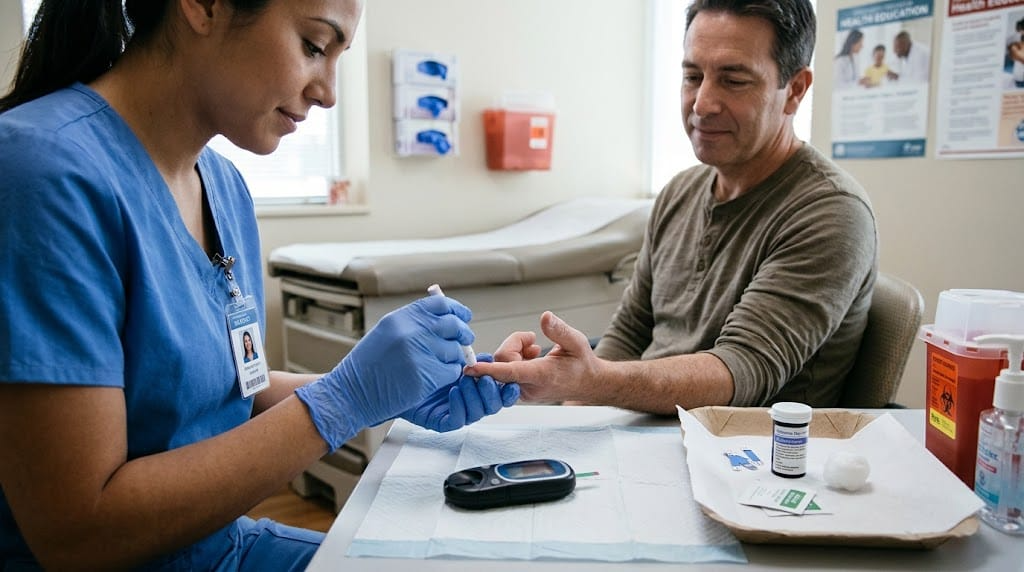
A simple finger-prick test using an electronic glucometer provides a snapshot of current blood sugar within five seconds. While a single random reading cannot confirm a clinical diagnosis unless classic symptoms accompany an extraordinarily high result, it acts as a frontline filter at community health fairs, chemist shops, and remote outposts.
2. Fasting Plasma Glucose (FPG)
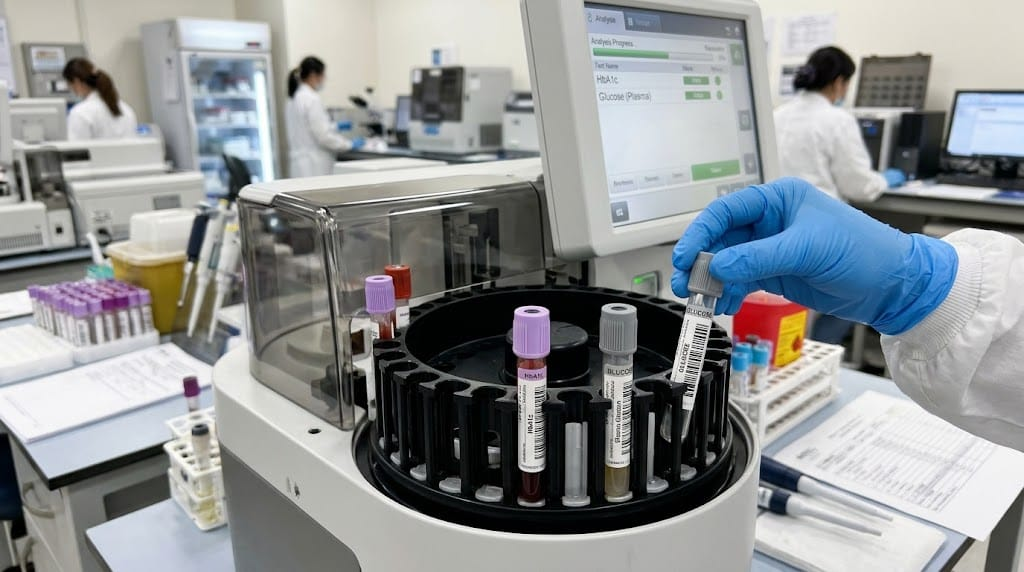
An FPG test measures venous blood drawn after an overnight fast. It provides a clean baseline of how well the liver and basal insulin output regulate sugar without the interference of recent meals. A result between 5.6 and 6.9 mmol/L (100 to 125 mg/dL) indicates impaired fasting glucose, commonly referred to as prediabetes.
3. Glycated Haemoglobin (HbA1c)
The HbA1c test remains the diagnostic standard for long-term monitoring. Glucose molecules bond to haemoglobin in red blood cells throughout their roughly 120-day lifespan. Because it reflects average control across two to three months, patients cannot manipulate the outcome by skipping sweets the day prior to their appointment. No fasting is necessary, making it convenient for daytime clinic visits.
4. Oral Glucose Tolerance Test (OGTT)
Clinicians use the OGTT primarily during pregnancy to detect gestational diabetes and in borderline cases where fasting glucose leaves diagnostic uncertainty. It evaluates how quickly the pancreas produces insulin to clear a measured glucose load from circulation over two hours.
Global Disparities in Screening Access
Access to routine metabolic checks varies substantially depending on where a patient lives. In high-income countries like the United Kingdom, the National Health Service (NHS) invites adults aged 40 to 74 for an NHS Health Check every five years, which routinely screens for blood sugar irregularities at no direct charge to the patient. In Canada, provincial healthcare systems cover basic diagnostic blood panels ordered by family physicians.
In sub-Saharan Africa, where out-of-pocket health spending accounts for a large share of medical care, structured public screening programmes remain scarce outside urban tertiary centres. The International Diabetes Federation notes that more than 50 per cent of people living with diabetes in Africa remain undiagnosed, the highest proportion of any global region. In countries such as Nigeria, Kenya, and Ghana, independent community pharmacies and patent medicine vendors have increasingly stepped in to fill this gap, offering walk-in capillary blood tests for nominal fees.
Diagnostic delays in low-resource environments mean patients frequently present only after microvascular or macrovascular damage has occurred, presenting with foot ulcers, reduced renal function, or heart failure. Expanding access to cheap point-of-care testing represents an urgent public health objective.
The Hidden Costs of Delayed Detection
Persistently high blood sugar damages the endothelial lining of blood vessels throughout the body. Small vessels supplying the retina, kidneys, and peripheral nerves suffer initial harm. Without intervention, undiagnosed type 2 diabetes triples the risk of cardiovascular events, including heart attacks and strokes.
When diagnosed early in the prediabetes window, sustained adjustments in dietary composition, physical activity, and sleep patterns can reverse impaired glucose tolerance. Once extensive beta-cell exhaustion occurs in the pancreas, lifelong pharmacological treatment becomes necessary to keep glucose levels within safe ranges.
Conclusion
World Diabetes Day is an annual reminder that diabetes rarely begins with overt pain or sudden incapacitation. Subtle cues such as darkened neck folds, recurring skin infections, uncharacteristic visual blurriness, and slow-healing scrapes often precede full disease onset by years. Affordable diagnostic tools, from simple pharmacy finger-prick tests to standard fasting blood panels, allow individuals to detect metabolic shifts before structural complications arise.
Sources
- World Health Organization - Diabetes Fact Sheet
- International Diabetes Federation - IDF Diabetes Atlas
- National Health Service (UK) - Overview of Diabetes
- Centres for Disease Control and Prevention - Diabetes Basics
Disclaimer: This article is for general informational purposes only and does not constitute medical advice. Anyone experiencing persistent physical symptoms or seeking diagnostic screening should consult a qualified healthcare professional.
Category: Health