Health Insurance in Nigeria: How HMOs and the NHIA Work and What Corporate Plans Cover
By Gbenga Ayandare —
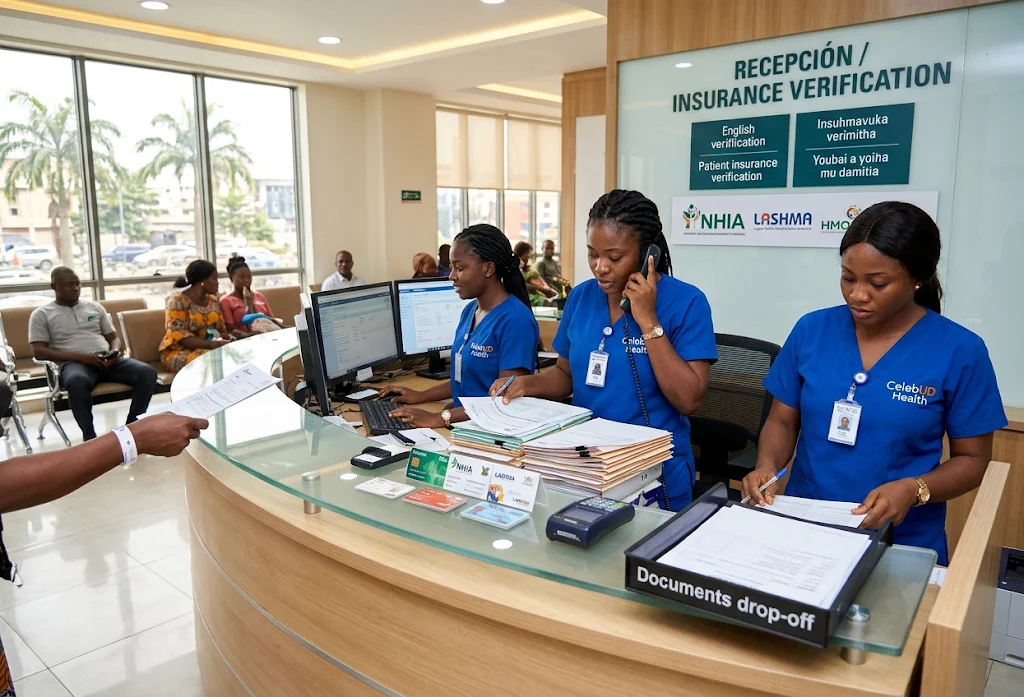
Out-of-pocket payments have long dominated healthcare financing in Nigeria, accounting for over 70 per cent of total health expenditure according to data from the World Health Organization. When a medical emergency strikes, individuals without structured coverage must rely on cash reserves, family contributions, or personal loans to settle hospital bills. To alter this dynamic and expand financial protection, Nigerian authorities enacted the National Health Insurance Authority (NHIA) Act in May 2022, replacing the older National Health Insurance Scheme (NHIS) established in 1999.
Understanding how the statutory framework interacts with private Health Maintenance Organisations (HMOs) is essential for employees, employers, and diaspora families funding care for relatives back home. Corporate health insurance offers substantial financial relief, but policies carry specific structural rules, benefit caps, and pre-authorisation processes that dictate how medical care is accessed.
The Statutory Framework: Understanding the NHIA
The NHIA Act 2022 fundamentally restructured health cover across the federation. While the old NHIS operated as an optional scheme that struggled to cover more than five per cent of the population, the 2022 law makes health insurance compulsory for every Nigerian citizen and legal resident. The authority functions as both a regulator of private health plans and a promoter of universal social health coverage.
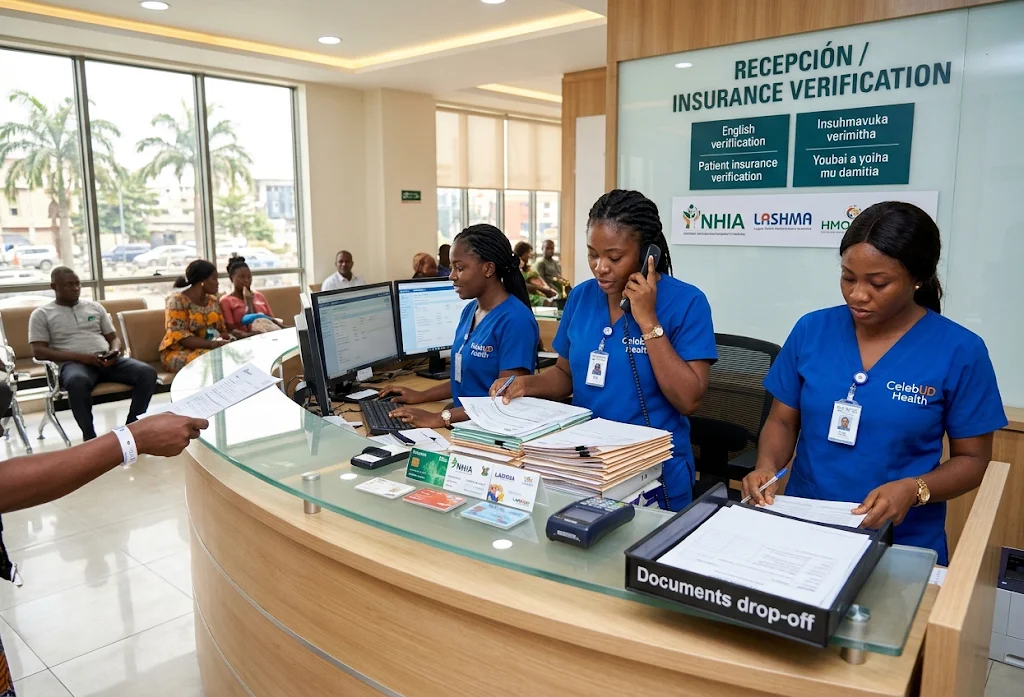
Under the legislation, employers in the formal sector with five or more staff must register their workers and pay contributions toward an accredited health insurance plan. The law also integrates State Social Health Insurance Agencies (SSHIAs), such as the Lagos State Health Management Agency (LASHMA) and the Kano State Contributory Healthcare Management Agency (KSCHMA). These state-level bodies manage decentralised insurance pools, while the federal NHIA sets standards, registers participating institutions, and monitors provider compliance.
The law also established the Vulnerable Group Fund (VGF). This financing pool draws revenue from government subsidies, developmental levies, and donor contributions to subsidise basic healthcare for individuals unable to pay premiums, including indigent households, pregnant women, the elderly, and people living with physical disabilities.
How Health Maintenance Organisations (HMOs) Function
An HMO is an independent corporate entity licensed and accredited by the NHIA to manage health insurance plans. Rather than delivering medical treatment directly, an HMO acts as an intermediary connecting three parties: the insured individual (the enrollee), the corporate or individual policyholder, and medical service providers, which include hospitals, diagnostic centres, clinics, and retail pharmacies.
When an employer purchases a group policy, the HMO registers employees and issues insurance identity numbers. To manage risk and deliver care, HMOs use two primary payment mechanisms across their hospital networks:
- Capitation: For primary healthcare, the HMO pays a contracted clinic or hospital a fixed monthly amount for each registered enrollee, regardless of whether that enrollee visits the clinic during the month. This payment covers basic consultations, routine laboratory examinations, and standard primary medicines.
- Fee-for-Service: When an enrollee requires secondary or specialist interventions—such as surgery, advanced imaging, or prolonged inpatient admission—the hospital bills the HMO separately for each specific medical procedure based on a negotiated tariff sheet.
Because the HMO assumes financial risk for fee-for-service claims, private insurers enforce strict administrative checks. Primary among these is the pre-authorisation code, commonly referred to as a PA code.
Pre-Authorisation Codes and Drug Formulary Rules
Enrollees visiting a hospital for standard conditions such as uncomplicated malaria or basic respiratory infections rarely experience administrative delays. Capitation covers these primary treatments, allowing the clinic to treat the patient immediately.
Secondary care operates differently. If a physician recommends an ultrasound scan, an admission bed, specialist consultation, or surgical intervention, the hospital billing department must contact the HMO call centre to request a pre-authorisation code before proceeding. Without this code, the HMO will not honour the hospital's invoice, and the facility may decline to offer treatment under the policy or ask the patient to pay out of pocket.
HMOs also control costs through drug formularies. A formulary is an approved list of medications that the insurer agrees to pay for. Most Nigerian corporate plans require hospitals to dispense generic pharmaceutical formulations rather than original branded medicines. If an enrollee requests an imported, branded drug when an equivalent generic compound is available, the enrollee must pay the price difference directly to the hospital pharmacy.

What Corporate Employer Plans Standardly Cover
Corporate coverage varies depending on the insurance tier selected by the employer. Companies frequently assign different tiers to staff based on seniority, providing bronze or basic plans for junior employees, silver or gold plans for mid-tier staff, and platinum or executive packages for management. Despite these differences, standard employer plans typically include several core areas of medical care.
Primary and Secondary Outpatient Care
Corporate plans standardly cover general practitioner consultations, standard laboratory tests such as full blood count, malaria parasites, and urinalysis, along with treatment for common communicable illnesses. Outpatient specialist visits—such as appointments with a cardiologist, gynaecologist, or paediatrician—are covered, though many policies require a referral from a primary medical officer first.
Inpatient Hospital Stays
When an illness requires admission, the employer plan pays for room charges, nursing care, professional attendance fees, and medications administered during the stay. The category of room depends on the employee's plan tier:
- Basic plans typically restrict admissions to shared general wards containing multiple beds.
- Mid-level plans cover semi-private rooms, usually shared between two patients.
- Executive plans provide private individual rooms or suite accommodations.
Surgical Interventions
Intermediate and major surgical operations, including appendectomies, hernia repairs, and emergency trauma care, fall under employer coverage. However, every plan applies an annual financial limit. A mid-tier plan might cap surgical claims at ₦1,500,000 or ₦3,000,000 per policy year. Once bills exceed this sum, the employee or the employer must fund the balance directly.
Maternity Care
Maternity benefits form a standard component of corporate policies, covering routine antenatal appointments, routine obstetric scans, standard vaginal delivery, and emergency or elective caesarean sections. Cover also extends to basic neonatal care for the newborn during the first 30 days of life.
Insurers regularly impose waiting periods on maternity benefits. A corporate plan may require an employee to be enrolled for six to nine months before maternity claims are eligible for settlement. This waiting rule prevents adverse selection, where companies or individuals buy cover solely to fund an imminent birth.
Dental and Optical Benefits
Employer plans rarely provide open-ended dental and optical coverage. Instead, they apply separate annual sub-limits. A standard mid-level package may permit ₦40,000 to ₦75,000 per year for optical services, which covers an eye examination and contributes toward corrective lenses and frames. Dental care is generally limited to simple tooth extractions, temporary fillings, and one annual routine scale and polish, with sub-limits typically falling between ₦30,000 and ₦80,000.
Comparing Standard Corporate Health Insurance Tiers
Employer plans distribute benefits across defined levels. The table below outlines how coverage terms, limits, and facility access differ across typical corporate tiers in Nigeria.
| Benefit Category | Entry / Basic Tier | Mid-Level Tier | Senior Management Tier |
|---|---|---|---|
| Hospital Network | Primary clinics, mission hospitals, and general hospitals | Mid-tier private hospitals and regional medical centres | Premium private hospitals and multi-specialist centres |
| Inpatient Accommodation | General ward (4 to 8 beds) | Semi-private room (2 beds) | Single private room or executive suite |
| Annual Medical Cap | ₦1,000,000 to ₦2,000,000 | ₦3,500,000 to ₦6,000,000 | ₦10,000,000 to unlimited (within policy rules) |
| Maternity Limit | Basic delivery; CS capped at ₦400,000 | Full maternity; CS capped at ₦800,000 | Full maternity; CS covered up to higher plan cap |
| Optical Sub-Limit | Basic eye test; minimal frame allowance (₦20,000) | Lenses and frames up to ₦50,000 | Lenses and frames up to ₦150,000 |
| Dental Sub-Limit | Simple extraction and relief of pain only | Routine cleaning and fillings up to ₦50,000 | Advanced dental care up to ₦150,000 |
| Dialysis / Oncology | Excluded or limited to initial stabilisation | Short-term care capped at ₦500,000 | Specialist cancer and renal therapy sub-limits |
Standard Policy Exclusions
Even comprehensive employer policies contain exclusions. When a treatment falls into an excluded category, the hospital cannot bill the HMO, and the patient assumes full financial responsibility for the invoice. Common exclusions include:
- Cosmetic Surgery: Any aesthetic surgical or dermatological procedure that is not required to reconstruct tissue damaged by trauma or disease.
- Fertility Treatments: Assisted reproduction procedures, including in-vitro fertilisation (IVF), intrauterine insemination, and related hormonal treatments, are excluded from standard group contracts.
- Chronic Dialysis and Organ Transplants: Long-term renal replacement therapy and organ transplantation exceed standard private insurance thresholds, though some high-tier plans provide initial acute stabilisation.
- Experimental Treatments: Unlicensed medications or therapies not cleared by Nigeria's National Agency for Food and Drug Administration and Control (NAFDAC).
- Self-Inflicted Injuries: Medical care resulting from intentional self-harm or injuries sustained while committing an illegal act.
Out-of-Pocket Frictions at the Hospital
Enrollees frequently encounter situations where private facilities request direct payments despite an active health insurance card. This occurs when an attending physician prescribes a branded medication that falls outside the HMO's formulary, when a hospital bills above the HMO's tariff without prior approval, or when a patient requests an admission room superior to their plan entitlement.
Friction also arises when the hospital administration delays contacting the HMO for pre-authorisation codes, leaving patients waiting in reception areas. In acute medical emergencies, the NHIA operational guidelines require hospitals to stabilise patients before financial clearances are completed. For non-life-threatening treatments, however, facilities routinely hold off on care until administrative approval arrives from the insurer.
Implications for the Diaspora
For members of the Nigerian diaspora living in the United Kingdom, Canada, the United States, and across the African continent, managing family healthcare remittances presents persistent financial exposure. Sending cash to relatives for urgent medical bills often leads to unpredictable expenditures and fragmented care.
As an alternative to spontaneous cash transfers, several private HMOs and state insurance agencies now offer diaspora-targeted retail schemes. These arrangements allow a family member abroad to pay an annual premium in foreign or local currency, enrolling parents or dependents into private hospital networks in Nigeria. The enrolled relative receives direct access to primary and secondary facilities, while the overseas sponsor receives itemised reports of medical encounters without intermediary cash handling.
Conclusion
Health insurance in Nigeria continues to expand from an optional corporate perk into a legally compulsory safeguard overseen by the NHIA. Private HMOs provide the operational framework that allows employers to shield staff from devastating out-of-pocket medical bills. While these policies offer vital support for primary care, common illnesses, maternity services, and standard surgeries, every plan operates within definite financial boundaries, formulary constraints, and pre-authorisation requirements. Understanding these contractual provisions enables policyholders to use their coverage effectively and avoid unexpected expenses when entering a hospital.
Sources
- National Health Insurance Authority (NHIA) Official Portal
- World Health Organization: Nigeria Health Financing Profile
- Federal Republic of Nigeria Official Gazette: National Health Insurance Authority Act 2022
Disclaimer: This article is for informational purposes only and does not constitute financial, legal, or medical advice. Health insurance terms, coverage limits, and provider networks vary by policy and insurer; consult a licensed insurance broker or healthcare professional for specific guidance.
Category: Health