How Gen Z Republicans running for Congress are thinking about the future of the party
By CelebUD Newsroom —
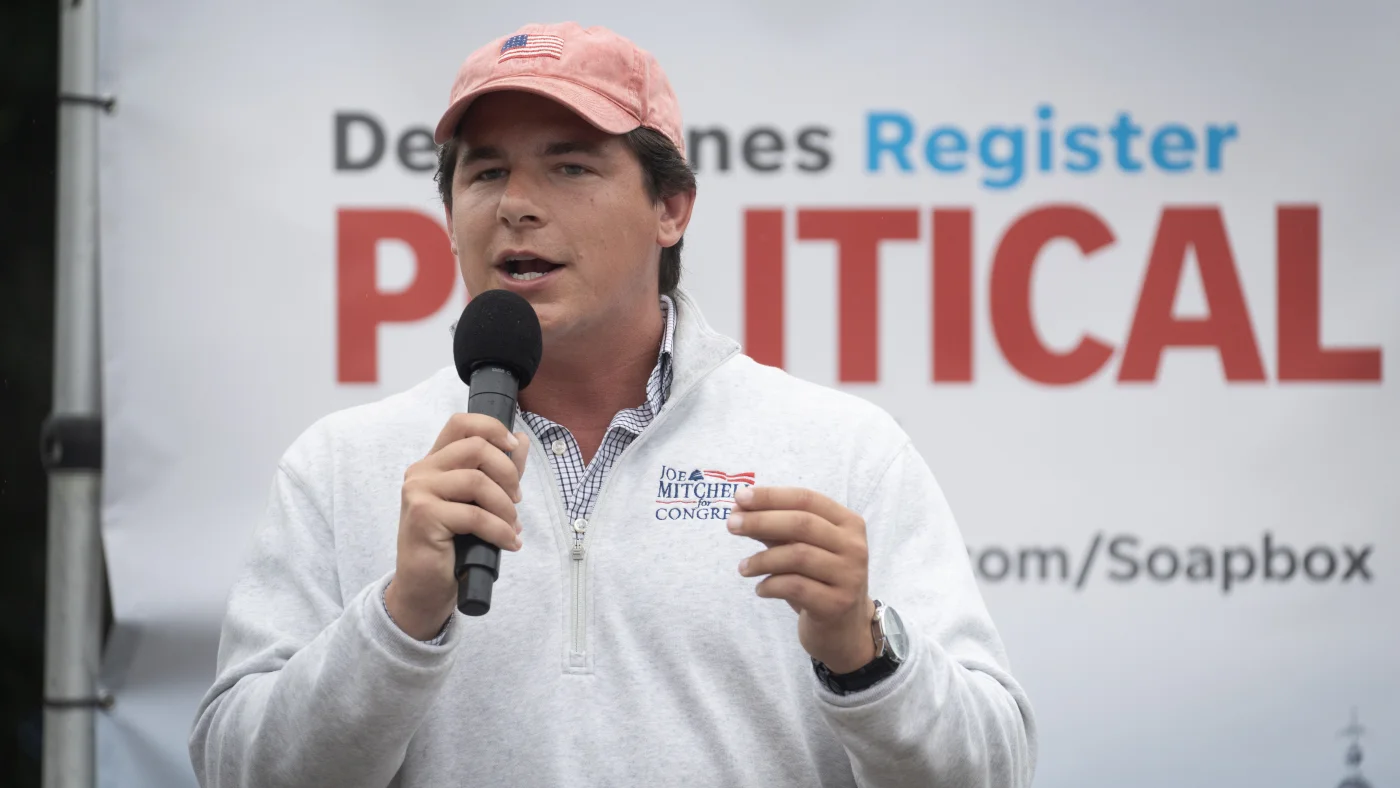
A tiny cadre of youthful conservative contenders is seeking to shatter political norms by entering the United States House of Representatives, positioning themselves as reform-minded champions of an emerging generation while embracing populist doctrine. Leading this small vanguard is 29-year-old Joe Mitchell, a former Iowa state senator and real estate developer competing in Iowa's closely divided 2nd congressional district. Running in a tossup territory amidst an uphill political climate for Republicans, Mitchell could soon become one of the foundational members of the first-ever cohort of Generation Z Republicans in the federal legislature.
The Vanguard of Young Conservatives on the Ballot
Generation Z, whose oldest members are only approaching age 30, faces a constitutional barrier that requires House lawmakers to be at least 25 years old. As a consequence, representatives from this demographic cohort remain exceptionally rare on Capitol Hill. Florida Democrat Maxwell Frost, 29, currently stands as the sole member of Gen Z serving in the federal chamber.
However, the upcoming election could subtly reshape that balance. While Democratic socialist Melat Kiros, 29, is favored to capture Colorado's deep-blue 1st district, two young Republicans are pushing forward on the right:
- Michael Alfonso: The 26-year-old newcomer is heavily favored to win Wisconsin's strongly conservative 7th congressional district. Backed by Donald Trump, Alfonso is married to the daughter of U.S. Transportation Secretary Sean Duffy, who represented the district from 2011 to 2019. An election victory would make Alfonso the very first lawmaker born in the 2000s to take a seat in Congress.
- Joe Mitchell: Vying for Iowa's 2nd district with an endorsement from Trump, Mitchell operates in a far more competitive landscape. In August 2026, he presented Trump with an unofficial "Man of the Century Award" at an Iowa campaign gathering.
- Riley Owen: A 28-year-old candidate challenging the odds in Utah's newly redrawn 1st congressional district, an area that strongly favors Democrats.
Comparing Gen Z Congressional Hopefuls
| Candidate | Party Affiliation | District & State | Electoral Outlook |
|---|---|---|---|
| Joe Mitchell (Age 29) | Republican | Iowa 2nd | Competitive Tossup |
| Michael Alfonso (Age 26) | Republican | Wisconsin 7th | Strong Republican Advantage |
| Melat Kiros (Age 29) | Democratic Socialist | Colorado 1st | Strong Democratic Advantage |
| Riley Owen (Age 28) | Republican | Utah 1st | Underdog / Safe Democratic Seat |
An Anti-Corruption Platform Geared Toward Youth Frustrations
Running in a battleground seat, Mitchell has championed an agenda designed to cross traditional party lines. Pitching an explicitly "anti-corruption" framework, he advocates for a six-term maximum limit on House tenure, an outright prohibition on members of Congress trading individual stocks, and a self-imposed pledge declining donations from corporate political action committees.
Mitchell connects these proposals directly to an under-30 electorate weary of perceived systemic decay and economic insecurity:
"I just think that young people — on both sides of the aisle or no party affiliates — are frustrated with the system. They're frustrated and they should be."
On his broader campaign appeal, Mitchell highlighted widespread voter interest in generational turnover:
"I think people are looking for hope, regardless of what party they're in. They want to see young people get involved, and I hear that everywhere we go."
In Wisconsin, Michael Alfonso similarly views his youth not as a liability, but as a defining asset. Addressing local media during his bid, Alfonso characterized his age as his "greatest advantage," emphasizing that his platform aligns directly with district constituents:
"I have the same values of everyone here in the 7th [district]: Hard work, faith and family."
The Long Odds and Grassroots Infrastructure
Despite these high-profile candidacies, the statistical hurdle for younger candidates remains formidable. Research from Future Caucus, an independent organization promoting young civic leaders, illustrates that Gen Z made up a mere 4% of congressional aspirants across the nation during this cycle. The demographic was also the least likely of any generation to advance past primary balloting.
Furthermore, right-leaning young candidates represent a distinct minority within their age bracket. Data reveals that among Gen Z contenders who entered congressional contests this year:
- More than half campaigned on the Democratic ticket.
- Fewer than a third chose to run under the Republican banner.
- Roughly 16% opted for third-party status or avoided major-party affiliation entirely.
To counterbalance these numbers, right-wing advocacy networks are building structural support. Run Gen Z, an initiative initially founded by Mitchell, focuses on preparing young conservatives for public service. Adam Pennings, the group's executive director, explained the group's long-term objective of bench-building rather than total political displacement:
"Young people need a seat at the table. Does that mean they need to be the only seat of the table? No. We need to be building up young people who are ready to lead in the future when some of these more, you know, long-term serving people retire."
Run Gen Z issued endorsements to more than 220 conservative candidates spanning both Gen Z and millennial brackets nationwide, encompassing both front-runners and underdogs such as Owen in Utah.
"People want to trust their government. People want to take risks and dream big and start a business, start a family, live the American dream," Owen noted regarding his optimistic longshot campaign. "They want all of those things. And if we can provide solutions, I think the conservative movement has a very bright future."
Ideological Tensions: Defining 'America First'
Beyond institutional reform, the incoming generation of Republicans is navigating complex ideological battles inside their party, specifically over foreign policy and the doctrine of "America First."
Mitchell insists the future of the conservative movement rests on that doctrine, linking his perspective to figures like Vice President JD Vance. According to Mitchell, the platform simply requires politicians to constantly ask how decisions benefit ordinary domestic citizens.
Yet internal debates remain sharp, notably around foreign conflicts such as the ongoing U.S. war with Iran, which Democratic opponents have targeted as an economic burden on everyday families. While maintaining that Iran cannot possess a nuclear weapon, Mitchell has acknowledged wariness toward broader prolonged combat, remarking that he opposes "endless wars" while maintaining that the definition of "America First" naturally leaves room for multiple interpretations.
What an 'America First' youth cohort means for Africa
The ideological debate within this new generation of American politicians over America First carries real implications for Nigeria and the wider African continent. As younger lawmakers advocate for domestic-first spending, fewer foreign entanglements, and strict limits on international commitments, traditional U.S. foreign policy priorities—including foreign aid, trade partnerships, and international educational exchanges—face increasing scrutiny.
While fewer foreign military operations may sound positive on the surface, an inward-looking Washington often translates into reduced focus on African diplomatic relations, potential tightening of visa pathways, and unpredictable trade stances. For Nigerians planning international study, cross-border commerce, or diaspora partnerships, shifts in legislative leadership can quietly alter the landscape of bilateral cooperation over the coming decade.
Takeaway for readers: If your business or family plans rely on international trade, travel, or student visas, are you factoring a more inward-looking U.S. foreign policy into your long-term planning?
Conclusion
The entrance of Gen Z Republicans into national campaigns represents an intriguing experiment in how the party's populist realignment will adapt to modern youth culture. While generational participation in legislative politics remains scarce, candidates like Joe Mitchell and Michael Alfonso are showing that reform-driven rhetoric—targeting congressional insider trading, longevity in office, and foreign interventions—can resonate across traditional demographic boundaries. Whether this emerging cohort successfully claims their target seats or faces setback at the ballot box, their campaigns have laid the blueprint for how young conservatives plan to influence national politics over the decades ahead.
Reporting based on coverage by NPR News.
Category: Politics