Why Torontonians Should Re-Elect Olivia Chow: A Proven First Term Deserves Another
By Matthew Ayandare —
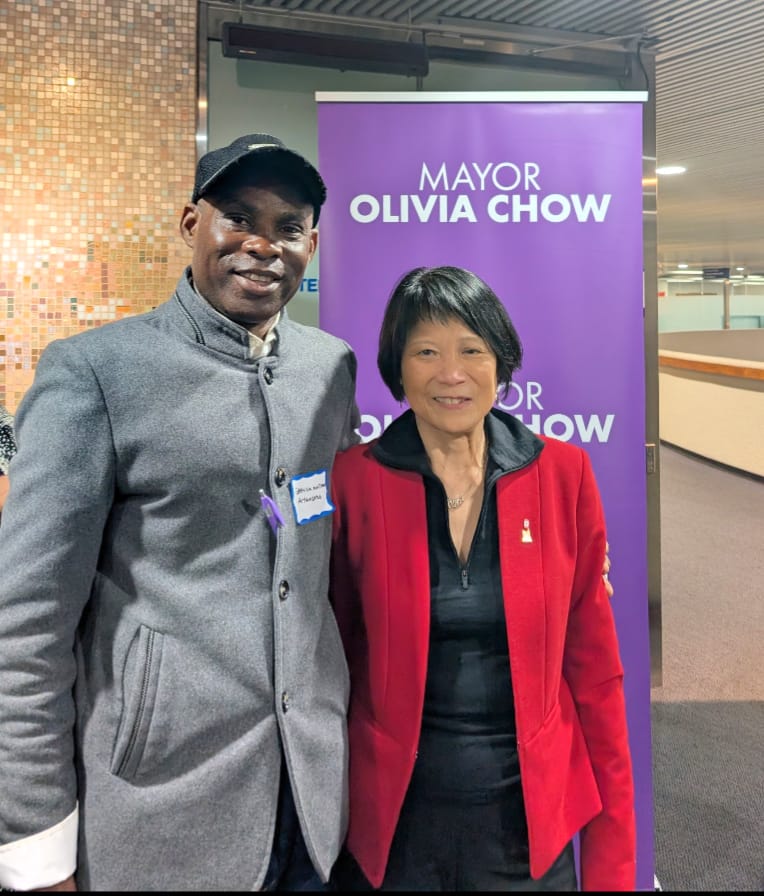
When Olivia Chow assumed office at City Hall in July 2023, she inherited a metropolis standing at a precarious precipice. More than a decade of deferring maintenance, starving core infrastructure, and depleting rainy-day reserves had caught up with Canada's economic capital. The city faced a staggering, multi-billion-dollar structural deficit, a crumbling transit network, and a housing crisis squeezing middle-class families and vulnerable residents out of the city entirely. Cynics suggested Toronto was unmanageable; partisans predicted gridlock.
Instead, Chow responded with one of the most consequential, pragmatically effective first terms in modern Toronto history. By combining financial realism with aggressive intergovernmental diplomacy, Chow has not only stabilized Toronto's balance sheet but delivered tangible, street-level improvements across transit, housing, and social services. As municipal elections approach, the question facing voters is straightforward: do we return to the hollow rhetoric of austerity, or do we provide Olivia Chow the second term necessary to finish the structural transformation she started?
The Balance Sheet Reality: Reversing a Decade of Hidden Deficits
To appreciate Olivia Chow's accomplishments, one must first confront the financial wreckage she was handed. For nearly twelve years under mayors Rob Ford and John Tory, Toronto adhered to an ideological orthodoxy of below-inflation property tax increases. While politically convenient on the campaign trail, the policy was mathematically ruinous. Essential maintenance was postponed, city services deteriorated, and the municipality masked structural deficits by relying on one-off federal COVID-19 relief funds and emptying municipal reserve accounts.
When those one-time cushions evaporated, Chow was greeted by an unprecedented $1.8 billion operational budget shortfall for 2024. A weaker politician would have gutted community centers, slashed public transit lines, and pointed fingers. Chow did the opposite: she chose political courage over short-term popularity.
She introduced a frank, balanced budget that included a combined 9.5 percent property tax adjustment (including the dedicated City Building Fund)—the first honest alignment between municipal revenue and the actual cost of operating a global metropolis in a generation. Crucially, she structured the tax increases alongside expanded protections for low-income seniors and residents with disabilities, ensuring that fiscal stabilization did not come at the expense of Toronto's most vulnerable.
The Masterstroke: The 'New Deal for Toronto'
Chow's most transformative structural victory was the historic bilateral agreement struck in late 2023 with Ontario Premier Doug Ford: the New Deal for Toronto. For decades, Toronto mayors traveled to Queen's Park to plead cap-in-hand for ad-hoc grants, returning home empty-handed while complaining about provincial interference. Chow, an astute veteran of legislative politics, recognized that mutual survival demanded a grand bargain.
The resulting accord reshaped Toronto's fiscal architecture:
- Uploading Major Highways: The province agreed to assume full financial and capital responsibility for the Gardiner Expressway and the Don Valley Parkway (DVP). This single operational upload lifted an estimated $7.6 billion in long-term capital repair and maintenance liabilities directly off the backs of Toronto property taxpayers.
- Targeted Operating Relief: The agreement unlocked up to $1.2 billion in direct operational and capital subsidies over three years for the Toronto Transit Commission (TTC) and emergency shelter management.
- Transit Expansion Commitments: Provincial capital guarantees were secured to operate new provincial light-rail transit lines, including the Finch West LRT and the Eglinton Crosstown, ensuring the city would not be crushed by unexpected handover costs.
"For years, leaders pretended Toronto could maintain provincial highways and regional social safety nets entirely on residential property taxes. Olivia Chow did what her predecessors couldn't: she fundamentally rewrote the division of responsibilities with Queen's Park."
By securing this pact, Chow dismantled an unfair arrangement where Toronto taxpayers alone shouldered the cost of highways used daily by hundreds of thousands of commuters from neighboring regional municipalities.
Tangible Results: Transit, Housing, and Public Spaces
Chow's success is not confined to spreadsheets and intergovernmental negotiations; it is visible in the daily fabric of the city. While her predecessors cut transit frequencies and closed public spaces early to shave fractions of a percentage from the budget, Chow re-invested in the public realm.
1. Restoring and Protecting Public Transit
Public transit ridership was in a tailspin following the pandemic, exacerbated by service reductions instituted by previous leadership. Chow reversed these cuts. Under her administration, the TTC restored regular scheduled service across dozens of crowded bus and streetcar routes. Furthermore, she maintained a freeze on TTC transit fares in the 2024 budget, easing inflation pressures for daily commuters while adding community transit ambassadors to enhance rider safety and support.
2. Rebuilding the City's Public Housing Capacity
Rather than leaving housing delivery solely to private-sector developers during a high-interest-rate environment, Chow pivoted the city back toward public leadership. City Council established ambitious new targets to build tens of thousands of deeply affordable and rent-geared-to-income units on municipal land, expanding the HousingTO 2020–2030 Action Plan. By actively acquiring private rental buildings through the Multi-Unit Residential Acquisition (MURA) program, the city prevented hundreds of affordable units from being demovicted into high-end condominiums.
3. Reopening the Commons
Basic civic pride matters. Under Chow, the Toronto Public Library system expanded full Sunday service to every single branch across the city, giving working families and students seven-day-a-week access to study spaces and community resources. Public washrooms in parks—notoriously shuttered for half the year under previous regimes—saw extended operating seasons and maintenance overhauls.

Comparing the Records: Ford, Tory, and Chow
When weighing a vote in municipal governance, comparative performance provides the clearest guide. Toronto has experienced three radically distinct governing philosophies over the past fifteen years:
| Governing Metric | Rob Ford (2010–2014) | John Tory (2014–2023) | Olivia Chow (2023–Present) |
|---|---|---|---|
| Fiscal Approach | Arbitrary spending freezes; cancellation of vehicle registration tax; depletion of reserves. | Below-inflation tax increases; reliant on one-time federal transfers; growing deferred infrastructure deficit. | Transparent revenue restructuring; balanced the $1.8B budget deficit honestly while safeguarding vulnerable residents. |
| Provincial Relations | Ideological conflict; erratic policy swings. | Polite lobbying; limited structural concessions from Queen's Park. | Pragmatic 'New Deal'; successfully uploaded the Gardiner and DVP, securing $7.6B in capital relief. |
| TTC Investment | Cut transit expansion plans; fought surface rail in favor of unfunded subways. | Deep pandemic service cuts; fare increases outpaced inflation; maintenance backlogs grew. | Restored frontline service levels; 2024 fare freeze; integrated safety ambassadors. |
| Housing Strategy | Privatization focus; neglected Toronto Community Housing repairs. | Private-market incentives; housing targets consistently fell behind demand. | Public-led development model; expansion of MURA non-profit acquisitions; accelerated city-owned land builds. |
The Character and Virtues That Set Olivia Chow Apart
Beyond policy wins, the personal attributes of leadership dictate how effectively a mayor navigates crises. In a crowded field of municipal aspirants—many of whom campaign on vague slogans or partisan grievance—Chow possesses three defining virtues that make her indispensable to Toronto's future.
First is unshakeable pragmatism. Pundits once warned that an unrepentant progressive could never collaborate with a conservative provincial government. Chow proved the opposite. Rather than engaging in performative culture wars, she walked into Premier Doug Ford's boardroom with clear data, focused proposals, and an openness to compromise. She achieved more structural concessions from Queen's Park in six months than her conservative-leaning predecessor achieved in nine years.
Second is civic resilience rooted in lived experience. An immigrant from Hong Kong who arrived in Toronto as a child, grew up in public school classrooms, and navigated the challenges faced by working-class families, Chow understands the stakes of municipal services on a personal level. She uses public transit. She bikes the city streets. Her commitment to public libraries, community centers, and affordable shelter is not an intellectual exercise; it is an extension of the institutions that enabled her own rise.
Third is honesty with the electorate. For a generation, Torontonians were sold the dangerous fairy tale that they could enjoy world-class transit, flawless roads, and robust services while paying some of the lowest effective municipal taxes in the province. Chow had the integrity to tell the truth. By treating voters like adults, she broke the cycle of civic decay and positioned Toronto on a path of sustainable renewal.
Why Toronto Must Turn Out En Masse
Rebuilding a city of three million people cannot be completed in a single, shortened by-election term. Complex capital investments—such as revitalizing public transit infrastructure, constructing thousands of non-profit housing units, and rebuilding community services—require multi-year continuity. Reverting to leadership that promises easy cuts or tax gimmicks would undo the delicate stabilization achieved since 2023.
A high voter turnout is essential. Municipal elections are frequently decided by organized special interests and suburban-urban voting divides. If the broad coalition of working families, transit riders, newcomers, and civic-minded Torontonians turns out en masse, they can guarantee that Toronto does not turn backward. A good first term has laid the foundation; a second term will deliver the city Torontonians deserve.
Conclusion
Olivia Chow stepped up when Toronto was on the verge of fiscal breakdown and institutional exhaustion. Through sheer tenacity, pragmatic statecraft, and honest budgeting, she delivered the historic New Deal, stabilized municipal finances, protected core public services, and charted a path toward equitable urban growth. Toronto does not need another cycle of austerity and stagnation. Torontonians should organize, vote en masse, and re-elect Olivia Chow for a full, well-earned second term.
Sources
- City of Toronto: City Budget and Financial Plans
- Government of Ontario: Ontario and Toronto Reach Historic New Deal
- Toronto Transit Commission: Service and Financial Reports
- City of Toronto: HousingTO 2020–2030 Action Plan
Disclaimer: This article reflects an analytical editorial perspective based on publicly available municipal governance records, fiscal reports, and political developments at the time of writing. Editorial perspectives are subject to change as civic events and campaign platforms evolve.
Category: Politics