From Nigeria to Ethiopia, seven candidates with African ancestry eye US Congress
By CelebUD Newsroom —
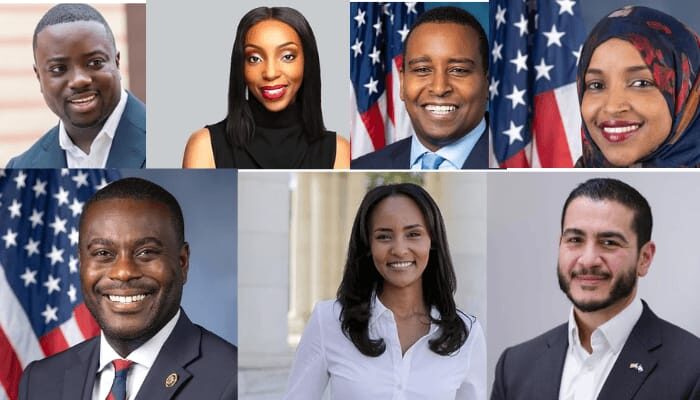
A diverse group of seven political contenders tracing their direct ancestry to the African continent are on the ballot as voters across the United States head to polling stations for the midterm elections. Spanning backgrounds connected to Nigeria, Ethiopia, Egypt, Ghana, Eritrea, Liberia, and Somalia, these candidates are competing for key federal legislative seats at a moment defined by high partisan polarization, intense immigration scrutiny under Donald Trump, and a broader demographic shift within American civic life. Their campaigns reflect the evolving footprint of first-generation and second-generation diasporic communities, illustrating how voters and community leaders are challenging historic norms on Capitol Hill.
A Pivotal Midterm Climate and Spending Records
The current electoral landscape presents unprecedented levels of financial investment and political volatility. Estimates from the advertising tracking group AdImpact indicate that total expenditures on political promotional campaigns across the country will eclipse $11 billion, establishing this cycle as the costliest midterm in United States history. These historic outlays coincide with deeply depressed public approval ratings for Donald Trump, aggressive boundary redistricting battles in several battleground states, and an influx of open races resulting from congressional retirements, departures, and lawmakers pursuing other offices.
Beyond partisan balances of power, the election represents a wider push against demographic barriers. Research published by Rutgers University’s Center for American Women and Politics highlighted that 26 women are vying for governor positions across the states, a historic peak. In parallel, advocates monitoring immigrant civic engagement see the slate of African-descended candidates as a benchmark for political advancement. The New York-headquartered New American Leaders Action Fund observed that despite a climate marked by rising hostility toward foreign-born residents and tougher immigration enforcement, candidates from immigrant communities continue to make significant inroads into state legislatures and the federal government.
The Fresh Contenders Eyeing Capitol Hill Breakthroughs
Among the seven candidates highlighting continental ties, three newcomers are competing in high-profile races for open seats or seeking upsets against established figures:
- Abdul El-Sayed (Michigan): A 41-year-old physician, epidemiologist, and former director of the Detroit Health Department, El-Sayed is running for the United States Senate in Michigan. Born to Egyptian immigrants, he would secure a historic milestone as the first Muslim elected to the US Senate if victorious. His platform emphasizes single-payer universal healthcare and the complete dismantling of the Immigration and Customs Enforcement agency, stances that, alongside his vocal critique of Israeli policies and his faith, have placed him at the heart of contentious debates.
- Melat Kiros (Colorado): Born in Addis Ababa to Tigrayan parents, the 29-year-old launched a grassroots bid for Denver’s seat in the US House of Representatives. Kiros produced one of the cycle's most notable primary shocks by unseating Diana DeGette, an incumbent Democrat who had held the district for 15 terms. Kiros’s public profile surged following her dismissal from the prominent law firm Sidley Austin after she declined to retract an open letter denouncing institutional opposition to pro-Palestinian campus protests. Her general election message centers on curbing the power of corporate donors and special interests in the capital.
- Adrian Boafo (Maryland): The 32-year-old former member of the Maryland House of Delegates and Bowie City Council is competing for the seat vacated by longtime Democratic heavyweight Steny Hoyer, for whom Boafo previously served as campaign manager. The son of Ghanaian immigrants who arrived in America during the 1980s, Boafo is seeking to transition his state-level legislative record into a federal tenure.
Incumbents Defending House Leadership and Experience
Alongside the three newcomers, three lawmakers who previously achieved historic breakthroughs as the first representatives of their respective ancestries are defending their positions in the House of Representatives:
"Her re-election campaign comes amid renewed political attacks from Trump, who has used racially charged language against Somali-American communities in her Minnesota district."
In Minnesota, 44-year-old Ilhan Omar is seeking another term representing Minneapolis. Arriving in America after spending several formative childhood years in a Kenyan refugee facility following the collapse of Somalia's Siad Barre regime, Omar entered the House in 2018 as the chamber's inaugural Somali-American. Throughout her bid for another term, she has remained a frequent rhetorical target of Donald Trump, who has deployed sharp, racially charged critiques directed at her district's significant Somali-American population.
In Colorado, 42-year-old Joe Neguse is also seeking re-election. Winning his seat alongside Omar in 2018, Neguse established milestones as Colorado’s first Black representative and the initial Eritrean-American to serve in the institution. Since his arrival, he has risen rapidly within House minority structures, earning a post as assistant House Democratic leader alongside responsibilities on the House Natural Resources Committee.
In Rhode Island, 38-year-old Gabe Amo is working to retain the congressional district he secured during a 2023 special election. The son of a Ghanaian father and a Liberian mother, Amo made history as the state's first Black federal lawmaker following a public career that included advisory roles inside both the Barack Obama and Joe Biden administrations.
Candidate Overview: Continental Roots on the Ballot
| Candidate | Ancestry / Origin | State & Chamber | Party | Incumbent Status |
|---|---|---|---|---|
| Abdul El-Sayed | Egypt | Michigan (Senate) | Democrat | Challenger / Open Seat |
| Melat Kiros | Ethiopia | Colorado (House) | Democrat | Challenger (Won Primary) |
| Adrian Boafo | Ghana | Maryland (House) | Democrat | Open Seat Candidate |
| Ilhan Omar | Somalia | Minnesota (House) | Democrat | Incumbent |
| Joe Neguse | Eritrea | Colorado (House) | Democrat | Incumbent |
| Gabe Amo | Ghana & Liberia | Rhode Island (House) | Democrat | Incumbent |
| Ndidiamaka Okpareke | Nigeria | New Mexico (House) | Republican | Challenger |
A Partisan Divergence in New Mexico
While the majority of candidates from the African diaspora have historically aligned with and run under the banner of the Democratic Party, the race in New Mexico features a sharp break from that trend. Ndidiamaka Okpareke, a 43-year-old pharmacist and private business operator, is contesting central New Mexico’s congressional seat on the Republican ticket.
Okpareke’s family roots trace to Nigeria, which her parents departed following the devastation of the 1967–1970 civil war. In her bid to defeat the incumbent Democrat Melanie Stansbury, Okpareke has targeted committee assignments centered on federal health regulations and foreign relations, articulating an agenda heavily focused on reducing medical expenditures for households. Her presence in the race illustrates a diversifying ideological alignment among first- and second-generation African immigrants, who are increasingly organizing within both sides of the American political divide.
These candidacies also align with Caribbean representation, including Jamaican-American lawmaker Yvette Clarke, who has represented parts of Brooklyn, New York, since 2006. As the head of the Congressional Black Caucus, Clarke’s campaign rounds out a broader cohort of eight diaspora figures profiled by regional monitors as influential voices during this cycle.
Conclusion
The outcomes of these congressional contests will provide a vital measurement of the African diaspora's lasting influence on American governance. Beyond the immediate arithmetic of majority control in the Senate and House, the election of these lawmakers carries practical consequences for the future of United States foreign policy toward Africa, international trade compacts, and heated legislative disputes over domestic migration rules. Whether newcomers like Kiros and El-Sayed break through, or established figures like Neguse and Omar preserve their influence, the presence of these candidates confirms that the African diaspora has become an enduring force inside Washington.
Reporting based on coverage by BusinessDay Nigeria.
Category: Politics