Canada-U.S. trade talks ‘moving quickly’ at political level ahead of midterms: sources
By CelebUD Newsroom —
High-level bilateral trade negotiations between Canada and the United States have suddenly accelerated after nearly two months of bitter deadlock, according to insider accounts. Despite the renewed momentum, significant doubts persist on both sides of the border over whether a binding pact can actually be finalized before the upcoming American midterm elections scheduled for November 3. Canadian officials remain particularly wary of the unpredictable negotiation style of U.S. President Donald Trump, who has previously claimed breakthroughs only to abruptly scuttle prospective pacts.
Political Dialogue Resumes Following Summer Impasse
The dialogue between the North American neighbors broke down on August 21 when Canadian negotiators walked away from what Ottawa considered unacceptable last-minute American demands. Now, direct political communication has resumed at the ministerial level rather than through technical working groups. Canadian Intergovernmental Affairs and Trade Minister Dominic LeBlanc has taken the lead in navigating these sensitive talks on behalf of Canada.
Technical negotiations between official trade delegates have not yet reconvened, an assessment reinforced by Canada’s chief trade negotiator, Janice Charette. Instead, officials in Ottawa view the rapidly approaching U.S. vote as a narrow strategic window to seek resolution while Washington faces immense electoral pressure.
Reuters has separately reported that negotiators from both capitals are actively exploring arrangements to scale back harsh U.S. tariffs on Canadian automotive and steel sectors before voters head to the polls. However, reaching an agreement requires Washington to yield on several contentious provisions that caused discussions to collapse two months ago.
Carney Stands Firm on Canadian Red Lines
Addressing the press on Monday, Prime Minister Mark Carney stressed that his government would only sign a document that genuinely advances national interests, cautioning that Ottawa will evaluate any proposal in its entirety before making commitments.
“Canada is ready to sign an agreement that is in the interest of Canadians, all Canadians. We have very clear bottom lines, red lines, which meant that we were not willing to sign what was offered in August. To the extent to which the U.S. is moving towards accepting those aspects, then there’s a greater prospect of a deal. But if there is (a deal offered), we’ll judge it as a whole.”
When journalists pressed Carney on how confident he feels that Trump would ultimately honor any signed pact, the prime minister answered bluntly:
“I don’t.”
Speaking earlier on the Real Talk with Ryan Jespersen podcast, Carney indicated that the White House had already begun to ease its stance on certain key sticking points that initially drove Ottawa away from the bargaining table. The prime minister had previously identified several unacceptable U.S. demands from August, including attempts to restrict Canada’s ability to pursue independent trade agreements with third-party nations, initiatives that would undermine domestic French language rules, and measures that threatened significant harm to the Canadian auto sector.
Tariff Escalation and Key Midterm Battles
Following the August breakdown, Washington slapped fresh duties on billions of dollars in Canadian exports, prompting the federal government in Ottawa to implement retaliatory tariffs on an equal dollar-for-dollar basis. The dispute has since spilled directly into pivotal American Senate races, where Republican candidates are bracing for severe electoral headwinds in battleground states like Maine and Michigan.
| Jurisdiction / Sector | Recent Tariff & Policy Shifts | Political / Electoral Factor |
|---|---|---|
| Maine (Agriculture & Packaging) | Exemptions granted for corrugated paper, plastic boxes, and farm machinery | Sen. Susan Collins defending seat in tight re-election fight |
| Michigan (Industrial & Waste) | 50% duties imposed on municipal waste and sewage sludge; auto tariffs debated | GOP candidate Mike Rogers facing Democrat Abdul El-Sayed |
| Consumer & Industrial Imports | New U.S. duties levied on cocoa powder, paints, shampoos, vinyl flooring, and carpets | Retaliatory trade friction ongoing following August 21 breakdown |
In Maine, Republican Senator Susan Collins announced that Trump consented to remove duties targeting several vital Canadian items, including agricultural machinery, plastic crates, and corrugated paper. Collins underscored that local growers and agricultural producers depend on Canadian imports that cannot be easily or affordably sourced domestically.
Yet, while granting selective carve-outs, the White House simultaneously applied punitive duties to other consumer goods, ranging from archery equipment and carpets to varnishes, paints, shampoos, and cocoa powder. Washington also implemented a steep 50 percent penalty on municipal garbage and sewage sludge exported across the border.
During a weekend campaign rally in Port Huron, Michigan, Republican Senate hopeful Mike Rogers, who is locked in a fierce contest against Democrat Abdul El-Sayed, highlighted the waste duties to supporters. Rogers criticized the volume of Canadian refuse entering the state, cheering the newly announced levies on waste haulers.
Trump Signals Early End to Dispute
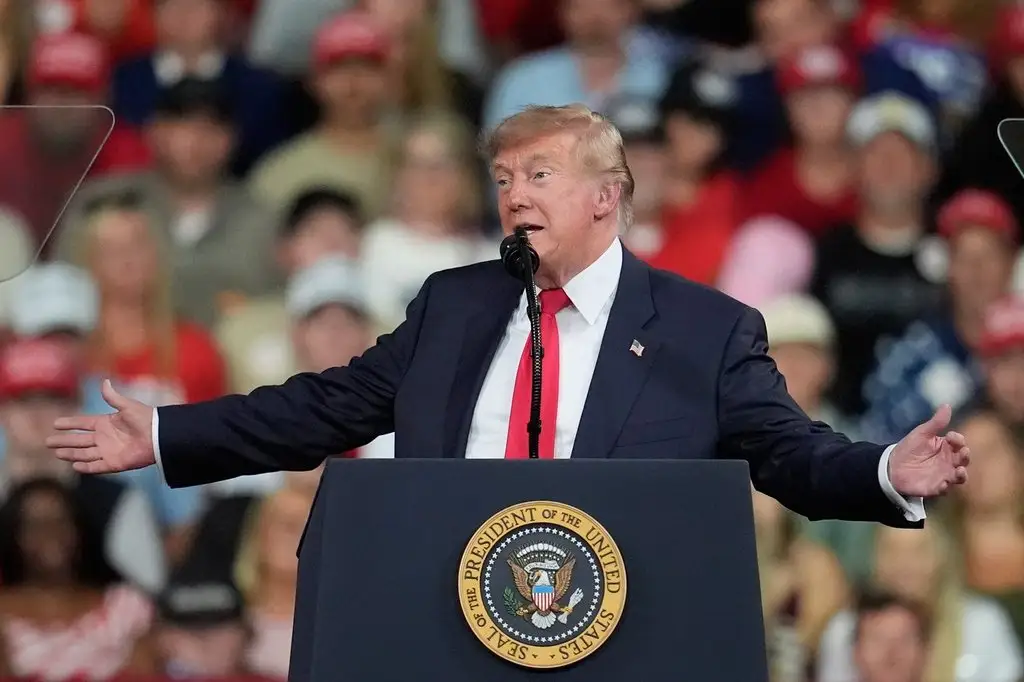
Sharing the stage in Port Huron, President Trump told attendees he envisions the dispute resolving rapidly, asserting that the cross-border confrontation would conclude “pretty soon.” Characteristically, Trump paired that prediction with sharp rhetoric, accusing Canada of having taken economic advantage of the United States for decades.
Canadian authorities maintain that verbal assurances from the American president offer little guarantee of structural progress. Any enforceable settlement reached in the coming days will require consensus across competing factions within the Trump administration, along with binding concessions on how automotive, aluminum, and steel tariffs are structured going forward.
How bilateral tariff disputes squeeze your monthly remittance budget
Cross-border trade disputes may seem abstract, but their ultimate impact lands directly on household purchasing power in Canada. Retaliatory tariffs on everyday consumer goods—ranging from personal care essentials to household furnishings—push up the cost of living at a time when newcomers and diaspora families are already managing elevated housing and grocery expenses.
When routine domestic spending rises in Canadian dollars, disposable income contracts. For families who consistently send money back home to Nigeria or Ghana for school fees, family support, or property projects, elevated local living costs narrow the margin available for foreign exchange transfers. A resolution that lowers import friction helps keep everyday Canadian shelf prices from climbing further.
As trade policy shifts impact retail prices across Canada, is your household budget structured to protect your regular commitments back home without straining your local savings?
Conclusion
The swift resurgence of Canada-U.S. trade talks underscores the intense political pressure bearing down on Washington as midterms loom. While Minister Dominic LeBlanc continues to engage his American counterparts, Ottawa has made clear that speed will not take precedence over national economic safeguards. Whether these renewed discussions yield a lasting framework or unravel like previous attempts will depend entirely on whether the White House is genuinely prepared to sign concessions into binding law before American voters cast their ballots.
Reporting based on coverage by Global News - Politics.
Category: Politics