How NPR makes race calls in the 2026 election
By CelebUD Newsroom —
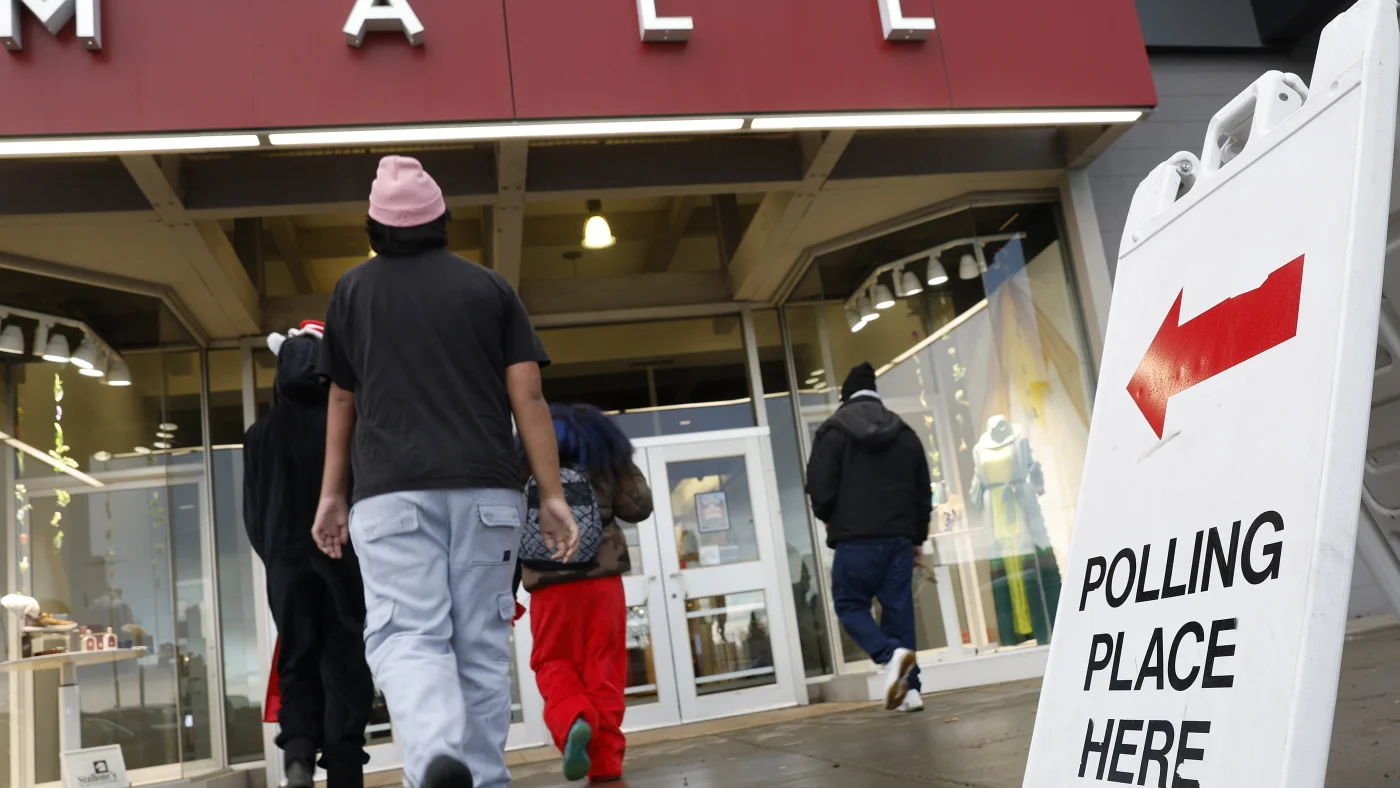
As millions of American citizens head to voting booths across the nation to decide critical political battles—including all 435 seats in the U.S. House of Representatives, 35 U.S. Senate seats, and 36 state governorships alongside extensive local ballots—the responsibility of reporting winners accurately becomes a monumental undertaking. Rather than setting up an isolated internal projection unit, National Public Radio (NPR) maintains a longstanding partnership with the Associated Press (AP) to verify and declare winners across digital platforms and over the public radio airwaves.
The Longstanding Alliance Between NPR and the Associated Press
Calling winners across hundreds of simultaneous contests requires an immense operational footprint. The Associated Press has handled the tallying and calling of American political contests since 1848, bringing nearly two centuries of operational history to modern balloting. Because of this established expertise, NPR has relied on the news cooperative for decades to deliver reliable, nonpartisan electoral determinations.
When the AP reaches a final decision on an outcome, NPR rapidly distributes that verification across multiple channels:
- Broadcast Delivery: Real-time special breaking reports across nationwide radio broadcasts.
- Member Stations: Dissemination of authenticated results to hundreds of independent local public radio stations across all 50 states.
- Digital Trackers: Continuous feeds powering real-time web maps and result tables for online audiences.
Inside the Analytical Framework of the Decision Team
Declaring a victor is not simply a matter of watching high-level numbers shift on a board. At the Associated Press, the process involves deep collaboration among regional race callers, specialized analysts tracking statewide contests such as governorships and Senate races, and designated Decision Team editors who maintain ultimate sign-off power over competitive House districts and state-level leadership.
To evaluate whether a candidate can hold or surrender a lead, analysts assess several interrelated metrics:
- Local Geography: Examining returns on a county-by-county and precinct-by-precinct basis rather than relying on statewide totals.
- Voting Methods: Segmenting tabulated tallies by ballot type, including early in-person votes, mail-in or absentee ballots, and standard day-of voting at traditional precincts.
- Remaining Ballots: Communicating directly with field reporters and municipal vote-tabulation teams to determine precisely how many uncounted ballots remain outstanding in specific jurisdictions.
- Demographic Realities: Weighing the historical political leanings and demographic makeup of the specific municipalities where late-stage counting continues.
Calling Contests Before Every Ballot Is Tabulated
A common point of public confusion during modern elections is how major media organizations can call a winner when significant portions of the vote remain untallied. The answer rests on mathematical certainty rather than guesswork or early speculation.
Neither NPR nor the AP projects outcomes based on exit-polling impressions or speculative models. Instead, an official declaration occurs exclusively when analytical models demonstrate that it is mathematically impossible for trailing candidates to overcome the front-runner's margin with the specific ballots that remain uncounted. If a candidate holds a lead of 50,000 votes in a district that has only 30,000 total ballots left in the vault, the race can be definitively decided even if those final 30,000 votes take days to formalize.
| Metric | 2026 National Scope | Method of Tabulation and Verification |
|---|---|---|
| U.S. House of Representatives | 435 seats | District-level analysis backed by AP Decision Team sign-off |
| U.S. Senate | 35 seats | Statewide county-by-county assessment of outstanding ballots |
| Gubernatorial Contests | 36 states | Multi-format ballot scrutiny (early, absentee, and day-of voting) |
| State Legislatures & Measures | Thousands of seats | Precinct-level monitoring via regional AP race-calling desks |
Ethics, Independence, and the Historical Refusal to Project
Partisan candidates routinely give premature victory speeches, and political opponents often concede defeats in public remarks before formal tallies are complete. However, NPR and the AP operate under strict editorial policies that disregard partisan declarations when determining formal calls.
A candidate's public victory claim or a concession statement will never trigger a race call. Instead, determinations are withheld whenever the data indicates an election is too close to call. A prominent historical illustration occurred during the 2000 presidential contest between George W. Bush and Al Gore: while various commercial broadcast networks prematurely projected Florida back and forth, the AP withheld calling the state because the raw margin remained too narrow to ensure mathematical certainty.
Furthermore, NPR maintains stringent institutional integrity rules, explicitly prohibiting the payment or acceptance of money for interviews or news coverage. Editorial determinations remain entirely insulated from commercial influence or political leverage.
What reliable race calls mean for diaspora planning in Canada and the U.S.
For Nigerians living in Canada or tracking family across the border in the United States, congressional and state elections are never just domestic American news. The balance of power in Washington influences cross-border trade, immigration enforcement, visa processing tempos, and economic sentiment across North America. When high-stakes midterms occur, diaspora community chats and social feeds often flood with speculative victory claims within minutes of polls closing.
Understanding that outlets like NPR and the Associated Press rely on strict mathematical certainty rather than early political declarations helps diaspora families filter out the panic. Premature victory speeches by candidates or early concessions do not reflect finalized governance outcomes. When policy shifts could affect family reunification plans, cross-border business investments, or regional currency stability, waiting for verified determinations prevents making hasty financial or relocation decisions based on incomplete vote tallies.
Takeaway: Before reacting to viral social media declarations about U.S. election winners, check whether established tracking desks have confirmed the outcome based on remaining uncounted ballots.
Conclusion
As the 2026 election cycle unfolds, tabulating ballots and determining the balance of power across both chambers of Congress will extend well past the moment traditional polling places close. By leaning on the historical rigor, data modeling, and mathematical thresholds enforced by the Associated Press, NPR provides audiences with dependable, non-speculative election outcomes. Listeners and digital readers can expect race calls grounded in transparent methodology, patient mathematical verification, and a commitment to declaring winners only when the path for any trailing candidate is entirely closed.
Reporting based on coverage by NPR News.
Category: Politics