6 things to watch for on election night
By CelebUD Newsroom —
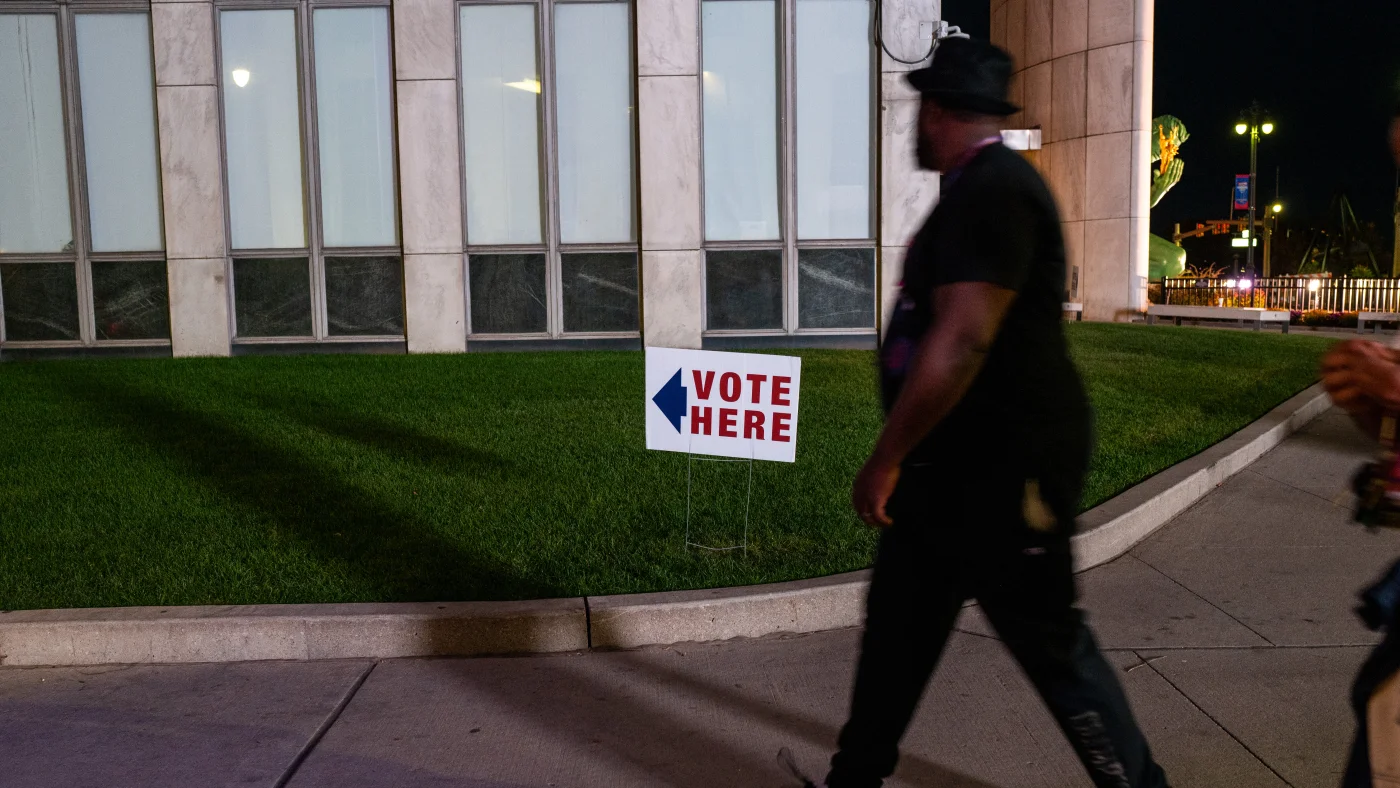
Navigating the deluge of returns on midterm election night can quickly overwhelm even seasoned political observers, as hundreds of federal, state, and legislative battles report numbers simultaneously across multiple time zones. The struggle for congressional control will hinge on a series of distinct geographic tests, demographic turnout benchmarks, and shifting party loyalties that have redefined modern campaigns. Tracking a select set of early bellwethers, critical battleground states, and voter coalitions offers an immediate window into which party holds the upper hand before final tallies emerge days or weeks later.
Early Bellwethers in the Eastern Time Zone
The first meaningful clues of the evening arrive swiftly when polls close in portions of the Midwest and South. Indiana and Kentucky provide initial data points during the 6 p.m. Eastern time window, offering early glimpses into suburban and rural dynamics. Shortly after, the 7 p.m. hour brings a flood of tallies from Florida. While Florida spans both the Eastern and Central time zones, the vast majority of its precincts operate under Eastern time. Statewide contests in Florida, including high-profile races for governor and the U.S. Senate, will not see initial calls until 8 p.m. at the earliest, but several key House races will post returns quickly.
Campaign strategists watching for signs of an emerging national wave should pay close attention to four specific congressional districts across these early states:
- Indiana's 5th Congressional District: Held by Republicans, this seat has grown surprisingly competitive compared to the start of the campaign cycle. Tight margins here could signal lagging Republican turnout.
- Kentucky's 6th Congressional District: Another Republican-held territory where heightened Democratic competitiveness would suggest broader vulnerabilities for the conservative base.
- Florida's 22nd Congressional District: A seat currently occupied by a Democrat that was aggressively redrawn to favour Republican contenders.
- Florida's 27th Congressional District: Donald Trump secured this heavily Latino district by double digits, turning it into a prime testing ground for whether conservative inroads among Hispanic voters remain intact or erode.
The Realignment of Independent Voters
Independent voters have traditionally held the balance of power in American elections, yet they present unique challenges in midterm cycles due to their lower propensity to participate compared to presidential years. Decades ago, securing a decisive majority of unaffiliated voters was mandatory for national Republican victories. For instance, Mitt Romney carried independents by 55% in 2012 yet fell well short of winning the presidency.
Over the past ten years of the Trump era, however, structural realignments have reshaped these dynamics. As blue-collar white voters migrated toward conservative candidates and formal Democratic identification declined, college-educated suburban voters shifted leftward. Consequently, the statistical threshold for Republican success has changed dramatically: conservative candidates have performed well whenever they secure at least 46% of independent voters. Falling short of that 46% line has consistently correlated with broad GOP defeats.
The Battleground in Michigan: Wayne County's Decisive Thresholds
Senate control could ultimately come down to the race in Michigan, where Republican candidate and former U.S. Representative Mike Rogers faces Democratic nominee Abdul El-Sayed. The stakes for this contest are exceptionally high: should Republicans flip the Michigan seat, the arithmetic for Democrats becomes punishingly difficult, forcing them to capture five Republican-held seats across the country rather than four to secure a majority.
For El-Sayed to prevail, his coalition depends heavily on turning out Black voters in Wayne County, home to Detroit. Historical data indicates that Democratic nominees in the Trump era generally require 68% or more of the Wayne County vote to capture the state, unless they manage extraordinary overperformances in affluent suburban counties, as Senator Elissa Slotkin demonstrated in 2024.
| Election Year and Candidate | Wayne County Margin | Electorate Share | Statewide Result |
|---|---|---|---|
| 2024 (Elissa Slotkin) | 63% | 11% | Win |
| 2024 (Kamala Harris) | 62% | Not specified | Loss |
| 2020 (Joe Biden) | 68% | 12% | Win |
| 2020 (Gary Peters) | 68% | Not specified | Win |
| 2018 (Debbie Stabenow) | 69% | 15% | Win |
| 2016 (Hillary Clinton) | 66% | 13% | Loss |
Youth Turnout Dynamics (Ages 18 to 29)
Young voters historically experience steep participation drop-offs when transitioning from presidential to midterm contests. Since 1992, an average of 43% of registered voters aged 18 to 29 cast ballots in presidential elections, but that number plummets to just 21% in midterms—meaning only one in five young citizens casts a ballot.
Despite this participation gap, the margin by which Democrats win younger voters heavily influences national outcomes. Over the last two decades, when Democratic candidates carried the 18-to-29 demographic by more than 20 percentage points, the party consistently won presidential races or made significant midterm pickups. The single structural deviation occurred in 2022: while Republicans captured the House by a narrow nine-seat margin, Democrats' 28-point advantage among youth voters helped limit the anticipated conservative wave and allowed the party to net one Senate seat.
| Election Year | Democratic Margin (18–29) | National Outcome |
|---|---|---|
| 2024 | +11 | Donald Trump wins presidency |
| 2022 | +28 | GOP takes House; Dems gain Senate seat |
| 2020 | +25 | Joe Biden wins presidency |
| 2018 | +35 | Democrats win House majority |
| 2016 | +19 | Donald Trump wins presidency |
| 2014 | +11 | GOP wins Senate and expands House |
| 2012 | +23 | Barack Obama wins re-election |
| 2010 | +17 | Republicans win House majority |
| 2008 | +34 | Barack Obama wins presidency |
| 2006 | +22 | Democrats win House majority |
Texas Arithmetic: South Texas and Suburban Tests
In Texas, Democratic state representative James Talarico has posted polling leads within the margin of error against controversial Republican Attorney General Ken Paxton. However, Democrats face a 38-year Senate drought and have not won a statewide office in Texas since 1994, leading analysts to treat polling leads with caution after previous cycles repeatedly underestimated conservative strength. Even in 2018, when Beto O'Rourke generated massive momentum against Ted Cruz, Cruz held on by under three percentage points.
Talarico's path against Paxton depends on two variables: conservative ticket-splitting and Latino turnout. Republican Governor Greg Abbott remains in a competitive contest of his own, though he is viewed as stronger than Paxton. In 2018, Cruz lagged Abbott's statewide vote total by roughly 400,000 votes but still carried his own contest by over 200,000. For Talarico to break through, the split between Abbott and Paxton would need to exceed that 400,000-vote threshold.
Simultaneously, Talarico must exceed O'Rourke's 2018 benchmark among Hispanic voters, where O'Rourke won 64% of a group that comprised 26% of the electorate. To win, Talarico needs gains across key South Texas counties:
- Cameron County: O'Rourke carried 63% in 2018.
- Hidalgo County: O'Rourke won 69%.
- Webb County: O'Rourke secured 71%.
- Nueces County: O'Rourke took 51%.
Talarico also needs substantial showings in populous Dallas-area suburban counties, where O'Rourke won 47% in Collin, 46% in Denton, and 51% in Tarrant.
Exit Poll Identification and Party Unity
Finally, broad ideological identity figures will demonstrate whether party enthusiasm translated into actual ballots. Self-identified Democrats fell to an electorate low of 31% in 2024, continuing a steady decline from earlier cycles:
- 2008 & 2010: 39%
- 2012: 38%
- 2014: 35%
- 2016, 2018, & 2020: 37%
- 2022: 33%
- 2024: 31%
While the party base has grown more progressive, voter hostility toward the executive branch serves as a potent unifier. With 53% of likely voters reporting strong disapproval of Donald Trump, anti-administration sentiment provides a common denominator across divergent factions. Whether progressive figures such as El-Sayed in Michigan or candidates running in battlegrounds like Michigan's 7th Congressional District can assemble winning coalitions will set the parameters for intra-party debates and shape the road to the 2028 presidential primaries.
What congressional control means for legal pathways and visa backlogs
For Nigerian students, skilled workers, and families navigating the U.S. immigration system, the composition of the Senate and House directly influences daily reality. While the executive branch administers immigration agencies, Congress holds the power of the purse. Legislative majorities determine whether consular posts receive the funding needed to clear immigrant and visitor visa backlogs, or whether fee hikes and administrative restrictions gain statutory backing.
The battleground contests in states like Michigan and Texas will decide who chairs crucial congressional committees overseeing the Department of Homeland Security and the State Department. A Congress focused on tightening border laws can stall reforms for high-skilled pathways like the H-1B or employment-based green cards, while a different majority could protect student work authorisations such as Optional Practical Training (OPT). For applicants currently waiting in lengthy queues in Abuja and Lagos, legislative funding bills directly dictate processing speeds and consular staffing levels.
Takeaway: If you or an immediate family member are currently waiting on U.S. visa processing or petition approvals, have you factored potential legislative gridlock into your personal timeline?
Conclusion
Election night provides a definitive balance sheet on modern coalition politics. The interplay between early returns in Indiana, Kentucky, and Florida, the durability of independent support, and turnout in places like Detroit and South Texas will establish who governs the Capitol. In the immediate days ahead, the margins produced in these distinct battlegrounds will dictate legislative power in Washington and define the long-term ideological trajectory of both major parties.
Reporting based on coverage by NPR News.
Category: Politics