Iru-Ekun: A Divine Security Mandate at Risk of Political Hijacking
By Gbenga Ayandare —
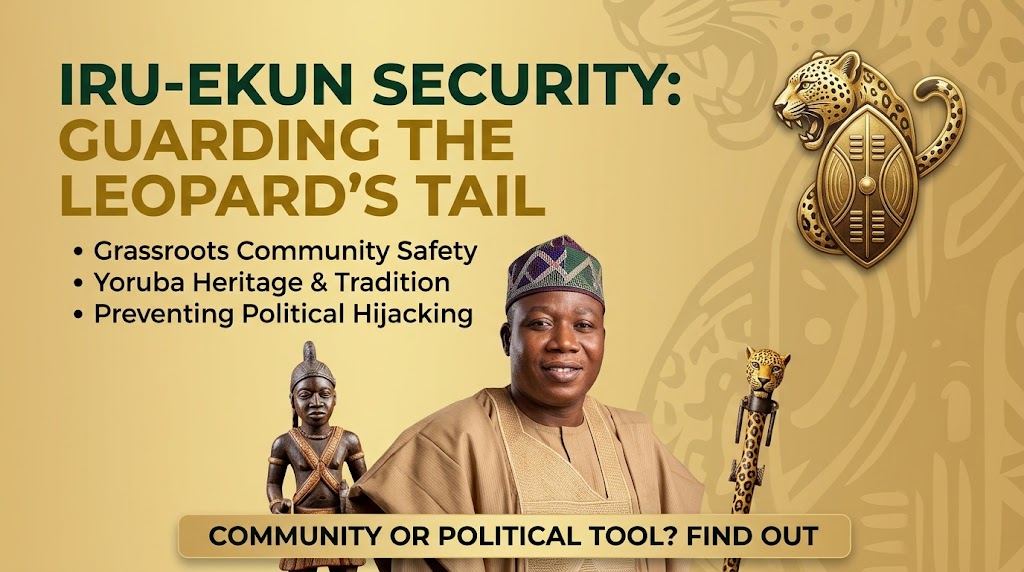
When Chief Sunday Adeyemo, widely known as Sunday Igboho, formally unveiled the Iru-Ekun Security Network across Nigeria's southwestern states, the initiative struck an immediate emotional chord across Yorubaland and the broader diaspora. In Yoruba folklore and metaphysics, Iru Ekun—literally translating to the "Tail of the Leopard"—carries an ominous and definitive maxim: anyone who dares to step on the tail of a resting leopard invites swift, unrelenting retribution. For communities terrorised by rural banditry, highway kidnappings, and brutal farm invasions, the movement arrived not merely as an administrative security structure, but as a providential intervention born of necessity and collective desperation.
Yet, as thousands of enthusiastic volunteers mobilised across historic grounds from Mapo Hall in Ibadan to the rolling hills of Ogun and Ekiti, a shadow began to creep over the enterprise. Seasoned observers of Nigerian political history have watched this pattern unfold before. What begins as a genuine grassroots shield, backed by traditional institutions and organic community solidarity, frequently attracts the predatory instincts of calculating political actors. The urgent question now confronting the South-West is whether Iru-Ekun will remain a sacred security mantle or become another co-opted political instrument bartered for transient influence.
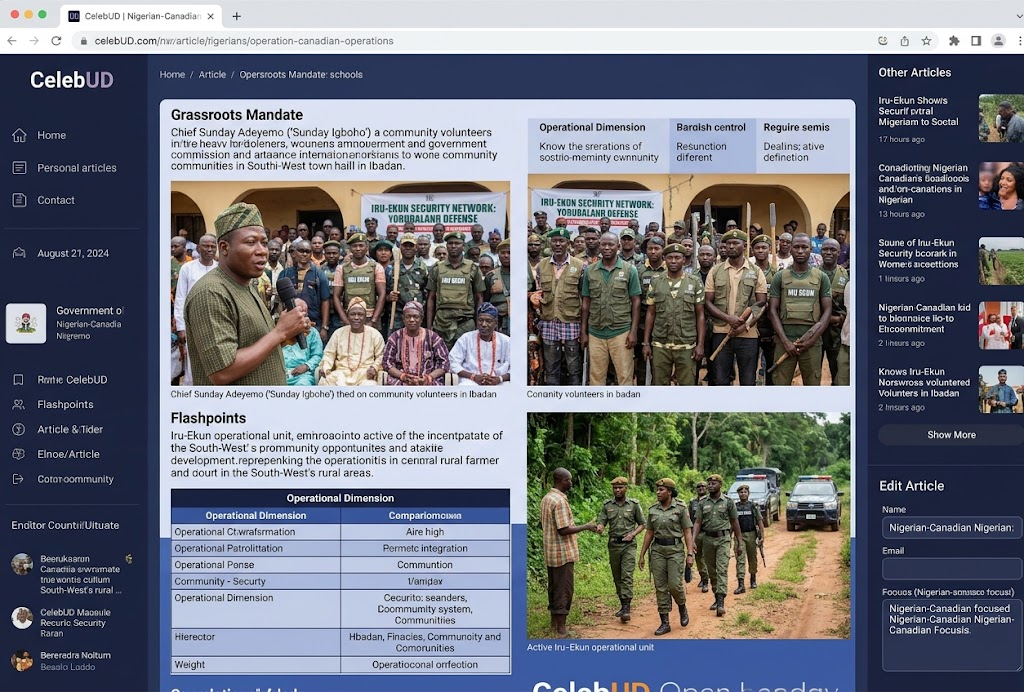
The Genesis of Iru-Ekun: Grassroots Mandate and Divine Provocation
To understand the spiritual and social gravity of Iru-Ekun, one must revisit the trauma that birthed Chief Sunday Adeyemo’s public rise. In the face of catastrophic rural insecurity, when traditional farmers could no longer visit their ancestral lands and royal monarchs were assassinated in their own domains, the conventional state security architecture appeared paralysed by bureaucratic lethargy and regional politicking. Igboho stepped into the breach as an unconventional champion, enduring military raids on his home, tragic loss of aides, and gruelling detention across the border in the Republic of Benin.
When he returned and conceived Iru-Ekun, it was presented as an auxiliary civilian network dedicated purely to territorial integrity, community intelligence, and rural preservation. Tens of thousands of young men and women stepped forward voluntarily, taking sacred oaths to defend their homelands without statutory salaries. This organic buy-in reflected genuine trust. For many, Iru-Ekun was not an ordinary vigilante squad; it represented a divine rescue operation aimed at restoring dignity and safety to a beleaguered people.
The Subtle Architecture of Political Hijacking
The tragedy of popular movements in post-colonial Africa often lies not in defeat by sworn adversaries, but in calculated infiltration by political patrons. In Nigeria, the political class has perfected the art of weaponising legitimate popular unrest. Whenever an influential civic leader commands the unvarnished loyalty of the youth and the working class, political power brokers move swiftly to domesticate the threat.
The co-optation process rarely begins with hostility. Instead, it arrives dressed in the finery of state recognition, logistical support, official endorsements, and elite backroom negotiations. Corrupt political elements realize that directly repressing a figure like Sunday Adeyemo could spark regional conflagrations. Therefore, the strategic calculation shifts: draw the leader close, offer patronage, embed state-sponsored handlers, and subtly redirect the movement’s raw numerical strength toward partisan interests.
"A movement that barters the trust of the oppressed to dine at the table of the political elite inevitably turns its weapons against the very people it was sworn to defend."
The danger is palpable. By allowing political actors to dictate deployment, operational focus, and financial lifelines, the sacred mandate of Iru-Ekun risks being gutted from within. A security outfit meant to patrol dark forests and flush out violent criminal syndicates risks devolving into a private partisan vanguard deployed to secure polling booths, intimidate political dissenters, and manage contentious electoral rivalries.
Evaluating the Trajectory: Strategic Collaboration vs. Partisan Co-optation
A fine line separates legitimate operational synergy with constitutional security agencies from total political subservience. While no non-state security outfit can operate in total isolation from the Nigerian Army, the Nigeria Police Force, or state governments, the terms of engagement determine whether the movement survives as a guardian or perishes as a partisan pawn.
| Operational Dimension | Autonomous Grassroots Mandate | Hijacked Political Machinery |
|---|---|---|
| Primary Objective | Securing rural settlements, forests, and community farmlands from terror groups. | Securing political supremacy, monitoring ballot boxes, and silencing opposition voices. |
| Source of Authority | Traditional rulers, community elders, and moral grassroots solidarity. | Partisan patrons, government functionaries, and covert political financiers. |
| Public Perception | Viewed as selfless guardians, cultural protectors, and regional saviors. | Feared as partisan thugs, rogue mercenaries, or state-sanctioned enforcers. |
| Disciplinary Control | Rooted in ancestral oaths, local community oversight, and communal honour. | Distorted by patronage payouts, factional loyalty, and political cover. |
| Longevity | Endures across generations as a permanent community defense mechanism. | Discarded and crushed once election cycles end and political utility expires. |
The Dangers of Surrendering the Divine Mandate
If Chief Sunday Adeyemo yields to the blandishments of bad political elements, the fallout will not merely be personal; it will inflict devastating consequences on regional security and social cohesion.
1. The Demoralization and Disillusionment of the Grassroots
The greatest currency of any social leader is public credibility. The 20,000 volunteers who enrolled in Oyo, and thousands more across Ogun, Osun, Ondo, and Ekiti, did not enlist to serve the ambitions of any governor, minister, or party cabal. They stepped forward because they believed Sunday Igboho was incorruptible in his defense of the land. If these volunteers realize they have been packaged as a bargaining chip for political leverage, disillusionment will trigger mass resignations, cynicism, and an unprecedented crisis of trust in indigenous leadership.
2. The Historical Curse of the 'Bakassi' and 'OPC' Deviations
Nigeria’s recent history is littered with cautionary tales. The Oodua Peoples Congress (OPC) in its early years possessed immense grassroots prestige as a regional shield. However, when splinter factions aligned with partisan power structures, internal bloodbaths and criminal extortion eclipsed their founding ideals. In the South-East, the original Bakassi Boys began as an effective grassroots anti-crime force with strong merchant backing. Yet, the moment corrupt political actors co-opted the group for state-sponsored political assassinations, the outfit completely forfeited public legitimacy and was ruthlessly dismantled by federal authorities. Iru-Ekun stands directly at this historic crossroads.
3. Infiltration and Weaponization Ahead of Future Elections
As electoral contests loom on Nigeria’s political horizon, desperate political actors are scouring the landscape for established paramilitary formations. If Iru-Ekun is surrendered to selfish political operatives, partisan agents will inevitably be planted within its commands. Once an organisation with thousands of active, field-trained volunteers is weaponized for partisan battles, it transforms from a solution into a profound national security threat, inviting heavy federal clampdowns that innocent volunteers will bear the brunt of.
Direct Counsel to Oloye Sunday Adeyemo: Guard the Mandate
Chief Sunday Adeyemo must remember who he is and the heavy mantle placed on his shoulders. The title of Akoni Oodua is not an ornament granted by political godfathers; it is a spiritual contract sealed by the tears of displaced farmers, the blood of fallen comrades, and the hopes of millions of citizens who refuse to be driven from their ancestral soil.
- Maintain Institutional Independence: While technical collaboration with statutory bodies such as the Police and the Army is sensible and lawful, direct entanglements with partisan politicians must be strictly avoided. Financial autonomy through transparent community foundations and royal trusts is essential to keep political grease off the machinery.
- Center the Traditional Rulers: The legitimacy of Iru-Ekun must remain firmly anchored in the palaces of revered traditional monarchs, who hold custodial responsibility over the land across election cycles. When traditional rulers oversee security structures, the risk of partisan co-optation drops dramatically.
- Reject Mercenary Deployments: Igboho must establish an ironclad operational code of conduct. Under no circumstance should an Iru-Ekun volunteer be seen around partisan political rallies, VIP security details for politicians, or electoral disputes. Their mission is strictly territorial defense against armed marauders in the forests and highways.
- Remember the Transience of Political Alliances: Politicians operate purely on self-interest. The very hands that applaud and fund an outfit today will sign its proscription order tomorrow once public outcry erupts. The people’s goodwill is the only permanent armor.
What this means for families and daily life in the South-West
For ordinary residents and their families living in towns and rural settlements across Yorubaland, the fear of armed invasions and highway ambushes is not an abstract political talking point—it is a daily reality that shapes school runs, market days, and transit between states. The grass-roots backing for Chief Sunday Adeyemo’s civilian network reflects the genuine exhaustion of communities whose local farmers could no longer access their lands without risking their lives.
Yet history provides a sober warning about non-state security initiatives that accept political patronage. When regional groups like the Bakassi Boys or the Oodua Peoples Congress became embroiled in partisan politics, local residents paid the heaviest price. Neighborhoods were caught in crossfires between rogue operatives and statutory security forces, while grassroots defenders devolved into political enforcers during election cycles.
Key takeaway: Families with relatives in rural communities should advise loved ones to maintain operational boundaries, avoiding partisan gatherings or unauthorized vigilante checkpoints that could attract heavy security-force intervention.
Conclusion
The Iru-Ekun Security Network has all the hallmarks of a historic grassroots intervention—a movement conceived in response to existential insecurity across southwestern communities. However, its greatest vulnerability lies not in the dense forests where bandits lurk, but within carpeted political corridors where opportunists seek to domesticate and hijack its moral strength. Chief Sunday Adeyemo must stand firm against political seduction. By keeping Iru-Ekun purely devoted to community welfare, maintaining strict transparency, and respecting traditional institutional oversight, he can preserve the sanctity of this movement. To surrender this mandate to selfish political elements would not only dishonor the sacrifices of the past, but seal the defeat of the very people looking to him for salvation.
Disclaimer: This article provides journalistic commentary and political analysis based on publicly available reports regarding the Iru-Ekun initiative. As security developments and civic engagements in the region continue to evolve, analyses reflect facts and observations available at the time of publication.
Category: Politics