Brazil voters head to polls in presidential runoff
By CelebUD Newsroom —
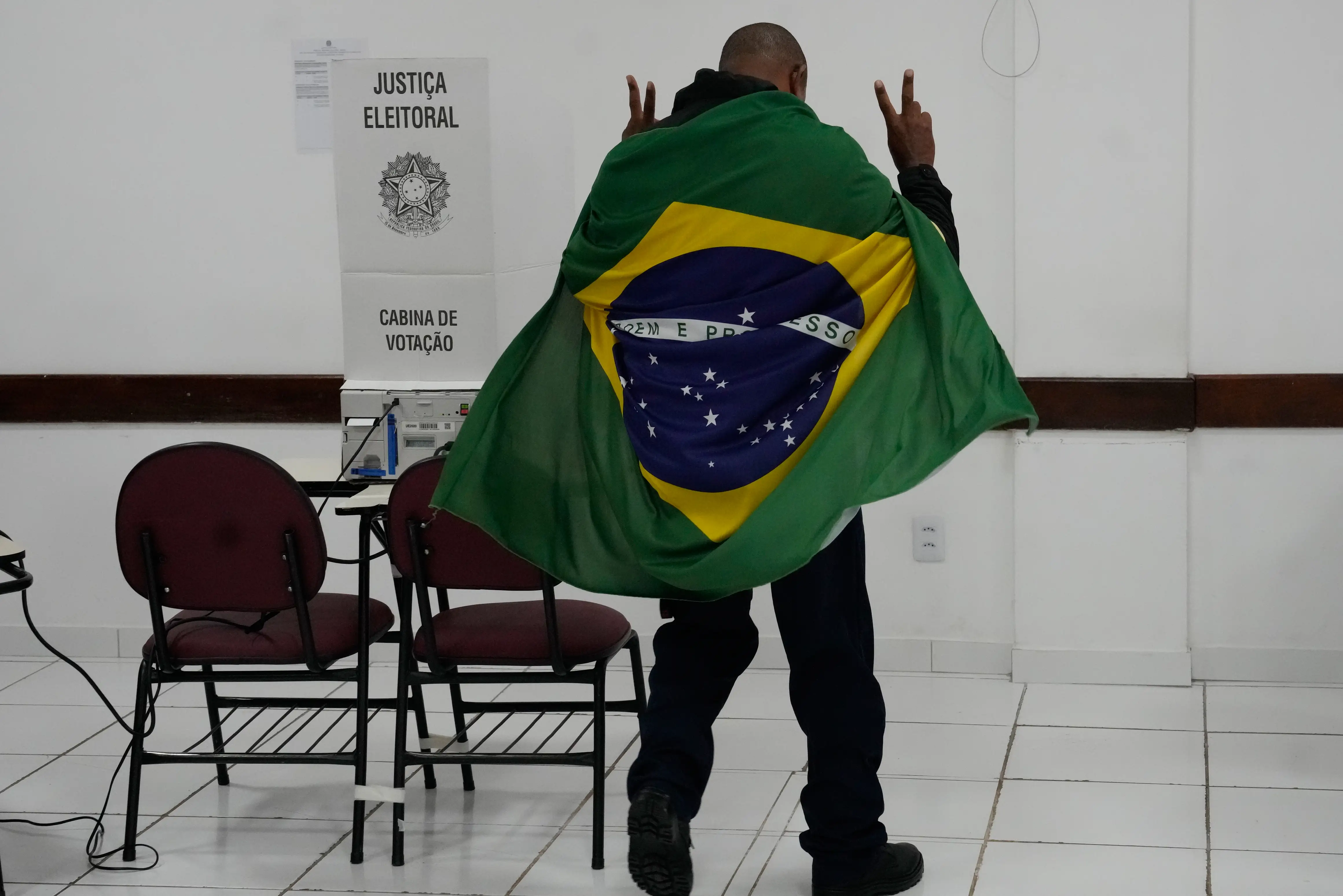
Voters across Brazil have headed to polling centers in a fiercely contested presidential runoff that pits left-wing incumbent Luiz Inácio Lula da Silva against conservative challenger Flávio Bolsonaro. The high-stakes showdown will decide the ideological trajectory of Latin America's largest democracy and economic powerhouse, carrying major ramifications for environmental policy, social spending, and the diplomatic balance between Washington and South American capitals.
A Tightly Contested Race with Continental Repercussions
Pre-election surveys pointed to an extremely tight finish, with neither candidate holding a clear advantage as they battle to cross the critical threshold of 50 percent of the valid ballots needed to assume power this coming January. The election arrives on the heels of the first-round contest held earlier this month, where Bolsonaro outpaced Lula by an advantage exceeding 2.2 million votes. Despite voting being legally mandatory for eligible citizens, more than 33 million of the country's nearly 160 million registered voters stayed away from the booths in that opening phase, turning voter mobilization into the defining factor of the runoff.
The duel represents a classic ideological clash between two sharply divergent worldviews:
- Luiz Inácio Lula da Silva: A veteran figure of the Brazilian left who previously governed from 2003 to 2010 before returning to the presidency four years ago, Lula advocates robust social welfare protections, progressive environmental agendas, and an independent, multipolar foreign policy.
- Flávio Bolsonaro: A staunch conservative lawmaker and ally of U.S. President Donald Trump, Bolsonaro champions private sector deregulation, hardline security policies, deep economic ties with Washington, and widespread reform of public institutions.
The geopolitical ramifications extend far beyond national borders. A win for Bolsonaro would mark a decisive turn to the right across the region, aligning Brazil with recent conservative election triumphs in Chile, Peru, and Colombia, while deepening American leverage across Latin America. Conversely, a victory by Lula would preserve an influential left-of-center bloc anchored by Brazil and Mexico, the area's two most populous economies, where President Claudia Sheinbaum currently leads.
Contrasting Platforms and Key Metrics
The two campaigns present sharply divergent records and visions for the country's legal, economic, and institutional framework.
| Core Issue | President Luiz Inácio Lula da Silva | Senator Flávio Bolsonaro |
|---|---|---|
| Political Orientation | Left-of-center (Workers' Party) | Right-wing conservative |
| First-Round Performance | Trailed by more than 2.2 million votes | Secured first-place lead |
| Economic Focus | Small enterprise debt forgiveness; weekend free transit | Deregulation, mining partnerships, cost of living cuts |
| Judiciary Strategy | Defends court independence amid upcoming vacancies | Advocates judiciary overhaul and presidential pardons |
| Foreign Alliances | Multilateral neutrality; critical of external interference | Close alliance with Donald Trump administration |
Voter Sentiments and the Polarization Rematch
The election has reignited the intense political divisions that have defined Brazilian civic life for nearly a decade. Four years ago, Lula edged out Bolsonaro's father, former president Jair Bolsonaro, by the narrowest margin recorded since civilian rule was restored in 1985. The current election has stirred comparable fervor and animosity at polling stations.
Casting his ballot at approximately 8 a.m. at an educational facility in Rio de Janeiro, Flávio Bolsonaro was met by a clamor of opposing crowds. While loyalists gathered to shout insults aimed at his opponent, Lula's backers countered with energetic chants of their own. Speaking with reporters at the scene, Bolsonaro declared:
“The time of real change has arrived. Brazil can’t go on another four years on its current trajectory.”
That desire for structural change resonates with citizens who feel weighed down by economic stagnation. Fabianne Borges Santoro, a 45-year-old physiotherapist residing in Rio de Janeiro, noted that although she once backed the Workers' Party, her views have shifted due to governance concerns:
“The Workers’ Party has been in power for a long time and the voice of the people is saying that we need change to see improvements in security and the cost of living.”
Lula, meanwhile, cast his vote in São Bernardo do Campo, the historic industrial heartland where he rose to prominence as a trade union leader during the 1960s. Reflecting on the campaign's closing stretch, he expressed deep gratitude to his supporters:
“It is a lot of generosity, a lot of care, a lot of love. I will be forever grateful.”
His support base remains fiercely loyal among lower-income communities. Luzia da Souza, a small-business operator running a neighborhood bar in Rio de Janeiro, underscored the personal connection the president maintains with working-class citizens:
“Lula is a man of the people and he knows what it’s like to be poor. I find it impossible not to vote for him.”
Scandals, the Judiciary, and Campaign Maneuvers
Both political camps enter the vote under legal clouds and fierce corruption debates. Lula’s reelection bid has been weighed down by voter frustration over inflated living expenses and public safety worries, alongside memories of the corruption proceedings that once resulted in his incarceration for over twelve months before the convictions were formally thrown out by the courts. Lula’s platform has consistently framed Bolsonaro as an existential danger to constitutional stability, spotlighting that the challenger's father remains under house arrest over allegations of orchestrating a coup attempt.
Bolsonaro, who has pledged to pursue an official pardon for his father, faces his own legal challenges. His campaign has been buffeted by revelations that he accepted roughly US$12 million from Daniel Vorcaro, a controversial former banker, to finance a biographical film about his father. The financial arrangement has prompted official investigations into allegations of tax fraud, money laundering, and illicit enrichment. Both contenders have also had to navigate wider ethics controversies involving family members and political allies.
The institutional stakes are exceptionally elevated because the incoming president will be tasked with appointing at least three justices to the 11-member Federal Supreme Court as mandatory retirements take effect. The nation's highest tribunal has itself been shaken by internal ethics probes, prompting Bolsonaro to repeatedly target the bench and demand an overhaul of the judicial branch.
To regain momentum after falling behind in the initial voting round, Lula's administration launched a series of high-impact socioeconomic measures designed to win over undecided voters. These initiatives have included a dedicated debt-relief scheme targeting small businesses, pledges to introduce zero-fare public transit during weekends, and vocal backing for a measure approved by the Senate that ends the traditional six-day workweek.
The International Dimension: Washington and Critical Minerals
International dynamics have loomed unusually large over the race. Lula has voiced strong wariness over potential foreign meddling, specifically calling out aggressive economic and legal moves by the Trump administration. Washington has targeted Brazilian trade through heavy import tariffs, imposed punitive financial sanctions against the Supreme Court magistrate who oversaw the judicial inquiry that ultimately sentenced Jair Bolsonaro, and designated regional narcotics cartels as foreign terrorist organizations—a move critics argued was intended to paint Lula as ineffectual against organized crime.
Bolsonaro has taken the opposite approach, openly highlighting his close relationship with the White House and arguing that his administration would be uniquely positioned to forge lucrative commercial agreements with Washington. Among his chief economic targets is Brazil’s vast rare-earth mineral reserves, estimated at approximately 21 million metric tons—a volume surpassed globally only by China. While denying that his campaign has received improper foreign assistance, Bolsonaro has maintained that aligning with American industrial priorities represents Brazil’s best route to economic modernization.
What shifting trade policies mean for import costs and commodity prices
When the economic strategy of Latin America's economic powerhouse hangs in the balance, the impact eventually lands on local market stalls and import ledgers across Africa. Brazil is a major global supplier of agricultural essentials, including sugar, poultry, and soybeans, which directly and indirectly influence food prices in import-reliant economies like Nigeria.
The two candidates offer completely opposite playbooks for managing domestic costs and foreign trade: Lula leans toward debt forgiveness for small enterprises and shields the economy from foreign tariff pressures, while Bolsonaro pushes deregulation and closer integration with American markets. Any post-election currency instability, combined with ongoing trade friction involving U.S. tariffs, could shift freight rates and commodity export pricing. When Brazilian exporters alter their terms or redirect supply to preferred diplomatic partners, international buyers often absorb higher shipping bills and wholesale costs.
Key takeaway: Small business owners and import traders should consult their suppliers over the next two months to confirm pricing stability on South American agricultural goods before committing to large inventory orders.
Conclusion
With electronic voting stations concluding operations at 5 p.m. Brasília time, the outcome will provide an immediate answer to whether Brazil chooses Continuity under Lula’s progressive social model or executes a sharp rightward pivot under Flávio Bolsonaro. The result will redraw Brazil's institutional leadership, decide the makeup of its highest court, and fundamentally reshape diplomatic and trade alignments across the Western Hemisphere.
Reporting based on coverage by Global News - Politics.
Category: Politics